







How Do Honduran Coffee Farms Produce Cigua SHB Beans?
Honduras sits in northern Central America, a mountainous country of more than 8.3 million people and about 112,000 square kilometers. Its growing conditions are comparable to those of Guatemala and Nicaragua, and it now ranks among the world's top ten coffee exporters, harvesting roughly 3 million bags a year. The washed Cigua SHB bean shows chocolate notes and a lasting caramel sweetness.
The country holds around 280,000 hectares of coffee farms, mostly smallholder plots under 3.5 hectares, and those small farms supply about 60 percent of total production. Growing areas sit in mountainous terrain, where harvesting relies on manual picking followed by careful processing. French press parameters and operating suggestions help home brewers reproduce a balanced cup with this bean.
Honduras is located in Central America, with a mountainous interior, and its coffee-growing conditions are no less favorable than those of Guatemala and Nicaragua. It is now one of the world's top ten coffee exporters. This article systematically introduces the overall picture of Honduran coffee, from the production environment and the distribution of the six major regions to the washed processing flow, and focuses on sharing the estate background, grade information, and cupping performance of Front Street Honduras Cigua RFA EP coffee beans. At the same time, Front Street Coffee brings the French press brewing parameters and operating suggestions for this bean, helping coffee lovers easily reproduce at home a balanced flavor profile with chocolate notes and a lasting caramel sweetness.
After consulting the information, Front Street learned that Honduras is located in northern Central America and is a mountainous country with a population of more than 8.3 million and a land area of about 112,000 square kilometers. To its north is the Caribbean Sea, to its south is the Gulf of Fonseca on the Pacific Ocean, to the southeast it borders Nicaragua and El Salvador, and to the west it neighbors Guatemala. More than three-quarters of Honduras is made up of mountains and plateaus, with mountain ranges stretching from west to east, a lava plateau in the interior, valleys dotted among the mountains, and plains along the coastal areas. The country has an overall tropical climate, and the coastal plains have a tropical rainforest climate.
From the perspective of geographical conditions, Honduras is not inferior to neighboring coffee-producing countries such as Guatemala and Nicaragua. Honduras has 280,000 hectares of coffee farms, mainly small plantations, most of which are less than 3.5 hectares, and these smallholder coffee farms contribute 60% of the country's total coffee production.
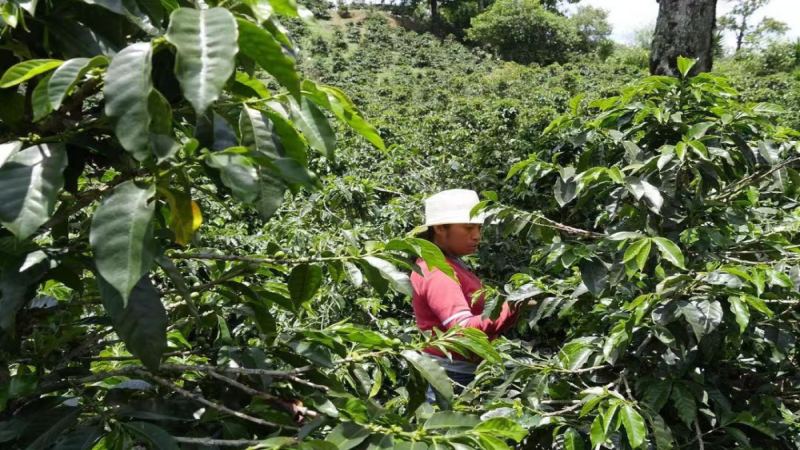
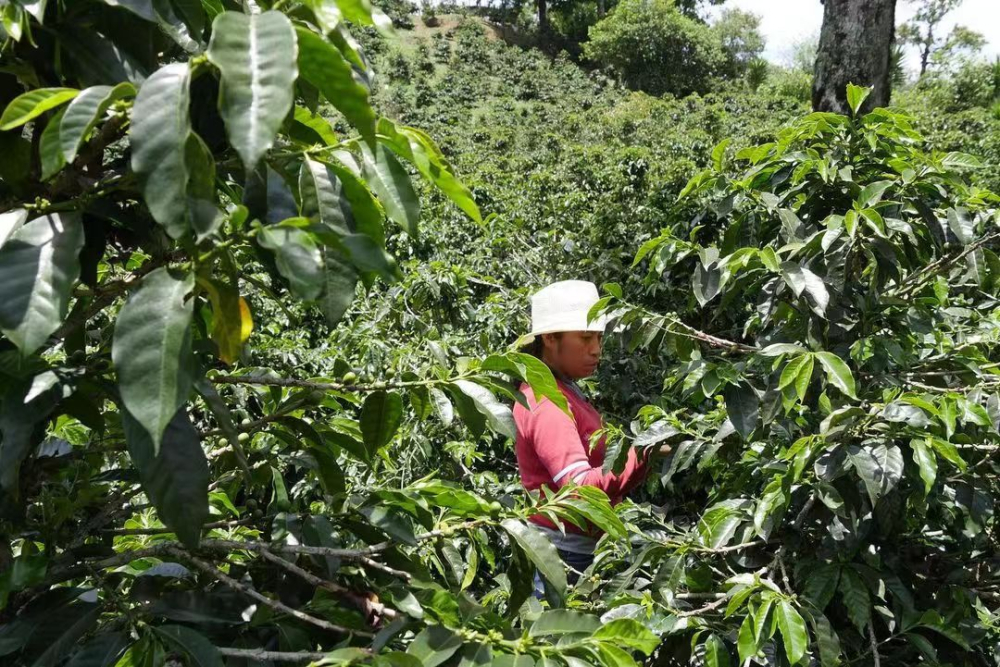
Coffee-growing areas are mostly located in mountainous regions, and harvesting relies on manual picking, followed by careful processing in pursuit of higher-quality coffee beans. Honduras harvests about 3 million bags of coffee each year. The coffee supplied to the market is not only considerable in quantity but also quite excellent in quality, and it has now entered the ranks of the world's top ten coffee exporters.
In Honduras, coffee-producing areas are divided into six major regions, distributed in the west and south: Santa Barbara, El Paraiso, Copan, La Paz, Comayagua, and Olancho, with an average growing altitude above 1,100 meters. In terms of varieties, Arabica is the main type, of which 69% is HG "High Grown Coffee" grade, 12% is SHG "Strictly High Grown Coffee," and 19% is CS. Common varieties include Typica, Bourbon, Caturra, Villa Sarchi, and Lempira.
Honduran coffee shows a rich, layered flavor depending on the degree of roasting. Medium roast can bring the bean's sweetness to the extreme, while dark roast increases bitterness, but the sweetness does not disappear because of it. Overall, medium roast has the best mouthfeel, with a rich and unique aroma, and is very popular among Honduran coffee lovers.
High-quality Honduran coffee is processed by the washed method. Generally, it is first soaked, and during soaking, defective fruits float to the surface and can be directly washed away and discarded. Then the intact fruits are sent to a depulper, where the rotating force of the machine removes the fruit skin. After depulping, the fruits are screened by machine to select high-quality fruits. Usually, the larger the fruit, the higher the degree of maturity. Honduran coffee is dried by sun exposure, so the flavor often carries a faint fruity note.
Front Street Honduras Cigua RFA EP Coffee Beans
Estate: BECAMO
Grade: SHB
Processing: Washed
Altitude: 1,200-1,800 meters
Cupping: Slightly acidic, overall balanced, bright, with good body
FrontStreet Coffee shares Honduran French press coffee parameters
1. Filter: French press
2. Water temperature: 88°C
3. Grind size: white sugar
4. Roast level: medium-dark roast
5. Blooming time: 2.5 minutes
Flavor: Balanced, chocolate, lasting caramel sweetness in the finish
FrontStreet Coffee recommended method: 15 g coffee, white sugar grind size, soak in 88°C water for 2.5 minutes, press the grounds, filter, and pour out the coffee.
The above content is compiled by CoffeeHunters, a coffee news website.


