







How Does Coffee Bean Processing Shape Yirgacheffe Kochere Flavor?
Yirgacheffe Kochere coffee is known for a clean, sweet washed profile. The town of Yirgacheffe sits in Ethiopia's Sidama region at 1,700 to 2,200 meters, with cool, foggy highlands and more than forty cooperatives. Kochere is one of its core sub-regions, and the washed method is central to the bright, clear cup that defines the area.
The name combines two ancient Ethiopian words meaning calm and marshy wetlands, and springs and waterways supply the washing stations. Coffee trees grow in villagers' backyards or intercropped with other crops. The Ethiopia Commodity Exchange grading system sorts lots by region, processing, and cup quality, and pour-over brewing highlights Kochere's sweet, clean character.
Yirgacheffe is a shining calling card of Ethiopian specialty coffee, and Kochere, as one of its core sub-regions, has won over many coffee lovers with its clean and sweet washed flavor profile. This article will begin with the geography and history of Yirgacheffe, delve into the cultivation model and processing equipment advantages of the Kochere region, sort out the grading system of the Ethiopia Commodity Exchange, and share Front Street Coffee's brewing suggestions and flavor impressions for Kochere coffee beans. Whether you are a beginner just getting into acidic coffee or a seasoned connoisseur looking for a daily staple, you will find useful origin knowledge and practical references here.
Many customers who prefer acidic coffee walk into Front Street's shop and the first thing they say is to order a cup of Yirgacheffe pour-over. So, what exactly does the so-called "Yirgacheffe flavor" refer to? Today we will use one of Yirgacheffe's representative regions—Kochere—as a starting point to talk about its origins.
Yirgacheffe Coffee Region
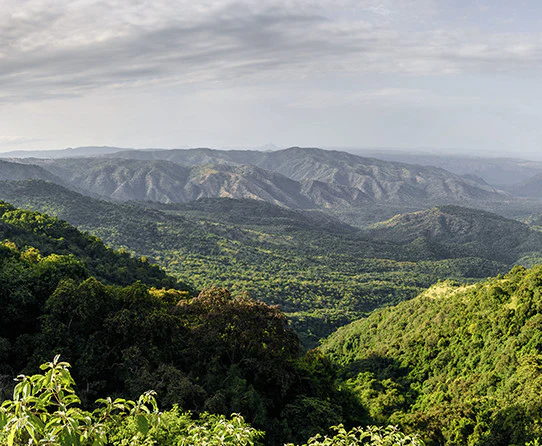
The town of Yirgacheffe is located in the Sidama region of Ethiopia, with coffee cultivation at elevations between 1,700 and 2,200 meters. It is both the administrative center of Ethiopia's coffee-producing regions and an important area for producing high-quality coffee beans, with more than forty cooperatives distributed throughout the area. Yirgacheffe is not only a benchmark for Ethiopian specialty coffee, but has also attracted widespread attention for its unique geographical and climatic conditions. The high-altitude zone is cool and foggy year-round, with mild spring-like weather in all seasons. This terrain and cultivation system create an ideal environment for nurturing top-quality coffee beans.
In the ancient Ethiopian language, "Yirgacheffe" is a combination of two words: ይርጋ Yərga means calm, to settle down, and ጨፌ Č̣äfe refers to marshy wetlands, together carrying the meaning of "let us settle and establish ourselves in this wetland." Front Street looked at the map and saw that the town of Yirgacheffe is located in the Gedeo Zone, right downstream of the Great Lakes, with abundant springs and waterways, providing ample fresh water resources for the cooperatives that process coffee beans.
In the Yirgacheffe region, coffee trees are mostly planted in villagers' own backyards or intercropped with other crops in farmland. Although each household's output is not large, this has given rise to a distinctive pastoral coffee style. The small mountain villages are shrouded in mist year-round, with gentle summer breezes and spring-like weather in all seasons, making the climate comfortable. It is precisely this environment that has created the signature citrus and floral notes of Yirgacheffe coffee, leaving an unforgettable impression with a single sip.
Kochere Region
Ethiopian coffee beans have complex genetics and numerous producing regions. The main trading method for coffee farmers is selling fresh cherries, which makes it difficult for international green bean prices to be linked to the upstream producing regions, and also makes it hard for farmers' incomes to improve. In order to refine coffee bean traceability information and promote fair trade, the Ethiopian government established the Ethiopia Commodity Exchange (ECX) in 2008 to facilitate coffee trading in a more just manner. Under the ECX regional classification system, Yirgacheffe is divided into four sub-regions: Kochere, Gedeb, Gelana, and Wenago. Each sub-region has outstanding production teams with distinctive offerings.
Kochere is one of the 77 Woredas (administrative districts) of SNNPR in Ethiopia, located about 25 kilometers southeast of Yirgacheffe. The coffee beans harvested in this region come from numerous local smallholder farmers, whose average cultivated area is about 1 hectare, with cultivation elevations of about 1,900 to 2,000 meters. It is part of Gediyo within Yirgacheffe and is also one of the most important regions of Yirgacheffe.
Because Kochere has relatively advanced green bean water processing equipment, it has consistently performed excellently in washed processing, and its complex layers of honey and citrus, along with its clean and sweet style, are widely praised. The main local production model is: small coffee farmers deliver each batch of harvested red cherries directly to the nearby cooperative's washing station for unified processing. Other well-known neighboring regions around Kochere include Wenago, Gelena, Abaya, Gedeb, and others.
Yirgacheffe Coffee Grading System
After the establishment of the Ethiopia Commodity Exchange (ECX) in 2008, an innovative grading method was adopted. This method combines the physical attributes of green coffee beans with cup tasting flavor characteristics for a comprehensive score, thereby ensuring that coffee quality and taste reach the desired standard.
The ECX divides all coffee into three types according to processing method:
· Speciality: Few defects, high cup tasting flavor quality
· Commercial: Does not reach specialty grade, but is higher than domestic consumption grade
· Local / Domestic: Many defects (unripe beans), relatively poor flavor due to being out of season or improperly stored. (Consumed domestically within Ethiopia, does not enter international market circulation)
Among these, Speciality and Commercial are oriented toward the export international market. The grading standards differ slightly for different types.
I. Commercial Grade Classification
Based on the total score of physical attribute characteristics and cup tasting flavor characteristics, the ECX divides green coffee beans into nine grades, with physical characteristics accounting for 40% and cup tasting quality accounting for 60% (SCAA cupping standards).
II. Specialty Grade Classification
This grade rating is further divided on the basis of commercial grading. When the commercial grade reaches Grade 1-3, a specialized cup tasting evaluation is then conducted. The evaluation criteria refer to the basic requirements of SCA standard cupping.
Yirgacheffe Coffee Bean Processing Methods
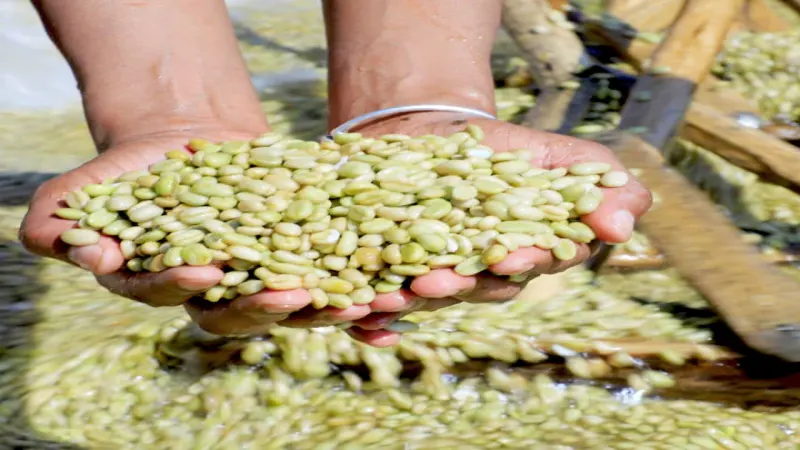
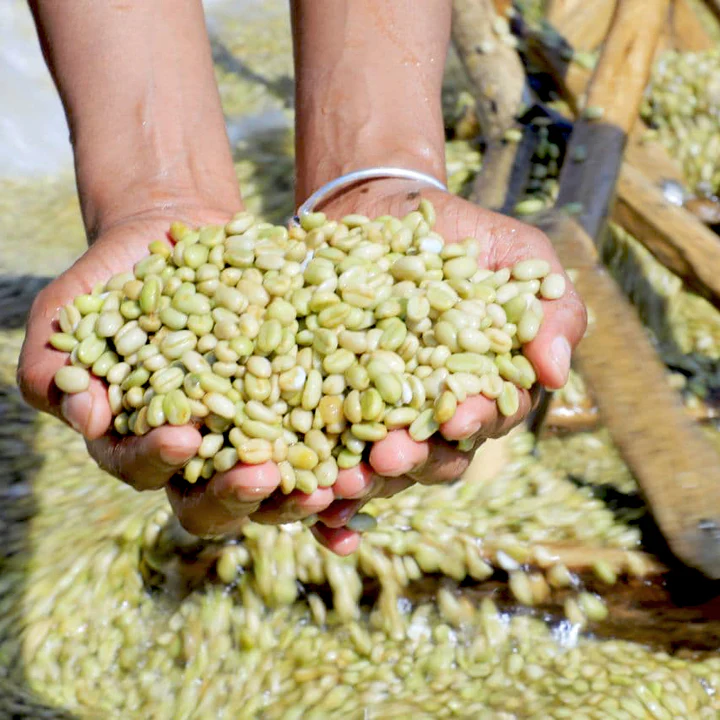
The washed processing method is a way of processing coffee beans: first remove the skin and pulp of the coffee fruit, then place it in a fermentation tank to ferment for 12 to 36 hours. The acidic substances produced during fermentation break down the pectin. After decomposition is complete, rinse the coffee beans with clean water, then spread them out to dry. Through this series of steps, the washed method can effectively remove impurities and defective beans, making the appearance of green beans more uniform.
Therefore, it is generally believed that coffee beans processed by the washed method are of higher quality and command relatively higher trading prices. However, although the washed method is often regarded as representing high-quality coffee, it does not mean that all washed beans are necessarily high quality. Front Street Coffee believes that washed coffee typically has more pronounced acidity, good cleanliness, medium body, and consistent green bean quality. The Yirgacheffe·Kochere coffee beans on Front Street's bean shelf use the traditional washed processing method.
Coffee Production Model in the Kochere Area
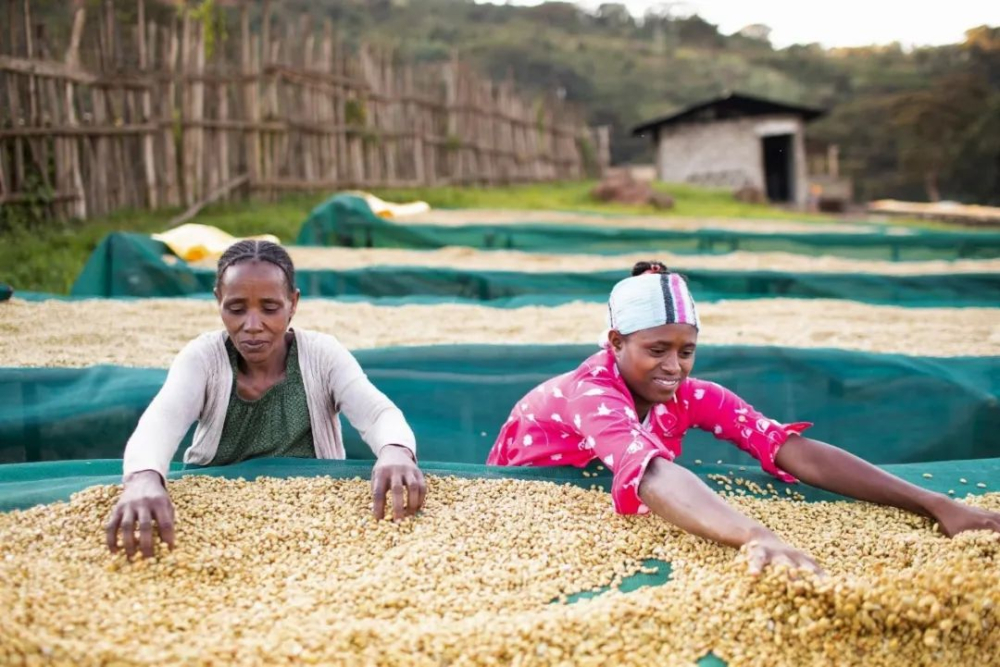
The production model in Kochere is mainly based on local smallholder farmers delivering their output batches to cooperatives for unified processing. In the local Chalalacktu village, about 100,000 people rely on coffee for their livelihood, and related production activities are their main source of income. Due to the income brought by coffee production, the local standard of living is better than in many Ethiopian villages, and health facilities are relatively well developed. Advanced processing equipment allows the Kochere region to consistently maintain a high standard in washed processing, with complex notes of molasses and citrus, clean and sweet.
Front Street Coffee's Yirgacheffe Kochere has distinctive origin flavor characteristics, with a clean and fresh lemon aroma, as well as delicate and elegant jasmine floral notes, melon, citrus, spiced tea, and other rich aromas and flavors.
Front Street Coffee Ethiopia·Kochere Coffee Beans
Region: Yirgacheffe Kochere
Elevation: 1650m-1800m
Variety: Heirloom
Processing Method: Washed
Grade: G1
Front Street Coffee Brewing Suggestions
Front Street's roasting philosophy is "freshly roasted good coffee," so that every customer who places an order receives the freshest coffee beans. The resting period for coffee is generally 4 to 7 days, so the beans arrive just when they are at their peak flavor expression. However, from the perspective of understanding coffee, even if the resting period is insufficient, you can still try it, as this allows you to experience the aroma changes of the coffee beans at different stages.
Front Street's Brewing Parameters for Yirgacheffe·Kochere Coffee Beans
Dripper: V60 #1
Water Temperature: 90-92°C
Coffee-to-Water Ratio: 1:15
Grind Size: Medium-fine grind (80% passing rate on China No. 20 standard sieve)
The brewing uses a three-stage extraction: first bloom with water at 2 times the coffee grounds weight, i.e., 30 grams of water for 30 seconds; then pour in a small stream in a circular motion until reaching 125 grams, then pause for the stage; when the water level drops and is about to expose the coffee bed, continue pouring until reaching 225 grams and stop. (Timing starts at the beginning of blooming) Extraction time is 2 minutes 10 seconds.
The flavors Front Street perceives in this coffee bean are mostly lively lemon and citrus acidity, smooth overall, with jasmine floral aroma on the entry, as well as a fruity sweet-and-sour sensation.
For professional coffee knowledge exchange and more coffee bean information, please follow Coffee Workshop (WeChat public account: cafe_style)
For more specialty coffee beans, please add the private WeChat of Front Street Coffee, WeChat ID: qjcoffeex
The above content is compiled by CoffeeHunters, a coffee news website.


