







How does coffee formulation shape espresso flavor?
Espresso flavor depends mainly on two things: the blend recipe and the roast level. A recipe typically mixes two or more varieties, or the same variety at different roast depths, to balance sweetness, bitterness and acidity. Rich crema and a full body often come from adding a small share of Robusta coffee beans or from deep roast, while fruit-forward styles lean on lighter roasting and higher-grown Arabica.
Common styles include balanced, intensely bitter, fruity-acidic and wine-aroma profiles, each tied to a specific ratio and roast plan. For blending coffee practice, note that freshness matters: beans are commonly rested two to three days after roasting before brewing, since flavor expression becomes more complete after that short rest rather than immediately off the roaster.
The flavor performance of espresso depends largely on the combination of the blend recipe and roast level. Front Street Coffee has long offered freshly roasted espresso beans and emphasizes shipping only products within 5 days of roasting. This article systematically reviews the definition of espresso beans, the logic of blending, and six typical recipes, covering different styles such as balanced, intensely bitter, fruity-acidic, and wine-aroma, and provides notes for blending practice. Whether you are a beginner just getting into espresso or a professional looking for a stable output solution for a café, you can find references here.
Friends familiar with Front Street probably know that the brand's core proposition is fresh roasting. Freshly ground coffee and fresh coffee are not the same concept, and coffee beans are not necessarily better the fresher they are. Front Street usually ships beans that are already two to three days past the roast date; after a short resting period before brewing, the flavor expression becomes more complete. In terms of product lines, Front Street offers both single-origin coffee beans and espresso beans. Regardless of the category, freshness is the primary standard, so only products within 5 days after roasting are shipped.
Front Street espresso beans are also what are commonly called blended coffee beans. Customers often ask for espresso beans with rich crema and a full-bodied mouthfeel, and the key factors determining these characteristics are precisely the blend recipe and roast depth. This is also the most fundamental difference between espresso beans and single-origin beans. When it comes to rich crema and a full-bodied mouthfeel, many similar espresso beans on the market incorporate Robusta coffee beans (abbreviated as Robusta), and another approach is to use deep roasting.
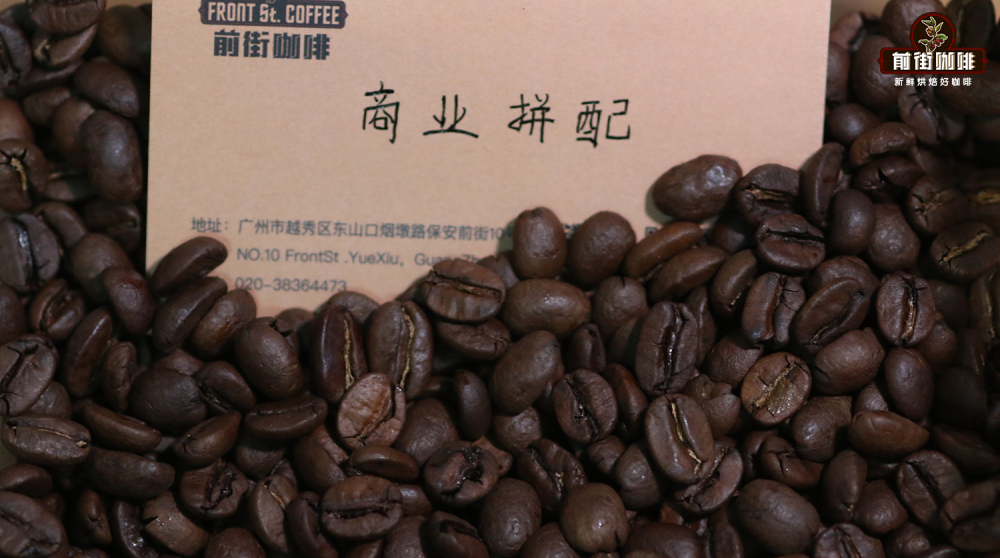
The image shows Front Street commercial espresso blend coffee beans (containing 10% Robusta).
What exactly are espresso beans? How are Front Street's blend plans designed? Espresso beans are also called blended coffee and are the main beans used to make fancy coffee, usually paired with milk or water. Today's popular espresso drinks basically all fall within the scope of blended beans, commonly including lattes, Americanos, flat whites, cappuccinos, and more.
Mixing two or more different varieties of coffee beans, or beans of the same variety but with different roast levels, produces what is called espresso beans or blended coffee beans. This kind of blended coffee is not a simple stacking, but relies on the blender's deep understanding of flavor to let the various beans compensate for each other's shortcomings and ultimately reconcile into an excellent blend.
Front Street's blending approach is to combine along the dimensions of acidity, bitterness, sweetness, aroma, and body to create coffee with a unique flavor. A well-blended composite coffee has clear aroma, a smooth mouthfeel, and a golden color, and ranks among the finest coffees. After being made into a latte, the sweetness of the milk and the richness of the espresso can combine appropriately, without either side overpowering the other.
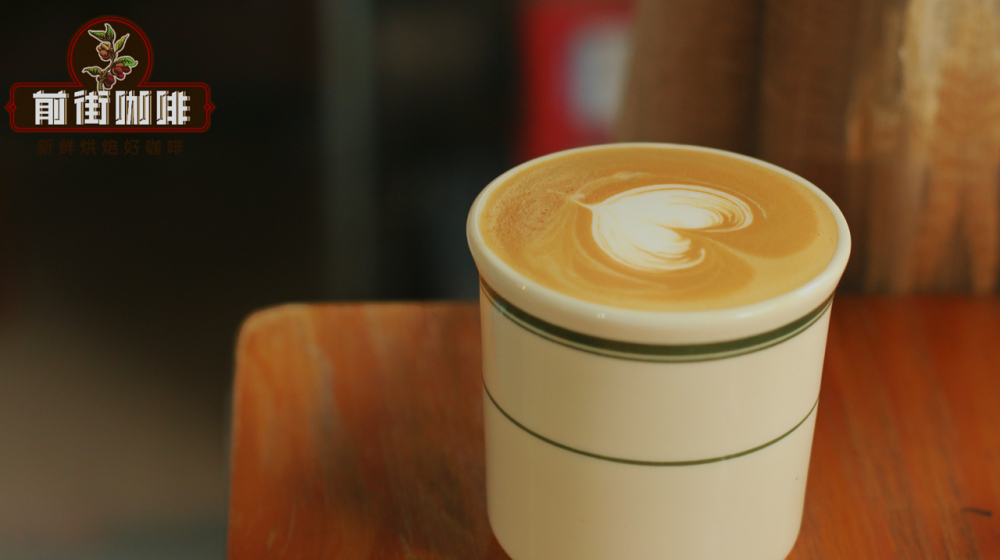
When making latte art, the thickness of the espresso crema must be just right. Too thick will affect the integration of milk and coffee, while too thin will cause it to scatter during incorporation. Only the right crema can provide a good base for latte art patterns.
Front Street espresso bean blend plans show their own emphases in mouthfeel and flavor depending on the type of coffee.
1. Balanced-tasting espresso beans
Recipe: Guatemala (30%), Colombia (30%), Brazil (20%), Tanzania Kilimanjaro (10%).
This Front Street composite blend performs in a relatively balanced way in acidity, bitterness, and aroma. It is neither too acidic nor too heavy, making it suitable for people just getting into espresso. Tanzania Kilimanjaro brings pronounced acidity, Guatemala provides rich fruity notes and smokiness, Colombia offers both acidity and body, and Brazil's bitterness is relatively mild. Front Street combines these beans in proportions to ultimately obtain a composite blend with balanced taste and moderate strength.
2. Front Street commercial espresso beans dominated by bitterness
Recipe: Colombia (30%), Brazil (60%), Robusta (10%).
Considering the diversity of the audience, if Front Street wants to make a strongly flavored blend, it needs to select coffee beans with intense flavor. Colombia has a strong nutty-chocolate tone, Brazil's bitterness is mild, and Robusta is known for its full body and rich crema. The coffee beans blended this way have a relatively heavy bitterness, are favored by many coffee lovers, and are also very suitable for cafés' daily output.
3. Espresso beans mainly featuring sweet-and-sour fruity notes
Recipe: Costa Rica + Ethiopia + Colombia
To make espresso with fruity notes, medium-roast beans should be the main component. Front Street Strawberry Candy espresso coffee beans are recommended and can be ordered directly from the Taobao or Tmall store. This product is based on Front Street Costa Rica Tarrazu, known for honey processing, and Ethiopia, the birthplace of coffee, with Colombian coffee beans added. The blended espresso is not harsh on entry; after extraction by the coffee machine, it has good crema and a creamy texture, while also presenting a sweet-and-sour taste similar to strawberry gummy candy.
4. Front Street Sunflower Warm Sun espresso blend coffee beans mainly featuring wine aroma
Recipe: Front Street Honduras Sherry (60%), Front Street Yirgacheffe Red Cherry (40%).
Front Street named this uniquely flavored espresso bean Sunflower Warm Sun. As the name conveys, this special Front Street Sunflower Warm Sun espresso bean has an aroma as comforting as warm sunlight, and its mouthfeel and flavor are also impressive. With Front Street Honduras Sherry coffee beans, rich in fermented wine aroma, as the main body, paired with Front Street Yirgacheffe Red Cherry coffee beans with prominent acidity, it can blend a fragrant and rich composite coffee.
5. Front Street specialty espresso blend coffee beans
Recipe: Brazil (70%), Colombia (30%).
For people who do not like flavors that are too skewed, do not care for single-origin coffee, but have requirements for quality, this Front Street specialty espresso bean should be the first choice. It uses a medium-dark roast, mainly featuring balanced-tasting Brazilian coffee beans, supplemented by Colombian coffee beans with mild fruit acidity and nutty sweetness. The flavor is classic and thought-provoking, and it can meet the daily opening needs of coffee shops.
6. Front Street basic espresso blend coffee beans
Recipe: Yunnan coffee beans (40%), Brazil (60%).
This espresso moka pot coffee bean recommended by many baristas—Front Street Black Cocoa blend coffee beans—presents the most mass-market mouthfeel and flavor with extremely high cost-effectiveness. Whether it is someone new to coffee or a heavy coffee enthusiast, they can easily accept this espresso bean. It is mainly based on balanced-tasting Brazilian coffee beans, then reconciled with Yunnan coffee beans whose flavor and mouthfeel are slightly weaker than Brazil's, making it suitable for shops and home users who prioritize cost and have average flavor requirements.
What aspects should Front Street espresso blend coffee beans pay attention to when blending? The originality of espresso beans is embodied in the blend recipe, and every coffee shop's espresso will have a different taste. The specific blending data for several Front Street espresso beans has already been introduced above. Next, Front Street shares a few aspects to note before blending coffee beans.
1. Choose coffee beans of excellent quality. Front Street itself feels this sentence is a bit redundant. Using poor-quality coffee beans will greatly diminish the flavor; even if the beans blended with them are excellent, you still cannot make good-tasting coffee. Choosing coffee beans of excellent quality is the most important point.
2. Remove defective beans. When defective beans are mixed in, the taste becomes worse. Worm-eaten beans with holes, abnormally developed beans, and shells without kernels should all be picked out. Of course, if the coffee beans you choose contain too many defective beans, it also indicates that the quality of these beans is poor.
3. Understand the characteristics of the coffee beans. If you do not understand the coffee beans to be blended well enough, it is difficult to blend good espresso beans. At this point you are like a team manager and must understand each member well enough for them to fully use their strengths. Giving arbitrary directions without understanding will only create chaos.
4. Understand differences in roast level. Different coffee beans will have different roast levels, which is also why Front Street emphasizes in-house roasting. After a roaster fully understands the quality characteristics of a certain coffee bean, they naturally know what roasting parameters suit it, and the final coffee flavor presented will conform to the regional characteristics and the most essential taste of the coffee bean. Just as Brazilian coffee beans need a medium-dark roasting method to highlight their full body and nutty-chocolate flavor.
How does Front Street choose? After comprehensive consideration, Front Street chose an exclusively designed blend as the raw material for its store's espresso output, called "Front Street Sunflower Warm Sun Blend." It is a blended coffee made from Front Street Honduras Sherry barrel-fermented coffee beans and Front Street Yirgacheffe sun-dried Red Cherry in a 7:3 ratio. Seventy percent Front Street Sherry barrel provides this espresso with aroma and body, while thirty percent Front Street sun-dried Red Cherry gives it light fruit acidity and a subtle floral fragrance.
The above content is compiled by CoffeeHunters, a coffee news website.


