







Why Does Black Bean Coffee From Brazil Taste Burnt?
Brazilian beans are usually medium-dark roasted, so some bitterness is built into the cup. Nutty, chocolatey and caramel-like bitterness is pleasant; smoky, woody, medicinal or burnt notes are defects. Fixing the burnt taste comes down to the brew: a pour-over dripper, a moderate dose around 15 g, a ratio near 1:15, medium-fine grind, water around 90C and a steady three-pour technique.
Front Street Coffee uses Cerrado region beans to show the steps in order: pick the dripper, weigh the dose, set the coffee-to-water ratio, dial in grind size, then control water temperature and pouring. With those variables in line, the cup keeps its creamy body and caramel, roasted chestnut and spice aroma while the harsh, throat-irritating bitterness stays out, much like the sweetness people look for when asking is americano bitter or sweet.
Many coffee enthusiasts, after getting their hands on Brazilian beans, find that the brewed coffee has a distinct bitterness, sometimes even a burnt, throat-irritating discomfort. Brazilian coffee beans are mostly medium-dark roasted, and a bitter tone is inherently part of their flavor profile, but bitterness can be positive or negative—nutty, chocolatey, caramel-like bitterness is pleasant, while smoky, woody, medicinal, and burnt notes are defects. Front Street Coffee uses beans from Brazil's Cerrado region as an example, breaking down step by step—from dripper choice, dose, coffee-to-water ratio, grind size, and water temperature to the three-pour technique—how to brew a cup of full-bodied, sweet Brazilian pour-over with rich caramel and nutty flavors, while avoiding the development of negative burnt bitterness.
For more specialty coffee knowledge, please follow our WeChat official account: FrontStreet Coffee
A friend bought a bag of Brazilian beans and found the brew very bitter, so they came to ask Front Street how to brew it. Here Front Street will share the pour-over brewing method for Brazilian coffee.
Brazilian coffee beans generally use a medium-dark roast level, so their most basic flavor tone is bitterness. So it's normal for Brazilian coffee to be bitter. However, bitterness is divided into good and bad. Good bitterness, such as nutty, chocolatey, and caramel-like flavors, we call positive flavors. Since there are positive flavors, there will of course also be negative bitter flavors. Common ones include smoky, woody, medicinal, and burnt notes, which generally present an unpleasant, throat-irritating, harsh sensation.
So, if the coffee you brew has a positive-flavor bitterness, that's normal; if the brewed coffee has a negative-flavor bitterness, then you need to keep reading.
Besides the bitterness mentioned above, Brazilian coffee has other appealing aspects, such as its alluring aroma—originally referring to the fragrance given off by this strong, bitter dark-roasted black coffee. These aromas are a composite of nuts, caramel, roasted chestnuts, cream, and spices. It's hard for people to resist the temptation of such aromas. Many friends have slowly fallen into coffee starting from the aroma. The creamy, full-bodied mouthfeel is also an unparalleled characteristic of Brazilian and other dark-roasted coffees.
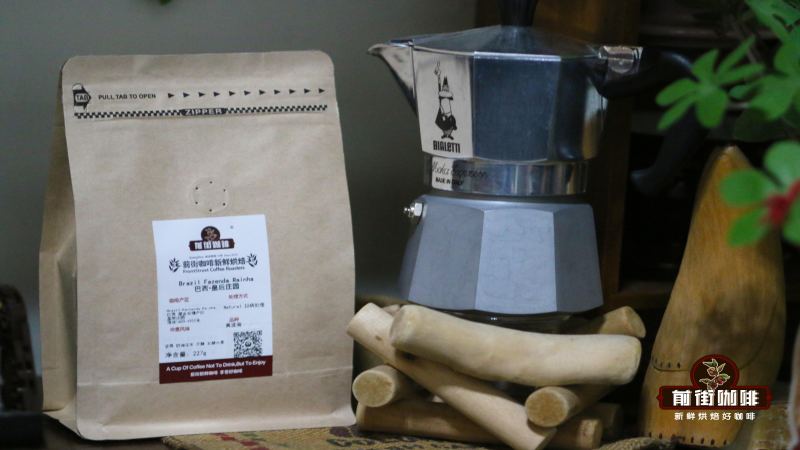
So how should Brazilian coffee beans be brewed? Front Street uses coffee beans from Brazil's Cerrado region for a demonstration. This coffee bean is also the representative bean of the Brazil region in Front Street's daily-drink bean series. Since Front Street Brazil Cerrado coffee and Front Street Brazil Queen's Estate both have rich nutty aromas and a balanced mouthfeel, they are suitable for various extraction methods and can be made into moka pot coffee, Americano, siphon coffee, drip bag coffee, and more. You can purchase them at Front Street's Tmall flagship store.
For the dripper choice, Front Street chose the Kono Meimon dripper. The Kono dripper's biggest feature is that the ribs extend from the bottom to the middle, with the upper part being a smooth dripper wall, so when the filter paper adheres to the dripper, water cannot "sneak" around the coffee grounds and escape, enhancing the body and richness.
The dose Front Street uses is still 15g. More coffee grounds isn't necessarily better, nor is less necessarily better—it depends on the dripper size. Front Street uses a 1-2 cup dripper, and a dose of 15-20g is a reasonable brewing dose; brewing outside this range will be somewhat difficult.
For the brewing coffee-to-water ratio, Front Street recommends 1:15. Although some suggest using 1:13 or a smaller ratio, Front Street has shown in previous articles that concentration and body are not necessarily related. Moreover, too strong a brew can cause discomfort. Therefore, using a 1:15 coffee-to-water ratio can also well express the full-bodied mouthfeel of Brazilian coffee beans.
For the coffee grind size, Front Street uses a No. 20 sieve with a 70% pass-through rate. The grind size for brewing Golden Mandheling coffee should be a bit coarser than light-roasted coffee beans, because Golden Mandheling uses a dark roast, and its structure is relatively loose, making it easier to absorb water and release coffee substances. If ground to the fineness of light-roasted beans, it easily brews out burnt bitterness; if ground coarser, the coffee becomes thin and tasteless, with a mouthfeel as thin as water.
For the water temperature choice, Front Street recommends brewing at 87-88℃. For the same reason as grind size, too high a water temperature easily produces burnt bitterness, while too low a water temperature makes the coffee taste flat and produces an unpleasant sourness.
The brewing method uses a three-pour technique. Dividing into three pours can better express Brazilian coffee's full-bodied mouthfeel and caramel sweetness. The specific water distribution is: the first pour, the bloom, is 30ml, which fully wets the coffee grounds for degassing to allow better extraction of flavor substances later; the second pour is 100ml; the final pour is 95ml to enhance the coffee's sweetness, overall presenting a substantial, full-bodied mouthfeel with caramel sweetness and chocolate, nutty flavors.
The above content is compiled by CoffeeHunters, a coffee news website.


