







Where did geisha coffee originally come from?
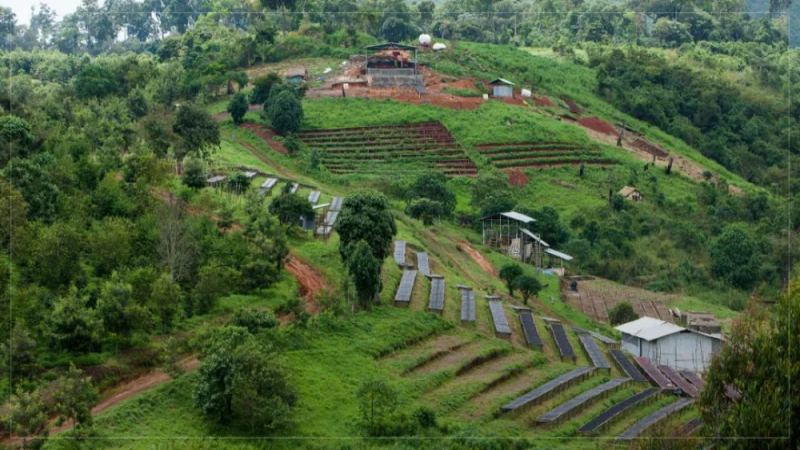
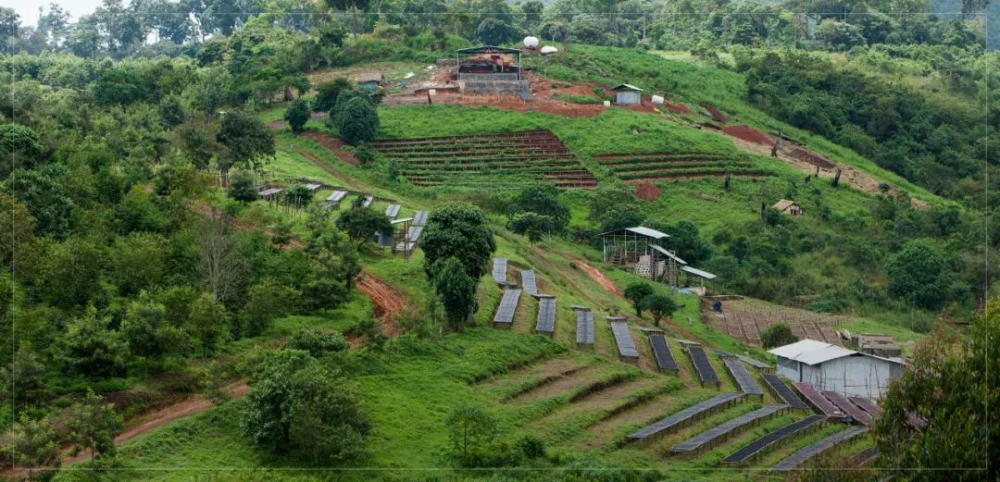
Gesha Village Coffee Estate in Ethiopia's Bench-Maji region was co-founded by American documentary director Adam Overton and Ethiopian photographer Rachel Samuel, with help from Dutch coffee professional Willem Boot. The team located a primitive forest they believe shares the same origin as Panama Geisha, and the estate grows only the Geisha variety under a five-tier grading system: Auction, Gold, Red, Green and CHAKA.
The variety was first collected in 1931 on Geisha Mountain in Ethiopia, then moved through research stations before reaching Panama. By 2004 Willem Boot judged the BOP competition, the first time Geisha appeared on that stage, and in 2006 he bought La Mula and planted 6,000 Geisha trees; La Mula won the natural Geisha group in 2014.
Geisha coffee is now popular all over the world, but where exactly are its roots? The Gesha Village Coffee Estate in Ethiopia was co-founded by American documentary director Adam Overton and Ethiopian photographer Rachel Samuel. With the assistance of Dutch coffee professional Willem Boot, they found a primitive forest in the Bench-Maji region that shares the same origin as Panama Geisha. The estate only grows the Geisha variety and has established a strict grading system of Auction, Gold, Red, Green, and CHAKA. This article will comprehensively sort out the origin, variety composition, plot division, and characteristics of each grade of Gesha Village Coffee Estate, and share the cupping flavors and brewing suggestions of several Geisha coffees from Front Street Coffee.
The Origin and Development of Gesha Village Coffee Estate
Gesha Village founder Adam Overton is from the United States. His original profession was not in the coffee industry, but rather that of a documentary director. His partner Rachel Samuel is Ethiopian and also a photographer. In 2007, the two received a commission to go to Ethiopia to shoot a documentary about coffee. As the filming deepened, their contact with the local land and people became increasingly close, and the idea of owning their own estate was born from this.
In 2009, they met Willem Boot. This Dutchman came from a family that ran cafes, later moved to the United States, and went to work for the roasting machine company Probat. In 2004, he served as a judge for the BOP competition, which was also the first time the Geisha variety appeared on the competition stage. After taking one sip, he was extremely amazed and full of praise. Because of this, in 2006 he bought the then-unknown La Mula estate and planted 6,000 Geisha trees there.
In the 2014 BOP competition, La Mula estate entered for the first time and immediately won the championship in the natural Geisha group and eleventh place. Well-known estates such as Hacienda La Esmeralda, Kotowa, and Elida were unexpectedly defeated by this estate that had only been established for 8 years. But Willem Boot's most desired goal was to return to Ethiopia and find the land where Geisha was originally born.
In 1931, the coffee variety Geisha was discovered in a forest in Ethiopia called Geisha Mountain. Later, it was brought back to Costa Rica by Don Pachi for cultivation and transferred to other estates. At first, its yield was extremely low, but it had strong resistance to mold and a tall tree shape, so it was often planted by many estates at the edges as a windbreak. It was not until 2004, when Hacienda La Esmeralda separated it out and sent it to the competition, that it became famous overnight.
After meeting with Willem Boot, Adam and his wife became even more determined to establish a Geisha estate in Ethiopia. So they flew to Addis Ababa, the capital of Ethiopia. At first, they hoped to build the estate closer to the capital, but combining the microclimate, soil, and other natural conditions observed in Panama, they ultimately chose to settle in the Bench-Maji region, located in southwestern Ethiopia near South Sudan. Many places in this area are called Geisha Village, and it is also the region most likely to contain original Geisha. So they decided to establish an estate here and named it "Gesha Village Coffee Estate."

In 2011, Willem Boot came to the estate's groundbreaking ceremony and served as an estate consultant. Amazingly, in a primitive forest not far from the estate, in an area the locals call Gori Geisha, they discovered native coffee varieties very similar to those at La Mula estate. The entire forest was filled with the aroma of coffee flowers. They firmly believed that this was the place where Geisha had originally been found, and that this variety was the original native variety. Subsequent variety identification also confirmed this judgment. So the estate planted two types of Geisha: one was the Gori Geisha from this forest, and the other was the originally discovered Geisha 1931 variety.
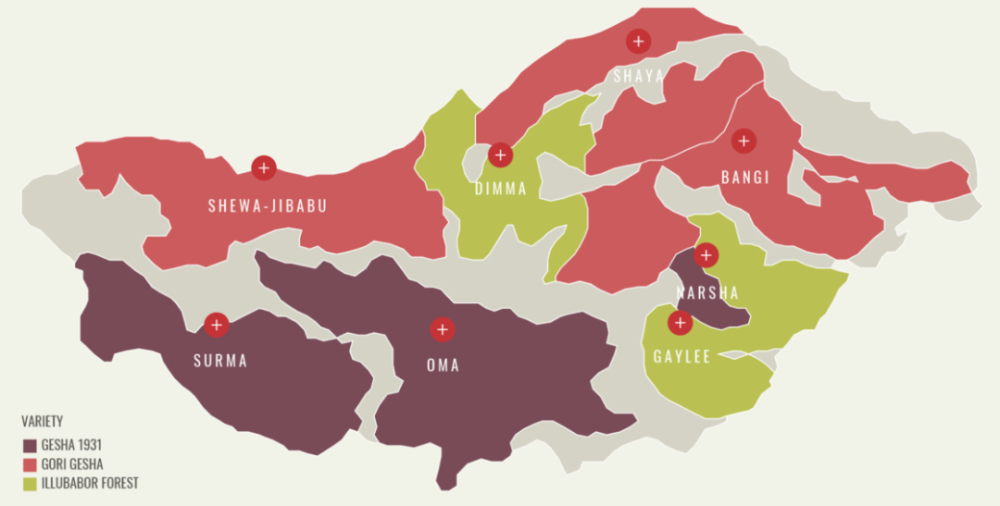
Only a few estates in the world can hold their own auctions, the most famous including Panama Hacienda La Esmeralda, Guatemala El Injerto, Brazil Daterra, Nicaragua Mierisch, and Ethiopia's Gesha Village Coffee Estate. Gesha Village Coffee Estate is completely different from the vast majority of Ethiopian farms. It is not a small farm, but a large farm covering 500 hectares, with its own washing station and laboratory, located in the southwest near the Sudanese border. Most specially, the entire farm only grows the Geisha variety, rather than the usual Ethiopian heirloom varieties whose exact varieties cannot be determined. Gesha Village divides the farm into 8 blocks and grows 3 main Geisha varieties. The Geisha seeds are all collected from nearby forests, not from Panama.
The Grading of Gesha Village
From the estate owner's plot division, it can be seen that the western part of Gesha Village Coffee Estate is planted at relatively high altitude, especially the three blocks OMA, SURMA, and SHEWA-JIBABU, with altitudes between 1900-2069 meters, among which SHEWA-JIBABU has the highest average altitude. The southern part of the estate has a relatively higher shade ratio, while the northern part receives longer sunlight. Among the estate's eight blocks, Adam selected the most suitable variety for each block based on differences in microclimate such as altitude, soil conditions, and shade conditions, ensuring that each block develops different flavor characteristics.
Front Street needs to remind everyone of one point: the Geisha grown in Ethiopia's Gesha Village is not the Geisha variety that became famous in Panama. Gesha Village has 3 Geisha varieties: Gori Gesha, Geisha 1931, and Illubabor Forest. Gori Gesha and Geisha 1931 are related by blood to the Panama Geisha variety, but they are still not the same variety. Among them, Geisha 1931 exhibits characteristics very similar to Panama Geisha, while Illubabor is a disease-resistant variety provided by the Ethiopian research institute.
In order to ensure the quality of the Geisha coffee produced by Gesha Village Coffee Estate, Adam established a strict grading system, dividing Geisha into different grades: Auction, Gold, Red, Green, and CHAKA.
Gesha Village Auction
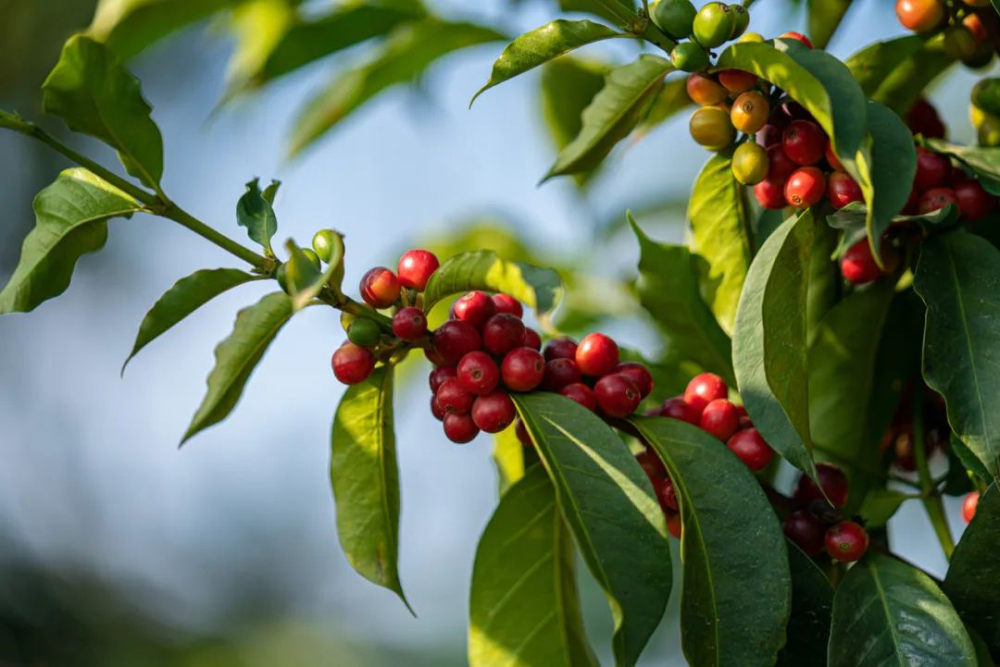
The Gesha Village Auction lot is the top-level lot and can only be obtained through buyer bidding. The production of Gesha Village Auction Geisha accounts for only 3.7% of the annual output. This lot of Geisha coffee undergoes multiple strict screenings.
Gesha Village Gold
Gesha Village Gold Geisha is a lot often purchased by competitors around the world and roasters with high quality requirements. It accounts for about 10% of the estate's annual output and has detailed traceability information. The Gold lot Geisha purchased by Front Street offers complex and rich flavors. During cupping, one can feel the charm of this lot of Geisha coffee. Whether it is the uniqueness of the dry aroma or the sipping flavor, mouthfeel, and aftertaste, it leaves a lingering impression.
FrontStreet Coffee Ethiopia Gesha Village Coffee Estate Gold Geisha
Region: Ethiopia Bench-Maji
Estate: Gesha Village Coffee Estate Oma Block
Altitude: 1900-2040 meters
Variety: Geisha 1931
Processing Method: Natural
Flavor: Citrus, berries, cream, caramel, melon, honey
Gesha Village Red
Gesha Village Red also has complete traceability information and accounts for 15% of total annual output. It is high-quality Geisha coffee with an SCA cupping score of 88 or above. Although the intensity and complexity of the flavor cannot compare with the Gold and Auction lots, Red has a very classic Gesha Village flavor. Front Street believes this is a very cost-effective Geisha lot and worth buying for Geisha enthusiasts.
FrontStreet Coffee Ethiopia Gesha Village Coffee Estate Red Geisha
Region: Ethiopia Bench-Maji
Estate: Gesha Village Coffee Estate Shewa-Jibabu Block
Altitude: 1973-2069 meters
Variety: Gori Gesha
Processing Method: Natural
Flavor: Lemon, plum, citrus, tropical fruit, floral tea
Gesha Village Green
The Gesha Village Green lot refers to a single-block and single-variety lot. The Green lot provides complete traceability information for each lot number, including the farm block name, coffee variety, and processing date. Compared with the Red and Gold lots, Green does not have a cupping score requirement, so it can be said to be an entry-level single-block Geisha lot.
FrontStreet Coffee: Ethiopia Gesha Village Coffee Estate Green Geisha
Region: Ethiopia Bench-Maji
Estate: Gesha Village Coffee Estate Bangi Block
Altitude: 1911-2001 meters
Variety: Gori Gesha
Processing Method: Natural
Gesha Village CHAKA
Unlike other lots from Gesha Village Coffee Estate, CHAKA blends Geisha coffee beans from all blocks on the estate and from the entire annual production season, including the three Geisha varieties grown in Gesha Village: Geisha 1931, Gori Gesha, and Illubabor. This coffee bean has two natural processing methods, washed and natural. The batch Front Street obtained uses the natural processing method.
First, impurities and unripe cherries are removed through flotation, then the cherries are spread in thin layers on African raised beds covered with plastic sheeting for sun drying. During the drying process, they need to be turned regularly, and hand sorting is also carried out to remove beans with uneven color. The total drying time is 18-30 days. In order to retain more fruit acidity, Front Street chose a medium-light roast. Through cupping, Front Street found that Gesha Village CHAKA presents flavors of floral aroma, citrus, berries, cream, oolong tea, and cane sugar.
Green Bean Analysis
The green beans are smaller than Panama's. Washed Geisha green beans have a very beautiful blue-green color, while natural Geisha green beans have a beautiful green with a slight yellow tint, a warm jade-like texture, and smell of fresh grass, peach, berries, and the unique milky sweetness of oolong tea that most coffee beans do not have. It seems that aroma and flavor are things that greatly require association, but the faint tea note is something we can clearly perceive.
Cupping:
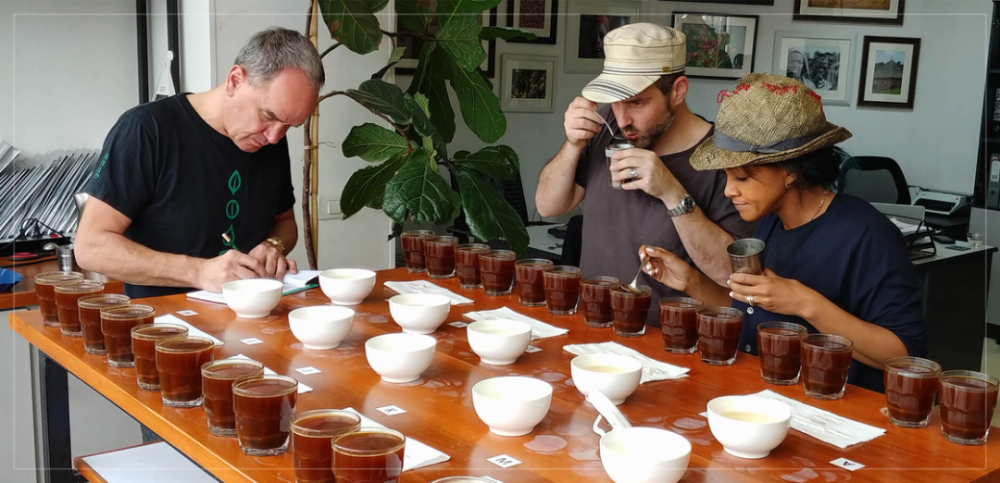
The dry aroma is vinous and apricot. The wet aroma has a sweet orange juice quality, jasmine floral notes, sweet peach, vinous aroma, pineapple, bright and rich. Sipping reveals citrus, tropical fruit aroma, ripe fruit aroma, berry notes, citrus, light fermented vinous aroma, clear and bright acidity, smooth texture, grape, maple syrup, wild ginger flower, delicate fruit acidity, a clean and balanced mouthfeel, and a lingering, lively finish of fruity sweetness.
Brewing Recommendation:
Front Street believes that Geisha coffee, with its rich and varied fruit flavors, is best extracted by pour-over to experience the aroma of the coffee extraction. The preparation before brewing is very important. Since these are high-quality coffee beans, if you want to taste the complete aroma of the coffee, Front Street recommends choosing freshly roasted coffee beans. Because all coffee has a period during which its flavor is at its best, generally 7-30 days after roasting, and only during this time will brewing not waste these good coffees. The coffee beans shipped by FrontStreet Coffee are all roasted within 5 days, which ensures that the coffee beans everyone receives after placing an order are the freshest, and at that time they are exactly in the best flavor period.
The flavor of Geisha coffee is renowned worldwide for its rich floral aroma and complex fruit tonality. The roasters at Front Street hope to retain more of Geisha's high-quality acidity, so they choose a medium-light roast (with slight adjustments made for different lots). Under this roast level, the high hardness of the bean quality from high altitude is not changed much, so brewing requires increasing the extraction rate to present a fuller flavor layering. A relatively high water temperature and a finer grind size are used here to stimulate more aromatic substances. In addition, Front Street hopes the flavor expression of Geisha coffee will be clearer, so it widens the coffee-to-water ratio a little, using 1:16.
In order to improve the extraction rate of Geisha coffee, avoid over-extraction, and at the same time highlight the sweet and sour flavor layers, the baristas at FrontStreet Coffee use a V60 dripper. The body of the V60 dripper has ribs connecting the top and bottom and a large central hole that speeds up the flow of water, while the spiral-shaped vent groove design lengthens the water flow path and increases the contact time between coffee grounds and hot water. Each stream of water converges along the grooves toward the center of the dripper, concentrating the pressure on the coffee grounds and making the extracted coffee richer in layering.
Dripper: V60
Water temperature: 91-92℃
Coffee dose: 15g
Coffee-to-water ratio: 1:15
Grind size: fine granulated sugar size (80% passing a No. 20 sieve)
Three-stage extraction: In the first stage, use 30g of water to bloom for 30 seconds, pouring evenly in circles to form a dome. In the second stage, pour 95g of hot water. When the coffee bed drops to halfway, begin pouring the third stage of 100g until all the coffee has finished dripping. Note to start pouring from the center point, using a gentle, small stream in circles throughout, to avoid uneven extraction.
The pour-over Gesha Village Red Gori Gesha tastes of tropical fruit, bergamot, and lemon, with creamy sweetness mixed with fermented notes. As the temperature cools slightly, jasmine floral notes gradually unfold.
For professional coffee knowledge exchange and more coffee bean information, please follow Coffee Workshop (WeChat public account: cafe_style)
For more specialty coffee beans, please add the private WeChat of FrontStreet Coffee: qjcoffeex
The above content is compiled by CoffeeHunters, a coffee news website.


