








Which Coffee Producing Regions Give Kenya Its Fruity Acidity?
Kenyan coffee is known for intense acidity and fruit notes that recall smoked plum and cherry tomato. The main coffee producing regions sit on volcanic soils between 1,600 and 2,100 meters, running from the area around Nairobi into the surrounding highlands, where cooler temperatures slow cherry growth and concentrate aromatic compounds in the bean.
The SL28 and SL34 varieties carry much of that character, and the K72 washed method, with its long fermentation and soaking steps, shapes the bright acidity further. Coffee was not commercialized in Kenya until the early 1900s, yet the country's two rainy seasons and two harvests helped it become a specialty coffee reference within a few decades.
Kenyan coffee is renowned for its intense acidity and fruit notes reminiscent of smoked plum and cherry tomato, making it a favorite among specialty coffee enthusiasts. Starting from the flavor profile of Front Street Kenyan coffee, this article systematically reviews the cultivation history of Kenyan coffee, its main producing regions, the characteristics of the SL28 and SL34 varieties, and how the famous K72 washed processing method shapes its bright acidity. It also introduces brewing and roasting suggestions for Front Street's Cherry Tomato coffee beans, giving you a comprehensive understanding of why Kenyan coffee is so rich in fruity acidity.
For more specialty coffee knowledge, please follow: Front Street Coffee ( Frontsteet Coffee )
Front Street Kenyan coffee has flavors of smoked plum and cherry tomato on entry, with intense, full-bodied acidity, prominent mid-palate sweetness, black plum-like juiciness, and a finish of berry and brown sugar sweetness accompanied by a faint tea-like aroma. This is why it is so beloved by coffee enthusiasts. Today, Front Street will share some knowledge about coffee from this country.
Although it neighbors Ethiopia, the birthplace of coffee, Kenya's coffee industry developed relatively late—coffee was not commercialized in Kenya until the early 1900s. In just a few decades, Kenyan coffee grew into one of the world's leading representatives of specialty coffee.
Overview of Kenyan Coffee Cultivation
Kenya is located in East Africa, with the equator running through its center and the East African Rift Valley stretching north to south. It borders Somalia to the east, Tanzania to the south, Uganda to the west, Ethiopia and Sudan to the north, and the Indian Ocean to the southeast. The country is mostly plateau, with an average elevation of 1,500 meters.
Situated in the tropics, Kenya has two concentrated rainy seasons each year, resulting in two harvest seasons. Coffee is mainly grown in volcanic areas at elevations of 1,600–2,100 meters, from the capital Nairobi to the mountains surrounding Kenya. This altitude is suitable for developing coffee bean flavor because the cooler mountain temperatures slow growth, allowing the aromatic components of the coffee beans to fully develop, making the fruity acidity more pronounced and the texture harder. This fertile, crescent-shaped coffee zone is the main producing area for Kenya's specialty beans.
French missionaries transported Bourbon coffee seeds from the island of Bourbon (now known as Réunion) to the Kenyan coast in the late 1800s. According to research by Front Street, John Paterson introduced the plant to Kenya in 1893 on behalf of the Scottish mission. This coffee was first introduced to Kenya's fertile Kiambu-Kikuyu region in 1896. By 1912, the area had plantations covering hundreds of acres, mainly growing Bourbon and Kent varieties. After independence in 1963, local Kenyan farmers applied the expertise they had long acquired, creating today's high coffee quality standards. Currently, more than 50% of Kenyan coffee is produced by smallholder farmers.
Kenya places great emphasis on cultivating coffee varieties. SL28, discovered through research by a professional team, is a direct branch of Bourbon coffee beans and represents the finest quality and flavor of Kenyan coffee. Kenya, located in East Africa and bordering the ancient coffee country of Ethiopia, is a world-famous coffee producer of extremely important status, and its coffee has always been renowned for its high quality. Its bold acidity and rich, aromatic fruit flavors, such as blackcurrant and grapefruit, form the rugged and mature character of Kenyan coffee.
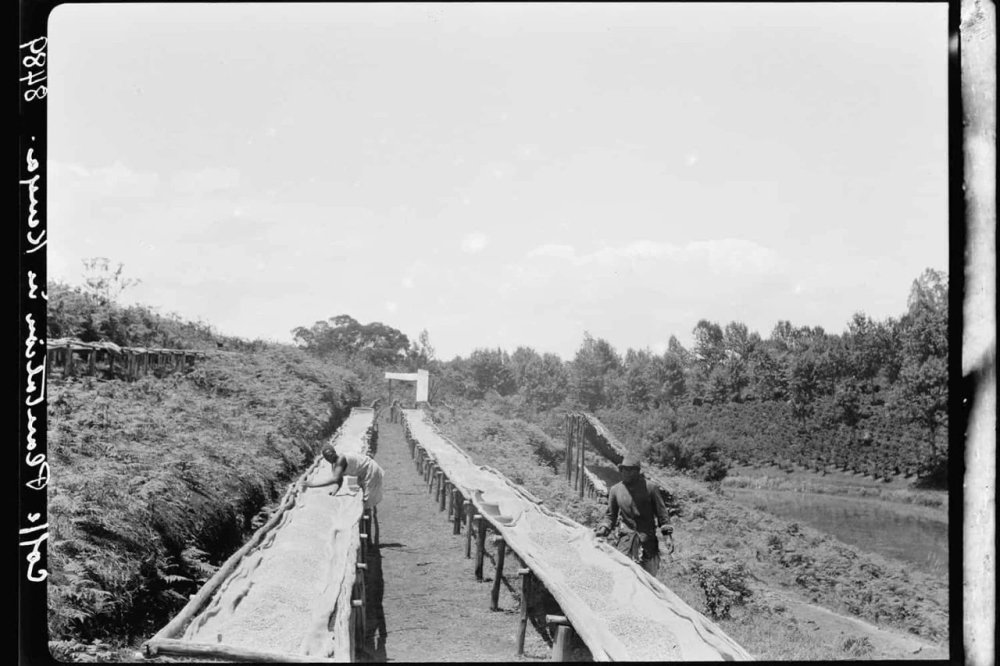
Kenyan Coffee Producing Regions
Kenya's position along the equator provides a unique climate suitable for growing coffee. The deep, fertile volcanic soil and well-drained high-altitude areas are particularly suited to Arabica varieties, and the acidic soil gives the coffee produced here a bright, uplifting, high-quality fruity acidity. Most Kenyan coffee grows at elevations between 1,400 and 2,000 meters, at temperatures between 15 and 24 degrees Celsius, in deep, well-drained red volcanic soil.
Kenyan coffee cultivation is concentrated in 6 producing regions, including: Thika, Kirinyaga, Mt. Kenya West, Nyeri, Kiambu, and Muranga. Of this, 60% of production comes from the central regions of Thika, Nyeri, Kirinyaga, Muranga, and Kiambu. These areas have fertile volcanic soil, just the right amount of sunlight and rainfall, allowing coffee cherries to fully absorb nutrients and develop plump fruit flavors.
SL28 and SL34
These are Kenya's two most representative high-quality coffee varieties, having won over the world with their bright fruity acidity and elegant smoked plum and blackcurrant flavors. SL refers to Kenya's Scott Laboratories. In the 1930s, a large-scale coffee berry disease outbreak occurred in Kenyan coffee trees, so Scott Laboratories was commissioned by the government to begin breeding disease-resistant new varieties. Among the research results, No. 28 and No. 34 had strong disease resistance and outstanding flavor. Farmers were then encouraged to widely cultivate these two varieties.
SL28, as a drought-resistant variety, exhibits wine-like high acidity in cupping, with a rich, syrupy mouthfeel and deep, intense fruity aromas. SL34 has lineage from French missionaries, Bourbon, and more Typica. With bronze leaf color and broad bean-shaped beans, it has excellent sweetness, balance, and complex, varied flavors, along with distinctive citrus and smoked plum characteristics.
Kenyan Coffee Flavor
Kenyan coffee is known for its vivid and complex berry and fruit flavors; its solid fruity acidity and sweet juiciness leave a lasting impression. In addition to the phosphoric acid content in Kenya's local soil, the garlic-like note of blackberry is also due to Kenya's most famous K72 washed processing method.
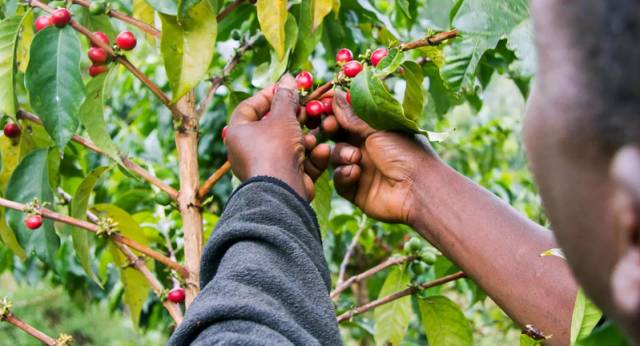
Washed beans typically have brighter acidity because the wet fermentation in processing is semi-aerobic fermentation, and semi-aerobic fermentation breaks down sugars in the coffee beans, producing more organic acids, so washed beans taste more acidic! Generally speaking, fermentation time does not exceed 36 hours! But Kenya is different from its neighboring countries—its coffee washed processing fermentation time is a full 72 hours!
However, this is not a single continuous soaking fermentation, but is divided into three rounds of 24 hours each. After each round of fermentation, fresh clean water is replaced for re-soaking, until the full 72 hours of fermentation is complete, after which the coffee beans are sent to the next step! Therefore, this unique washed processing is called Kenyan-style 72-hour fermentation washed processing, abbreviated as K72. Precisely because the fermentation time is double or more than others, Kenyan beans have a more abundant acidity! It is worth mentioning that the drying process in processing is also very particular! Kenyan coffee farmers do not casually spread coffee beans out on any flat ground to dry, because this easily breeds "wild" flavors.
They dry the beans on specially made steel plates. The steel plates are suspended in the air, away from the ground, so the coffee beans do not easily absorb dust and ash from the ground. The steel plates have evenly spaced holes of uniform size, which allow the beans to dry more evenly and ventilate better during the drying process. With fewer unstable factors, Kenyan coffee has a cleaner taste experience, and this specially designed steel plate is called the "Kenyan steel bed."
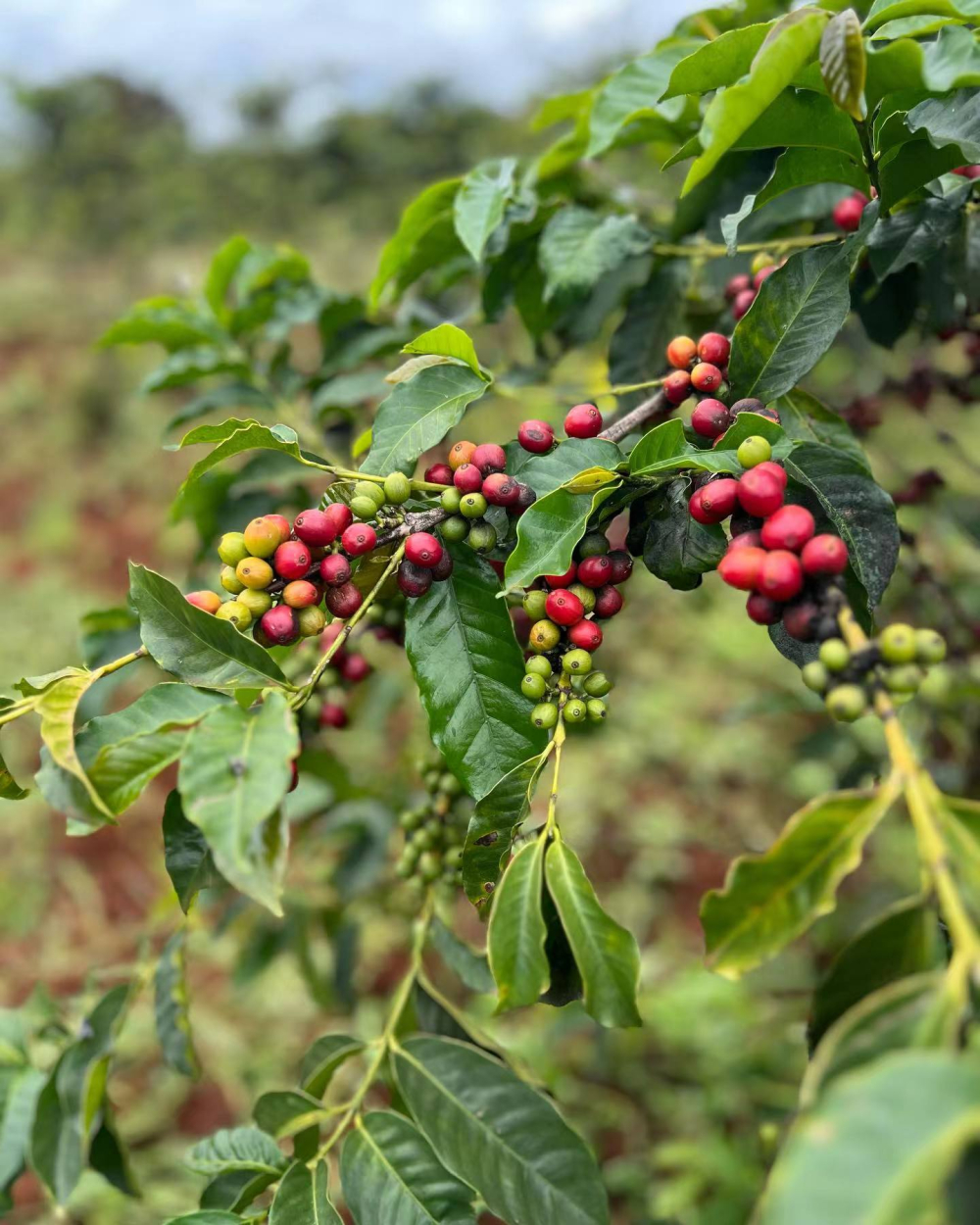
Front Street's own-roasted Kenyan Cherry Tomato coffee beans use K72 72-hour washed processing, selected from high-quality local SL28 and SL34 varieties, at the highest local AA grade. To highlight its plump floral and fruity flavors, Front Street uses a medium-light roast, allowing you to brew it in various ways such as pour-over, cold brew, ice drip, French press, siphon, and Clever Cup. Those curious about what Kenyan coffee tastes like might want to give it a try—just place an order at Front Street's Tmall flagship store or Front Street's Taobao store.
Front Street Brewing Suggestions
Coffee-to-water ratio: 1:15
Coffee grounds: 15g
Total water: 225ml
Water temperature: 90℃~91℃
Grind size: fine granulated sugar coarseness | EK43s setting 10 (80% passing through No. 20 standard sieve)
The barista at Front Street Coffee will use a three-stage extraction. After grinding the coffee, pour it onto the filter paper, start pouring 30g of water from the center for a 30-second bloom, making sure to keep a slow, steady circular pour from inside to outside throughout. For the second stage, pour 95g of water, and once the coffee liquid has nearly finished draining, begin pouring the third stage of 100g, until all the coffee has filtered through, then remove the dripper. The time is about 2 minutes, with a margin of about 10 seconds.
The above content is compiled by CoffeeHunters, a coffee news website.


