







What Is Kopi Luwak and How Does Kochere Coffee Differ?
Kopi luwak is coffee made from cherries eaten and excreted by the Asian palm civet, an Indonesian origin that draws attention for its unusual processing rather than for a flavor profile shared with other coffees. Yirgacheffe Kochere from Ethiopia sits at the opposite end of specialty coffee, prized for bright acidity, floral aroma, and a clean washed cup.
Kochere lies about 25 miles south of Yirgacheffe town inside the Gedeo zone, where smallholders deliver cherry to cooperatives. Beans are graded G1, grown between 1,650 and 1,800 meters, and processed both washed and natural, which changes the cup noticeably. Luwak coffee taste, by contrast, depends on the civet's digestion and the subsequent roast.
Yirgacheffe, as Ethiopia's most iconic specialty coffee region, has won over countless coffee lovers with its bright acidity and elegant floral aroma. Among them, coffee beans from the Kochere area are hailed as one of the best origins in southern Ethiopia. This article will comprehensively analyze the characteristics of Front Street Yirgacheffe Kochere coffee beans from multiple dimensions, including the region's background, the flavor differences between washed and natural processing methods, the appearance comparison of green beans and roasted beans, roasting curves, and brewing parameters. Whether you are a coffee novice just starting out or a flavor explorer seeking to advance, you will find practical reference information here.
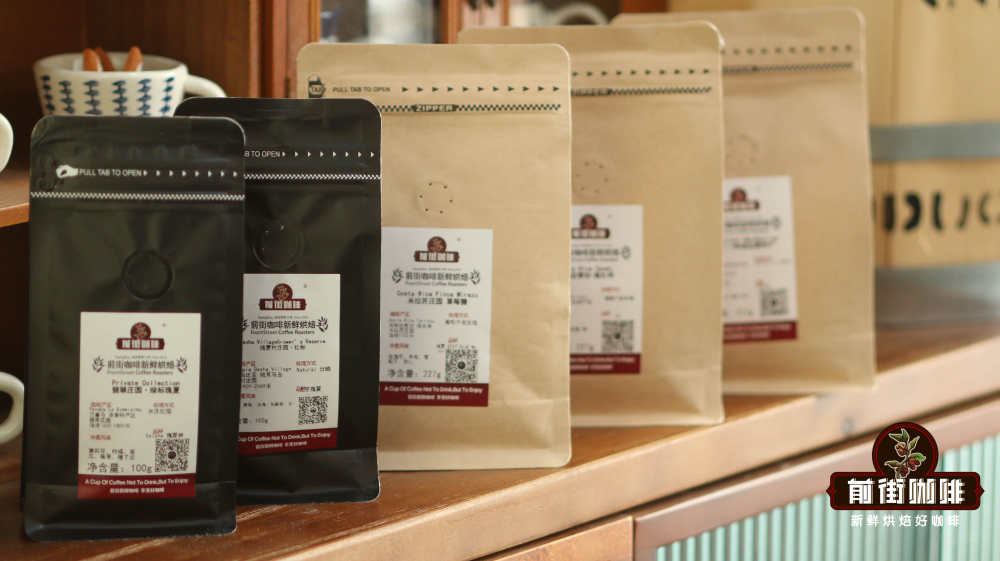
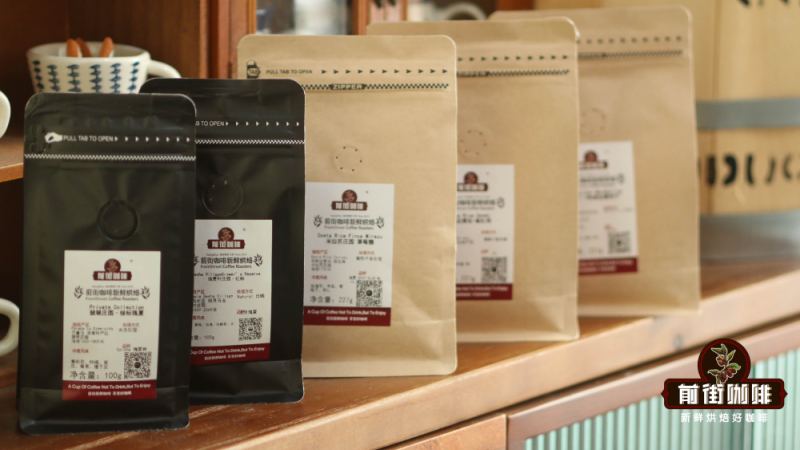
When it comes to single-origin coffee, many coffee lovers may first think of names such as Front Street Yirgacheffe Coffee, Front Street Mandheling Coffee, Front Street Indonesian Kopi Luwak Coffee, or Front Street Jamaican Blue Mountain Coffee. Among them, Front Street Yirgacheffe, with its bright acidity, redefined people's perception of coffee flavor and has been favored by veteran coffee enthusiasts for decades. When recommending beans to friends who are new to coffee, Front Street Yirgacheffe coffee beans almost always rank first on the recommendation list. Front Street Yirgacheffe coffee beans are not only suitable for pour-over coffee; the Sunflower Warm Sun blend coffee beans used in Front Street's daily espresso drinks also contain about 30% Front Street natural Yirgacheffe to add layering and berry notes, while the other 70% Front Street Honduras Sherry provides body and aroma.
ETHIOPIA, YIRGACHEFFE, KOCHERE
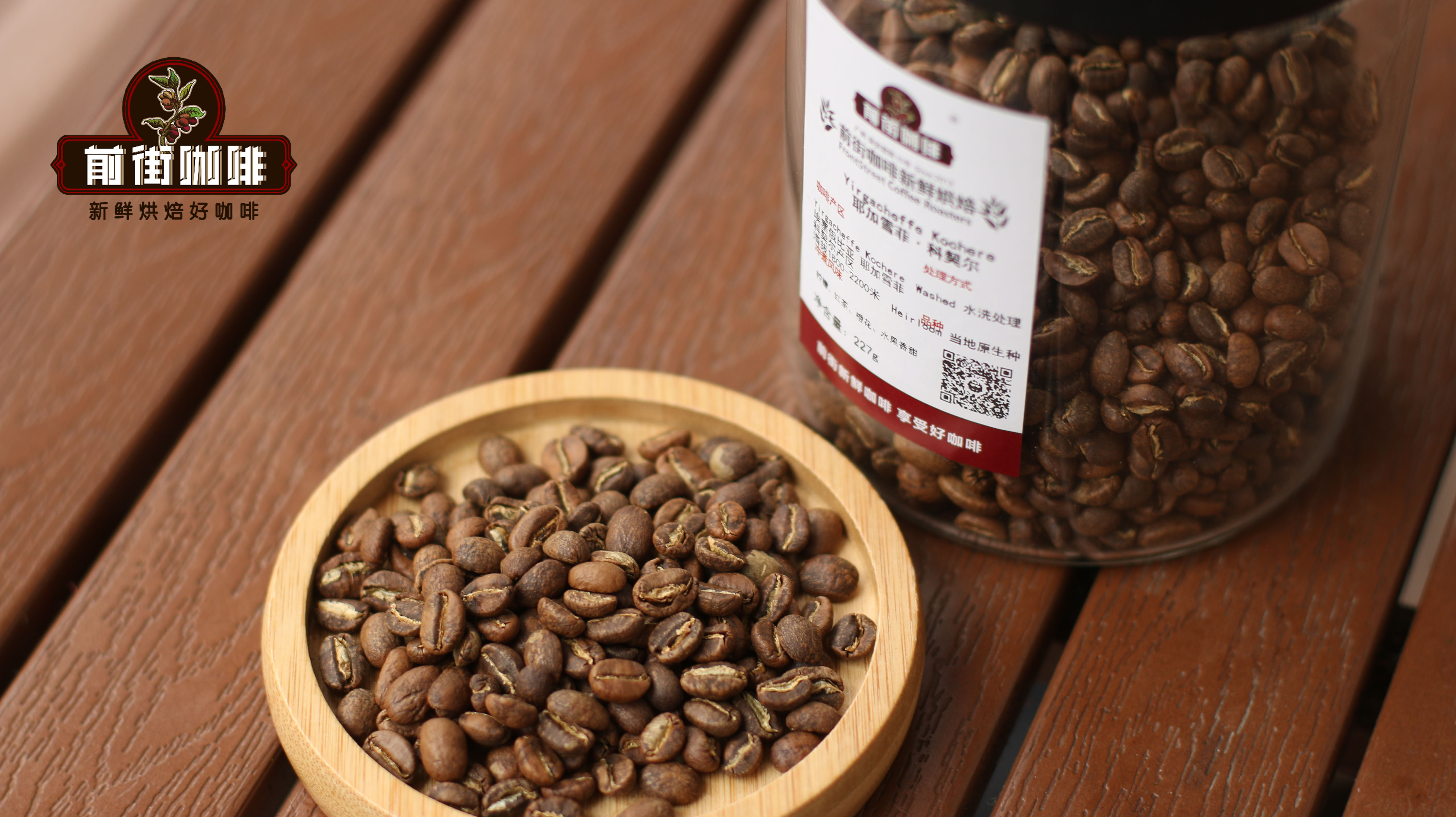
Front Street Ethiopia Yirgacheffe Kochere Coffee Beans
Country: Ethiopia Region: Yirgacheffe Grade: G1 Variety: Heirloom Altitude: 1650m~1800m Processing Method: Washed
After Ethiopia carried out regional redistricting in 1995, Yirgacheffe, familiar to Chinese coffee lovers, was incorporated into the Gedeo zone within the new SNNPR. Currently, Yirgacheffe is located in central Gedeo, and about 25 miles north from Kochere lies the famous Yirgacheffe town. The local production model is mainly based on smallholder farmers delivering their output batches to cooperatives for centralized processing. This area has long been regarded as one of the highest-quality coffee sources in southern Ethiopia. Ethiopia has eight main coffee-producing regions: Nekempte(Lekempti) Gimbi, Limu, Illubabor, Djimma, Harrar, Teppi/Bebeka, Sidamo, and Yirgacheffe.
Region Introduction
Kochere is located in a highland area at an altitude of 1,650 to 1,800 meters. Ethiopia's main harvest season is concentrated in November and December. Most local farmers do not use modern farming methods but rely on manual care for the coffee trees, neither spraying harmful pesticides nor using herbicides. For this reason, coffee produced in Ethiopia can almost be assumed to be organic coffee, whether or not it has certification. The primitive cultivation methods combined with fine processing techniques have earned the coffee of this region a worldwide reputation. The owner of Neko Farm once said: This time, due to the tight schedule, there was not enough time to prepare, but in the next harvest season, they will apply for RFA organic certification.
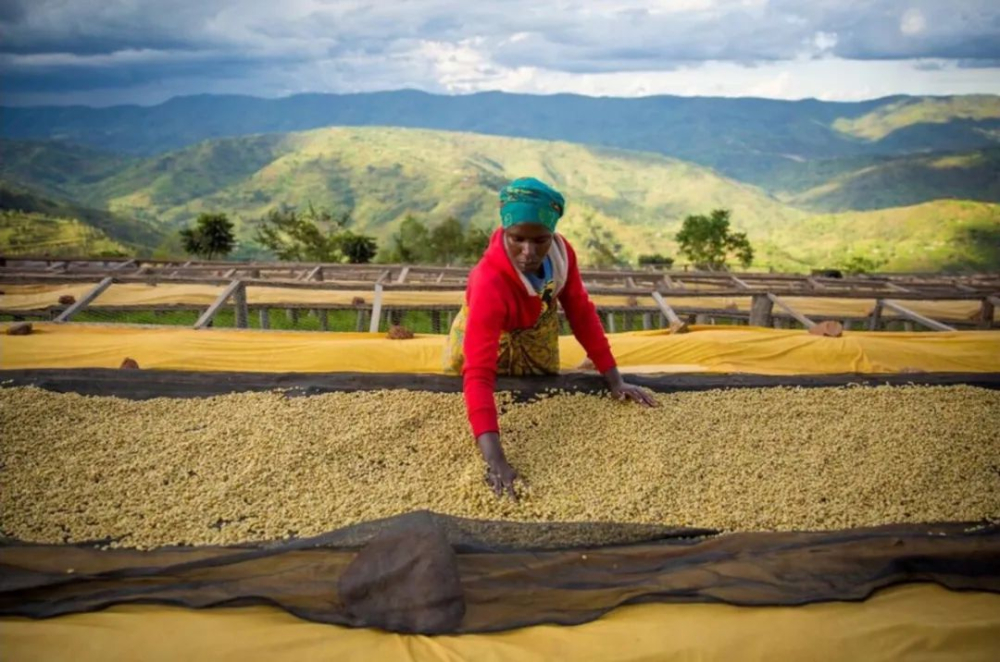
Washed processing consumes more resources than natural processing (especially water), so the quality of washed green coffee beans is usually higher. The coffee beans are spread flat on drying tables for drying to ensure good ventilation. At the same time, to prevent excessive fermentation, workers turn the coffee beans regularly.
Washed processing can present brighter acidity than natural processing, which gives Yirgacheffe its "clean" taste. People prefer washed Yirgacheffe precisely because of its clarity.
Flavor Characteristics: Fruity, Fresh Jasmine Aroma, Berries, Citric Acidic, Pineapple, Apple, Smooth, Clean, Long Aftertaste
Difference One Between Washed and Natural Front Street Yirgacheffe Coffee
After coffee cherries are harvested, they must immediately enter the processing stage; otherwise, they will begin to ferment and produce off-flavors. Processing methods are mainly divided into natural and washed, and different methods bring completely different flavor expressions.
Beans processed by the natural method retain a complete natural mellowness, with gentle aroma and more mucilage;
The washed method has good mellowness, high aroma, and lively acidity.
Natural/Dried-in-the-Fruit:
After the fruit is picked, it directly enters the sun-drying process without any treatment. This is the oldest processing method still in existence. The drying process usually lasts about four weeks. The operating method must be very rigorous to ensure that the coffee does not lose any flavor.
Washed:
Washing and fermentation are used to remove the skin, pulp, and mucilage. Farms using the washed method must build washing channels and be able to continuously introduce fresh water. During processing, the fermented beans are moved back and forth in the channel, relying on friction between the beans and the force of the water flow to wash the coffee beans to a smooth and clean state.
After washing, the coffee beans are still wrapped in the parchment layer, with a moisture content of about 50%, and must be dried to reduce the moisture content to 12%; otherwise, the beans will continue to ferment and become moldy and deteriorate.
The ideal drying method is sun drying. Although it takes 1 to 3 weeks, the flavor is exceptionally excellent and highly popular.
Difference Two Between Washed and Natural Front Street Yirgacheffe
Appearance of Coffee Beans
Taking two batches of beans from Ethiopia's Yirgacheffe region from Front Street as an example, the left side of the image below is Front Street washed Yirga Kochere, and the right side is Front Street natural Yirga Red Cherry.
[Green Beans]: Washed green beans are usually blue-green, while natural green beans tend toward yellow-green.
From the perspective of silver skin, the washed refinement process generally removes the silver skin on the surface of the coffee beans, giving the beans a special luster; while dry refinement (natural method) only removes the parchment, and the silver skin remains completely intact.
Silver Skin/Chaff: Inside the parchment layer, there is an even thinner film wrapping the coffee bean. Because its color is lustrous and silvery, it is customarily called "silver skin."
Difference in green beans: Washed green beans are generally blue-green, while natural green beans are yellow-green.
[Roasted Beans]: Front Street washed Yirga has more silver skin, while Front Street natural Yirga has less silver skin.
Natural beans have relatively more outer silver skin, which falls off more thoroughly during roasting, so less remains during grinding; washed beans have more inner silver skin, and quite a bit remains after roasting, appearing more during grinding. Of course, this is also directly related to the roast level. The darker the roast, the more thoroughly the silver skin is removed.
To investigate the taste of silver skin, the barista at FrontStreet Coffee even specially brewed a cup of silver skin by pour-over to taste it, and found that it did not have the strong bitterness people often describe. However, too much silver skin does indeed bring astringency, but if the silver skin is excessively treated at the green bean stage, it will lead to a reduction in flavor. In addition, washed beans will definitely have silver skin in the center line, but that part may not necessarily produce obvious astringency, so there is no need to completely remove the silver skin.
Differences in dry aroma:
Front Street natural Yirgacheffe Coffee: With a faint fermented wine aroma and spice aroma.
Front Street washed Yirgacheffe Coffee: Exudes jasmine floral aroma and the acidic aroma of lemon or lime.
[Cupping]
Front Street has a very high fondness for Ethiopian coffee. The creamy berry notes of Front Street Sidamo Hambela Huakui Coffee, the citrus acidity of Front Street washed Yirgacheffe Coffee... The rich and diverse profile makes Ethiopia a treasured region in everyone's mind.
Front Street natural Yirgacheffe Coffee: The natural flavor is more complex, with a faint fermented wine aroma, richer fruitiness, honey sweetness and cocoa notes mixed with a little spice, a thick body, and a lasting finish.
Front Street washed Yirgacheffe Coffee: The acidity of washed processing is brighter, similar to citric acid, with a more refreshing taste, more prominent citrus aroma, and some black tea-like character in the aftertaste.
Similarities: Both have fruity acidity, similar to fruits such as lemon and citrus.
Roasting Analysis
When roasting Front Street Yirgacheffe coffee beans, the roaster at FrontStreet Coffee usually chooses a light roast. This is because a light roast can make the fruity aroma of Yirga, grown in the tropics, more obvious and richer. The slight acidity on the palate is an apple-like acidic aroma, and this acidity instead highlights the coffee's body, while the bitterness also becomes aromatic and memorable. Coffee itself is a fruit, and being able to retain the sweet and sour fruit flavors after high-temperature roasting is precisely the characteristic of Front Street Yirgacheffe. This is also the philosophy upheld by the roaster at FrontStreet Coffee—every coffee bean should express the taste of its region of origin.
Roaster Yangjia 600g semi-direct fire
Use a fast-roasting mode. When the drum temperature rises to 200°C, charge the beans, adjust the damper to 3, and after 1 minute adjust the heat to 160°C while keeping the damper unchanged. When roasting reaches 4'50'', the temperature reaches 150°C, the bean surface turns yellow, the grassy smell completely dissipates, and dehydration is complete. Adjust the heat to 130°C and open the damper to 4; at the 8th minute, ugly wrinkles and dark streaks appear on the bean surface, and the toast aroma clearly turns into coffee aroma, which can be defined as the prelude to first crack. At this time, it is necessary to listen carefully for the sound of the first crack. At 8'20'', first crack begins. Turn the heat down to 70°C and open the damper fully (when adjusting the heat, be especially careful not to reduce it so much that there is no crackling sound). Drop the beans at 192°C.
FrontStreet Coffee Brewing Recommendations
The Front Street Yirgacheffe everyday beans launched by Front Street use washed processing and a medium-light roast, with the classic Yirgacheffe flavor profile, suitable for pour-over, cold brew, French press, and other brewing methods. The Front Street everyday bean series allows friends who are new to coffee to taste the basic flavors of the region at an affordable price, and the small-package design also avoids waste from being unable to finish drinking it. If you want to experience the classic aroma of Front Street Yirgacheffe, Front Street believes that pour-over black coffee is the most suitable.
Dripper: V60 Water Temperature: 92-93°C Dose: 15g Coffee-to-Water Ratio: 1:15 Grind Size: fine sugar size (78% passing through a No. 20 sieve)
Three-stage pouring: First, use twice the weight of the coffee grounds in water to wet the coffee bed, forming a dome, and let it bloom for 30 seconds. Then, pour in a small stream in circles from the inside outward. At 125g, pause in stages. Wait until the coffee bed drops to half the height of the dripper, then continue pouring the third stage with the same fine stream to 225g, until all the coffee liquid has filtered through. Remove the dripper. The time is about 2 minutes.
After grinding Front Street washed Yirgacheffe everyday bean coffee into powder, you can smell the fresh fragrance of honey and jasmine. After pouring in hot water, it begins to release hints of berry flavor. The pour-over black coffee enters the mouth with bright lemon, citrus, and green tea notes. As the temperature changes, it presents a finish of berries, cream, and sugarcane, with obvious sweetness returning and a clean, sweet taste.
For professional coffee knowledge exchange and more coffee bean information, please follow Coffee Workshop (WeChat public account: cafe_style)
For more specialty coffee beans, please add the private WeChat of FrontStreet Coffee: qjcoffeex
The above content is compiled by CoffeeHunters, a coffee news website.


