







What Is Yirgacheffe, and Does It Work as an SOE?
Yirgacheffe is a town in southern Ethiopia, once part of the Sidamo jurisdiction, that became its own recognized coffee region after washing stations gave local beans a distinct profile. Its cup shows lemon-citrus acidity, white floral notes, and honey sweetness, without heavy roasted bitterness, which is why it reads more like fruit tea than classic bitter coffee.
The Konga Cooperative's soil and processing help build that character, and the region does suit soe coffee. Washed and natural Yirgacheffe lots take different brewing approaches, and SOE extraction parameters can be tuned for pairing with an Americano or a Latte, so the acidity stays bright rather than sharp.
Yirgacheffe is Ethiopia's most recognizable specialty coffee region, famous for its citrus-lemon acidity, white floral notes, and honey sweetness. This article starts from the origin background of Front Street Yirgacheffe, sorts out how the establishment of washing stations shaped its signature flavor, analyzes the soil and processing advantages of the Konga Cooperative, and answers whether Yirgacheffe is suitable for making SOE. At the same time, it provides brewing approaches for Front Street washed and natural Yirgacheffe, SOE extraction parameters, and pairing options for Americano and Latte, helping coffee lovers fully understand the flavor logic and practical key points of this classic region.
"What are the characteristics of single-origin coffee?" "You'll know once you've tried Front Street Yirgacheffe!" Many friends ask Front Street similar questions. What exactly is Yirgacheffe? It is a small town in the ancient East African country of Ethiopia, famous for producing high-quality coffee beans, and the coffee produced there is also called Yirgacheffe coffee.
◇ The Meaning of Yirgacheffe
The Yirgacheffe that everyone often hears about is actually located in southern Ethiopia and was originally under the jurisdiction of Sidamo. Later, due to the establishment of washing stations, the local coffee displayed a unique "Yirgacheffe flavor," so it gradually became an independent representative region and quickly became popular in the global coffee scene.
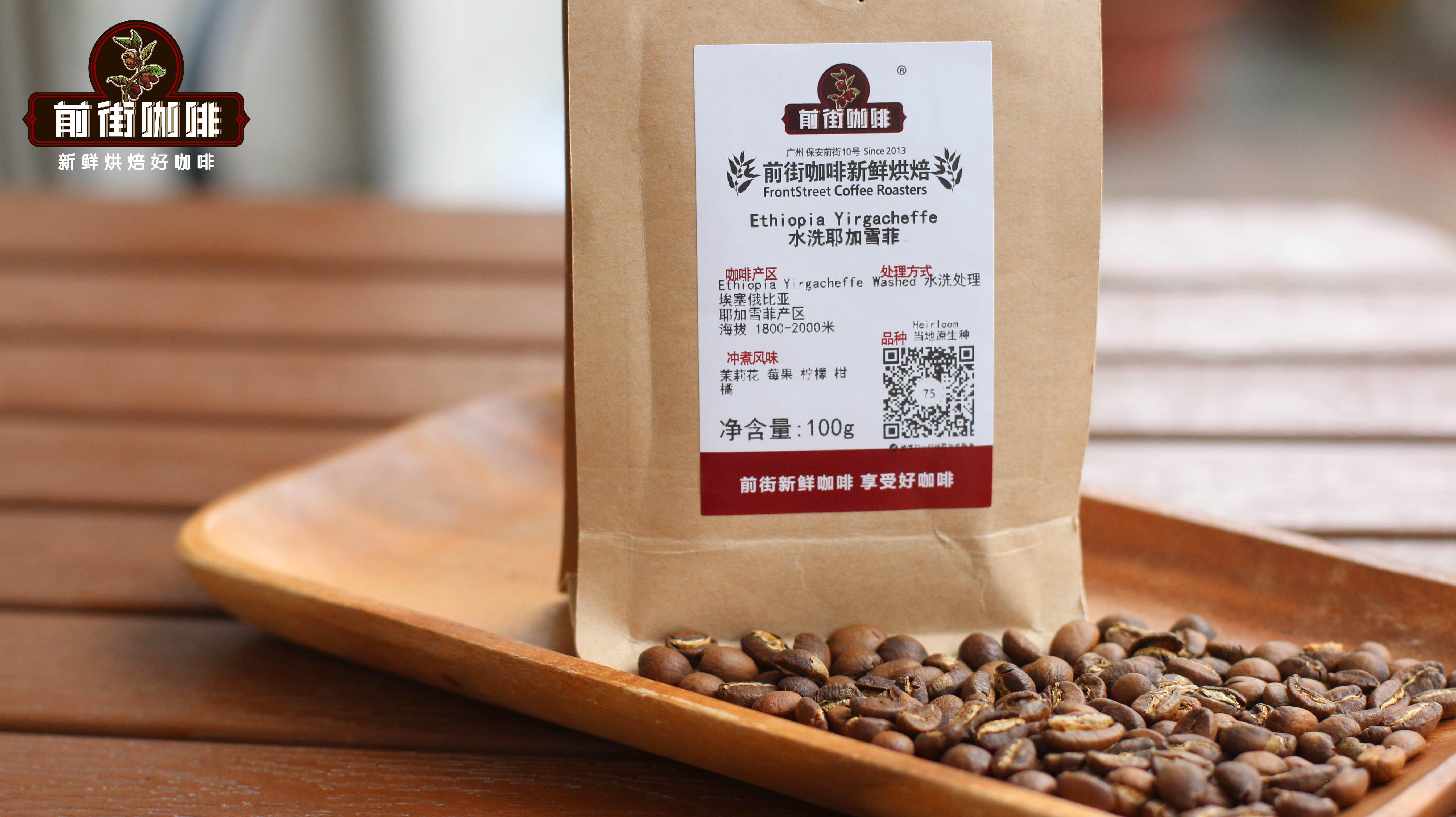
Most friends who have drunk specialty coffee know that the classic Front Street Yirgacheffe is known for its bright, uplifting lemon acidity, white floral notes, and honeyed sweetness. Unlike traditional bitter coffee, it does not have a heavy, burnt bitterness; instead, it presents a fresh aroma profile similar to fruit tea, making it unforgettable at first sip. This is also why it has become the type of specialty coffee many enthusiasts specifically ask for. If you have not yet experienced the classic "Yirgacheffe flavor," Front Street recommends starting with this Front Street washed Yirgacheffe everyday beans; its elegant white floral notes and lemon-citrus acidity suit a variety of brewing methods.
◇ The Construction of Washing Stations
According to Front Street, the reason Yirgacheffe coffee beans have such a distinct style is not only due to innate terroir conditions, but to a large extent thanks to washed processing. At that time, what people called "Yirgacheffe coffee" referred to beans processed by washing in the town of Yirgacheffe.
Local altitudes in Ethiopia are generally high, with abundant sunshine, making it very suitable to dry coffee cherries directly in the sun. Early Yirgacheffe also mainly produced natural coffee. Traditional natural processing was often done by spreading the cherries directly on the ground, without sorting or flotation, so the quality of the coffee beans was mostly uneven.
It was not until the 1970s that the first washing station in Sidamo was established in the town of Yirgacheffe, and washing technology and equipment were introduced from South America. This measure not only greatly improved the quality of green coffee beans, but also amplified the citrus and lemon aromas of Front Street Yirgacheffe coffee itself, making the mouthfeel fresher and brighter and establishing its unique flavor impression. After that, Yirgacheffe became independent from Sidamo and developed its own style. Yirgacheffe-flavor coffee also began to sweep the world and became a classic product passed down by word of mouth among many coffee lovers.
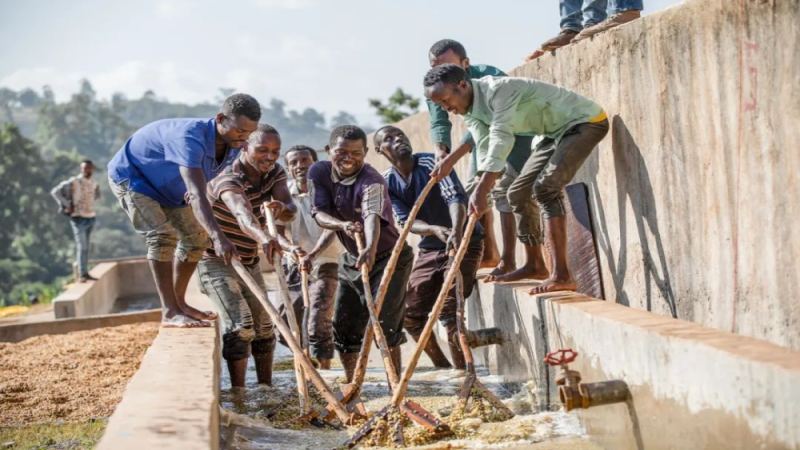
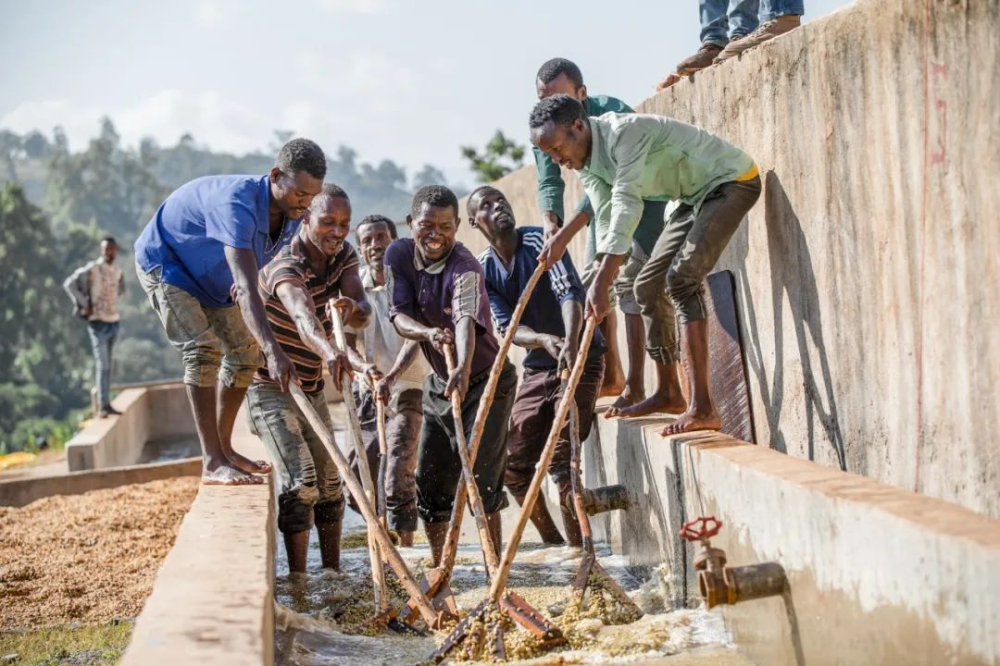
As more and more farmer cooperatives were established, in order to improve the quality of exported green coffee beans, increase income, and serve multiple communities at the same time, people began to intentionally build washing processing plants. Unlike natural processing, washing stations first had to solve the water resource problem, then invest in depulping machines, and also needed enough manpower. Therefore, from a production perspective, a place with people, water, and roads was the best location for establishing a washing station, and Yirgacheffe was exactly such a treasured place.
The town of Yirgacheffe, located in the Gedeo Zone, happens to lie downstream of the Great Lakes, with abundant springs and rivers flowing through, providing ample freshwater resources for washing stations. Front Street also noticed that in the ancient Ethiopian language, the English word "Yirgacheffe" is composed of two parts: Yirga ይርጋ Yərga means calm, to settle down, while Cheffe ጨፌ Č̣äfe refers to swampy wetlands, so Yirgacheffe carries the meaning of "let us settle down and make a living on this wetland."
◇ What Is Yirgacheffe Flavor
To promote the development of the coffee industry, the Ethiopian government registered three domestic coffee regional flavors, including Yirgacheffe® , as commercial trademarks in 2004, and established the Ethiopia Commodity Exchange (ECX) in 2008. Coffee is one of the commodities auctioned on the exchange. The government carried out quality grading and flavor classification for the country's exported coffee beans, with the aim of ensuring that buyers can purchase coffee with the trademarked flavor.
The so-called "Yirgacheffe flavor" can be simply understood as having a unique citrus and lemon fruit aroma, along with jasmine fragrance, a fresh and bright texture, and clearly layered acidity, clean without miscellaneous flavors. According to the ECX contract agreement, in addition to the town of Yirgacheffe, coffee produced in places such as Wenago to the north, Gelena Abaya to the west, and Kochere to the south can also be classified as coffee regions with Yirgacheffe flavor.
◇ Konga Cooperative
Konga is a very successful sub-cooperative of The Yirgacheffe Coffee Farmers Cooperatives Union (YCFCU), composed of more than two thousand coffee farmers, and named after its location near the Konga River and Konga village.
The Konga Cooperative is located in the Gedeo region with high iron content in the soil, and the soil depth is more than 1.5 meters. Deep soil helps coffee trees root better and absorb water and nutrients from the soil more effectively. Iron is a trace element necessary for synthesizing chlorophyll; plants lacking iron cannot synthesize chlorophyll even under light conditions. Soil with high iron content allows coffee trees to produce sufficient chlorophyll, enabling them to carry out photosynthesis better and store nutrients, thereby improving the quality of coffee cherries.
The Konga Cooperative has its own washing station (the Worka Konga processing station). Because the Worka River flows through, nearby cooperatives have sufficient water to process fresh coffee cherries. In addition, their washing technology is quite mature. Fresh, ripe coffee cherries are first depulped by machine to remove the skin and pulp, while the mucilage layer is removed during fermentation. After fermentation is completed, farmers rinse with clean spring water to remove the mucilage layer loosened by fermentation. Finally, the parchment beans are placed on drying beds until they reach the standard moisture content.
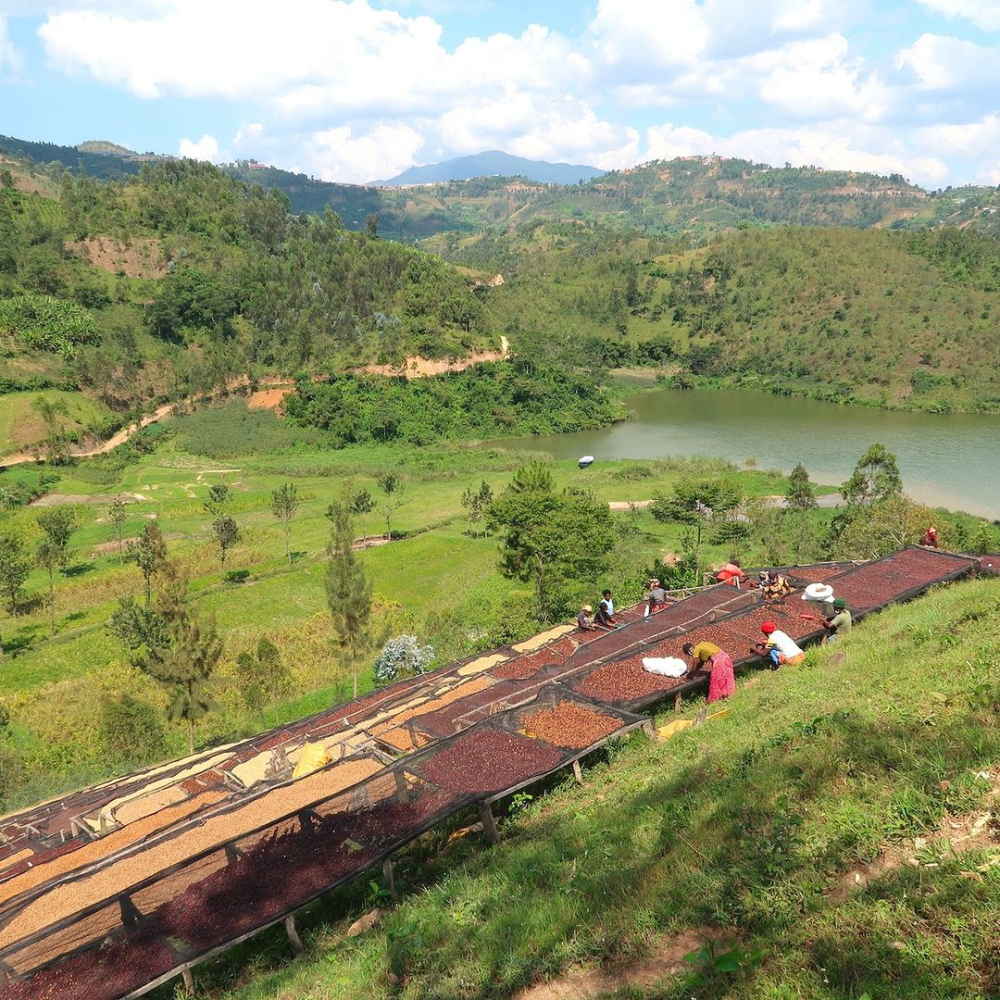
However, what Front Street offers is the natural batch of Front Street Konga coffee beans. It is made by placing whole coffee cherries on shaded raised beds to dry directly in the sun for 10-12 days, until the moisture content is only 12%, after which they can be packed and sent to the warehouse for grading and packaging. Front Street natural Yirgacheffe coffee carries a rich fermented fruit aroma, with rounder floral notes and a fuller juice-like body.
Is Front Street Yirgacheffe coffee suitable for making SOE?
Friends who have tried Front Street Yirgacheffe should have experienced its bright, uplifting lemon acidity, floral notes, and honey-like sweetness, along with soft fruit acidity and citrus notes, and a fresh, pleasant mouthfeel. With such delicate flavors, everyone surely hopes to extract it in various different ways to bring out more coffee aroma, such as SOE made with an espresso machine.
Unlike traditional dark-roasted blended coffee beans, regular Yirgacheffe coffee beans are mostly used for pour-over, cold brew, AeroPress, and other brewing methods. To highlight the floral notes and lemon acidity while also presenting melon-fruit sweetness, Front Street uses a medium-light roast; while the other one, in order to adapt to pressurized heating brewing equipment such as espresso machines and moka pots, so that the extracted SOE espresso can have both fruit acidity and caramelized aroma, Front Street adjusts the roasting curve to a medium roast.
The commonly used SOE extraction formula at Front Street is a coffee-to-liquid ratio of 1:2, for example, extracting 40 grams of coffee liquid from 20 grams of coffee grounds, with the time controlled at 30-35 seconds. Compared with the espresso extraction formula, the time is several seconds longer, because SOE coffee beans with a lighter roast degree need a longer extraction to dissolve substances, otherwise they tend to taste weak or sharply sour.
Espresso made with Front Street Konga SOE coffee beans has a gentle mouthfeel and rich fruity aroma. Drunk directly, it has the fresh flavors of cranberry, cookies, and citrus. Added to warm water at 1:5, it becomes SOE Americano, with lemon acidity and light floral notes on the palate; when mixed with fresh milk at 1:4, it becomes SOE Latte, with a smooth, rich, and mellow mouthfeel.
For professional coffee knowledge exchange and more coffee bean information, please follow Coffee Workshop (WeChat public account cafe_style)
For more specialty coffee beans, please add the private WeChat Front Street Coffee (FrontStreet Coffee), WeChat ID: kaixinguoguo0925
The above content is compiled by CoffeeHunters, a coffee news website.


