







How Do Yunnan Coffee Varieties Differ in Sweetness and Bitterness?
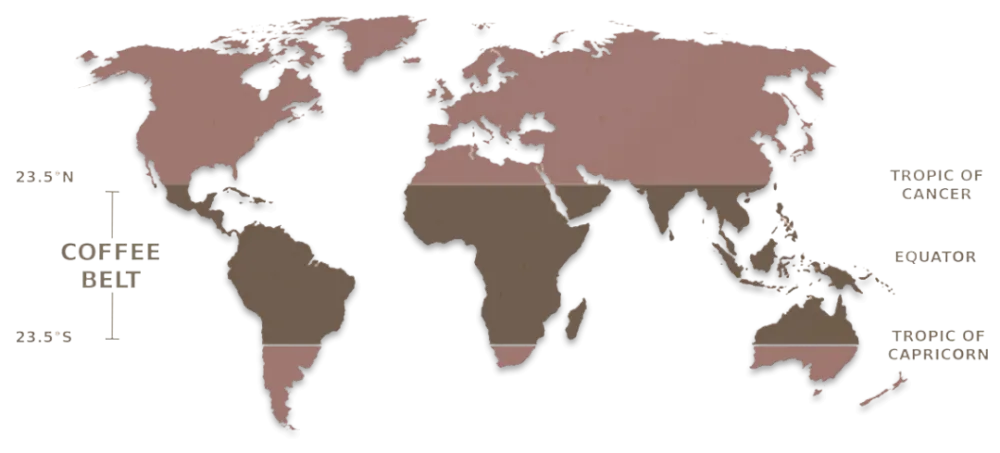
Yunnan coffee sits inside the Coffee Gold Belt between the Tropic of Cancer and the Tropic of Capricorn, one of the few places in China with both the latitude and the altitude coffee needs. Cultivation there dates back to 1877, and the crop has since moved through three waves of development, with Typica and Catimor as the two main varieties grown.
Typica tends toward cleaner sweetness and brighter acidity, while Catimor carries more body and a firmer bitter edge. A useful context point: where do arabica coffee beans come from elsewhere matters too, since Yunnan competes on variety quality rather than volume. Sun-dried Typica grown on the Lincang estate shows how processing shapes the final cup.
Yunnan coffee has become a hot topic in the guochao (national trend) beverage scene in recent years, and many people walk into a café and ask whether there are any good-tasting Yunnan beans. This article systematically reviews the growing conditions, historical origins, and three waves of development of Yunnan coffee, explains in detail the origins, flavor characteristics, and acidity-bitterness performance of the two major varieties, Typica and Catimor, and introduces Front Street Coffee's practice of growing sun-dried Typica on its own estate in Lincang, with brewing parameters and flavor descriptions attached, to help coffee enthusiasts gain a comprehensive understanding of the variety quality and flavor direction of Yunnan small-bean coffee.
Under the wave of domestic products, Yunnan coffee has also become popular. Nowadays, when walking into a café, more and more customers ask as soon as they speak: Are there any Yunnan beans worth trying? Do you have Yunnan small-bean coffee in the shop? As the tasting of specialty coffee becomes more and more refined, people have even begun to care about exactly which varieties are grown in Yunnan coffee. Below, Front Street will guide everyone through information related to Yunnan coffee.
The flavor expression of crops cannot be separated from a suitable growing environment. In addition to sufficiently high altitude, climatic conditions are equally crucial. Many well-known coffee-producing regions around the world fall within the "Coffee Gold Belt" between the Tropic of Cancer and the Tropic of Capricorn.
Within China, the places that can simultaneously satisfy both the location in the gold belt and suitable altitude are mainly Yunnan and Taiwan. However, for this land, tea is the native crop, while coffee is an exotic species. The earliest documentary record of coffee cultivation in China appeared in 1877. In the "Regulations on Pacifying the Aborigines and Opening the Mountains for Postwar Administration" drafted by Fujian Governor Ding Richang, it was mentioned that the indigenous residents of the Ryukyu Islands should switch to growing a series of cash crops to replace their hunting life, among which coffee was included.
The earliest place where coffee was planted in mainland China was precisely Yunnan. According to the "Binzhou County Annals" and the "History of Catholicism in Yunnan," in the 30th year of the Guangxu reign (1904), the French Catholic missionary Tian Deneng was sent by the Dali diocese to Binchuan Prefecture, built a church in Zhukula Village, and personally planted the first coffee tree, solely for his own consumption.
Today, the cultivation of Yunnan coffee has gone through three distinct waves:
The first wave appeared in the 1950s and 1960s. At that time, the vast majority of people had never even tasted coffee, and some did not even know what coffee was. The coffee beans at that time were mainly used for export to the Soviet Union to repay loans. Yunnan Agricultural Reclamation was responsible for cultivation, and the national foreign trade department purchased in a unified manner. The farms participating in cultivation included Baoshan Lujiang Farm, Xincheng Youth Farm, Dehong Zhefang Farm, Ruili Farm, Wanding Farm, Wenshan Babu Farm, and Tianbao Farm. During that period, the coffee varieties in Yunnan were mainly locally propagated Typica and Bourbon variants.
After the loan repayment task ended, the foreign trade department no longer actively purchased Yunnan coffee beans. At the same time, coffee diseases spread, and a large number of coffee trees became infected or even died, making large-scale felling necessary to block transmission. Coffee cultivation area was once reduced to less than 3,000 mu.
The second wave began in the 1980s after reform and opening up. In 1988, Nestlé strongly supported Yunnan's coffee industry and actively promoted the Catimor variety locally. Catimor's yield can reach three times that of Typica, and its disease resistance is outstanding. For farmers, they cared more about purchase prices and fruit harvests, and had little concept of flavor. As a result, Catimor gradually replaced Typica and became the main variety of Yunnan coffee, even once accounting for 90% of Yunnan coffee production.
The third wave of development appeared after 2000. China's rapid economic growth attracted the attention of many coffee brands, and the concept of specialty coffee also entered the country along with it. As people's enthusiasm for specialty coffee continued to rise, variety selection and cultivation work for Yunnan coffee also actively unfolded. At present, Yunnan coffee's path toward specialization is still being advanced.
Originally, the name Yunnan small-bean coffee came from Typica. Typica's beans are relatively small, contrasting with the medium-sized Robusta grown in Hainan, hence the name "small bean." Front Street also mentioned earlier that because Catimor has high productivity and strong disease resistance, many growers painfully cut down Typica and switched to planting Catimor. At present, the cultivation area of Catimor in Yunnan is still relatively large, and so-called Yunnan small-bean coffee now more often refers to the Catimor variety. If you want to experience the basic origin flavor of Yunnan coffee, buying Front Street. Yunnan Small Bean is the right choice. It uses washed processing and medium roasting, presenting a soft profile of chocolate, brown sugar, and nuts.
Catimor was developed in 1959 by the Portuguese Coffee Leaf Rust Research Center CIFC, and is a hybrid descendant of the Timor variety and Caturra. It inherited Timor's Robusta genes, has stronger resistance to coffee berry disease and coffee leaf rust, and also has a certain ability to resist coffee pests.
Regarding Catimor, the Chinese Taiwan specialty coffee master Han Huaizong once described it as having a "devil-like aftertaste." Because it carries Robusta genes, Catimor coffee may have an earthy, fishy smell. Of course, with continuous improvements in cultivation techniques and processing methods, the flavor of Yunnan Catimor is also continuously improving.
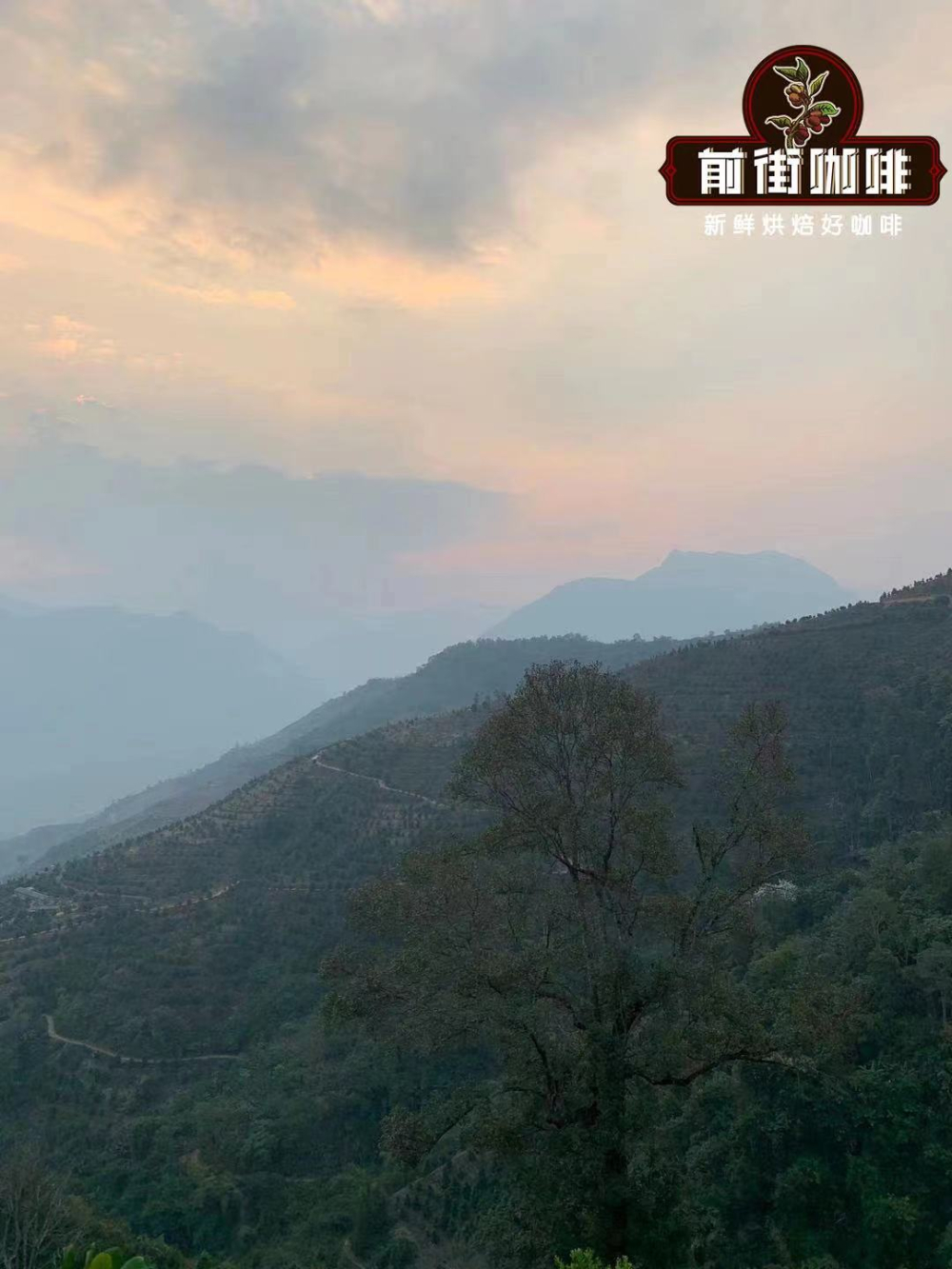
In order to pursue the terroir flavor of Yunnan, Front Street Coffee established its own coffee estate in Lincang. The Lincang production area is located in southwestern Yunnan, with the Tropic of Cancer running across its southern part, adjacent to Pu'er, Dali, and Baoshan, and bordering Myanmar to the southwest. It is a pearl on the southwestern frontier of the motherland. The cultivation altitude here is above 1,000 meters, the annual temperature is about 17 degrees Celsius, the dry and wet seasons are distinct, and sunlight is abundant, providing excellent innate conditions for Front Street Coffee to grow Typica on this land.
The Typica grown on Front Street Coffee's estate uses the natural processing method, spreading ripe coffee cherries evenly and completely on raised beds for sun drying, and turning them from time to time to avoid uneven drying that could produce an unpleasant fermented taste. At the same time, keeping the whole fruit allows more sugars to penetrate into the green coffee beans, making this coffee rich in aroma and more prominent in sweetness, allowing everyone to taste the pure flavor of Yunnan specialty coffee.
After Front Street Coffee's roaster received this sun-dried Typica green coffee, considering the need to highlight the aroma and sweetness while preserving the mouthfeel characteristics of Yunnan small-bean coffee, medium roasting was ultimately chosen.
Filter: Hario V60
Water temperature: 87 degrees Celsius
Dose: 15 grams
Coffee-to-water ratio: 1:15
Grind size: 75% passing through China Standard No. 20 sieve
Since the coffee beans shipped by Front Street are freshly roasted within 5 days, by the time they arrive they have usually already passed the 4-to-7-day resting period, so the beans are relatively fresh and contain sufficient carbon dioxide. To make flavor extraction more stable, Front Street recommends a 30-second bloom during brewing.
First pour 30 grams of hot water and let it bloom for 30 seconds, then slowly pour in a thin stream from the center in circles up to 125 grams; when the water level in the dripper drops to the point where the coffee bed is about to be exposed, continue pouring in circles up to 225 grams. Total extraction time is about 2 minutes.
Front Street Coffee's own estate Front Street 2013 Sun-Dried Typica has a full body after brewing, with prominent acidity and sweetness, notes of citrus and berries, a hint of fermented wine aroma, caramel-like sweetness, a creamy finish, and a black tea-like tea sensation.
The above content is compiled by CoffeeHunters, a coffee news website.


