







What Makes a Gesha Coffee Bean from Gesha Village Distinct?
Gesha Village Coffee Estate sits in the Bench Maji region of western Ethiopia, surrounded by dense forest, and covers roughly 471 hectares, about 320 of them planted. Its Ethiopian Gesha lots are divided across eight blocks with different varieties and flavors, and beans carrying the Gold Label and Red Label grades have been used as competition coffee in major events.
Owners Adam and Rachel first traveled to Ethiopia in 2007 to film a coffee documentary, met Willem Boot in 2009, and returned to Bench Maji in 2011 to search for native Gesha in the forest areas locals call Gesha Village. That origin story separates this gesha coffee bean from panama geisha lots, and cupping scores and brewing parameters vary by grade.
Located in the Bench Maji region of Ethiopia, Gesha Village Coffee Estate has in recent years become a name impossible to avoid in the specialty coffee world. The Ethiopian Geshas of various grades produced by this estate frequently appear in world-class coffee competitions, bringing Ethiopia—this coffee kingdom—back into the spotlight. From the entrepreneurial story of Adam and Rachel, to the variety and flavor differences across the eight blocks, to the strict grading system of Gold Label, Red Label and others, Gesha Village interprets its pursuit of quality with near-rigorous standards. This article will also present the cupping performance and brewing parameters of Front Street Coffee's new-crop Gold Label Gesha for coffee lovers' reference.
Among the specialty coffees produced in Ethiopia, Gesha Village Coffee Estate has remained highly popular in recent years. The estate's Ethiopian Gesha coffee beans of different grades have been selected as competition beans by contestants in many world-class coffee competitions, which has also brought Ethiopia's status as a coffee kingdom back to the world's attention.
Ethiopia Gesha Village
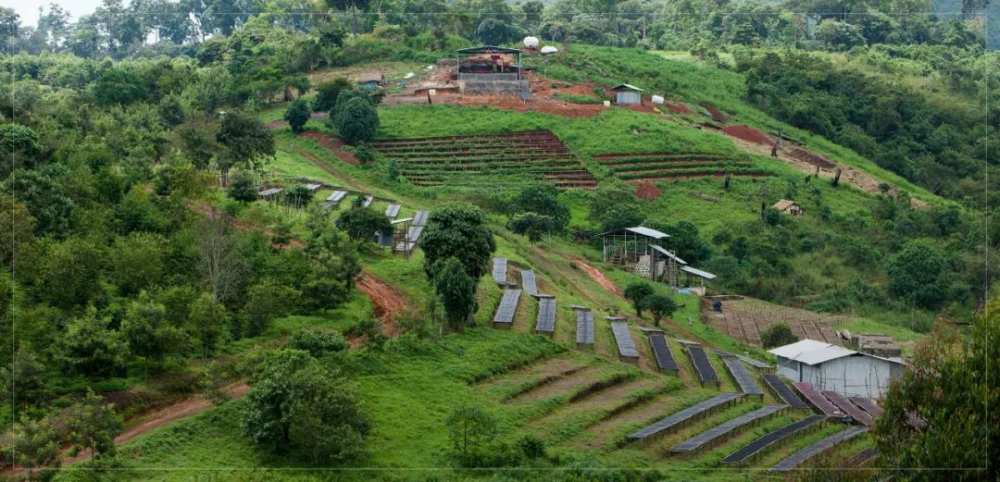
Gesha Village Coffee Estate is located in the Bench Maji region of western Ethiopia, surrounded by dense jungle. The estate sits in a place of beautiful scenery and comfortable climate; standing at a high point, one can gaze upon ancient and vast forests.
In 2007, estate owners Adam and Rachel were commissioned to travel to Ethiopia to film a coffee-themed documentary. As filming progressed, the couple's contact with this land and its people deepened, and the idea of having their own estate was born. Everything reached a key turning point after they met Willem Boot—whether it was estate siting, variety selection, or processing methods, all were closely connected to Willem Boot.
In 2009, the couple had the good fortune to meet Willem Boot, owner of Finca La Mula and a BOP judge. Willem Boot's idea of "returning to Ethiopia to find the birthplace of Gesha" also provided the two with a new direction.
In 2011, they returned to Bench Maji. Several local areas are called Gesha Village and are the zones most likely to contain native Gesha varieties. Led by a guide, they entered the forest that is Gesha's native homeland.
Gesha Village Coffee Estate covers a total area of about 471 hectares, of which about 320 hectares are planted with coffee. The soil is brown-red loam. Planting density is controlled at 7,000 coffee trees per hectare.
These coffee trees are planted at elevations above 1,900 meters. The high altitude slows the growth of the coffee trees, allowing the fruit more time to accumulate nutrients. Gesha Village Coffee Estate is further divided into 8 blocks, each planted with a single variety; therefore, at Gesha Village, a single-block lot also means a single variety.
Gesha Village Block Distinctions
Bangi
The Bangi block is located on the eastern side of Gesha Village Coffee Estate, at an elevation of 1,911 to 2,001 meters, and is responsible for growing the Gori Gesha variety, with an area of about 54 hectares. The Gesha produced from this block mostly carries aromas of honeysuckle and spice, blended with rich flavors of dark chocolate, spice, red fruit, black tea and blackcurrant.
Dimma
The Dimma block is in the central area of Gesha Village Coffee Estate, at an elevation of 1,966 to 2,019 meters, and grows the Illubabor variety, with an area of 28.7 hectares. The coffee from this block often shows coffee floral aromas and stone fruit flavors, interwoven with fresh citrus notes.
Gaylee
The Gaylee block is located southeast of Gesha Village Coffee Estate and, like the Dimma block, grows the Illubabor variety, at an elevation of 1,916 to 1,982 meters. The official description says the cup profile of this block carries fruit and spice flavors, accompanied by notes of lemongrass and jasmine.
Oma
The Oma block is located on the southern side of Gesha Village Coffee Estate, at an elevation of 1,931 to 2,040 meters, and grows the Gesha 1931 variety, with a total area of 67.6 hectares. The coffee from the Oma block carries intense jasmine floral aromas, as well as subtle flavors of peach, apricot, candied fruit, melon and mandarin, mixed with honey-like sweetness.
Narsha
The Narsha block leans toward the eastern side of Gesha Village Coffee Estate and is adjacent to the western side of the Gaylee block. Its planting area is relatively small, only 5.3 hectares, and the variety is Gesha 1931. The official description of its flavor includes honeysuckle, yellow fruit, lime, dark chocolate, white peach, apricot, rose, with clean acidity and a bergamot finish.
Surma
The Surma block is located southwest of Gesha Village Coffee Estate, at an elevation of 1,909 to 2,063 meters, with a planting area of 45.9 hectares, and the variety is Gesha 1931. The coffee produced from this block has aromas of jasmine and rose, and flavors reminiscent of strawberry, watermelon, apple and delicate spice.

Jibabu
The Shewa-Jibabu block is located northwest of Gesha Village Coffee Estate, at an elevation of 1,973 to 2,069 meters, with a planting area of 48.5 hectares, and grows the Gori Gesha variety. The Gesha from this block often carries flavors such as spice, strawberry, ripe peach, papaya, floral, dark chocolate, orange and bergamot.
Shaya
The Shaya block is located north of Gesha Village Coffee Estate, with a planting area of 36.5 hectares, and is responsible for producing Gesha Village Coffee Estate's Gori Gesha. The official description says the Gesha coffee from this block carries subtle aromas of jasmine, bergamot and orange, along with rich notes of dark chocolate, cherry, molasses, lemon, berry and apple.
Gesha Village Grading System
At Gesha Village, every stage of growing and processing strives for uncompromising quality. The estate's coffee laboratory in Addis Ababa follows official SCA standards, selecting each lot through a rigorous cupping process and implementing strict grading to ensure that the coffee beans delivered to buyers are of the highest quality.
Since its founding, Gesha Village Coffee Estate has always attracted attention. The coffee within the estate is divided into several grades: AUCTION, RARITIES Gold Label, GROWERS RESERVE Red Label, SINGLE-TERROIR Green Label, and CHAKA.
Definition of Gesha Village's Gold Label Grade
Gold Label lots account for about 10% of Gesha Village Coffee Estate's annual production, with complex and very rare flavors. These rare coffees are Gesha Village Coffee Estate's top offerings apart from the Auction lots.
Many baristas choose Gold Label lots as competition beans, and roasters with strict quality requirements also purchase them. Gold Label lots have complete traceability, and each lot has prominent flavors and high complexity.
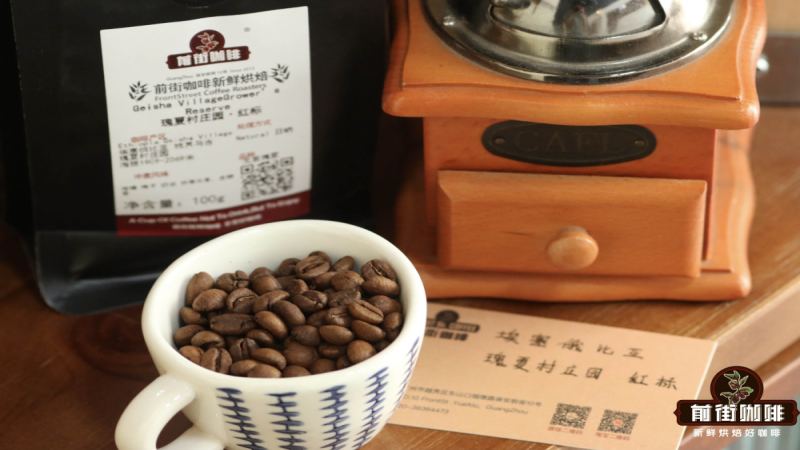
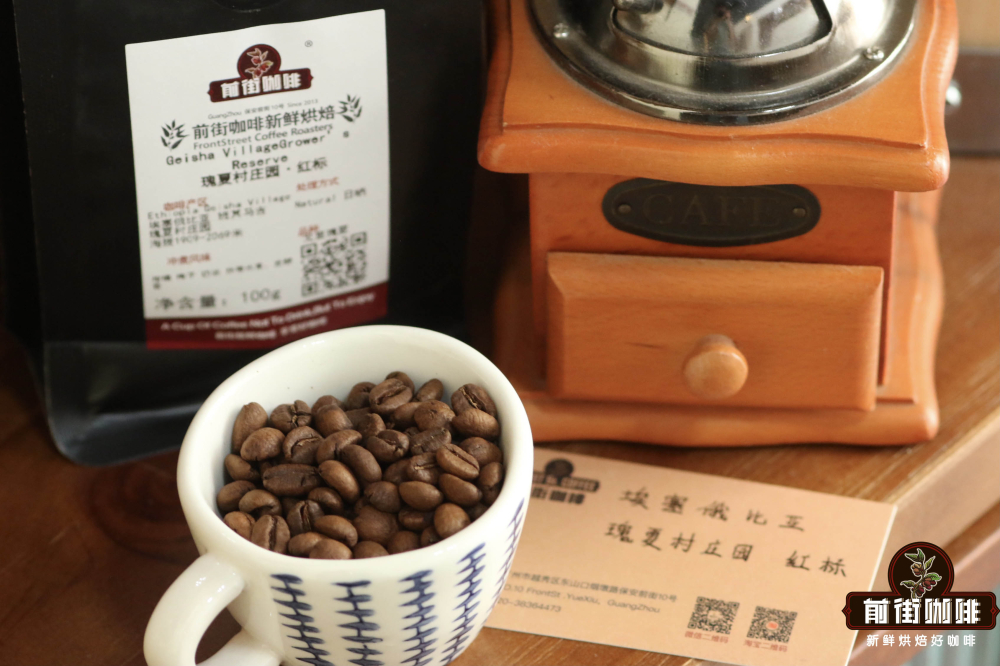
FrontStreet Coffee's new-crop Gold Label Gesha coffee beans this year come from the Oma block, processed by a natural method with a drying time of 32 days, and the variety is Gesha 1931, exclusive to the Oma block.
What Variety Is Gesha 1931?
Gesha 1931 was confirmed by observing plant morphology, bean shape and size, and combining this with cupping. It is considered the variety closest to the mother tree of Panama Geisha.
Through FrontStreet Coffee's cupping comparison, it was found that the new-crop Gesha Village Gold Label coffee beans show rich berry aromas, a full melon-like body, fresh citrus-like acidity, chamomile-like floral notes, and a tea-like sweet aftertaste.
How to Brew Gesha Village Gold Label?
In order to preserve the unique bright acidity of Ethiopian coffee beans, FrontStreet Coffee roasts the coffee beans to a medium-light level. Coffee beans from high-altitude production areas have a less dense structure, and combined with the shorter roasting time, the bean structure does not change much, so the substances in the coffee are not easily extracted.
Therefore, when brewing medium-light roasted coffee beans, FrontStreet Coffee recommends using a medium-fine grind, with a coarseness referring to fine granulated sugar (80% passing through China's No. 20 standard sieve). Take 15 grams of coffee grounds, use a V60 dripper, 90 to 91°C water temperature, a 1:15 coffee-to-water ratio, and brew with a three-pour technique.
First rinse the filter paper and preheat the dripper and coffee server. Bloom with 30 grams of water for 30 seconds, then pour in a small stream in circles until 125 grams for the first stage; when the water level drops and is about to expose the coffee bed, continue pouring in circles until 225 grams and stop. When the water level drops again and is about to expose the coffee bed, remove the dripper. Timing starts from the bloom, and the total extraction time is about 2 minutes.
Brewed flavor of Gesha Village Gold Label coffee beans: sweet berry aroma, a full and mellow body, with a little chamomile and red berry flavor, and a finish carrying melon notes and a tea-like sensation.
The above content is compiled by CoffeeHunters, a coffee news website.


