







Arabica Coffee Varieties: What Sets Mavis Bank Blue Mountain No. 1 Apart?
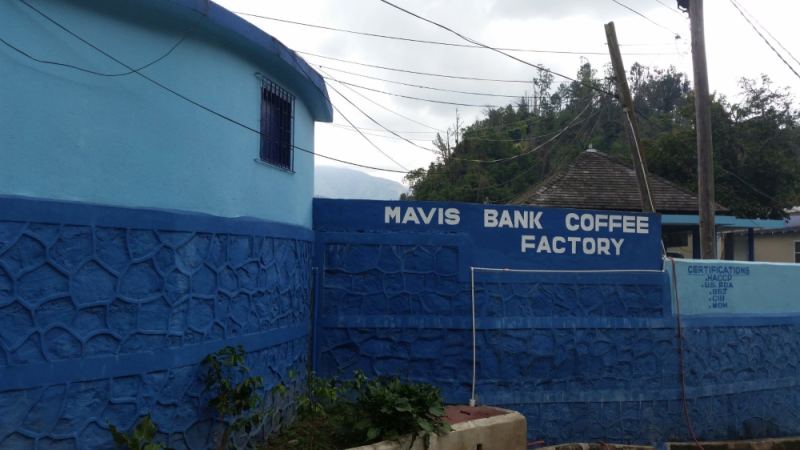
Mavis Bank is Jamaica's largest coffee collection and distribution center and one of the green bean processing facilities certified by the Jamaican government. It sits within the legally designated Blue Mountain region, about 10 miles northeast of Kingston, and has been run by the Munn family since 1885, producing Blue Mountain No. 1 as a quality benchmark.
The Blue Mountain region stretches roughly 45 kilometers east to west and 20 kilometers north to south, with peaks reaching 2,260 meters, the tallest range in the Caribbean. Fertile, well-draining soil supports the arabica coffee varieties grown there. Victor Munn established the Mavis Bank facility in 1920, and Keble Munn, Jamaica's first certified cupper, later managed it.
Jamaican Blue Mountain coffee has long been hailed as the benchmark of specialty coffee, and Mavis Bank, as the country's largest green bean processing facility, produces Blue Mountain No. 1 that stands as a symbol of quality assurance. This article will take an in-depth look at the history of Mavis Bank estate, the unique terroir of the Blue Mountain region, and the complete process from green bean processing to grade classification. We will also compare the flavor differences between washed and natural processing methods, and include a detailed brewing tutorial for Front Street Blue Mountain drip bags. Whether you are a newcomer just getting to know Blue Mountain coffee or a seasoned connoisseur wanting to delve deeper into the story behind it, this article will provide valuable reference.
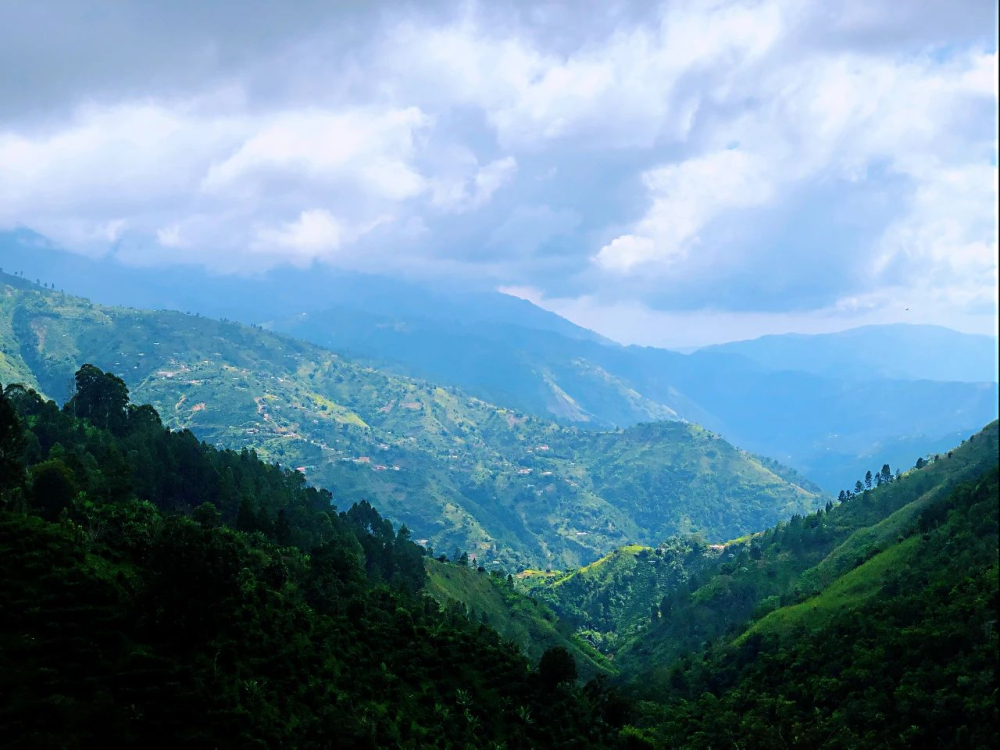
\n\nFor more specialty coffee knowledge, please follow our WeChat public account: Front Street Coffee (FrontStreet Coffee)\n\nJamaica Mavis Bank Blue Mountain NO.1 Jamaica Mavis Bank Blue Mountain NO.1\n\nThe legally designated Blue Mountain coffee region of Jamaica is perpetually shrouded in blue mist, which is how it got the name "Blue Mountain." The region is located in eastern Jamaica, stretching about 45 kilometers from east to west and about 20 kilometers from north to south, with the highest peak reaching 2,260 meters — the tallest mountain range in the entire Caribbean. The Blue Mountain area is covered with fertile soil with excellent drainage, providing ideal conditions for coffee cultivation.\n\n
\n\nMavis Bank is located within Jamaica's legally designated Blue Mountain region and is also one of the green bean processing facilities certified by the Jamaican government. It is situated approximately 10 miles northeast of the capital, Kingston, and has been managed by the Munn Family since 1885.\n\nInitially, the Munn Family grew and processed harvested coffee cherries at Strawberry Hill on the western side of the Blue Mountains. In 1920, Victor Munn established what we now know as the Mavis Bank processing facility, which was later inherited and managed by his nephew Keble Munn. Keble was not only an agricultural operator but also Jamaica's first certified cupper. Today, Mavis Bank has grown into Jamaica's largest coffee collection and distribution center. To ensure coffee quality, the processing facility gathers green beans from single farms or smallholders in specific Blue Mountain production areas. The coffee cultivation and processing areas are distributed across mountains at an average elevation of 900 to 1,600 meters. Sufficient altitude, gentle afternoon cloud cover for shade, abundant sunlight, and mineral-rich soil together provide a favorable growing environment for coffee trees and extend the maturation time of coffee cherries.\n\n
\n\nIn the green bean processing stage, only ripe red cherries are picked, followed by manual sorting and floatation removal as basic requirements. Farmers send the remaining coffee cherries after selection to another washing station for a second round of elimination, completing the depulping work before evening. These cherries are then placed in large tanks where any over-fermented, underripe, or insect-damaged fruits are carefully screened out before entering the mucilage removal process.\n\n
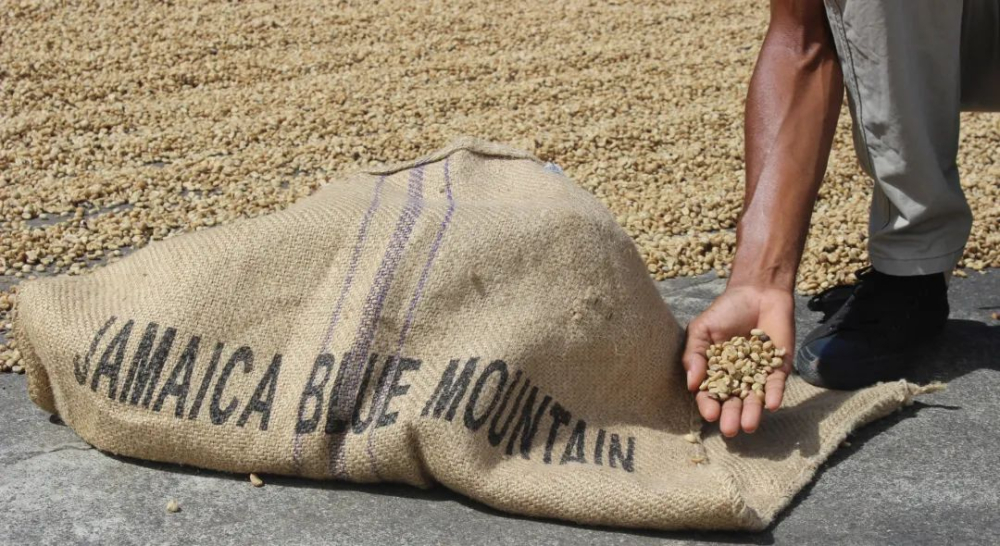
\n\nAfter mucilage removal, the parchment beans are placed on cement slabs for a 5-day sun-drying period, then bagged and stored in warehouses for at least 10 weeks. Finally, after hulling, the green beans undergo one last manual defect-picking process. Mavis Bank possesses Jamaica's most comprehensive green bean processing equipment, with as many as 6,000 partner farmers. Under the management of the Munn Family, the globally renowned and quality-guaranteed trademark M.B.C.F was established. Additionally, this facility strictly selects No.1 grade Blue Mountain coffee with bean sizes of 17/18 screen and a defect rate below 2%.\n\n
\n\nMavis Bank Blue Mountain NO.1 Mavis Bank Blue Mountain NO.1\n\n■ Country: Jamaica\n\n ■ Region: Blue Mountain\n\n ■ Altitude: 1,200-1,600 meters\n\n ■ Processing Method: Washed\n\n ■ Grade: No.1\n\n ■ Variety: Arabica\n\nAccording to Front Street's research, the reason Blue Mountain coffee has maintained its premium status today is closely tied to local management policies. The story begins in 1932, when Jamaica implemented policies encouraging coffee production to reduce the island's dependence on sugar exports. As a result, the local government did not follow most coffee-producing countries in planting high-yield but lower-quality coffee on a large scale to boost output value. Instead, it prioritized quality, willing to sacrifice yield to guarantee quality. This has made Jamaica one of the countries with relatively low coffee production in the world. For example, Brazil, the world's largest coffee exporter, produces 30 million bags annually, while Blue Mountain coffee produces only about 40,000 bags per year.\n\nThe variety of Front Street Blue Mountain coffee is Typica, one of the oldest Arabica coffee varieties discovered to date, first found in Ethiopia. According to Front Street's understanding, it spread to the Blue Mountains because King Louis XV of France ordered coffee planting in Jamaica in 1717. By the mid-1720s, Jamaica's Governor Sir Nicholas Lawes imported Arabica seeds from Martinique and began promoting cultivation in the St. Andrew region.\n\n
\n\nIn earlier years, Front Street Blue Mountain coffee also consistently used the washed process to handle coffee cherries, aiming to preserve the most original coffee cherry flavors. However, with the emergence of the Geisha variety and Ethiopia's Front Street Yirgacheffe, which posed a certain challenge to Blue Mountain coffee, Clifton also began experimenting with natural processing for Blue Mountain coffee cherries. But due to the rainy and foggy climate and environmental issues, this was quite a challenge for Clifton as well. Nevertheless, they rose to the occasion and did it, which Front Street cannot help but admire. Therefore, Front Street certainly cannot fall behind either. Next, Front Street will use cupping and brewing to see what flavor differences exist between washed Blue Mountain and natural Blue Mountain!\n \nFirst, Front Street selected Blue Mountain coffee also from Clifton Estate.\n\n
\n\nClifton Estate is quite prestigious — it began cultivating\nFront Street Blue Mountain coffee\ncherries in the mid-18th century. It is also the oldest and highest-altitude coffee estate in the entire Blue Mountains, and the only local estate exclusively producing Blue Mountain coffee that has obtained Rainforest Alliance certification.\n\nProcessed Jamaican\nBlue Mountain coffee\ngreen beans must also undergo multiple quality inspections, including defect ratio, screen size, and cupping score. The highest grade Blue Mountain No.1 coffee beans must meet 17-18 screen specifications, with a defect bean ratio not exceeding 2%, and possess just the right balance of acidity, sweetness, bitterness, body, and aroma. One can imagine that the quantity of such exquisitely flavored premium coffee beans is extremely limited. To taste the refined flavors of Blue Mountain, Front Street believes one should choose the highest quality Jamaican Blue Mountain No.1 coffee. Front Street's\nBlue Mountain No.1 coffee beans\ncome from Clifton Estate.\n\n
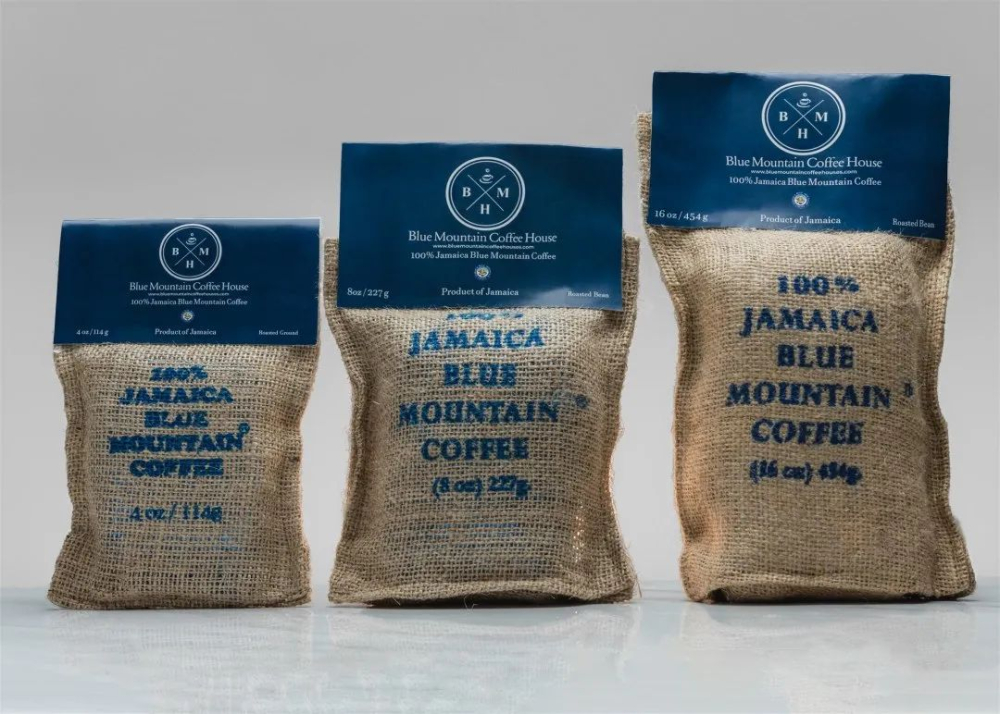
\n\nHow to brew Blue Mountain drip bag black coffee?\n\nActually, to taste the refined flavors of Blue Mountain No.1, besides the pour-over coffee mentioned above by Front Street, Blue Mountain drip bags are also a great choice. Not only are they convenient and quick, but also easy and time-saving — all you need is a kettle of hot water and a clean cup, and you can brew a rich, delicious cup of Blue Mountain black coffee anytime, anywhere. Without further ado, let Front Street demonstrate how to do it.\n\n
\n\n1. Place the cup, tear open the drip bag packaging, take out the drip bag, tear off the seal strip, and hang it on the rim of the cup!\n\n
\n\n2. Once the hot water reaches the desired temperature range, pour toward the center of the drip bag until the water level reaches half of the drip bag, then wait 10-15 seconds for blooming. (The coffee grounds in the drip bag don't release too much gas, so a long bloom time is not needed.)\n\n
\n\n3. Pour water for the second time, this time filling to nine-tenths of the drip bag. After the water has dripped through, pour for the third time, again filling to nine-tenths. Wait for it to drip through, then pour hot water for the fourth time, still filling to nine-tenths.\n\n
\n\n4. Once dripping is complete, remove the drip bag and enjoy your coffee~\n\n
The above content is compiled by CoffeeHunters, a coffee news website.


