







What Does Lightly Roasted Yirgacheffe Taste Like in a Pour-Over?
Yirgacheffe is a small Ethiopian town whose name became a regional coffee trademark, and its beans are grown at 1,700 to 2,200 meters, where slower cherry ripening builds up flavor. The result is a recognizable cup: white floral aroma, jasmine, and citrus-like acidity. A lightly roasted washed version keeps those notes clean and bright, which is why the region is such a common everyday specialty bean.
Processing changes the picture. Washed Yirgacheffe tends to show restrained citric acidity and a solid body, while natural versions push aroma forward and soften the acidity into layered floral and fruit notes. For a standard V60 three-pour, use freshly ground beans and watch water temperature and grind size, since a lightly roasted bean extracts quickly and can turn thin or sharp if the pour runs long.
Yirgacheffe, with its fresh and elegant white floral aroma and citrus acidity, has become the top choice of everyday staple beans for countless coffee lovers. On the bean list of Front Street Coffee, Yirgacheffe alone covers 4 varieties in total across traditional washed and natural processing, which shows just how popular it is. This article will start from the background of the producing region, the reasons behind its flavor, and the differences between washed and natural processing methods, systematically sorting out the flavor code of Yirgacheffe, and using the natural Red Cherry coffee beans as an example to share the standard V60 three-pour hand-brew parameters and tasting methods used in Front Street stores, helping friends who are new to specialty coffee better experience this bean's rich floral aroma and bright fruit acidity.
The flavor of Yirgacheffe coffee beans is extremely recognizable. Its elegant and fresh white floral aroma paired with citrus-like fruit acidity makes it hard to forget its name once you have tried it. In the eyes of many coffee lovers, compared with the expensive Geisha, Yirgacheffe often gives the impression of being affordable and delicious, so it is often the first choice as a daily staple bean. On the blackboard bean list at Front Street Coffee alone, Yirgacheffe occupies 4 spots, covering both traditional washed and natural processing, and its popularity is evident from this.
Where do Yirgacheffe coffee beans come from?
Like many top coffees, Yirgacheffe also comes from Ethiopia, the "home" of coffee. However, it is neither a variety name nor an estate title, but comes from a small town called Yirgacheffe. Coffee trees grow on the highlands of this town at an altitude of 1,700-2,200 meters, where the temperature is relatively low, and the development and ripening speed of coffee cherries is slower, thus giving them enough time to accumulate nutrients and flavor substances. The coffee beans produced are unique in flavor and outstanding in quality, and quickly gained fame worldwide. Later, the Ethiopian government formally applied for a regional patent for "Yirgacheffe," and Yirgacheffe coffee became synonymous with Ethiopian specialty coffee.
As one of the representatives of global specialty coffee, Yirgacheffe has a unique citrus and lemon fruit aroma, mixed with the fragrance of jasmine. The floral and fruit aromas are fresh and bright, the acidity is layered and distinct, clean without off-flavors, and its rich and balanced mouthfeel is exactly what makes it so captivating. It is also regarded as a representative of high-quality African coffee and enjoys a high reputation among coffee connoisseurs around the world.
How did the flavor of Yirgacheffe become popular around the world?
The so-called Yirgacheffe flavor, as understood by Front Street Coffee, is a richly layered citrus, lemon, and berry sweet-acid texture, accompanied by an interwoven white floral aroma and a clear tea-like body, making it unforgettable after one sip. To present such a refined flavor and mouthfeel, a high-quality growing environment, variety, processing method, as well as roasting and brewing, are all indispensable.
Ethiopia is located on the African continent, and its water resources are not well developed, so traditionally it has always used the ancient natural method to process green beans, that is, drying them directly in the sun. Because the methods were relatively rough, coffee quality was generally not high. It was not until 1972 that Ethiopia, in order to improve coffee bean quality, introduced washed processing technology and equipment from Central and South America. Unlike other producing regions, Yirgacheffe is a wetland area and is more suitable for washed processing. This measure amplified the citrus and lemon aroma of the Yirgacheffe coffee beans themselves, and the mouthfeel also became fresher and brighter.
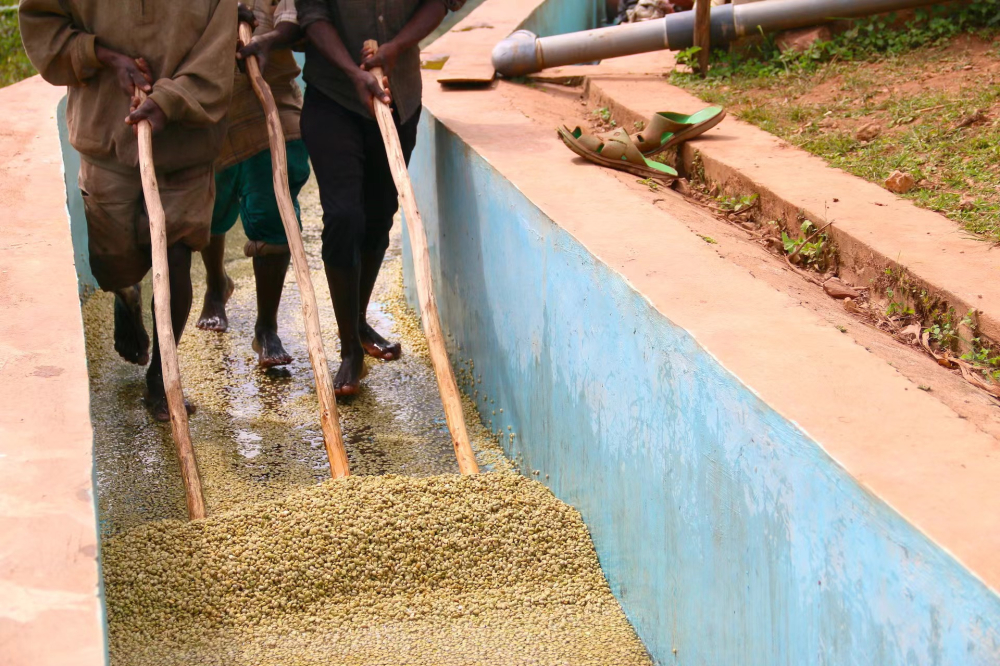
Washed process steps: After the coffee cherries are picked, they are placed in water, and immature fruits are removed by buoyancy, then the pulp and skin of the berries are removed with a depulper. After that, they are left in a fermentation tank for 18-36 hours until the mucilage layer breaks down. After fermentation is complete, the parchment beans are scrubbed in channels. Through specially designed channels and the scouring force of water, beans with low density and poor quality can be removed. Finally, the coffee beans are drained and spread on African-style raised beds to dry. Removing defective beans at multiple stages greatly reduces the defect rate of the coffee, resulting in higher cleanliness and clearer, more transparent aroma. The Gedeb Cooperative and Kochere regularly produced by Front Street Coffee are processed in this way.
Most of the coffee we drank in the past was mainly bitter and burnt. The reason coffee was strong and bitter was mainly that roasters roasted the coffee beans darker, with the main flavor direction being nuts and dark chocolate. With the emergence of the concept of specialty coffee, in order to retain more acidity, roasters roasted Yirgacheffe only to an appropriate light level. Lightly roasted Yirgacheffe showed a pleasant fruity sweet-acid sensation and white floral aroma, which can be said to have opened a "new era of fruity-acid coffee." A preference for sweetness and a fear of bitterness is exactly the public taste, and this is precisely why Yirgacheffe is so popular around the world.
Is there naturally processed Yirgacheffe? Is it good?
Although washed coffee once became a popular trend, natural processing actually still occupies the main part of Ethiopian coffee, and high-quality natural beans are not uncommon in China. What is different from the past is that today's natural processing spends more effort on manual sorting and ensuring even drying in the details. The Red Cherry coffee beans on Front Street's bean list are selected from traditional natural high-quality Yirgacheffe.
In order to increase the income of local Ethiopian farmers and improve coffee quality, the Dutch trading company Trabocca BV launched the "OPERATION CHERRY RED PROJECT" in 2007, mainly targeting high-altitude producing areas such as Yirgacheffe in Ethiopia to improve processing techniques such as washed, semi-washed, and natural, with professional cuppers also joining. During the harvest season, different coffee harvest volumes are set for different microclimate areas, and only 100% ripe red coffee cherries may be harvested, with output around 1,500-3,000KG. The financial loan support, new hardware equipment, and production knowledge and technology provided by Trabocca have greatly improved the coffee bean quality of the Yirgacheffe producing area, and even the entire country of Ethiopia. Correspondingly, the coffee also commands a higher selling price, thereby increasing the income of coffee farmers.
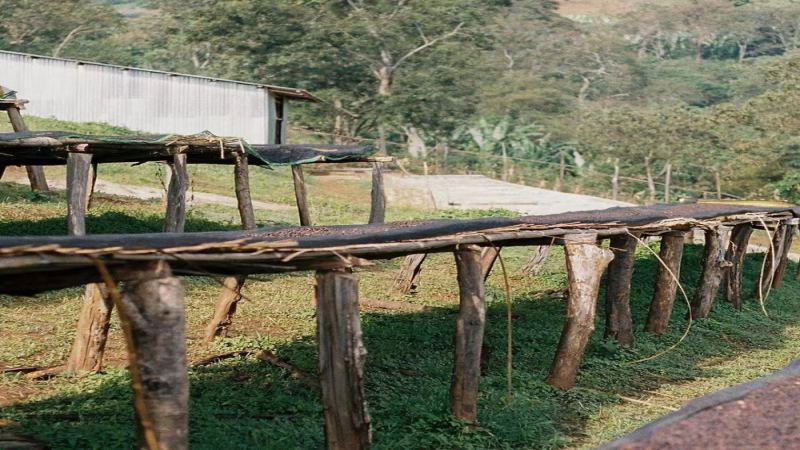
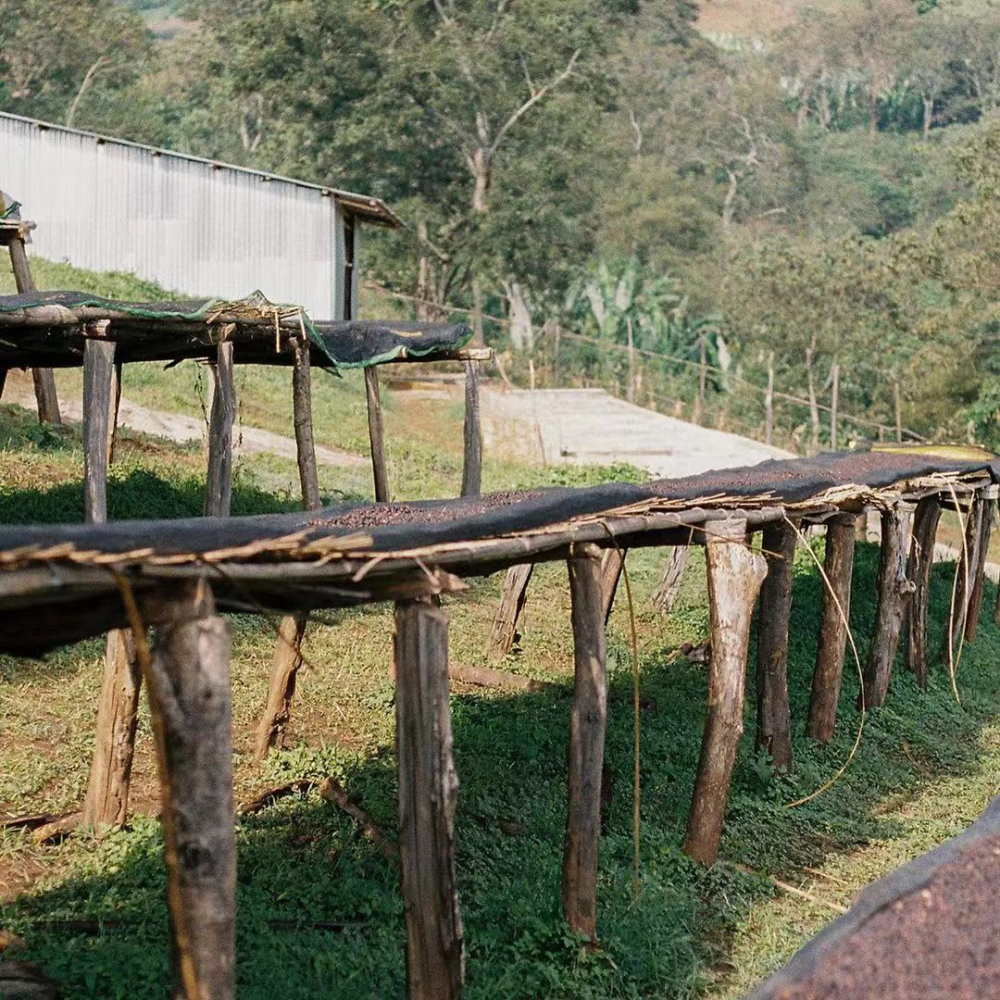
Freshly picked red coffee cherries are manually sorted to pick out defective beans and those that are overripe or insect-damaged, leaving the good beans. Then they are sent to a drying site for drying. Of course, different producing areas use different drying racks; some use tarps, raised beds, etc., and the most common is the African-style drying bed. The drying time generally takes 27-30 days, until the coffee turns dark purple and the moisture content drops to 11%, which is considered complete. Naturally processed Yirgacheffe has a more intense flavor and richer layering, with a winey fermented taste, and also a relatively high sweetness.
Sharing Yirgacheffe's hand-brew parameters
Front Street often receives brewing inquiries in the background from friends everywhere who love to learn, so today Front Street will use the natural Red Cherry coffee beans as the brewing object and, according to store output standards, explain Front Street Coffee's extraction approach for everyone. Come on, take notes~
Because Yirgacheffe coffee beans grow at high altitude and are relatively hard in texture, in order to bring out more floral and fruity notes in the coffee, Front Street uses hot water at 92°C~93°C for extraction. For grind size, Front Street recommends a medium-fine grind (78% passing through a Chinese standard No. 20 sieve). Too coarse cannot extract rich substances, and the brewed coffee will seem thin. Too fine easily causes over-extraction at high water temperature, and the brewed coffee is prone to bitterness.
During cupping, Front Street noticed that this bean shows different flavors at different temperatures, so the brewing method uses three-pour extraction, allowing different flavor substances to show their better selves as the coffee bed rises in temperature stage by stage. In order to highlight the fresh and charming aroma of washed Yirgacheffe, Front Street uses a V60 dripper for brewing. The dripper's spiral rib design allows the coffee grounds to degas better, maximizing the activation of the volatilization and dissolution of aromatic acids.
For the brewing ratio, Front Street believes 1:15~1:16 are both acceptable. If you want a richer mouthfeel, use 1:15; if you want to feel the floral sweetness more clearly, you can use 1:16, letting the flavors spread out more.
Dripper: V60 Water temperature: 92-93°C Dose: 15g Coffee-to-water ratio: 1:15 Grind size: fine sugar size (78% passing through a No. 20 sieve)
Three-pour pouring: Wet the coffee bed with twice the amount of water as the coffee grounds, forming a dome and letting it bloom for 30s, then pour in a small stream in circles from the inside out until 125g, then pause. When the coffee bed drops to half the height of the dripper, continue pouring the third stage with the same fine stream until 225g, until all the coffee liquid has filtered through, then remove the dripper. The time is about 2 minutes. After the coffee in the dripper flows into the server, remove the dripper, then shake the coffee liquid in the server evenly, and you can begin tasting Yirgacheffe's flavor starting from high temperature.
How to properly taste the flavor of Yirgacheffe coffee?
From this washed Yirgacheffe, Front Street sensed a very rich layering. First, after grinding, there was a fresh fragrance like honey, berries, and jasmine. Then, when Front Street poured in hot water, it began to give off a hint of apple aroma. The first sip of black coffee showed an elevating acidity like yellow lemon and sugar mandarin. As the temperature dropped slightly, the palate felt the lingering finish of green grapes, cream, and sugarcane, with obvious sweet aftertaste and a clean, sweet mouthfeel.
For professional coffee knowledge exchange and more coffee bean information, please follow Coffee Workshop (WeChat public account cafe_style)
For more specialty coffee beans, please add the private WeChat of Front Street Coffee, WeChat ID: qjcoffeex
When it comes to how to drink Yirgacheffe, Front Street believes that if you are a newcomer just getting into specialty coffee, you might as well first try tasting Yirgacheffe in the form of hand-brewed black coffee, because this way you can better experience its rich floral aroma and explosive fruit acidity.
The above content is compiled by CoffeeHunters, a coffee news website.


