







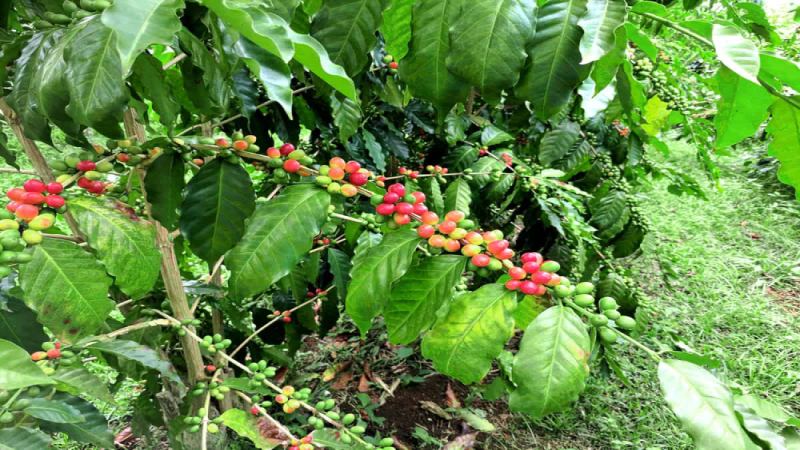
Why Does Panama Geisha Coffee Taste So Different?
Geisha coffee originated in Ethiopia but became famous at Hacienda La Esmeralda in Panama's Boquete region. The area sits near the Baru volcano, and its nutrient-rich volcanic ash soil plus a distinct microclimate give the cup its intense, prominent fruity aroma. Panama's coffee industry drew wide attention largely because of this variety.
The Geisha tree is tall with narrow leaves, strong resistance to coffee leaf rust, and widely spaced branches; green beans are slender. Yields are low, so bulk commercial supply is difficult. Boquete also hosts estates such as Elida and Kotowa Duncan. A budget entry point is Panama Butterfly, a single-origin lot grown from a mix of about 70% Geisha with Caturra and Catuai, which rewards fresh roasting and grinding on demand.
Geisha coffee originated in Ethiopia, rose to fame at Panama's Hacienda La Esmeralda, and the Boquete region is its core stage. This article begins with the variety's origins and spread, explains how Panama's unique microclimate and volcanic soil create specialty coffee, and focuses on the outstanding value-for-money Panama Butterfly—a single-origin bean grown from a mix of 70% Geisha, Caturra, and Catuai. It also presents Front Street Coffee's brewing parameters and flavor description, helping coffee lovers understand Butterfly's value as an entry-level Geisha bean, as well as the importance of fresh roasting and grinding-and-brewing on demand.
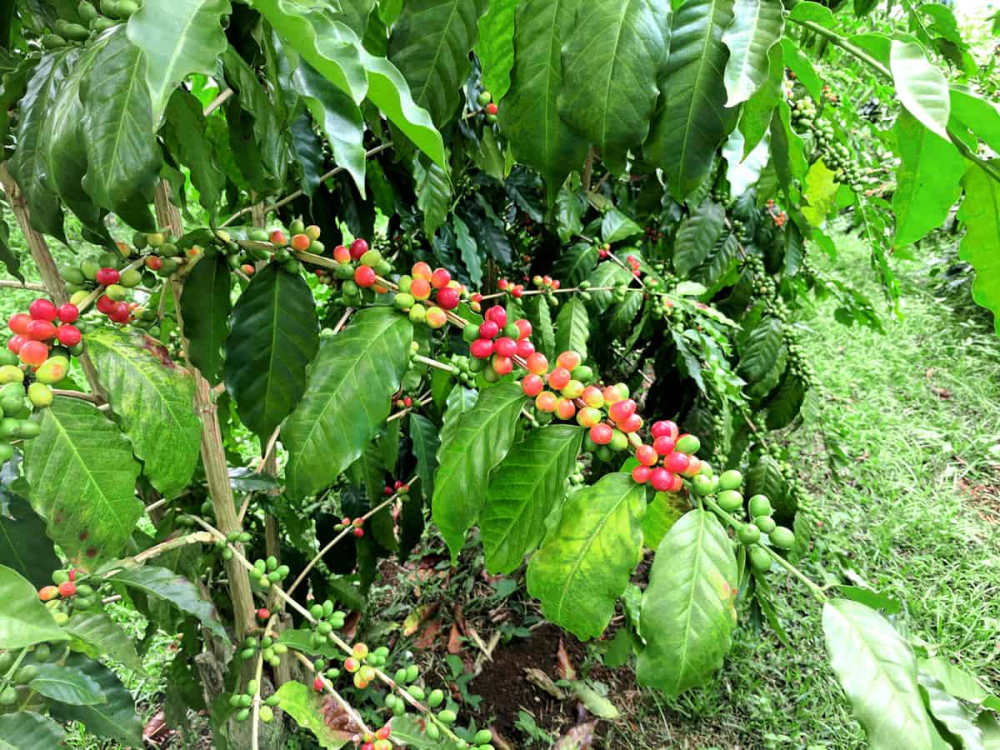
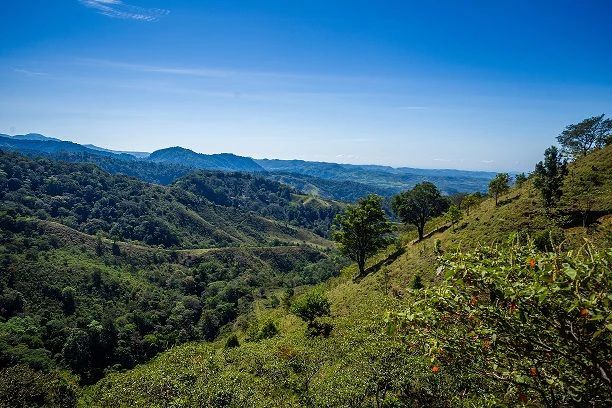
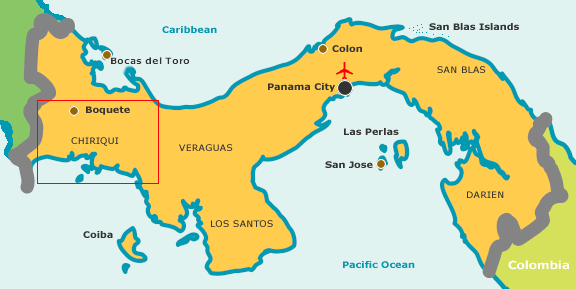
The Geisha coffee variety comes from Ethiopia, but the place that truly made it famous is Panama's Hacienda La Esmeralda, and Panama's coffee industry has also gained widespread attention because of Geisha. Hacienda La Esmeralda is located in the Boquete region, a town under Chiriqui Province, situated at the border between Panama and Costa Rica, adjacent to the famous Baru volcano, with beautiful scenery and nutrient-rich soil; the local climate and soil conditions provide an ideal environment for growing high-quality coffee. The Boquete region is also home to many excellent estates. Besides Hacienda La Esmeralda, estates such as Elida Estate and Kotowa Duncan Estate are equally renowned, all producing specialty coffee of excellent quality. These achievements stem not only from Boquete's favorable ecological conditions and the mineral-rich volcanic ash soil of Baru volcano.
Introduction to the Geisha variety:
Geisha was originally an extremely rare wild variety in Ethiopia, and its name may come from a small nearby village called Geisha where the coffee beans were discovered; this coffee tree is relatively tall, with narrow leaves, strong resistance to coffee leaf rust, and widely spaced branches along the trunk. The green beans are slender in shape, while the roasted beans carry an intense and prominent fruity aroma. Because this variety has low yields and is difficult to purchase commercially in bulk, the most critical factor in making Panama coffee unique lies in its microclimate. Panama's east-west topography causes cold air to flow through the central mountain range and converge at altitudes above 6,500 feet, creating diverse microclimates in the Boquete and Volcán–Candela areas, which also makes Panama an important region for specialty coffee.
Geisha is one of the oldest coffee varieties in the world. Some call it "Geisha" (艺伎), while others translate it as "瑰夏"—the name carries a sense of delicacy and floral fragrance. It is a coffee that is hard to forget once tasted, and a frequent winner in bidding and cupping competitions across countries, with extremely high praise. The Geisha variety was discovered in 1931 in the Geisha forest of Ethiopia, then sent to Kenya's coffee research institute; in 1936 it was introduced to Uganda and Tanzania, in 1953 to Costa Rica, and Panama began growing Geisha coffee in the 1970s after Mr. Francisco Serracín of Don Pachi Estate obtained seeds from CATIE in Costa Rica.
The Geisha variety swept through the coffee world with hurricane-like force. This coffee revolution came on fiercely, forcing even Jamaica Blue Mountain and Hawaii Kona, which had long occupied the throne of the coffee kingdom, to yield somewhat. This wild variety native to Ethiopia, after being tested in countless competitions, is now widely planted in major coffee-producing regions, and its finest ambassador is Panama's "La Esmeralda" estate.
Panama is located in the middle of the American continent, a small country whose coasts are washed by the waters of the Atlantic and Pacific Oceans. Panama sits at 9 degrees north latitude, at the convergence point of the central mountain range, where Baru volcano, one of the highest volcanoes in Central America, is located. Baru volcano rises over 11,400 feet above sea level, and the surrounding land is nutrient-rich and fertile, creating ample conditions for the planting and cultivation of Panama's specialty coffee.
The advantages of the Boquete region, besides the superior ecological conditions of Panama's Boquete area and the fertile volcanic ash soil of Baru volcano, include another key factor: the microclimate of the Boquete highlands is a unique and important resource for the specialty coffee of the Boquete region. Panama's east-west topography causes cold air to flow through the central mountain range and converge at altitudes above 6,500 feet, creating diverse microclimates in the Boquete area, making temperature and rainfall very suitable for plant growth, so the coffee trees here grow well.
In such a uniquely favorable growing environment as Boquete, there is of course not only the Geisha of Hacienda La Esmeralda, but also coffee kings with impressive flavor, quality, and value; however, drinking Geisha every day, Front Street believes, is still too luxurious, and even without financial pressure, it would not be appropriate—just like eating shark fin and bear paw every day. The same goes for coffee: one should explore widely to better enjoy the pleasure of tasting coffee.
Panama Butterfly Coffee
The Boquete region also has an excellent Geisha coffee—Panama Butterfly. Butterfly was originally called Cupid rather than its current name Butterfly. At first it contained only 30% Geisha; after selling for two years, the ratio was adjusted to 50%, and later adjusted again to 70%, and it was renamed Butterfly. Butterfly coffee is composed of 70% Geisha variety, including three varieties: Geisha, Caturra, and Catuai. Panama's special local microclimate gives this region abundant rainfall and a large temperature difference between day and night, and combined with the volcanic soil unique to volcanic areas, as well as careful harvesting and meticulous processing, this coffee performs remarkably well in body, acidity, and floral aroma.
FrontStreet Coffee's Butterfly coffee performs excellently in body, acidity, and floral aroma. Even more pleasantly surprising, on the basis of very good quality, its approachable price makes this coffee bean's value for money off the charts. The special thing about this coffee bean is that it contains the Geisha variety, giving it a very obvious Geisha flavor. For friends trying Geisha coffee for the first time, Panama Butterfly coffee is a great entry-level bean.
Geisha
What makes Geisha special is its very obvious and clearly defined floral and citrus flavors, very high cleanliness, soft and elegant acidity, lasting cottony sweetness, and a premium black tea mouthfeel. The aroma of flowers and the intense sweetness of tropical fruit give it a unique floral and fruity fragrance.
Caturra
Caturra is a mutation of the Bourbon variety, discovered in Brazil in 1937. It has better productivity and disease resistance than Bourbon, and a shorter tree that is convenient for harvesting. It is highly adaptable and does not need shade trees—it can thrive even under direct bright sun, commonly known as Sun Coffee. Caturra is suitable for planting from low altitudes of 700 meters to high altitudes of 1,700 meters, with strong altitude adaptability, but the higher the altitude, the better the flavor, and productivity decreases accordingly.
Catuai
Catuai is also an Arabica hybrid variety, a cross between Mundo Novo and Caturra. It has relatively good resistance to natural disasters, especially wind and rain. It inherits the advantage of Caturra's low tree height, correcting the shortcomings of Mundo Novo; another advantage is that its fruit is firmly attached and not easily shaken off by strong winds, making up for the fragile weakness of Arabica cherries.
Some may ask: Is Butterfly a blend?
According to information obtained by FrontStreet Coffee, due to the estate's historical reasons, in order to pursue yield at the time, the early Geisha variety was planted mixed together with Caturra and Catuai coffee trees. To facilitate harvesting, the coffee farmers later separated the three varieties, and at export they directly mixed and processed the three varieties together to achieve the intended rich flavor.
The three varieties in Butterfly are all from the same origin and the same region, so it belongs to single-origin beans.
Panama Butterfly Coffee Beans Washed Processing Method
There are many washed processing methods now, but broadly they all involve picking the coffee cherries, removing floating beans, then depulping, and then soaking the coffee beans in fermentation tanks, where enzymes in the water soften the mucilage attached to the parchment, and natural yeast breaks down the sugars in the mucilage. This process is called fermentation.
After fermentation is complete, the coffee beans are moved to drying beds to dry. During drying, the beans need to be constantly turned to ensure even drying. Finally, they are stored in warehouses in parchment. After a green bean buyer places an order, they are hulled and bagged. Coffee processed this way has a clean mouthfeel, emphasizing bright and lively fruit acidity, as well as lifted fruit flavors and floral aromas.
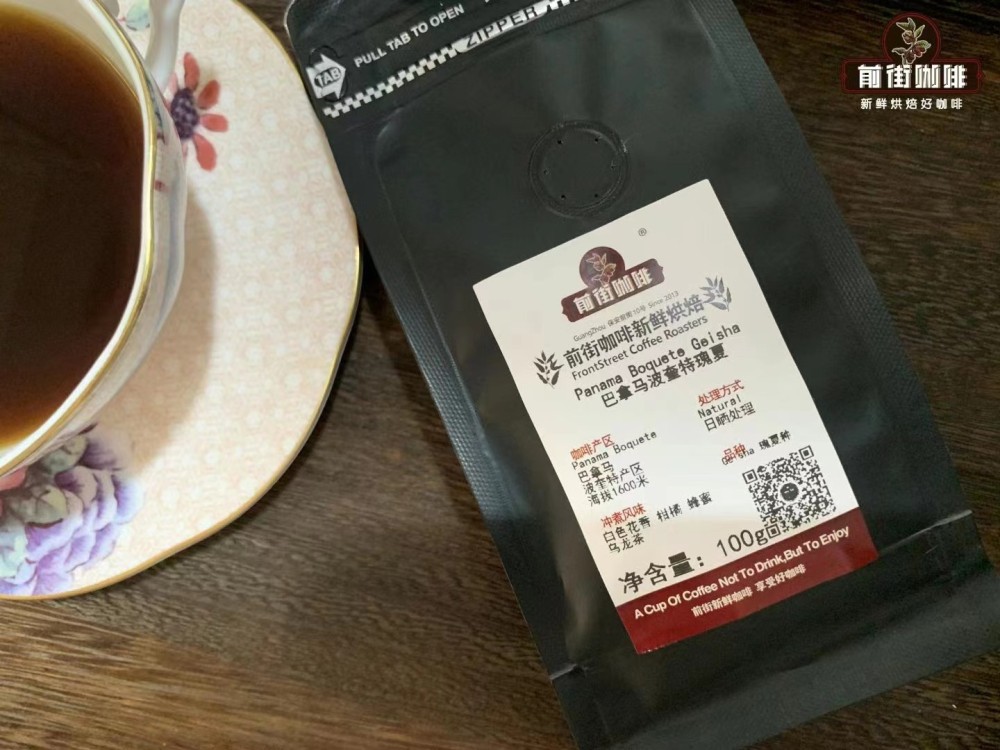
Front Street's brewing parameters for Panama Butterfly coffee:
Front Street uses: V60 dripper, 1:15 coffee-to-water ratio, medium grind (about the size of coarse sugar / 80% pass rate through China standard No. 20 sieve), 91°C water temperature.
Use staged extraction, blooming with 2 times the coffee powder weight in water, that is, 30 grams of water for a 30-second bloom. The reason a bloom is needed is to allow the coffee grounds to release internal carbon dioxide gas, thereby making the later extraction more stable. Pour in a small stream in circles until 125 grams, then pause; continue pouring until 225 grams and stop. After the water in the dripper has dripped through, remove the dripper. Start timing from the beginning of pouring; extraction time is 2'00". Next, pick up the whole cup of coffee and swirl it to mix evenly, then pour it into a cup for tasting.
Front Street Panama Butterfly coffee flavor characteristics: the dry aroma has the fragrance of white flowers, with very obvious citrus flavor; the finish has a relatively strong tea sensation, honey sweetness, and a clear lingering sweetness.
To let more friends taste the flavor characteristics of Panama Geisha coffee, Front Street specifically made the Boquete Geisha coffee from Panama's Boquete region a daily drinking bean, making it a representative coffee of Panama. Geisha coffee is certainly delicious, but other varieties of coffee are also very good. For example, coffee from Ethiopia, the original home of coffee, is very fresh! Its flavor is unique! For a richer mouthfeel, there is Indonesia's Mandheling coffee, etc. Front Street has more than fifty single-origin coffees from different regions and varieties in various producing countries, fully able to satisfy everyone's love for coffee.
Front Street's coffee brewing suggestions:
Regarding coffee brewing, Front Street has always believed that the freshness of coffee beans has a great relationship with coffee flavor. Therefore, the coffee beans shipped by FrontStreet Coffee are all within 5 days of the roasting date. Front Street's roasting philosophy is "freshly roasted good coffee," so that every customer who places an order receives the freshest coffee. Coffee's resting period is about 4–7 days, so when customers receive it, it is exactly at its best flavor.
For friends who need ground coffee, Front Street warmly reminds you: once coffee beans are ground in advance, they no longer need to rest, because during transport the pressure from carbon dioxide inside the packaging can also make the coffee flavor rounder, so you can brew a cup immediately after receiving the ground coffee. However, ground coffee needs to be brewed promptly, because after contact with air it oxidizes relatively quickly—that is, the coffee's flavor dissipates faster, and the coffee will not taste as good. Therefore, Front Street recommends buying whole beans and grinding and brewing on demand, so you can better taste the coffee's flavor.
For professional coffee knowledge exchange and more coffee bean information, please follow Coffee Workshop (WeChat public account: cafe_style)
For more specialty coffee beans, please add the private WeChat of Front Street Coffee (FrontStreet Coffee), WeChat ID: qjcoffeex
The above content is compiled by CoffeeHunters, a coffee news website.


