







How Do the Four Main Iced Coffees Actually Differ?
Iced Americano and iced pour-over follow a hot-then-iced route: a hot brew is made first, then rapidly chilled with ice. Cold brew and ice drip use cold water for the whole extraction. That single difference drives production time, home difficulty, and flavor. Iced Americano, for example, is espresso diluted with ice water, which keeps the cup bold and layered.
For an iced Americano, grind 20g of coffee, extract 40g of liquid at a 1:2 ratio in 25 to 33 seconds, then pour it over 90g of ice and 180g of drinking water in a 300ml glass and stir. Because this concentrates the coffee, the drink leans bitter rather than sweet, so if the answer to whether an Americano is bitter or sweet matters to you, adjust the ratio or the bean.
More and more people are drinking iced coffee in summer, but can you really tell the difference between the four common types of iced coffee: iced Americano, iced pour-over, cold brew, and iced drip? Although they are all called iced coffee, there are actually considerable differences from extraction principles to production time, and then to the final flavor performance. This article sorts out the similarities and differences of these four types of iced coffee one by one from four dimensions: extraction method, production time, difficulty of home operation, and taste characteristics. The article also includes the specific brewing parameters and steps of Front Street Coffee, including practical plans for beans such as Front Street Sunflower Warm Sun, Fruit Dingding, and Strawberry Candy, to help you more clearly understand what kind of beans and scenarios each type of iced coffee is suitable for, and also make it convenient to replicate at home.
To get more specialty coffee content, you can follow the WeChat public account: Front Street Coffee (FrontStreet Coffee)
Iced Americano, iced pour-over, cold brew, and iced drip are the four most common types of iced coffee in daily life. Many friends who have just come into contact with coffee are still relatively unclear about their differences. Front Street will explain the characteristics and differences of these four types of iced coffee clearly from several angles below.
Extraction Method
Let's look at the extraction method first. Both iced Americano and iced pour-over follow the route of hot first and then iced, that is, first making a cup of hot coffee, then rapidly cooling it with ice cubes; while cold brew and iced drip use cold water to complete the extraction from beginning to end.
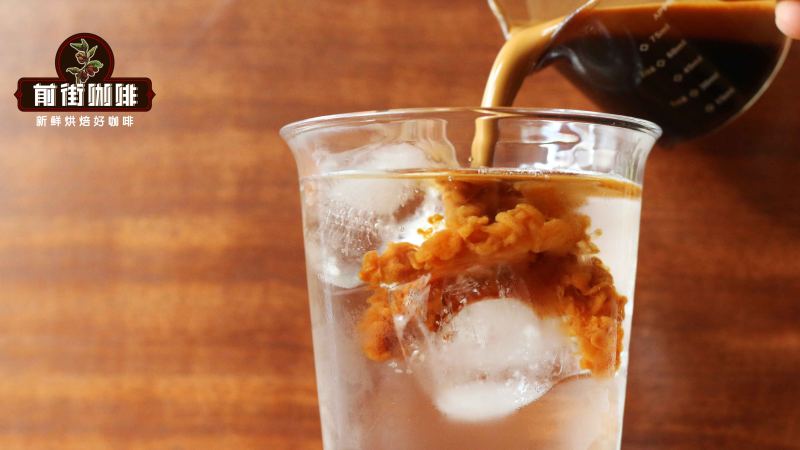
The method for iced Americano is to first extract espresso with an espresso machine, then add an appropriate amount of ice water to cool and dilute the coffee. Specifically, take 20g of Front Street Sunflower Warm Sun coffee powder, use a 1:2 coffee-to-liquid ratio, and extract 40 grams of coffee liquid within 25-33 seconds; take another 300ml glass cup, put in 90g of ice cubes and 180g of drinking water, pour in the freshly extracted espresso, stir evenly, and it is ready to drink.
The iced Americano made with Front Street Warm Sun coffee beans has a very rich layered mouthfeel on entry, with a faint vanilla and berry aroma that can be captured, and it also has the smoothness of cream. It is icy and full-bodied, especially suitable for summer.
Iced pour-over is to first brew a cup of hot coffee slightly stronger than normal output by pour-over, then cool and dilute it with ice cubes. Below, Front Street takes the light-medium roasted Front Street Fruit Dingding as an example, using high-concentration and high-extraction iced brewing parameters:
Dose: 15 grams
10 times hot water: 150 grams
5 times ice amount: 75 grams
Water temperature: 92°C
Grind size: 83% passing through a No. 20 sieve (EK43s setting 9, C40 setting 22)
Dripper: Hario V60
Technique: three-pour method
First put 75g of ice cubes into the server, then pour 15g of ground coffee into the dripper and gently tap it flat. For the first pour, use a small water stream of 3ml/s, pour 30g of hot water from the center outward in small circles, and bloom for 30 seconds; after 30 seconds, pour the second stage of 60g of water using the same technique, being careful not to raise the liquid level too high, otherwise it is easy to underextract; when the coffee liquid is almost drained, pour all the remaining 60g of hot water at a flow rate of 3ml/s, ensuring the total extraction time is controlled between 1 minute 50 seconds and 2 minutes.
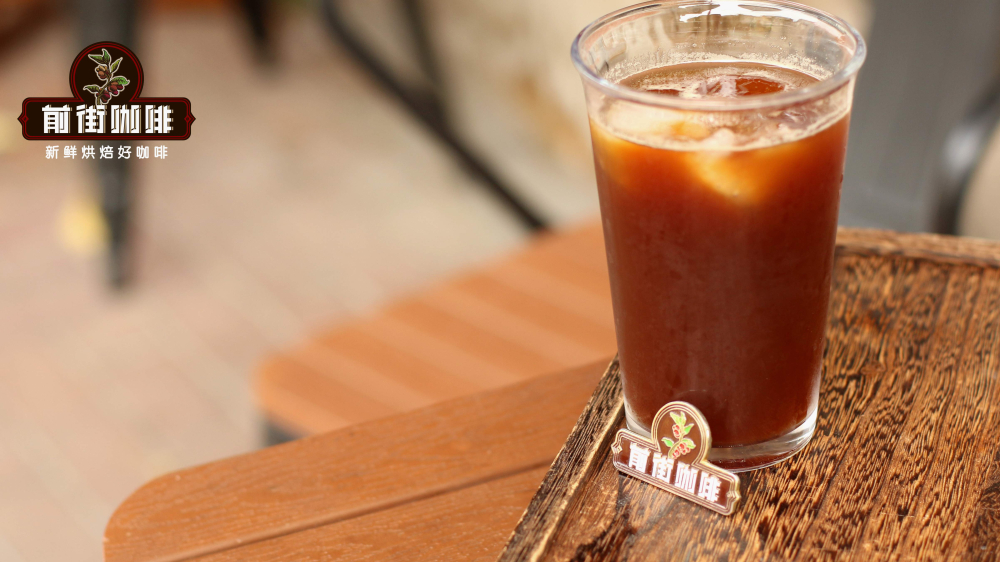
The method for cold brew coffee is to soak coffee grounds in cold water, usually for a longer soaking time, and then filter out the coffee grounds before drinking. The specific steps are as follows.
Taking Front Street Strawberry Candy as an example, making cold brew uses a 1L cold brew pot. Prepare 60g of Strawberry Candy coffee beans and grind them to the coarseness of fine granulated sugar (80% passing through China's No. 20 standard sieve). Then pour the ground coffee into the pot, add 600g of drinking water at a 1:10 coffee-to-water ratio, stir evenly with a long spoon, seal, and refrigerate for 8-12 hours. After soaking, take out the cold brew pot, stir thoroughly again, then pour into filter paper to remove the grounds until all the coffee liquid is filtered, and the cold brew is complete.
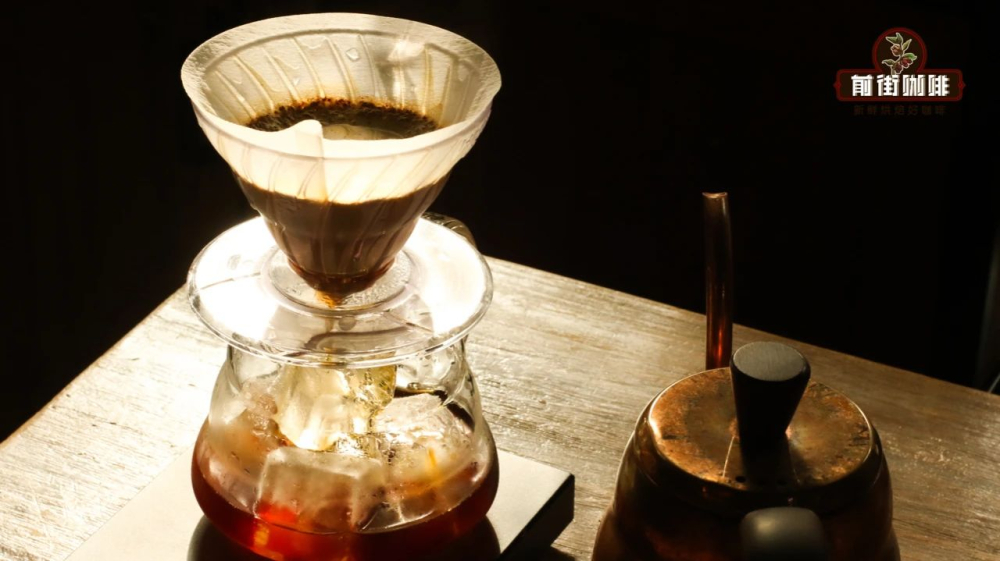
Iced drip coffee is made by letting ice water drip drop by drop into the coffee grounds layer to extract coffee liquid. The production time is also relatively long, and after drip filtration is completed, it still needs to be refrigerated before drinking. The specific method is as follows:
The flow rate calculation method for iced drip is different from pour-over; it is calculated by drops per second. The slower the flow rate, the longer the total time, and the more likely over-extraction becomes. Front Street generally controls it at 7 drops every 10 seconds, and the specific flow rate can be adjusted according to personal preference. The coffee-to-liquid ratio is 1:10. Because the iced drip coffee produced by Front Street is diluted with ice cubes before drinking, the concentration is made higher; if making it at home, you can extract at 1:12-1:14. When Front Street makes iced drip, it takes 60g of coffee beans and grinds them into powder, places a round filter paper in the powder cup, pours in the coffee powder, then lays another filter paper on the surface, and then wets the coffee powder with water. This can both shorten the drip filtration time and avoid uneven extraction. Fill the upper pot with an ice-water mixture at a 1:1 ratio of ice to water, extracting a total of 600g of coffee liquid.
Production Time
In terms of time consumption, iced Americano and iced pour-over are both very quick and can be completed within a few minutes; cold brew and iced drip take much longer. Cold brew generally needs about 12 hours, and iced drip usually takes 6-8 hours.
Ease of Production
If making it at home, pour-over iced coffee and cold brew coffee are relatively easier. Cold brew does not require much in terms of equipment; a sealed bottle can get it done; the equipment for iced pour-over is also relatively accessible, and people who usually have pour-over habits basically have it all ready.
By comparison, iced Americano requires an espresso machine, and iced drip requires special equipment, so the cost is somewhat higher.
Differences in Flavor and Mouthfeel
Here Front Street first explains one point: whether coffee is sour or bitter, floral and fruity or nutty and chocolatey, mainly depends on the flavor of the coffee beans themselves, and the influence of the extraction method is not that great. Iced coffee made by different methods will indeed present different styles, but these are differences under comparison. No matter which method is used, the final taste cannot depart from the basic flavor direction of the coffee beans.
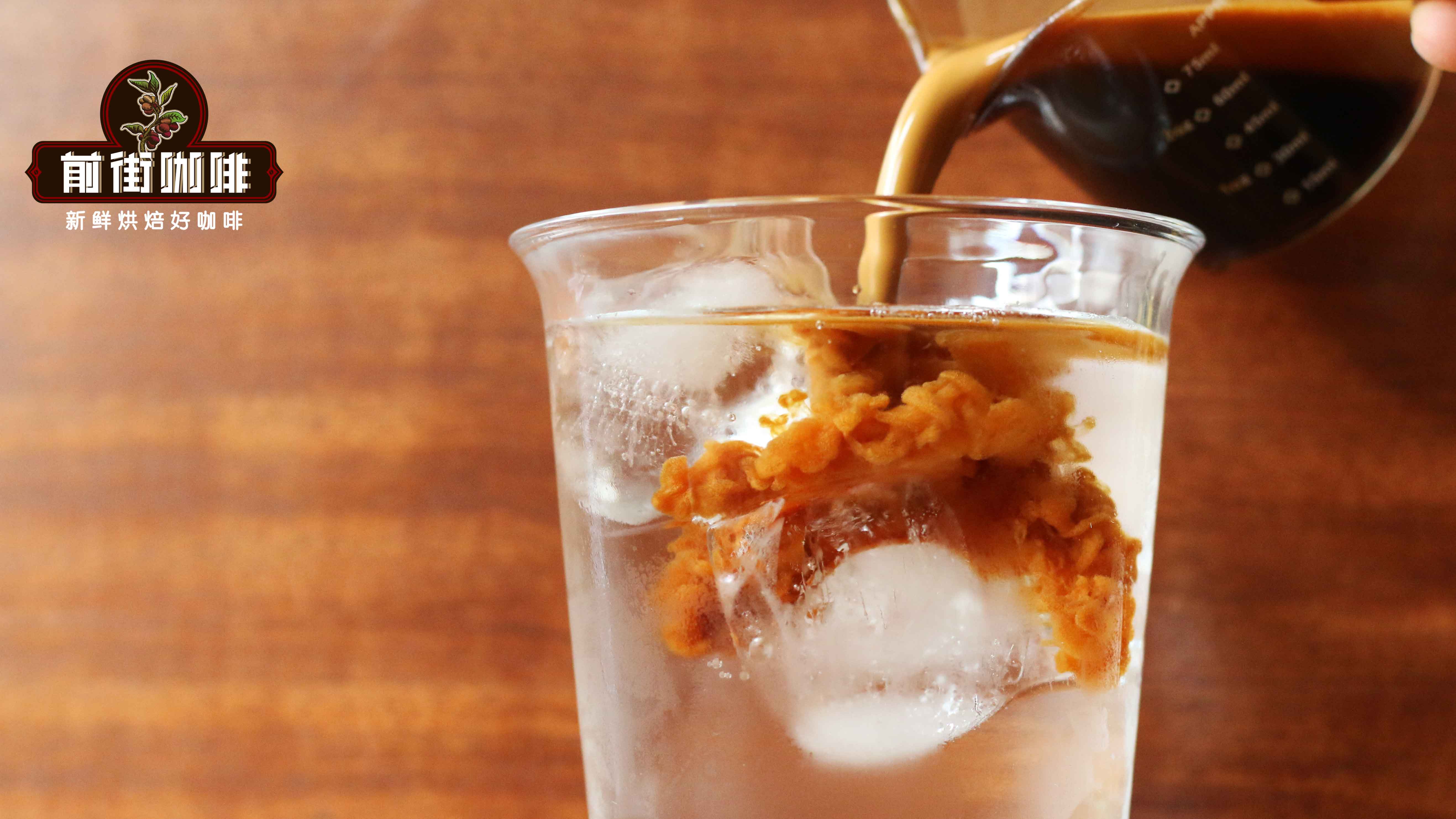
The flavor of iced Americano is usually on the lighter side, with a refreshing mouthfeel. It often presents the most basic taste of the coffee beans, and the liquid looks relatively cloudy.
The characteristic of iced pour-over is a clean and refreshing mouthfeel, making it easy to highlight the main flavor of the coffee beans, and the liquid is transparent and bright.
Cold brew has less bitterness, a balanced flavor, and prominent sweetness. Its mouthfeel is fuller than iced pour-over, and the clarity of the liquid is slightly inferior to iced pour-over.
Iced drip has richer fermented flavors, such as vinous notes. Under the premise of the same beans, the bitterness of iced drip is higher than the other three types of iced coffee, and its mouthfeel performance is also better than the other three.
The above content is compiled by CoffeeHunters, a coffee news website.


