







What Makes Sidamo Guji Hambela Buku 5.0 Coffee Distinct?
Yirgacheffe often stands in for all Ethiopian coffee, but Sidamo produces equally strong beans in a different style. The Guji Hambela Buku 5.0, offered by Front Street Coffee, is known for a juice-like body and a strawberry cream flavor. It comes from the Hambela sub-region and the Buku Abel processing station, whose natural process shapes the fruit-forward profile.
The Guji zone sits in southern Ethiopia next to Yirgacheffe, and its soil and microclimates vary enough that lots from each plot differ. Combined with the country's many native varieties, Sidamo coffees generally show abundant fruit acidity and bold aromas without an overly heavy body. The Huakui line entered the public eye with a 2017 TOH championship, and the 5.0 version continues that fine coffee lineage.
The bright acidity of Yirgacheffe leads many people to mistakenly believe that Ethiopia has only this one specialty region, but in fact Sidamo also produces high-quality coffee with diverse styles. Today, Front Street Coffee (FrontStreet Coffee) wants to talk about Huakui 5.0 from the Hambela sub-region of Guji in Sidamo—this bean has won countless fans with its full juice-like body and strawberry cream flavor. This article will sort out the terroir conditions of the Guji region, the natural processing method of the Buku Abel processing station, and the evolution of Huakui from its 2017 TOH championship to the 5.0 version, and will also include Front Street's roasting curve, cupping report, and V60 brewing plan to help coffee lovers fully understand the flavor source and extraction key points of this bean.
The transparent acidity and clean, fresh flavor of the Yirgacheffe region have made it widely famous in the specialty coffee world, and over time, many people have simply treated Yirgacheffe as synonymous with Ethiopian coffee, even mistakenly believing that the country produces only this one style of bright, refreshing bean. Today, Front Street wants to turn everyone's attention to another equally outstanding region—Sidamo. The Sidamo Guji Huakui 5.0 produced by Front Street Coffee (FrontStreet Coffee) has captured the hearts of coffee lovers batch after batch precisely because of its full mouthfeel like freshly squeezed juice.
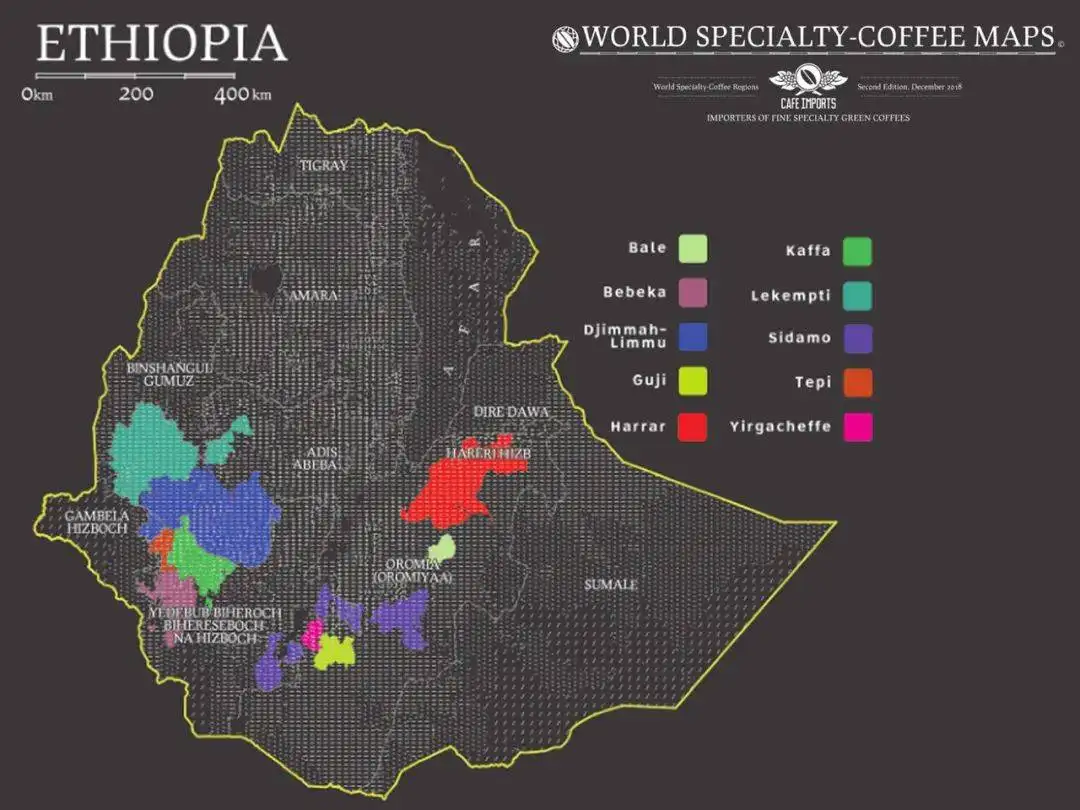
Let's first get to know the Sidamo region. It is located in southern Ethiopia, adjacent to Yirgacheffe, a major specialty coffee town, and is one of Ethiopia's important specialty regions. The flavor of coffee produced in Sidamo spans a wide range, because each small area has different soil composition and microclimate, and combined with the countless native coffee varieties in the area, the coffee from each plot shows distinct individual differences.
Front Street Coffee (FrontStreet Coffee) has encountered many beans from different areas of Sidamo, and they generally have abundant fruit acidity and bold aromas. They are quite friendly to consumers who like impactful flavors but do not want the mouthfeel to be too heavy, achieving a good balance between aroma and mouthfeel. The Huakui coffee bean we are focusing on today comes from the Hambela sub-region of the Guji region in Sidamo. This sub-region entered the public eye in 2017 because Huakui won an award in a competition. Below, let's first talk about the Guji region.
The Guji region was once assigned to the Sidamo administrative area, and in 2010 the Ethiopia Commodity Exchange (ECX) established it separately as a new region. It is located southeast of Yirgacheffe, with complex terrain and an interlacing distribution of high mountains, valleys, and plains. The soil in this area is fertile black soil (Vertisol), with a soil layer nearly two meters thick and an average altitude of more than 1,800 meters. The significant temperature difference between day and night brought by these geographical conditions provides an ideal terroir foundation for producing high-quality specialty coffee.
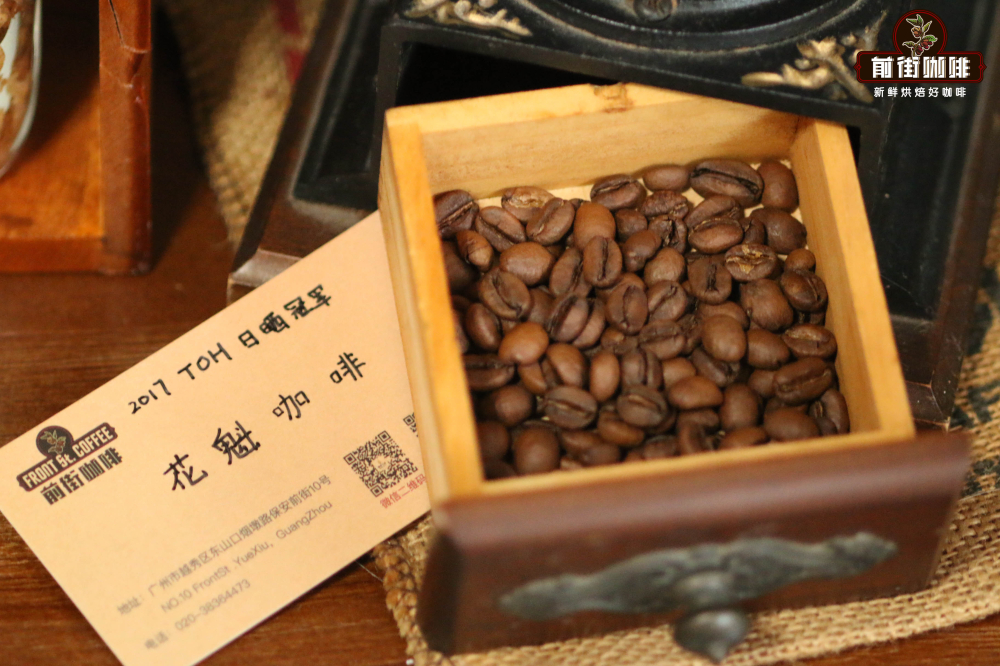
The most representative coffee bean of the Guji region is undoubtedly Huakui. At the 2017 TOH (Ethiopia National Taste of Harvest Competition), it won the championship with its outstanding strawberry cream flavor, and the name "Huakui" fully deserves its reputation.
Before becoming "Huakui," this bean was actually already an award-winning bean at the Ethiopian competition level. In February 2017, when Ethiopia's DW Coffee Company participated in the TOH green bean competition held by the African Fine Coffees Association, it submitted a naturally processed coffee bean from the Buku Abel processing station in the Hambela area of Sidamo, and its rich berry fragrance and creamy texture won it the championship in the natural group that year.
In the same year, this championship lot was noticed by a green bean trader in Beijing, and given its championship status, it was named "Huakui" and introduced to the domestic market, meaning "the chief of a hundred flowers, outshining all others." Subsequently, a contestant in the China coffee brewing competition used this bean in competition and defeated several opponents using Geisha, winning second place, and Huakui thus first made its name in China. As the competition's popularity continued to rise, this traditional natural bean from the Buku Abel processing station smoothly became famous, and with its affordable price and pleasing flavor, it quickly became recognized in the industry as a high-quality Ethiopian coffee.
About the Buku processing station. It is located in Buku Abel village at an altitude of 2,200 meters. From the beginning of cultivation, the coffee trees were planted in nutrient-rich reddish-brown soil and given shade care, allowing Huakui to obtain sufficient sunlight and accumulate rich aroma without consuming too many nutrients, thereby retaining more of the essence inside the coffee fruit. The harvest and processing season is concentrated from December to January, and the unique growing environment and natural climate together shape Huakui's distinctive flavor.
The Buku processing station only purchases red cherries with a sugar content of 30 or above before starting natural processing. In the first two days of natural processing, the humidity of the red cherries needs to be maintained so that the fruit sugars can fully initiate the fermentation reaction. At the same time, the nighttime temperature brought by the high altitude can drop to around 12°C, avoiding off-flavors from over-fermentation caused by excessively high temperatures. When the temperature rises at noon, the processing station promptly provides covering to prevent the red cherries from being sunburned.
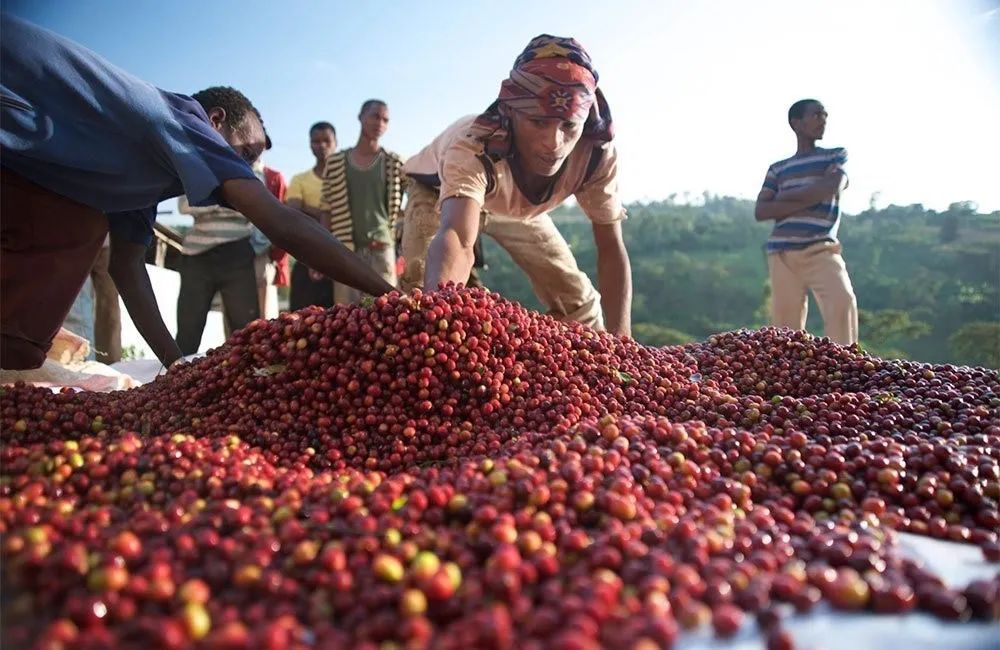
Coffee farmers select only fully ripe all-red cherries, that is, thoroughly ripe coffee cherries, using manual picking and African raised-bed drying, strictly controlling the thickness of the fruit layer, and turning them regularly every 24 hours without interruption to ensure even sun exposure and ventilation and to control the degree of fermentation more precisely. Front Street believes that Huakui uses fully ripe coffee berries with high sugar content, and after natural drying, the sugar in the pulp and pectin is absorbed by the coffee beans, so Huakui's sweetness is more prominent than that of coffee beans from other Sidamo regions.
The Huakui from the Buku processing station has been famous for many years, and afterward Huakui 2.0 was launched in 2018, and Huakui 3.0 and 3.1 were launched in 2019. At first, Front Street could still taste flavors close to the 2017 version in the Huakui from 2018 and 2019, but the body and aftertaste were both inferior to the 2017 batch.
By comparing different batches of Huakui, Front Street realized that the main source of the 2017 Huakui's aroma was that the beans were mixed with some particularly small-sized varieties; similar small beans also appeared in the 2018 and 2019 Huakui, and sometimes a few sacks of similar small beans would appear among ten sacks. In 2019, Front Street confirmed this information and informed the green bean supplier, and from 2020 onward Huakui was divided into two types: 4.0 and small-bean Huakui. Small-bean Huakui does not belong to the [X.0] series. Similarly, in 2021 the two kinds of beans were named small-bean Huakui and Huakui 5.0 respectively.
Front Street Coffee (FrontStreet Coffee): Ethiopia Huakui 5.0 coffee beans
Region: Guji Hambela
Processing station: Buku Able
Altitude: 2,350 meters
Variety: Ethiopian native varieties
Processing method: Natural processing method
Front Street Coffee (FrontStreet Coffee) green bean analysis
The appearance of coffee beans of Ethiopian native varieties varies in size, because there are simply too many varieties in Ethiopia, making it a natural gene bank of Arabica. On the one hand, the wide variety makes identification and classification difficult; on the other hand, the Ethiopian government, out of conservation considerations, is unwilling to disclose variety information, so they are collectively called Heirloom native varieties. Combined with mixed planting and mixed harvesting, this is also the main reason why Ethiopian beans look uneven in size. After receiving the green beans, Front Street Coffee (FrontStreet Coffee) noticed that the moisture content of the beans in the new crop season was relatively high, so the roaster extended the dehydration time to allow the bean surface and bean core to heat evenly. In order to present this bean's sweetness, acidity, and floral and fruity aroma, Front Street used a medium-light roast level.
Front Street Coffee (FrontStreet Coffee) roasting record
Yangjia 800N, bean drop amount 480g: raise the drum temperature to 175°C and charge, set the damper to 3 and the heat to 120. When it rises to 140°C, adjust the damper to 4. Roast until 6:00, at 151.7°C, when the bean surface turns yellow, the grassy smell completely disappears, and dehydration is complete. When wrinkles and dark streaks appear on the bean surface and the toast aroma clearly turns into coffee aroma, this can be regarded as the prelude to first crack, and at this time you should listen clearly for the sound of the first crack point. First crack begins at 9:50, open the damper fully, reduce the heat to 80 at 188°C, first crack development time 1 minute 40 seconds, and drop the beans at 196°C.
Front Street Coffee (FrontStreet Coffee) cupping report
Front Street Coffee (FrontStreet Coffee) conducts cupping within 8 to 24 hours after the sample beans are roasted. Front Street baristas usually use 200ml ceramic cupping bowls, with 150ml and 200ml scale lines marked inside. According to SCAA standards, the TDS of the water is controlled at around 150ppm; too low a TDS easily causes over-extraction, while too high affects the mouthfeel and easily causes under-extraction. The cupping water temperature is 94°C. The grind size is controlled so that the pass-through rate of a No. 20 standard sieve (0.85 mm) is 70%-75%. The coffee-to-water ratio is 11 grams of coffee powder plus 200 milliliters of hot water, that is, 1:18.18, so that the extracted concentration is exactly within the golden cup range of 1.15%-1.35%, and the steeping time is 4 minutes.
Dry aroma: citrus, berries
Wet aroma: blackcurrant, rose
Entry: almond, strawberry, blackcurrant, fermented sensation, lasting sweetness
Front Street Coffee (FrontStreet Coffee) brewing tips
Dripper: V60 #01
Water temperature: 90-91°C
Dose: 15g
Coffee-to-water ratio: 1:15
Grind size: medium-fine grind / fine granulated sugar size (sift the powder with a No. 20 sieve bowl to 77%)
Front Street brewing method: first wet the filter paper and preheat the dripper and coffee pot. Use 30 grams of water for a 30-second bloom, pour in a small stream in a circular motion until 125 grams, then pause in stages, and when the water level drops and is about to expose the coffee bed, continue pouring until 225 grams and stop. When the water level drops and is about to expose the coffee bed, remove the dripper (start timing from the beginning of the bloom), with an extraction time of 2 minutes 05 seconds.
Huakui coffee brewing flavor: almond aroma at high temperature, turning to the sweet-tartness of berries after cooling, with a blackcurrant juice sensation, honey-like aftertaste, and lasting sweetness.
For professional coffee knowledge exchange and more coffee bean information, please follow Coffee Workshop (WeChat public account cafe_style)
For more specialty coffee beans, please add the private WeChat of Front Street Coffee (FrontStreet Coffee), WeChat ID: kaixinguoguo0925
The above content is compiled by CoffeeHunters, a coffee news website.


