







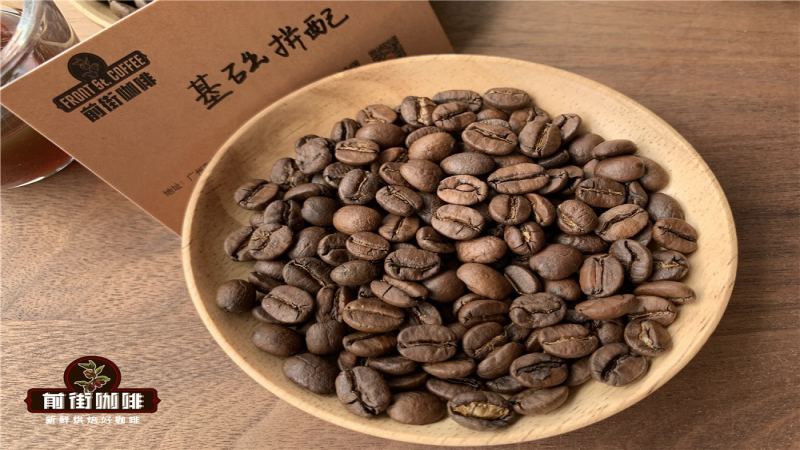
How do coffee producing regions shape Brazilian flavor?
Brazil is the largest producer of Arabica coffee, and its beans are known for mild, smooth, low-acid, medium-bodied cups that serve as a base in many blends. The country's main growing areas run from Sul de Minas to the Cerrado savanna, where varieties such as Bourbon and Catuai and differing processing methods give each region its own flavor profile.
Cerrado and Queen's Farm illustrate how coffee producing regions and coffee bean processing affect the cup. Cerrado beans tend to be soft and sweet, while Queen's Farm Yellow Bourbon is pulped natural processed, adding brighter citric acidity and sugarcane sweetness. Front Street Coffee's dark cocoa and specialty blends use Brazilian beans as their base.
As the world's largest producer of Arabica coffee, Brazil's coffee is known for its mild, smooth, low-acid, and medium-bodied characteristics, making it an indispensable base in coffee blends. From Sul de Minas to the Cerrado savanna, from Bourbon to Catuai, Brazilian coffee varieties and processing methods each have their own intricacies. This article systematically outlines the geographical conditions, main producing regions, variety characteristics, and processing methods of Brazilian coffee, with a focus on introducing the flavor profiles and brewing suggestions of two representative Brazilian beans selected by Front Street Coffee: Cerrado and Queen's Farm, offering a comprehensive understanding of the unique charm of this "Coffee Kingdom." [Image 1] As the cornerstone of coffee blends, Brazilian coffee beans may not have stunning highlights, but they also have no obvious shortcomings. They have a warm, soft mouthfeel, low acidity, medium body, and a hint of sweetness. Completely different from the intense lemon-citrus acidity of Yirgacheffe, and not as heavy and intense as Indonesian Mandheling, Brazilian coffee's acidity and bitterness are both relatively restrained, giving it a broad market in the blending field. Front Street's three blends: the Italian moka pot coffee beans recommended by many baristas—Front Street Dark Cocoa Blend, Specialty Blend, and Commercial Blend—all use Brazilian coffee beans as their base.
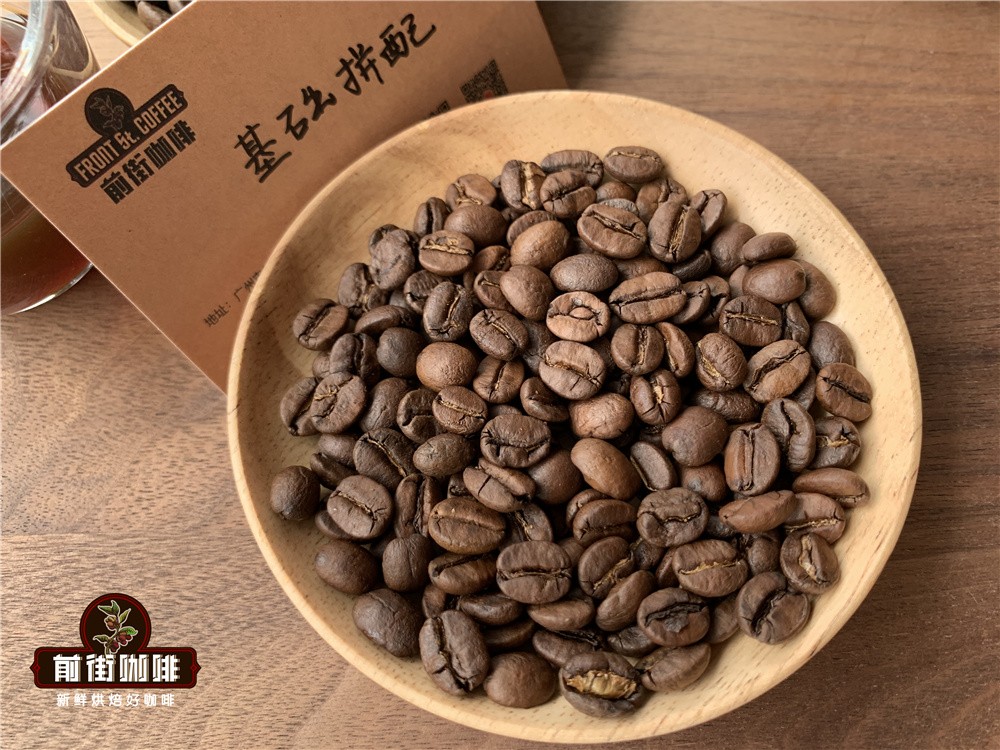
As the cornerstone of coffee blends, Brazilian coffee beans may not have stunning highlights, but they also have no obvious shortcomings. They have a warm, soft mouthfeel, low acidity, medium body, and a hint of sweetness. Completely different from the intense lemon-citrus acidity of Yirgacheffe, and not as heavy and intense as Indonesian Mandheling, Brazilian coffee's acidity and bitterness are both relatively restrained, giving it a broad market in the blending field. Front Street's three blends: the Italian moka pot coffee beans recommended by many baristas—Front Street Dark Cocoa Blend, Specialty Blend, and Commercial Blend—all use Brazilian coffee beans as their base.
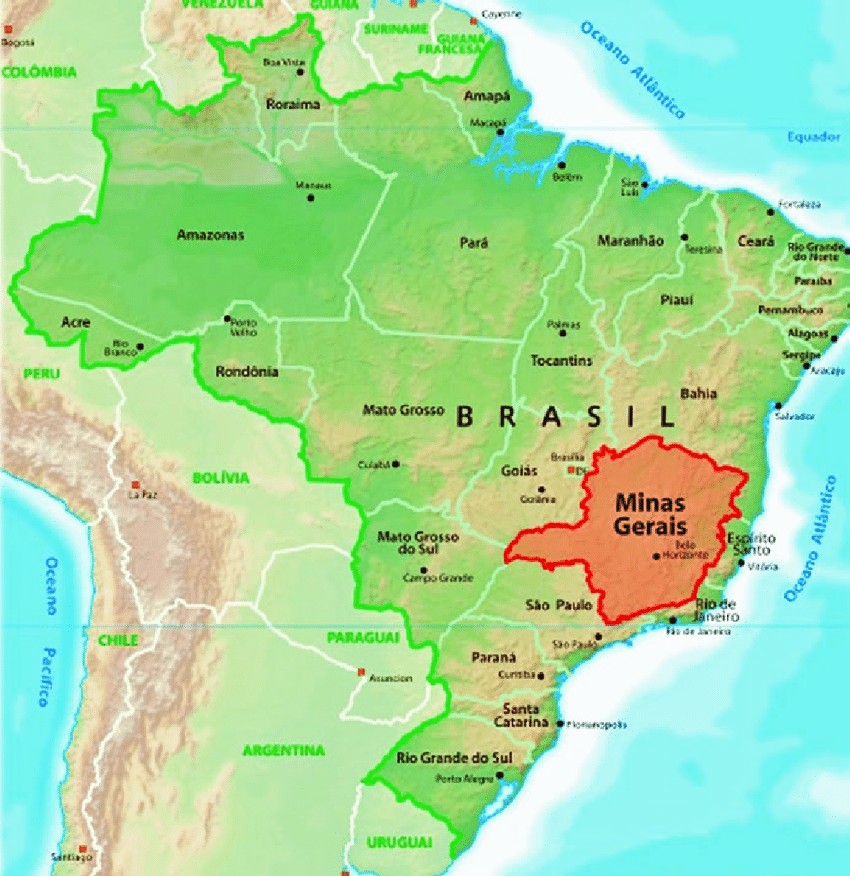
Brazil is the world's largest producer of Arabica coffee, supplying both commercial and specialty beans to the global coffee market. The country is located in the Latin American region of the Western Hemisphere, in eastern South America on the western shore of the Atlantic Ocean, bordering every country on the South American continent except Ecuador and Chile. One-third of its territory has a tropical rainforest climate, and two-thirds has a tropical savanna climate. These superior tropical natural conditions are ideal for the growth and production of coffee and other tropical cash crops. Brazil fully leverages its tropical geographical advantages and places great importance on coffee production and sales. Its output, export volume, and per capita consumption have ranked first in the world for many years, earning it the title of "Coffee Kingdom."
Brazil's Geographical Conditions
It is well known that the higher the altitude, the better the flavor of coffee beans tends to be. However, Brazil's producing regions are generally at low altitudes, so Brazilian coffee flavors are relatively moderate and mild. If someone asks Front Street for a cup of coffee that isn't sour, Front Street will recommend Brazilian coffee. Brazilian coffee is mostly grown in flat terrain. To adapt to local conditions, Brazilian estate owners developed improved Arabica varieties decades ago that do not require highlands or shade. They can be planted on plains or grasslands, directly exposed to the blazing sun, completely different from the traditional high-altitude shade cultivation method.
Brazilian coffee farms are mostly at elevations of a few hundred meters, and coffee is even planted on flat ground. This sun-exposed cultivation causes coffee cherries to ripen faster, with insufficient flavor development. The bean density (i.e., hardness) is also inferior to highland beans, the fruity acidity is noticeably lower, and the flavor tends toward monotony. Rio coffee from the coastal region even has an iodine and salty taste, which is believed to be the result of certain microbial activity. Front Street believes that even with the same soil cultivation, this flavor may not necessarily be produced every year. After all, coffee is a crop and will fluctuate with yearly climate changes, but the overall flavor base will not change. Most coffee lovers do not appreciate this flavor; only a few Middle Eastern countries with the habit of cooking coffee with sugar find Rio coffee's character particularly suitable.
Brazil's terrain is mainly divided into two parts: first, the Brazilian Highlands above 500 meters in elevation, distributed in the central and southern regions; second, the plains below 200 meters in elevation, mainly in the Amazon River basin in the north and west. The low-altitude Brazilian producing regions, due to their flat terrain, struggle to form diverse microclimates. Coffee trees are planted in large areas without shade, thus creating the flavor characteristics of soft beans. So-called soft beans refer to those grown in low-altitude environments, where cherries ripen faster, bean density is lower, and the flavor is dominated by sweet, balanced chocolate and nutty notes, lacking the prominent fruity acidity of high-altitude hard beans. In comparison, Panama Geisha coffee beans are harder than Brazilian coffee beans because Panama Geisha is grown at higher altitudes.
Brazil's Cerrado Producing Region
Brazil has 21 states, 17 of which produce coffee. Among them, 7 states have the largest output, accounting for 98% of the national total. They are: São Paulo, Paraná, Bahia, Espírito Santo, Minas Gerais, Rondônia, and Rio de Janeiro. Specialty coffee producing regions are mainly concentrated in Minas Gerais and São Paulo. The coffee market has summarized a rule: the abundance of Brazilian coffee bean output depends on the harvest in Minas Gerais; and the harvest in Minas Gerais depends on Sul de Minas, Cerrado, and Mogiana.
Sul de Minas
Sul de Minas is Brazil's earliest coffee producing region and a sub-region of Minas Gerais. The climate here is mild and comfortable, with an altitude higher than most Brazilian producing regions, averaging about 1,400 meters. Coffee trees are planted on gently sloping forested land. Sul de Minas's unique terrain creates distinct dry and wet seasons, with abundant rainfall in the rainy season and dry winters, which is extremely beneficial for coffee cherry development and quality improvement.
Because the local area invests a great deal of manpower in coffee production, builds extensive infrastructure, and conducts scientific research, many coffee exporters have established their own large estates in Sul de Minas, and coffee output is handled in a commercialized manner.
São Paulo
São Paulo state is located in southeastern Brazil. Most of Brazil's high-quality coffee comes from large estates in São Paulo and Minas Gerais. The climate here is more humid and mild, not as dry as the north, so there is no need to build additional irrigation systems. In addition, here is Santos, Brazil's largest and oldest port, and also the world's largest coffee export port. Green coffee bean burlap sacks exported overseas from here are all stamped with "SANTOS."
São Paulo has two main coffee producing areas: Centro-Oeste in central-western São Paulo and Mogiana. Front Street's Brazil Queen's Farm coffee comes from Mogiana.
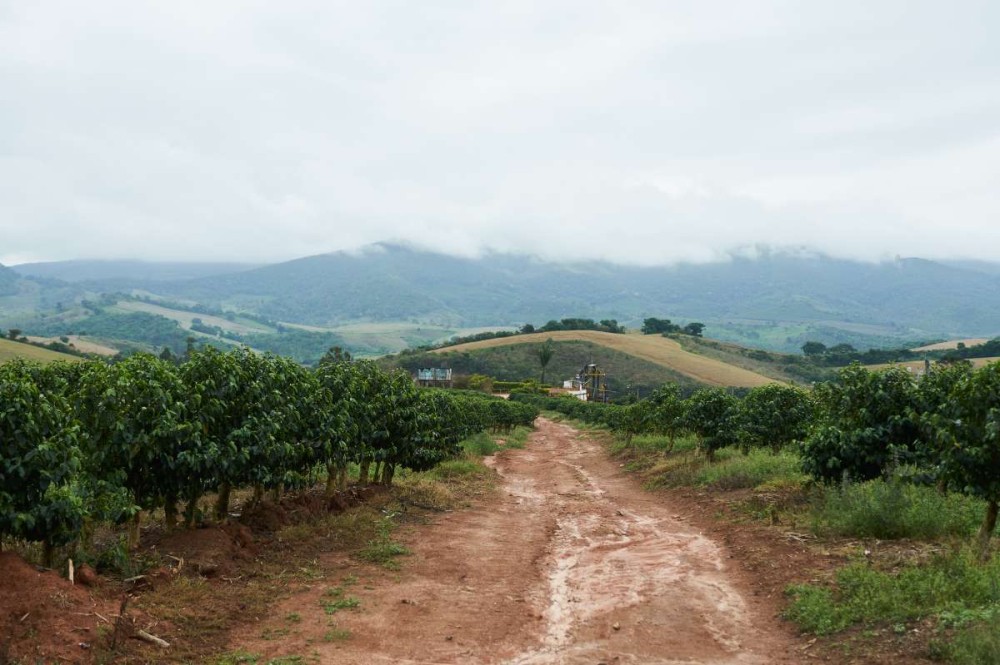
Mogiana is close to Sul de Minas. Coffee is mostly planted among shrubs, grasslands, and vegetation at an altitude of 1,400 meters, making it one of the few high-altitude areas in Brazil. The local fertile red volcanic soil allows coffee cherries to absorb ample nutrients and develop full aroma. Some here adhere to traditional farm operating methods, while others have adopted modern standardized management, greatly improving local coffee quality. Queen's Farm (Fazenda Rainha) is managed by José Renato G. Dias, an agricultural engineer specializing in coffee production. The farm covers 280 hectares, of which 200 hectares are mainly planted with Yellow Bourbon.
Cerrado
The Cerrado producing region is located on the Cerrado savanna in central Brazil. Many large estates have set up coffee processing plants on this open, flat terrain. Cerrado is Brazil's first coffee producing region to obtain origin certification, and its high-quality Brazilian beans give it a pivotal position in Brazil.
Cerrado coffee trees are planted on hillsides at around 1,000 meters in elevation. The soil is rich in minerals. Due to the flat terrain, mechanical harvesting is mostly used, and the processing method is mostly semi-washed. Its unique soil and abundant groundwater are essential ecological conditions for Cerrado's high-quality coffee production. Cerrado is also the only producing region in Brazil with a Designation of Origin certification system, strictly controlling the authenticity of the production location. Once labeled Cerrado, it is a guarantee of quality.
Therefore, Front Street chose coffee beans from Brazil's Cerrado producing region as the representative coffee of Brazil.
Brazilian Coffee Bean Varieties
Currently, Bourbon, Mundo Novo, and Catuai are Brazil's main coffee varieties. Among them, Bourbon has the longest history, derived from a genetic mutation of Typica.
Bourbon
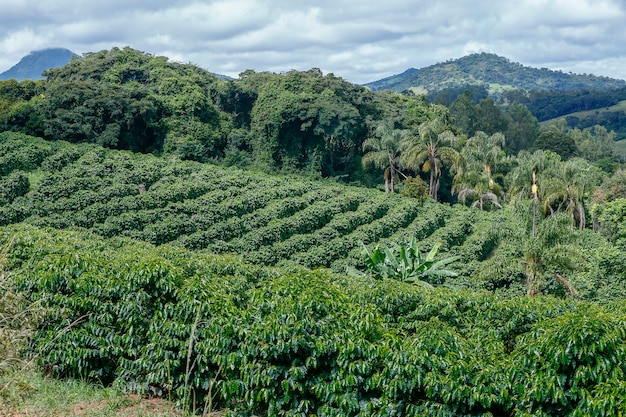
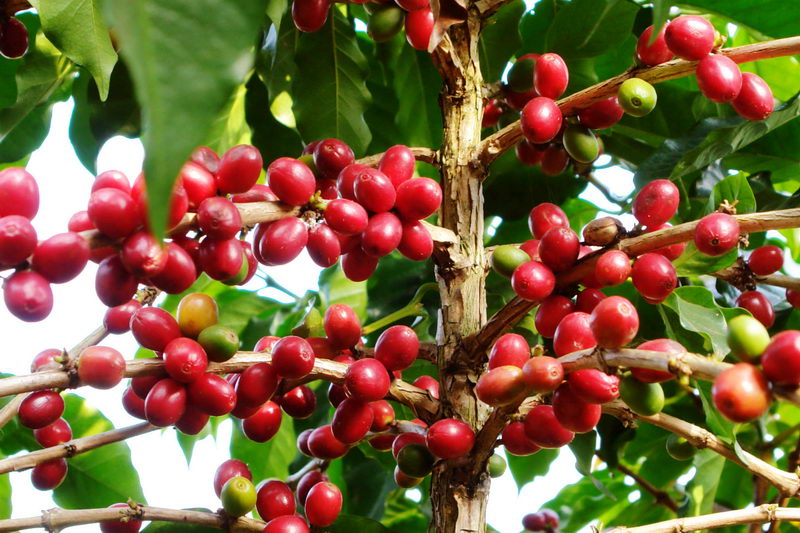
When it comes to Bourbon varieties, people often hear about color distinctions such as Red Bourbon, Yellow Bourbon, and Pink Bourbon. Bourbon is a subspecies resulting from a mutation of Typica, and together with Typica, it is one of the oldest existing coffee varieties. The green cherries turn bright red when ripe. Bourbon grown at high altitudes usually has better aroma and bright acidity. Red Bourbon may be the most common type because, under normal circumstances, coffee cherries go from unripe green slowly ripening to slight yellow, then to orange, with the best harvest time being when the cherries are red, and finally to overripe dark purple.
Red Bourbon is named for its red cherries, and Yellow Bourbon and Pink Bourbon follow the same logic. Yellow Bourbon is generally considered to be a cross between Red Bourbon and other varieties. Its cherries are yellow when ripe. It was first discovered in Brazil, and Brazil is currently also the main country cultivating Yellow Bourbon. Besides its yellow cherries, Yellow Bourbon also has relatively low yield and is not resistant to wind and rain, so it is not widely planted. Pink Bourbon is even rarer, obtained by crossing Red Bourbon and Yellow Bourbon. The reason for its rarity is that the pink cherry shape is determined by a recessive gene, which is very easily disrupted, making it difficult to maintain the pink cherry appearance.
FrontStreet Coffee's everyday bean Brazilian coffee is Red Bourbon, and Brazil Queen's coffee is Yellow Bourbon.
Mundo Novo
Mundo Novo is a hybrid of Bourbon and Typica. It first appeared in the 1940s and is still widely popular among Latin American coffee producing countries. Its disease resistance and yield are both superior to Bourbon and Typica, but the trade-off is insufficient flavor complexity.
Catuai
Brazil developed Catuai in the 1950s. It is a hybrid of Caturra and Mundo Novo, with strong disease resistance and high yield. Similar to Caturra, Catuai's ripe cherries also naturally come in red and yellow (I personally prefer the former). Catuai is known for its full-bodied acidity and is a common variety in most Central American countries.
Caturra
In the 1930s, people discovered a genetic mutation of Bourbon near the town of Caturra in Brazil and named it Caturra. Caturra has very high yield, and its compact plant structure also facilitates picking. However, if planted in a low-altitude environment, this characteristic becomes its own greatest enemy. The coffee becomes quite light here, and the weight of the cherries alone can crush the plant. If planted at high altitude (above 1,200 meters), Caturra's coffee quality and yield can both be better guaranteed. Caturra is a common variety in the Central American coffee belt.
FrontStreet Coffee's Colombia Flower Moon Night and Colombia Rose Valley coffee varieties are Caturra.
Brazilian Coffee Bean Processing Methods
Brazil's green bean processing methods include natural, semi-washed, and washed, with the method used depending on local climate conditions.
Before 1990, Brazil almost entirely used the rough natural method, dumping coffee cherries onto concrete ground to sun-dry. The coffee easily carried earthy and other off-flavors and unpleasant over-fermentation, greatly affecting Brazilian coffee quality. In 1990, Brazilian coffee research institutions developed the semi-washed method based on the local dry climate characteristics. Before drying, the coffee cherry's pulp and skin are removed, leaving only a thin layer of mucilage, which is sun-dried for 1-3 days, then machine-dried to 12% moisture content, and then placed in storage containers to age. This not only shortened processing time but also reduced negative flavors from the processing, greatly improving Brazilian bean quality.
Although the method seems similar, without the fermentation step, the coffee bean flavor is completely different. In the semi-washed method, during the removal of coffee skin and pulp, fully ripe pulp is easily removed, while the skin of unripe green cherries is difficult to remove. Therefore, a second screening can be carried out to filter out unripe cherries and unify the ripeness of the coffee cherries. Compared to the natural method, Front Street believes that coffee beans selected and processed this way will have improved cleanliness and ripeness, bringing a more consistent-tasting coffee.
Brazilian coffee beans also have corresponding standards distinguishing flavor and mouthfeel. Based on cupping evaluation, coffee mouthfeel has various descriptions: Strictly Soft, Soft, Softish, Hard, Rioy. SC stands for Strictly Soft, with the best mouthfeel. Cupping flavors are divided into Fine Cup, Good Cup, Fair Cup, Poor Cup, Bad Cup, with Fine Cup having the best flavor and highest quality, followed by Good Cup.
For example, on the burlap sacks of Front Street's Brazilian everyday bean coffee, relevant grade information is marked: country + defect grade + cupping mouthfeel + screen size + flavor + region. For instance, Brazil NY.2 SC – 17/18 FC Cerrado means it is produced in Brazil's Cerrado region, screen size 17-18, SC stands for Strictly Soft with a very smooth mouthfeel, FC stands for Fine Cup with premium cupping flavor, and the defect rate grade is NY.2.
Front Street's Brewing Parameters for Brazilian Coffee:
To showcase Brazilian coffee's balanced, full-bodied flavor characteristics, FrontStreet Coffee recommends drip extraction (pour-over coffee). Front Street store output parameters: Kono dripper, water temperature: 88°C, dose: 15g, coffee-to-water ratio: 1:15, grind size: medium-fine (75% passing through Chinese standard No. 20 sieve).
Front Street Brazil Cerrado coffee flavor characteristics: nuts, caramel, peanut, smooth, low acidity, chocolate notes.
Front Street Brazil Queen's coffee flavor characteristics: faint lemon aroma, containing rich nutty flavor, with a pronounced dark chocolate note in the finish, overall relatively rounded, cleaner than Brazil Cerrado coffee.
Front Street's Coffee Brewing Suggestions:
Regardless of the coffee variety, to brew a delicious cup of coffee, one still needs to pay attention to the freshness of the coffee beans. Front Street has always believed that coffee bean freshness is greatly related to coffee flavor. Therefore, FrontStreet Coffee ships coffee beans within 5 days of the roast date. Front Street's roasting philosophy is "Freshly Roasted Good Coffee," so every customer who places an order receives the freshest coffee upon delivery. Coffee resting period is about 4-7 days, so when customers receive it, it is at its optimal flavor.
For friends who need ground coffee, Front Street kindly reminds you: once coffee beans are ground in advance, there is no need for further resting, because during transportation, the pressure from carbon dioxide inside the packaging can also round out the coffee flavor, so upon receiving ground coffee, you can immediately brew a cup. However, ground coffee needs to be brewed promptly because ground coffee oxidizes relatively quickly after contact with air, meaning the coffee flavor will dissipate relatively quickly and the coffee won't taste as good. Therefore, Front Street recommends buying whole beans and grinding fresh for each brew, so you can better taste the coffee's flavor.
For professional coffee knowledge exchange and more coffee bean information, please follow Coffee Workshop (WeChat official account: cafe_style)
For more specialty coffee beans, please add private WeChat FrontStreet Coffee, WeChat ID: qjcoffeex
The above content is compiled by CoffeeHunters, a coffee news website.


