







How Does Washed Coffee Bean Processing Shape Rwandan Flavor?
Rwanda's rise in specialty coffee rests on volcanic soil, high altitude and Bourbon-lineage varieties, with washed coffee bean processing doing much of the work. Beans from Nyamasheke, grown at 1,500 to 1,700 meters, cup with berries, apple, green tea and apricot, while the country's Cup of Excellence results have pushed its profile onto buyer shortlists.
Coffee exports account for more than 70 percent of Rwanda's total export trade, with roughly 33,000 hectares planted and about 500,000 people earning a living from the crop. The country's coffee development moved from the colonial era through NAEB reforms, which organized washing stations and improved consistency, helping Red Bourbon and Gaseke lots reach a clean, bright standard.
In the African specialty coffee landscape, besides Ethiopia and Kenya, Rwanda has risen rapidly in recent years thanks to its impressive performance at the Cup of Excellence. This landlocked country, known as the "Land of a Thousand Hills," boasts volcanic soil and high altitudes, and its Bourbon-lineage varieties and washed processing shape a clean, bright flavor profile. In this article, Front Street Coffee will walk you through Rwanda's coffee-growing conditions, its development from the colonial era to the NAEB reforms, explain the characteristics of Bourbon varieties and the washed process, and share the roasting and pour-over parameters for Front Street's Rwanda Red Bourbon and Gaseke coffee beans, so you can experience the terroir flavors of berries, citrus, and nuts woven together.
Ethiopia and Kenya are not the only well-known coffee origins in Africa. Rwanda has frequently won awards at the Cup of Excellence in recent years, and its strength should not be underestimated either. It has actually only been involved in specialty coffee for a few short decades. In this article, Front Street Coffee will introduce you to the regional characteristics of Rwandan coffee.
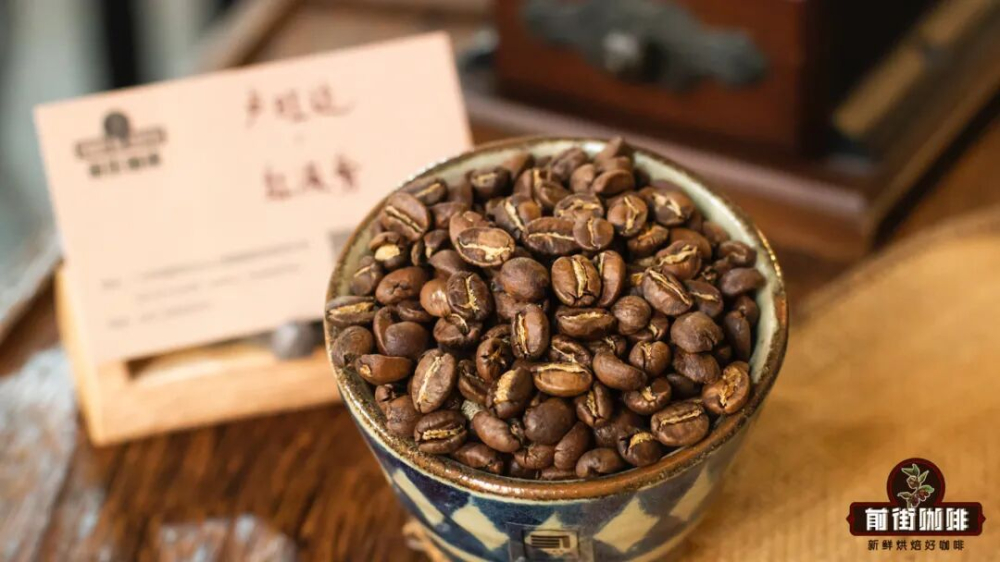
Before we begin, you might want to prepare a bag of Front Street Rwanda Red Bourbon coffee beans. These beans are washed-processed and come from Nyamasheke in western Rwanda, gathering almost all of the country's most representative elements, so from them you can taste a flavor closest to Rwanda's terroir.
Front Street Coffee: Rwanda · Washed Red Bourbon
Country: Rwanda
Region: Nyamasheke
Altitude: 1,500–1,700 m
Variety: Red Bourbon
Processing: Washed
Flavor: Berries, apple, green tea, apricot
Characteristics of Rwandan Coffee Regions
Rwanda's terrain is dominated by mountains and plateaus, which is why it has long been known as the "Land of a Thousand Hills." Most of the country has a tropical highland climate and tropical savanna climate, with fertile volcanic soil and suitable climatic conditions, providing an excellent growing environment for Arabica coffee and laying the foundation for the quality flavor of Rwandan coffee.
After reviewing materials, Front Street Coffee also learned that coffee exports account for more than 70% of Rwanda's total national export trade. The country's coffee planting area is about 33,000 hectares, and about 500,000 people make a living from coffee cultivation, with production mainly in the hands of smallholders. Local coffee trees basically receive no chemical fertilizers or insecticides, and soil nutrients mainly come from natural surface cover and traditional fertilization methods, which also creates the purely natural high quality of the fruit.
History of Coffee Cultivation in Rwanda
As Front Street mentioned above, Rwanda has not been in the specialty coffee ranks for long. It is located in central Africa and is a standard landlocked country. It was once colonized by Germany and then Belgium, and coffee was introduced during the colonial period by German missionaries.
During the colonial period, Rwanda's coffee production mainly supplied the metropole, Belgium. Although output was large, labor was exploited and quality could not be guaranteed. At that stage, Rwandan coffee had only quantity, not quality, and could hardly be called specialty.
After Rwanda gained independence, the first official coffee organization, OCIR, was established, and coffee bean production gradually began to receive attention. Production then continued to climb from the 1960s to the 1980s, reaching a historic peak in 1986.
However, in the early 1990s domestic political turmoil (the Rwandan genocide) forced the coffee industry to be interrupted. It was not until 2001, when the political situation stabilized, that the government established NAEB (National Agriculture Export Development Board), focusing on increasing coffee exports to earn foreign exchange. This is also one of the reasons why Rwandan coffee beans have repeatedly won championships in CoE events in recent years.
In 2017, NAEB and the Japan International Cooperation Agency (JICA) jointly launched a three-year technical program, "Rwanda Coffee Upgrading and Promotion (CUP Rwanda)," aimed at helping coffee farmers improve cultivation standards and processing quality. This shows that Rwanda has invested considerable effort in coffee quality.
Rwandan Coffee Bean Varieties
Among the coffee grown in Rwanda, Arabica accounts for more than 97%, of which about 95% is Bourbon. Therefore, among Rwandan coffee varieties, Bourbon, Caturra, and Catuai are all very common. Front Street Coffee believes that the flavor performance of all three leans toward the Bourbon family profile, so Rwandan coffee often carries citrus and nutty notes.
Bourbon Variety:
More than 90% of Rwandan coffee varieties are early-introduced Bourbon and Bourbon-family mixed varieties, which have a certain ability to resist natural disasters. Bourbon coffee was first planted on Réunion Island, spread to Brazil in 1860, and then quickly expanded northward across Latin America. After the Bourbon coffee tree flowers and bears fruit, the fruit color changes from green to slightly yellow, slightly orange, ripe red, and then darker red when more mature, so some people also call it "Red Bourbon." In fact, Red Bourbon is what is usually called Bourbon. Bourbon grown at high altitude often has better aroma and brighter acidity.
The several Latin American Bourbon coffees Front Street Coffee currently offers include Brazil Red Bourbon, Brazil Yellow Bourbon, and Colombia Pink Bourbon. However, the advantage of Bourbon in Latin America today is not what it once was, because its disease resistance is relatively poor. By contrast, Rwandan Bourbon still retains its advantages, which is one of the reasons Front Street Coffee brought in Rwandan coffee.
Rwandan Coffee Bean Processing Methods
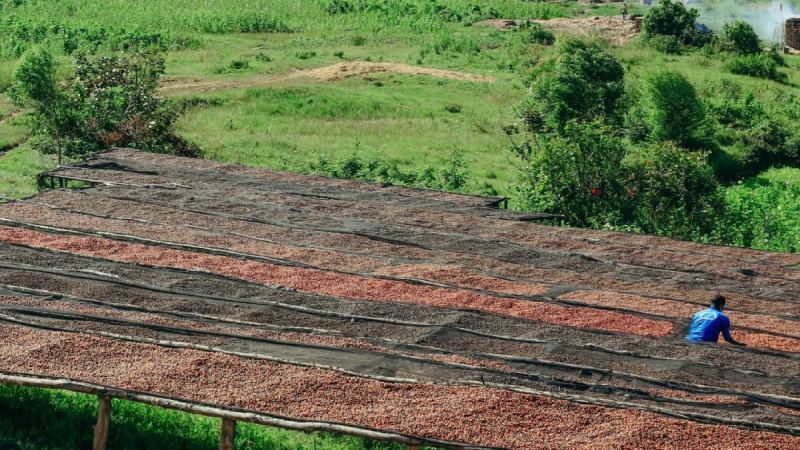
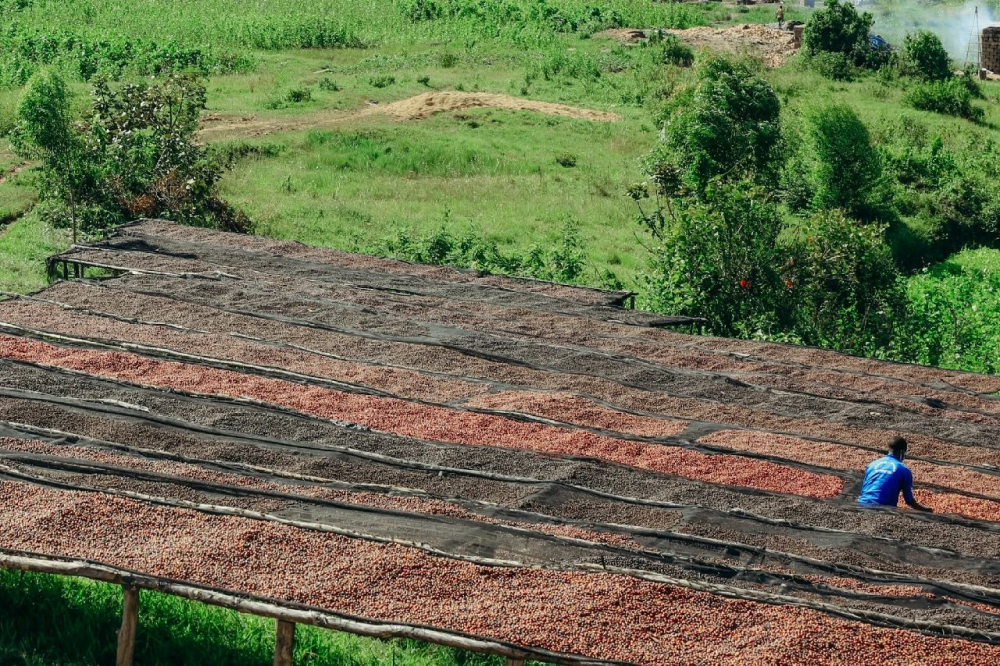
At present, Rwandan coffee beans mainly use the washed processing method. Every harvest season, farmers send ripe coffee cherries to washing stations for processing, where they are hand-sorted to ensure that unripe or damaged cherries are not mixed in. Front Street's previous articles have also often mentioned that the washed process best showcases a coffee bean's original flavor, presenting it as clean and bright, which is also one of the reasons Front Street Coffee introduced Rwandan coffee.
Washed Processing Steps:
1. Pour the coffee cherries into water, and use flotation to remove defective beans such as unripe, overripe cherries or debris. 2. Send the sorted cherries into a depulper to remove the outer skin and pulp. At this point, a layer of mucilage still sticks to the surface of the cherries and needs to be removed with plenty of clean water. 3. Using fermentation to remove the mucilage takes about 18 hours. After fermentation is complete, fermentation bacteria still cling to the surface of the cherries, so they must be rinsed again with plenty of clean water. To obtain 1 kilogram of coffee beans at this step requires 40 to 50 kilograms of clean water. Front Street considers this a rather astonishing figure, and it also limits the use of washed processing in some regions. 4. The washed coffee beans are then dried. In some areas they are simply dried outdoors, while processing plants with equipment use machines to dry them, reducing the moisture content to around 11%, after which a huller removes the parchment and silver skin.
According to Front Street's understanding, in just over 20 years of coffee development in Rwanda, washing stations increased from 2 to 220, all currently privately owned by exporters or farmer cooperatives. Because average farm size is small (each farm averages fewer than 200 coffee trees), each station serves about 50 to 100 farms. NAEB employs 200 agronomists and cuppers who regularly inspect quality at washing stations and teach farmers about soil management, organic farming, pruning, pest control, and harvesting.
This is also one of the reasons Front Street Coffee chose to introduce Rwandan coffee for coffee lovers to taste. Next, Front Street recommends the following Rwandan Gaseke coffee beans and shares the roasting and brewing data.
Front Street Coffee Gaseke Coffee Beans
Country: Rwanda
Region: Nyamasheke district, western Rwanda
Altitude: 1700-200m
Variety: Bourbon, Caturra, Catuai
Processing: Washed
Flavor: Plum, citrus, berries, nuts, bright acidity, honey sweetness in the finish.
Front Street Coffee Roasting Suggestions
Rwandan coffee beans have fresh acidity. To highlight this characteristic, Front Street Coffee recommends a medium-light roast. The darker the roast, the more fruity acidity is lost. Yangjia 800N, charge 550g: charge at 175°C, power 120, airflow set to 3; turning point at 1'36", when the temperature is 112°C open airflow to 4 and raise power to 140;
At 151°C the bean surface turns yellow and the grassy smell completely disappears, entering the dehydration phase; at 8'30", ugly wrinkles and dark patches appear on the bean surface, and the toast aroma clearly turns into coffee aroma, which can be defined as the prelude to first crack. At this point you need to listen clearly for the sound of first crack. First crack begins at 9'45", open airflow to 5, develop for 1'30'' after first crack, and drop at 190.6°C.
Front Street Coffee Brewing Notes
Dripper: V60
Water temperature: 90°C
Dose: 15 g
Coffee-to-water ratio: 1:15
Grind size: BG#6m (80% passing a Chinese standard No. 20 sieve)
For the first pour, use 30 g of water to bloom for 30 seconds. For the second pour, pour in a small stream in circles up to 125 g, then pause. When the water level drops and is about to expose the coffee bed, continue pouring the third stage up to 225 g and stop. When the water level drops and is about to expose the coffee bed, remove the dripper. (Start timing at the beginning of the bloom.) Total extraction time is 2 minutes. The conical V60 dripper can increase coffee layering, a 1:15 coffee-to-water ratio can enhance body and sweetness in the finish, and staged pouring keeps the extraction time from being too short while also allowing adjustments based on the early, middle, and late stages.
Rwanda's brewed flavor has obvious fruity acidity and nuts, and is balanced and smooth overall. Although its berry-like flavors are not as prominent as Kenya's, Front Street believes that Rwanda, as an origin that has only caught up in the past 20 years, still has room for progress, and believes that more Rwandan specialty coffee will enter the domestic market in the near future.
The above content is compiled by CoffeeHunters, a coffee news website.


