







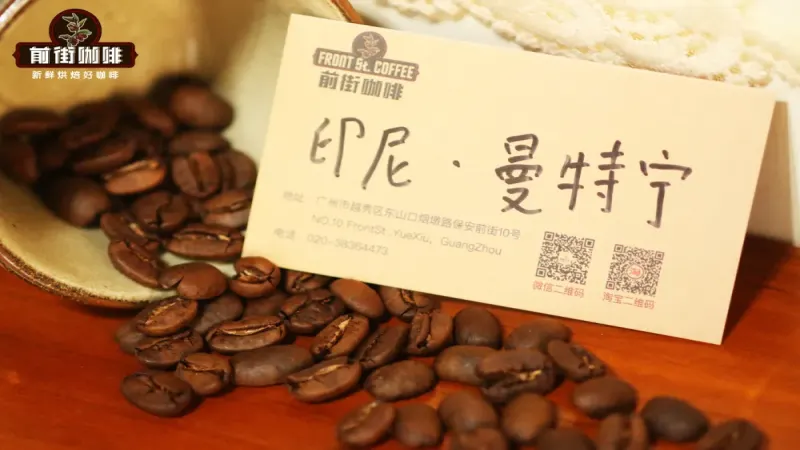
Where Does Golden Mandheling Coffee Come From and How Is It Brewed?
Mandheling coffee takes its name from a wartime mishearing of the Mandailing people in Indonesia, and the story stuck after a Japanese trading company imported 15,000 kilograms of Sumatra Mandheling in 1968. Today the beans come mainly from around Lake Toba and Lake Tawar in Sumatra, where wet-hulling yields the spicy, herbal, pine-like aroma and heavy body.
Indonesian cultivation is dominated by Robusta, with Arabica under a tenth of output, so Sumatra Mandheling stands out among the Arabica lots. For Golden Mandheling, a KONO dripper, moderate water temperature, medium grind and a three-stage pour keep the cup layered, clean and aromatic rather than muddy.
Mandheling coffee, renowned for its spicy, herbal, and pine-like aroma along with its heavy, rich body, is hailed as the "gentleman of coffee." Behind its name lies a mishearing story from World War II. Its production areas are concentrated around Lake Toba and Lake Tawar in Sumatra, Indonesia, and the wet-hulling method gives it a unique woody and herbal character. This article will outline the origin of the Mandheling name, the growing conditions of its production areas, processing methods, and grade classifications, with a focus on Front Street PWN Golden Mandheling's roasting approach and pour-over recipe, including KONO dripper, water temperature, grind size, and three-stage pouring details, helping coffee enthusiasts brew a layered, clean, and aromatic classic Mandheling flavor at home.
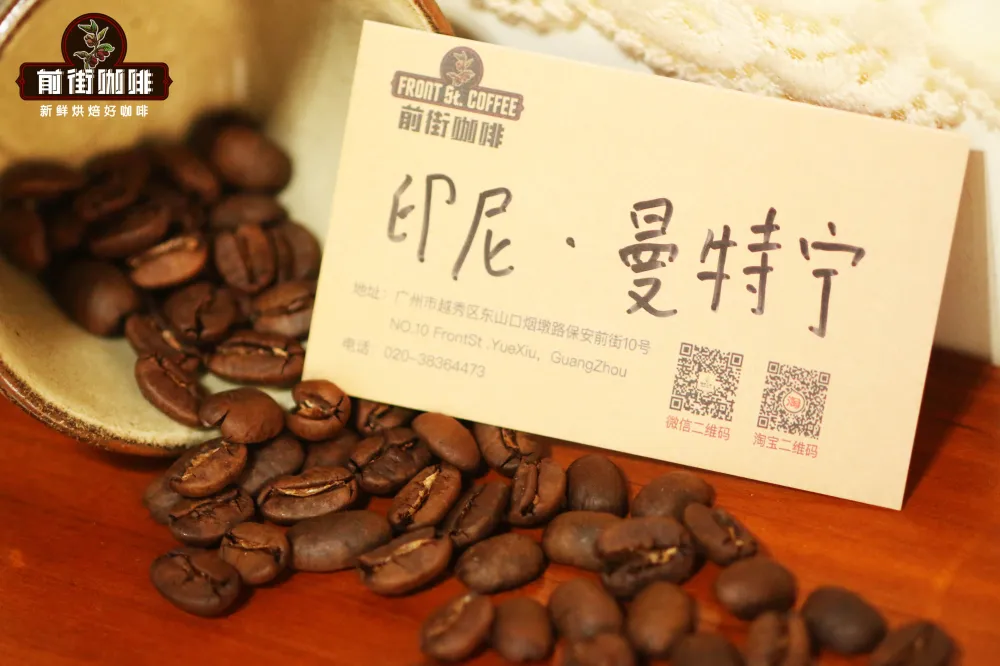
Mandheling coffee from Indonesia, with its spicy, herbal, and pine-like fresh aroma and thick, rich mouthfeel, is called the "gentleman of coffee" by many enthusiasts. Today, Front Street will talk about this distinctive bean and share how to brew its signature flavor.
The origin of the name Mandheling
Unlike many coffee beans, the naming of Mandheling has a widely circulated anecdote behind it, originally stemming from a mishearing of the name of a local indigenous people in Indonesia.
During World War II, a Japanese soldier drinking coffee at a shop in central Indonesia asked the owner what coffee he was drinking, but the owner mistook the question as asking where he was from and answered "Mandailing." After the war ended, the soldier returned to Japan and remembered that cup of unusually flavored coffee, vaguely recalling it as "Mandheling." In 1968, Nomura Trading Company of Osaka, Japan, visited Indonesia and called on N.V. Pawani Medan, importing 15,000 kilograms of Sumatra Mandheling coffee, which quickly became popular after being launched on the Japanese market. Since then, Mandheling coffee and the fame of Pwani Coffee Company have risen together.
Where does Mandheling coffee come from?
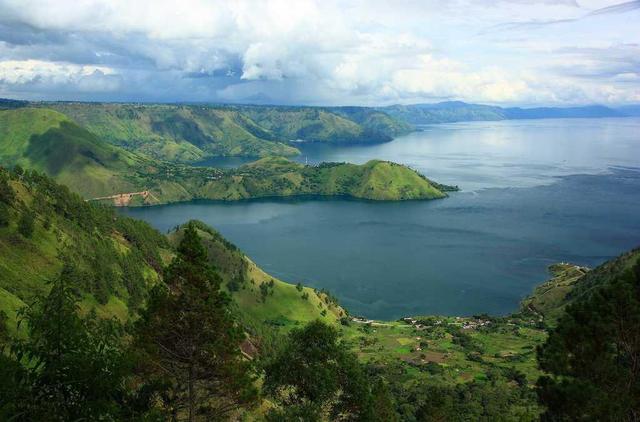
Coffee cultivation in Indonesia is dominated by Robusta varieties, with Arabica production accounting for less than one-tenth. Among these, Mandheling from Sumatra is the most well-known, and is therefore also called Sumatra coffee. Traditionally, Sumatra Mandheling mainly comes from Lake Toba in the Lintong production area of North Sumatra Province, and the Lake Tawar area in the northernmost Aceh region.
The Lintong production area is adjacent to Lake Toba, the largest volcanic lake in Indonesia, at an altitude of about 1,000–1,500 meters. The volcanic ash soil allows local Mandheling coffee to absorb more nutrients. The tropical rainforest climate brings abundant rainfall, so even with limited irrigation and fertilization, coffee trees can grow vigorously.
The Aceh region is located at the northernmost tip of Sumatra Island. Due to years of political instability, the coffee industry has developed less than the Lintong production area. But precisely because of this, the area has retained more ancient original trees, and coffee farmers also practice green organic cultivation, with coffee trees planted on the scenic slopes around Lake Tawar.
Wet-hulling process
Sumatra Island is close to the equator, with high temperatures and rain year-round, and frequent typhoons, so it is impossible to widely adopt the African sun-drying method or the Central and South American washed method to process green coffee beans. To reduce the risk of mold and spoilage during processing, locals greatly shortened the fermentation and drying time to adapt to the local weather.
After the coffee fruit is depulped, it undergoes only a few hours of brief fermentation before entering sun drying. When the moisture content of the parchment beans drops to 30–50%, the parchment beans are still in a semi-dry state. Locals use a special huller to remove the still-hard parchment layer through friction, and then continue drying the hulled beans to meet the moisture content standard. Because every step is completed in a 70–90% humidity environment, and the parchment layer has already been removed before the final drying, the "exposed" green beans easily absorb moisture from the air, so the resulting Mandheling coffee has extra woody and herbal notes. Front Street believes this is exactly the unique flavor of Sumatra Mandheling, and therefore also includes Lintong Mandheling in Front Street's high-value daily drinking bean series, so everyone can give it a try.
The specialty grade of Mandheling coffee — PWN Golden Mandheling coffee
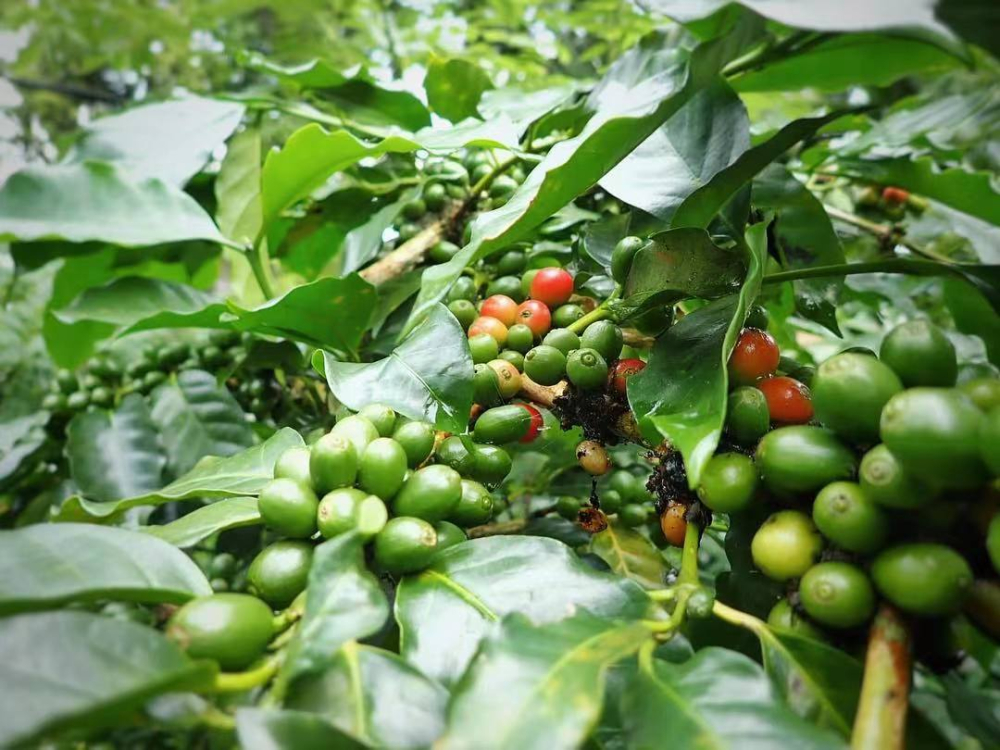
During wet hulling, green beans are easily squeezed and deformed under greater force. After the final high-temperature sun-drying stage, one side of the coffee bean may even crack open, which is the common "goat hoof" bean. Wet hulling brings unique flavor characteristics, but also increases the defect rate of coffee beans. To improve coffee bean quality, these defective beans need to be removed.
When it comes to high-quality Mandheling, one cannot fail to mention Indonesia's "gold" brand — Golden Mandheling coffee. PWN, a famous Indonesian green bean purchasing company, uses one mechanical sorting plus three rounds of manual hand sorting for wet-hulled Mandheling green beans, ensuring the produced batches reach Indonesia's highest grade G1. The purpose of mechanical sorting is first to screen out beans that must be 18 mesh or above, and the subsequent multiple manual sortings are to remove irregular defective beans. The reduction in defect rate greatly improves the quality of Mandheling coffee.
Front Street's bean list often reserves this Front Street PWN Golden Mandheling coffee bean for Mandheling "fans," so everyone can taste the refined classic Mandheling flavor.
What is the classic Mandheling flavor?
To highlight the high body of Golden Mandheling and retain more herbal spice notes, Front Street's roaster uses a medium-dark roast. Freshly roasted Mandheling coffee needs 7–10 days of degassing and resting before entering its optimal flavor period. Front Street hopes every customer who places an order can taste the full aroma in the coffee, so it only ships coffee beans freshly roasted within 5 days, allowing everyone to enjoy the complete optimal flavor period upon receipt.
After roasting, coffee beans expand and become loose in texture, making them prone to absorbing more water after grinding and accelerating the release of various substances. To avoid over-extraction, Front Street uses a medium grind size and slightly lower water temperature, reducing the release of bitter large molecules during extraction.
For this brewing, the barista at Front Street Coffee (FrontStreet Coffee) wants to highlight Golden Mandheling's rich, clean, and aromatic characteristics, using the KONO dripper for extraction. Also a conical dripper, the KONO dripper has less than half the diversion ribs of the v60, with a smooth curved upper section that makes the filter paper fit more closely. This restricts airflow upward, so hot water can only flow downward, creating a siphon-like extraction effect, allowing the coffee powder's aromatic substances to be released more fully and thereby enhancing the rich mouthfeel.
Golden Mandheling coffee pour-over parameters: 87–88°C water temperature, medium grind (70% passing rate on China standard No. 20 sieve), coffee powder: 15 grams, coffee-to-water ratio 1:15, three-stage pouring
Wet the coffee bed with twice the amount of water as the coffee powder, forming a dome and blooming for 30s, then pour in a small stream in a circular motion from the inside out until 125g, then pause. When the coffee bed drops to half the height of the dripper, continue pouring the third stage with the same fine stream until 225g, until all the coffee liquid has filtered through, then remove the dripper, about 2 minutes total. Finally, swirl the coffee liquid in the server to mix evenly and it's ready to enjoy~
The pour-over Front Street PWN Golden Mandheling coffee has varied layers overall, is rich and full-bodied, and has a clean mouthfeel. Nutty and caramel aromas, with chocolate notes, a lasting finish, and high balance.
For professional coffee knowledge exchange and more coffee bean information, please follow Coffee Workshop (WeChat public account cafe_style)
For more specialty coffee beans, please add the private WeChat of Front Street Coffee (FrontStreet Coffee), WeChat ID: qjcoffeex
The above content is compiled by CoffeeHunters, a coffee news website.


