







How Do Yirgacheffe and Sidamo Coffee Beans Differ?
Yirgacheffe and Sidamo are Ethiopia's two most discussed specialty regions, and they cup very differently. Yirgacheffe sits at roughly 2,000 meters and delivers citrus notes with elegant florals and a light, tea-like body. Sidamo, its larger neighbor to the southeast, shows a wider and more varied flavor range with a wilder character in the cup.
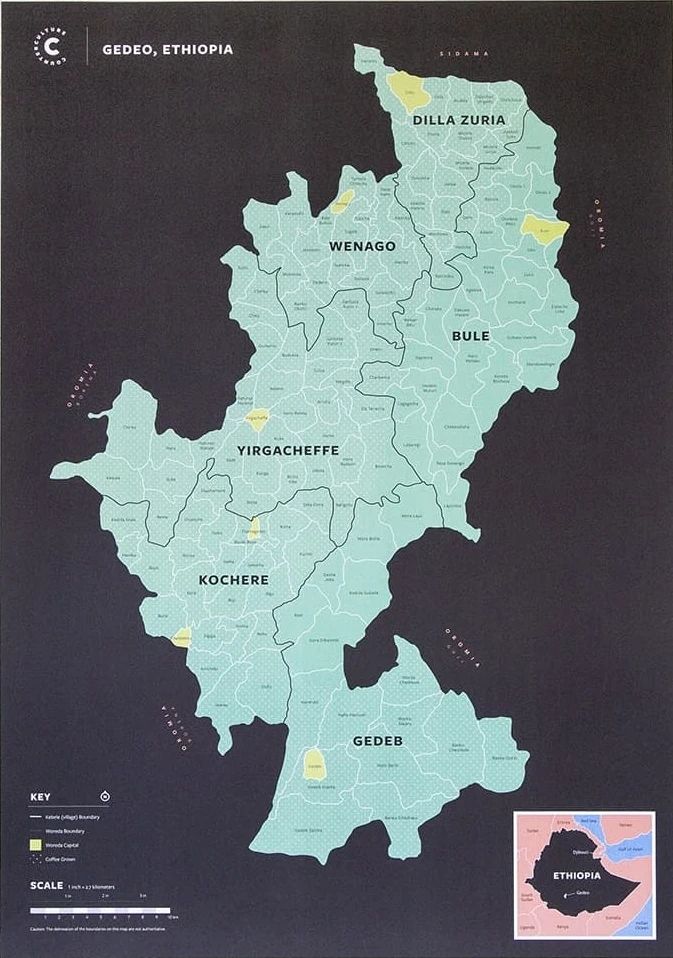
Altitude, rainfall, and soil explain much of the gap. Yirgacheffe was once part of greater Sidamo but was separated as its own region because of its distinctive profile, and it now covers Wenago, Kochere, and Gedeb. It is also home to the Kurume variety, which developed naturally under local conditions. These growing conditions suit the arabica coffee bean well.
Ethiopia is the homeland of specialty coffee, and among its regions, Yirgacheffe and Sidamo are the most well-known. Yirgacheffe is celebrated for its citrus florals and refreshing tea-like body, while Sidamo wins fans with its diverse flavors and wild charm. This article systematically breaks down the differences between the two—from regional geography, altitude and climate, to representative beans and brewing recommendations—and includes detailed parameters and brewing methods for several Ethiopian beans from Front Street Coffee. Whether you're a beginner just getting into coffee or a seasoned enthusiast looking for new beans, you'll find a cup that suits you.
For more specialty coffee knowledge, please follow our WeChat official account: Front Street Coffee (FrontStreet Coffee)
In Ethiopia's specialty coffee landscape, Yirgacheffe and Sidamo are two names you can't avoid. Each has a distinct personality, so this time we'll take a deep dive into exactly how these two regions differ.
Yirgacheffe Specialty Coffee Region Among the many renowned regions, Yirgacheffe is undoubtedly the most iconic. The citrus notes and elegant florals presented by Front Street Yirgacheffe make it the entry point for many people stepping into the world of single-origin coffee. It's worth mentioning that Yirgacheffe is home to a coffee variety called "Kurume," which evolved naturally over time under the region's climate and soil conditions—you could say it's the concentrated embodiment of Yirgacheffe's terroir.
Geographically, Yirgacheffe lies to the northwest of Sidamo. It was originally part of the greater Sidamo region, but its exceptional flavor profile led to it being separated out as an independent region. If you look at a map, you'll find that Yirgacheffe is just a small town in Ethiopia, but as a coffee region, its scope extends far beyond Yirgacheffe town itself, encompassing several legal areas including Wenago, Kochere, and Gedeb.
The Yirgacheffe region sits at an average altitude of about 2,000 meters, making it a classic high-altitude zone. High altitude provides exceptional conditions for coffee cultivation. Beyond that, abundant rainfall, fertile soil, and a cool, pleasant climate are exactly the growing conditions Arabica coffee beans prefer—it's no exaggeration to call Yirgacheffe a treasure trove of flavor. Among the region's many outstanding representatives, Front Street Yirgacheffe Gute is one pour-over single-origin you must try.
1. Front Street Yirgacheffe Gute Region: Yirgacheffe, Gedeo Zone Producer: Gute Cooperative Altitude: 1900-2300m Variety: Local Heirloom Processing: Natural Grade: G1
The Gute Cooperative is located in the Woka region at the southeastern tip of Yirgacheffe. Initially, it was just part of the Woka Cooperative under the Yirgacheffe Coffee Farmers' Cooperative Union (YCFCU). Later, as the market's demand for traceability of green coffee beans continued to rise, more and more "single-origin" lots were discovered one by one by coffee hunters around the world.
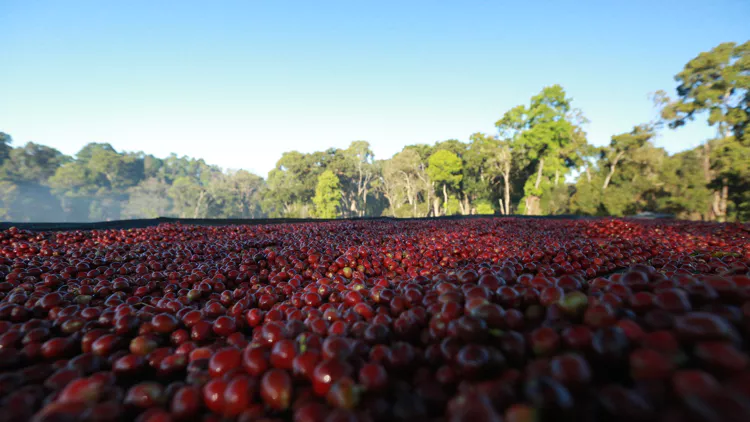
In 2012, Gute—with about 300 farmer members—formally separated from the original organization and established itself as an independent cooperative. Gute village was one of the first village areas to become independent; many smallholder farmers were originally members of the Woka Cooperative, so their coffee cultivation and processing techniques are quite mature. The cooperative primarily uses both washed and natural processing methods. This Front Street Yirgacheffe Washed Gute offers a base of citrus and black tea, with cream, caramel, and almond notes emerging as the temperature changes—a notably sweet finish and a clean, refreshing cup.
If you prefer Ethiopian coffee with a tropical fruit profile, we recommend trying Front Street Red Cherry:
2. Front Street Red Cherry Coffee Beans
Region: Yirgacheffe, Aricha Processing Station
Altitude: 2300m
Variety: Ethiopian Heirloom
Processing: Natural
Flavor: Citrus, berries, fruit fermentation, honey, creamy mouthfeel
Why we recommend it: Round and smooth mouthfeel; whether cold brewed or hot poured, it delivers rich aromatics.
Sidamo Specialty Coffee Region The Sidamo region sits at an altitude of 1,400-2,200 meters in southern Ethiopia, adjacent to Kenya, and is a famous specialty coffee region. Washed Sidamo green beans are light green, relatively small, and elongated oval in shape with plump fruit. The overall quality is balanced, the aroma fragrant and full-bodied, with a long-lasting finish and a certain wild beauty.
Sidamo's coffee flavors are extremely diverse. Different soil types, microclimates, and countless native coffee varieties cause coffees from various towns to show significant differences and distinctive characteristics. In 2010-2012, the region consecutively received high scores of 92-94 from the authoritative American coffee evaluation website CR, demonstrating that its green bean quality is truly exceptional. The region's terrain is rich and varied, with towering mountains, highlands, plateaus, valleys, and plains interwoven throughout. Geologically, it features nutrient-rich, well-draining volcanic soil with a soil depth approaching two meters and topsoil that is dark brown or brown. The area's greatest advantage is that soil fertility is maintained through organic matter cycling—fallen leaves from surrounding trees and plant residues naturally serve as fertilizer.
As a representative of floral and fruity coffee, if you want to taste the classic Sidamo flavor, we suggest buying Front Street Huakui coffee, which comes with berry aromatics:
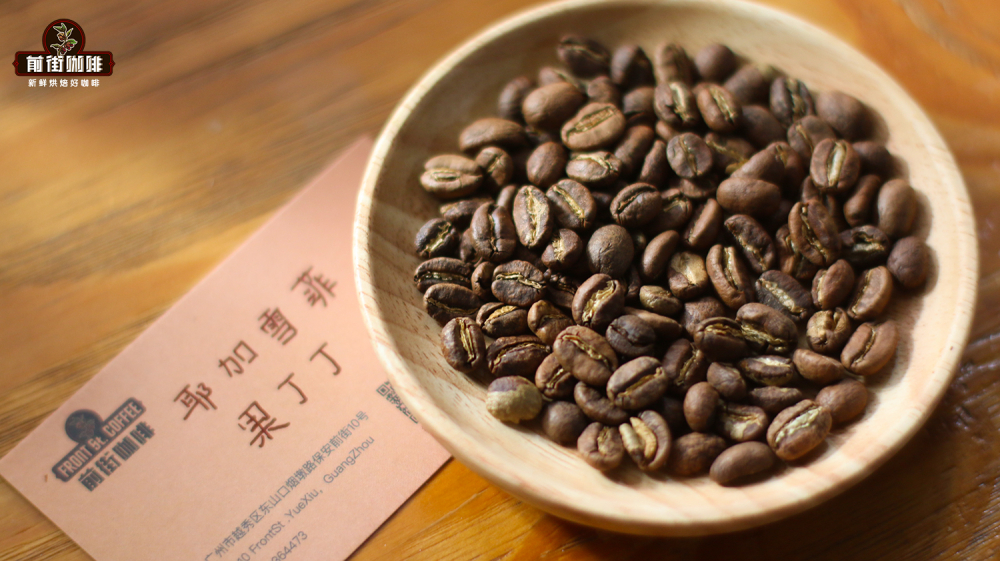
3. Front Street Huakui Coffee Beans
Region: Guji Hambela
Processing Station: Buku Able Processing Station
Altitude: 2250-2350m
Variety: Ethiopian Heirloom
Processing: Natural
Flavor: Citrus, strawberry, passion fruit, fermentation, black tea
Why we recommend it: A classic representation of creamy strawberry flavor, the all-purpose player of the coffee world—delicious no matter how you brew it.
If the above coffees still can't satisfy your palate, then you might want to try the Front Street ALO coffee and Front Street Hamasho coffee, both of which have exploded in popularity over the past two years. The Hamasho processing station is located in Hamasho village, north of Bensa town. In the Sidamo language, "Hamasho" means "snake," which locally symbolizes strength and spirit. The area benefits from high altitude and fertile soil, combined with traditional organic farming methods that use fallen leaves from surrounding trees and plant residues as fertilizer. The resulting coffee has a rich tropical fruit profile with excellent sweetness. To experience the classic Sidamo flavor, choose Front Street Hamasho coffee beans.
Front Street Hamasho Processing Station, Natural Process, 74158 Region: Ethiopia · Bensa Processing Station: Hamasho Processing Station Altitude: 1920-2020m Processing: Natural Variety: 74158
Flavor: Strawberry, florals, guava, sweet orange, honey, green grape
Front Street Coffee (FrontStreet Coffee) Brewing Recommendations
Ethiopian coffee has rich layers of flavor, with floral and fruity aromatics being especially prominent. Front Street recommends using freshly roasted coffee beans so you can fully experience the coffee's flavor expression. Coffee beans enter their optimal tasting window 4 to 7 days after roasting; once past this period, aromatics dissipate at an accelerated rate. All coffee beans sold by Front Street are freshly roasted within 5 days, so you can start brewing as soon as you receive them.
To fully showcase the flavor characteristics of Ethiopian coffee, Front Street selected two beans from the Yirgacheffe region: Front Street Gute Cooperative and Front Street Natural Red Cherry. Because Ethiopian beans grow at high altitudes, the beans are relatively hard. Front Street believes that using a higher water temperature and a finer grind is necessary to extract Yirgacheffe's layers of flavor. Speaking of grinding, some customers ask whether Front Street offers grinding services—Front Street can certainly grind for you. However, once coffee beans are ground, aromatics volatilize at an accelerated rate, so if you have them pre-ground, we recommend drinking them as soon as possible; leaving them too long will affect the brewed flavor.
Dripper: V60 #01 Water temperature: 90-91°C Dose: 15g Ratio: 1:15 Grind: fine granulated sugar (80% passing through a #20 sieve)
Front Street brewing method: First pour—inject 30g of water for a 30-second bloom. Then pour 95g (scale reads about 125g), finishing in about 1 minute. When the water level drops to 2/3 of the coffee bed, pour the remaining 100g (scale reads about 225g), finishing in about 1 minute 35 seconds. Drawdown completes at 2 minutes 10 seconds. Remove the dripper and extraction is complete.
Both Front Street Ethiopian Yirgacheffe coffees give off delicate floral and fruity aromas after grinding. Front Street Yirgacheffe Gute has a bright, uplifting acidity of lemon and berries on entry, with prominent sugarcane sweetness; as it cools, it takes on a green tea mouthfeel with a lasting finish. Front Street Natural Aricha tastes of berries and fermented fruit sweetness, with the rounded mouthfeel of black tea.
The above content is compiled by CoffeeHunters, a coffee news website.


