







What Coffee Standard Defines Jamaica Blue Mountain?
Only coffee grown in Jamaica's legally designated Blue Mountain zone, between 900 and 1,700 meters, and of the Typica variety, may be sold as Blue Mountain coffee. That coffee standard is why genuine supply totals roughly 900 tons a year. Beans from 450 to 900 meters are labeled Jamaica High Mountain, and anything lower falls into a separate class.
No. 1 is the top grade, judged on bean size and defect rate, and it rewards careful brewing: a moderate roast, adequate resting time, and a low-temperature Kono dripper bring out its balanced, mellow character. Shoppers should read labels closely, because products sold as Blue Mountain flavor or blends are not the same as certified beans. This is a narrow place for coffee to grow.
Blue Mountain coffee is hailed as one of the world's top coffees, but only about 900 tons are truly produced each year within Jamaica's legally designated Blue Mountain region, and products on the market named "Blue Mountain flavor" are far removed from authentic Blue Mountain coffee. This article will systematically sort out the strict definition of Blue Mountain coffee, the altitude grading standards, the official certification system, and introduce the innovative journey of Clifton Mount Estate. At the same time, it focuses on the grade requirements for Blue Mountain No. 1 coffee beans, from bean size and defect rate to roast level, resting time, and then to Front Street Coffee's recommended low-temperature Kono dripper brewing method, fully presenting this balanced, mellow coffee's flavor performance and extraction details.
For professional coffee knowledge exchange and more coffee bean information, please follow Coffee Workshop (WeChat public account cafe_style)
For more specialty coffee beans, please add the private WeChat of Front Street Coffee, WeChat ID: qjcoffeex
The Blue Mountains in eastern Jamaica produce globally recognized top-quality coffee, and this highest mountain range in the Caribbean is shrouded in thick fog year-round. When sunlight falls on the blue sea, light and shadow refract onto the fog-covered peaks, and the mountain body takes on a faint blue outline, which is how Blue Mountain got its name.
Compared with other producing regions, the annual output of true Blue Mountain coffee is extremely limited, only about 900 tons, and after distribution around the world, the price is naturally high, but not absurdly so.
For this reason, the so-called "Blue Mountain flavor" products commonly seen in supermarkets and convenience stores, or the Blue Mountain blended beans sold in cafes, require consumers to be especially careful.
What kind of coffee can be called Blue Mountain coffee ?
The criteria defining " Blue Mountain coffee " are quite strict. Just as wine emphasizes estate and variety, only coffee produced within the legally designated area of 900 to 1,700 meters above sea level in the Blue Mountains on the eastern side of Jamaica, and of the Typica variety, is eligible to bear the name Blue Mountain coffee.
Coffee produced at altitudes of 450 to 900 meters is called "Jamaica High Mountain," while coffee below this range is classified as "Jamaica Supreme" or "Jamaica Low Mountain."
Why not grow it higher? Because above 1,700 meters is the country's ecological forest reserve, where coffee cultivation is explicitly prohibited by law. Therefore, only about 25% of all coffee beans in Jamaica can be sold under the name Blue Mountain coffee.
Things are precious when they are scarce, and Blue Mountain coffee is so famous that the market is naturally full of imitations. To help consumers identify authenticity, the Jamaican government requires all exported Blue Mountain coffee beans to be packed in wooden barrels, and the Jamaica Coffee Board issues a certificate for every batch of exported Blue Mountain coffee .
There are three types of certificates:
(1) Quality certificate issued by the Jamaica Coffee Board
(2) Authorized sales certificate issued by the Blue Mountain coffee producer
(3) Certificate of origin for Jamaican Blue Mountain coffee
The quality certificate will indicate the time and quantity. The Jamaica Coffee Board randomly selects one package from the submitted Blue Mountain coffee for inspection, and only if it meets Blue Mountain coffee standards will the certificate be issued.
Where can you buy authentic Blue Mountain No. 1 coffee ?
Blue Mountain coffee is mainly grown in the Blue Mountain producing areas of Saint Andrew, Saint Thomas, Portland, and Saint Mary. Among them, the Saint Andrew producing area is home to Jamaica's oldest coffee-growing site—Clifton Mount Estate.
Clifton Mount Estate can be regarded as the most innovative estate in the entire Blue Mountain region. In the 2019 to 2020 crop year, it successively launched a natural-process version of Blue Mountain No. 1 coffee and Blue Mountain Geisha coffee. Before that, all Blue Mountain coffee sold externally was washed Typica.
The Jamaican Blue Mountain No. 1 coffee beans currently sold by Front Street Coffee come from this historic Blue Mountain estate. At Front Street Coffee's physical store, you can see the certification certificate issued by Clifton Mount Estate and the Blue Mountain coffee barrels bearing the green frog logo (Rainforest Alliance certification).
At Front Street Coffee's physical store, you can see the certification certificate issued by Clifton Mount Estate and the Blue Mountain coffee barrels bearing the green frog logo (Rainforest Alliance certification).
To reach Blue Mountain No. 1 grade, more than 96% of the coffee cherries must reach screen size 17, and the defect rate after processing must not exceed 2%. Only uniformly sized, top-quality beans can heat evenly during roasting and ultimately present a clean, balanced coffee flavor.
How should Blue Mountain No. 1 coffee beans be brewed to taste better?
In order to preserve Blue Mountain No. 1 coffee's balanced acidity, sweetness, and bitterness along with its mellow, solid mouthfeel, Front Street Coffee chose a medium-dark roast level. Since the coffee beans shipped are all freshly roasted within 5 days, there is no need to rush to brew them after receiving them; you can first rest the beans and let the coffee beans release carbon dioxide on their own.
Keep the coffee beans sealed in the original packaging and begin brewing on the 5th to 6th day after the roast date, and the flavor performance will be even more outstanding. Only freshly roasted beans that have been properly rested can achieve more ideal aroma and taste, as well as more stable extraction results.
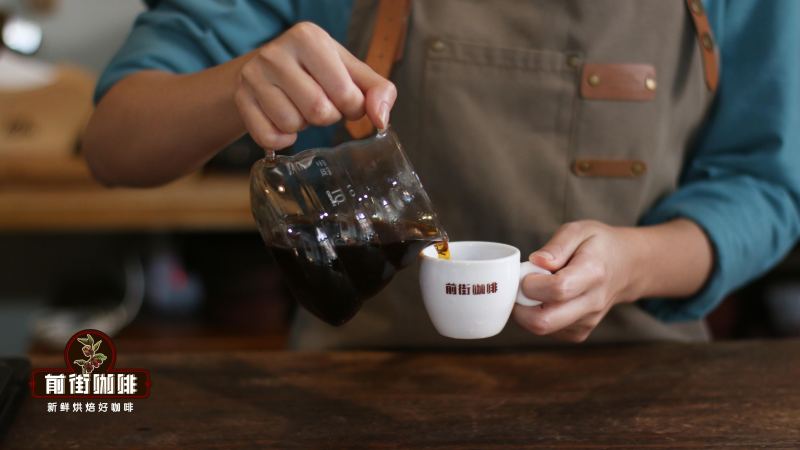
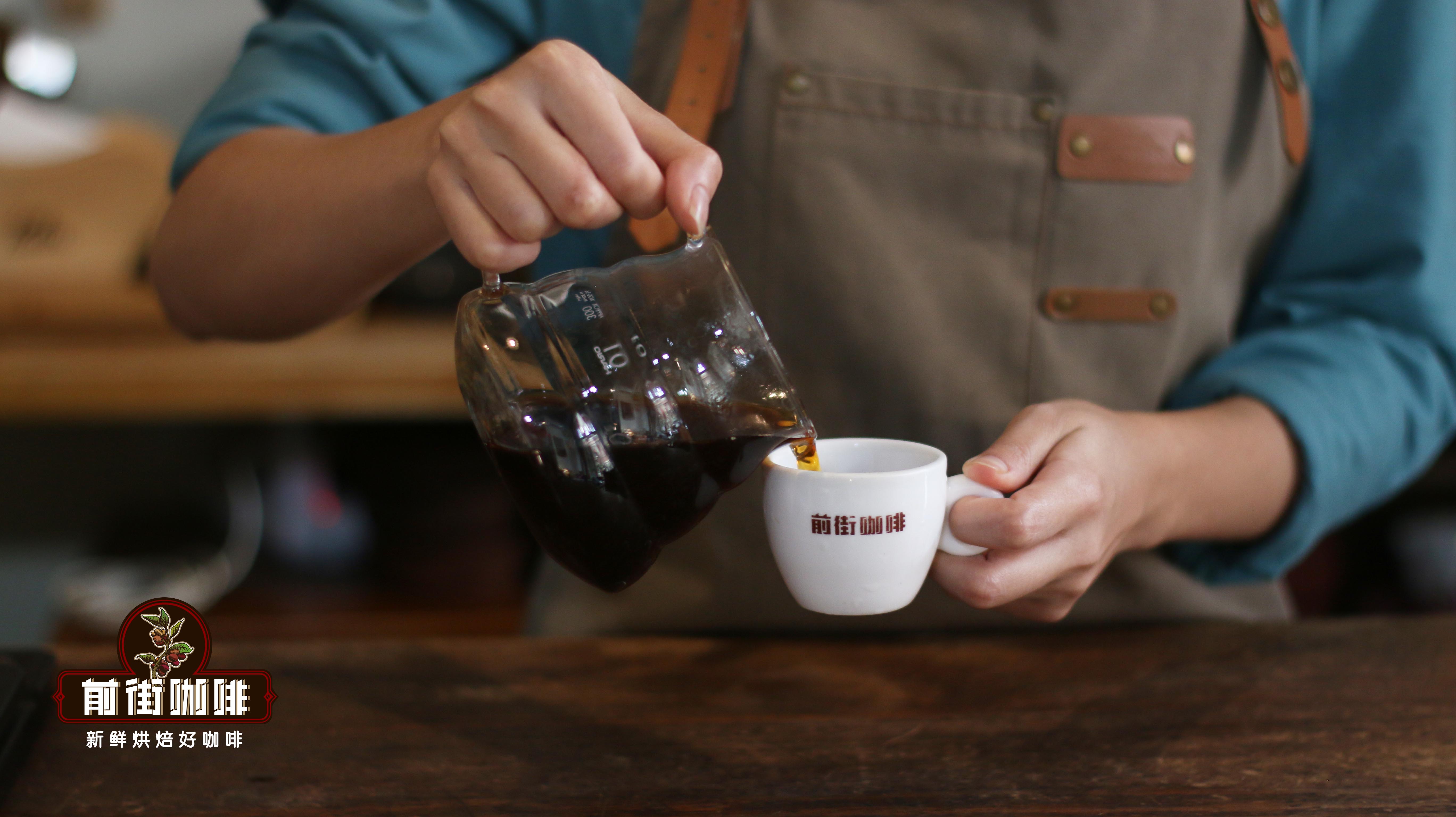
To fully bring out the mellowness and balance of Blue Mountain No. 1 coffee, Front Street Coffee recommends using a lower water temperature for extraction, paired with a slower-flow Kono dripper, so as to extract as much coffee material as possible under low-temperature conditions.
Front Street Coffee brewing parameter suggestions: Kono dripper, 88°C water temperature, 1:15 coffee-to-water ratio, 15g coffee dose, grind size: white granulated sugar size (70% passing rate on No. 20 standard sieve).
The extraction method is as follows: pour 30 grams of water in the first stage for blooming, with a blooming time of 30 seconds; in the second stage, pour to about 125 grams of water, then wait for the coffee liquid to drop; when it has dropped by half, pour the final stage of water to 225 grams, and end the extraction after all the coffee has dripped through. The total extraction time is generally about 2 minutes 10 seconds.
During the blooming stage of brewing Blue Mountain No. 1 coffee beans, Front Street can already smell the aroma of caramel, and when drinking it, you taste rich mellow nuts and dark chocolate flavors, with a full overall mouthfeel and a sweet, clear aftertaste.
The above content is compiled by CoffeeHunters, a coffee news website.


