







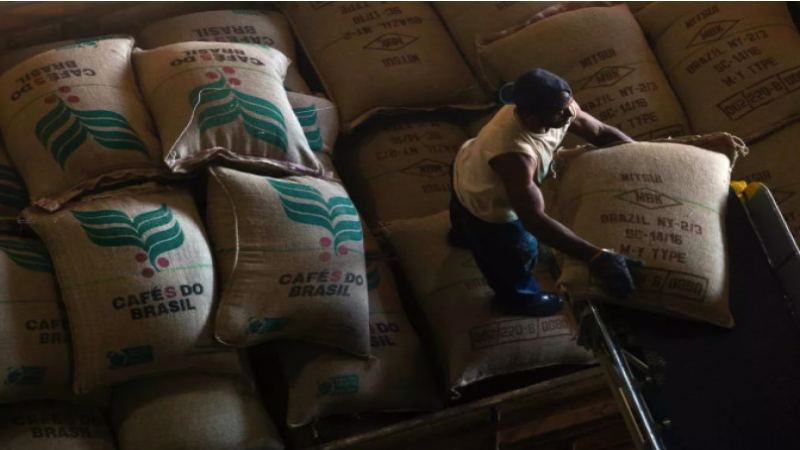
Why Do Brazil Cerrado Coffee Farms Stand Out?
Brazil is the largest coffee exporter, and the Cerrado region in Minas Gerais is one of its representative specialty sources. The coffee-producing zone covers only the area above 1,000 meters in west-central Minas Gerais, a plateau once called savage land that now delivers nutty, chocolatey cups with a smooth body.
Brazil grows coffee in 17 of its 21 states, but four states account for about 90 percent of output: Parana, Sao Paulo, Minas Gerais and Espirito Santo. Cerrado coffee farms typically use semi-washed processing and a soft bean grading system, and the beans are widely used in blends to add body and balance.
Brazil is the world's largest coffee-producing country, and the Cerrado region in Minas Gerais is one of its most representative sources of specialty coffee. This plateau, once called the "savage land," is now known for its nutty, chocolatey flavors and semi-washed processing method. The Brazil Cerrado Red Bourbon in Front Street Coffee's daily staple bean series is a perfect expression of this region's rich, smooth style. This article will guide you through Cerrado's geographical conditions, organic farm ecology, Brazil's soft bean grading system, and Front Street's recommended brewing parameters and flavor profile.
Brazil is the world's largest coffee exporter. Of its 21 states, 17 grow coffee, but the four states with the most concentrated production account for about 90% of the national total: Paraná, São Paulo, Minas Gerais, and Espírito Santo. Among them, the Cerrado region in Minas Gerais in the south is considered one of Brazil's oldest coffee-producing areas with the most ideal climate conditions. Today, let's take a deeper look at Cerrado.
Brazil Cerrado coffee beans are widely used in blends. Front Street also adds Brazilian coffee beans to its blends to enhance body and overall balance. In Front Street's daily staple bean series, there is a Brazil Cerrado Red Bourbon coffee bean that has won many customers' favor with its rich chocolate and nutty flavors and smooth mouthfeel.
Brazil Cerrado Coffee Region
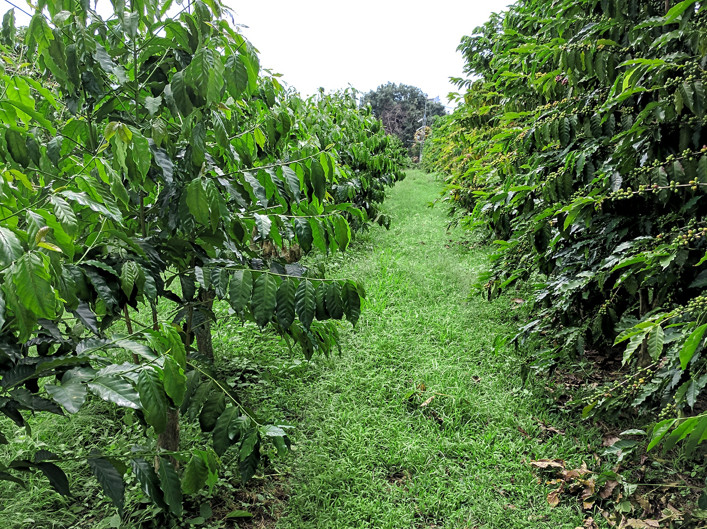
Minas Gerais is located in the coastal zone of southeastern Brazil, and Cerrado sits right here. About thirty years ago, the outside world knew almost nothing about Cerrado. It was a desolate mountainous area, existing quietly in Brazil's interior, which is why "Cerrado" means "savage land" in Portuguese. Today, however, Cerrado is a world-famous coffee-producing region. The Cerrado is actually a savanna that covers 22% of Brazil's territory, extending deep into the interior. The Cerrado coffee-producing region that Front Street refers to is not the entire savanna, but only the coffee-growing zone above 1,000 meters in elevation in the west-central part of Minas Gerais. Only this area deserves the title of "Cerrado coffee-producing region." This is the essence of the Cerrado savanna, where high altitude and fertile soil combine to create specialty coffee that is sweet, full-bodied, and high in cleanliness.
The coffee in this region is mostly distributed across flat plateaus at about 1,000 meters in elevation and is grown using large-scale mechanized methods. The unique soil conditions and abundant groundwater resources are the indispensable ecological foundation that enables Cerrado to consistently produce high-quality coffee. Cerrado's superior soil and climate seem innate. The earliest coffee farmers to cultivate this land combined modern agricultural concepts with local Cerrado farming techniques, overcame harsh natural conditions, and transformed this "savage land" into a source of high-quality coffee, making it an important pillar of local economic income.
Brazil Cerrado Organic Farms
In Cerrado, besides the exceptional soil and climate, there is another interesting phenomenon: one or two livestock farms can often be seen near coffee plantations. This layout of farms adjacent to coffee plantations is a major feature of Cerrado's agricultural community structure. Weeds in the coffee plantation become excellent feed for livestock, and the livestock's manure is converted into high-quality organic fertilizer for the coffee trees. The entire ecological cycle remains balanced, so traces of small animals and earthworms can often be seen on the ground. The farm and ranch buildings next to the coffee plantations have also become a typical landscape of the Cerrado coffee-producing region.
For this reason, Brazil Cerrado coffee has now become almost synonymous with high-quality coffee. In 2005, the high-quality Arabica coffee produced in Cerrado was officially certified by the Brazilian government as "Cerrado Coffee" in accordance with international standards, and it was declared to be internationally recognized. To use the Cerrado name within the region, one must pass certification tests and meet production quality requirements. Green bean evaluation covers the certified region, production area elevation, variety confirmation, soil conditions, agricultural techniques, and more. In terms of quality, beans must score more than 75 points according to SCAA evaluation methods before they can bear the Cerrado name.
Characteristics of Brazilian Coffee Bean Grading
Brazil's terrain is flat and monotonous, and most coffee farms are below 1,000 meters in elevation. Traditionally, sun-exposed cultivation methods are used, which originally did not align with the high-altitude shade-growing requirements of specialty coffee. Yet by coincidence, this developed into a unique Brazilian soft bean flavor: low acidity, prominent nuttiness, both sweet aroma and body, with floral and fruity notes not being obvious. For seasoned coffee lovers, Brazilian coffee has neither particularly outstanding strengths nor obvious shortcomings. This kind of coffee—with a balanced taste, low acidity, moderate body, and a subtle sweetness and chocolate flavor—is actually the best test for the palate if one tries to distinguish each element one by one. Brazil happens to use the way these soft flavors blend together to classify coffee into five grades, interpreting the unique gentle and smooth aesthetics of Brazilian soft beans: Strictly Soft, Soft, Softish, Hardish, and Rioy, grading bean quality accordingly.
In recent years, Brazil has used this grading system to skillfully showcase the characteristics of Brazilian coffee and has also pointed the way for the development of high-quality Brazilian coffee. Today, the soft bean aesthetic has replaced the traditional impression of mild Brazilian coffee from the past. Good Brazilian coffee should display a slight nutty sweetness, lower acidity, good viscosity, and a soft mouthfeel, and beans from the Cerrado region are known for exactly this flavor profile. Most coffee from this region is exported to Europe and the United States and is synonymous with Brazilian specialty coffee.
Brazil Cerrado Processing Methods
Semi-washed processing method: After screening suitable coffee cherries, the skin and pulp and part of the mucilage are removed, and the beans are dried with a small amount of mucilage remaining until the moisture content reaches 12%.
The semi-washed processing method is actually very similar to honey processing. Front Street has several Costa Rican coffee beans known for honey processing. Honey processing is simply Costa Rica's term for semi-washed, and Costa Rica has made honey processing more refined, dividing it into yellow honey, red honey, black honey, and so on. As a result, the term "semi-washed" gradually became less well known than "honey processed."
Front Street Brazil Cerrado Coffee Bean Brewing Method
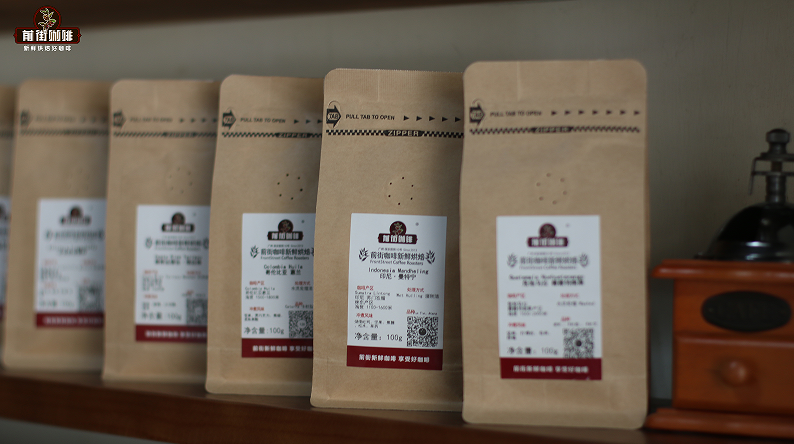
Front Street Coffee: Brazil · Cerrado Red Bourbon Coffee
Country: Brazil Region: Cerrado Altitude: 1,000 meters Variety: Red Bourbon Processing Method: Semi-washed
Flavor: Nuts, chocolate, cream, peanut, caramel
Front Street brewing parameters: Use a Kono dripper, 88°C water temperature, 15 grams of coffee, 1:15 coffee-to-water ratio, medium-fine grind (70-75% passing through a Chinese standard No. 20 sieve).
For darker-roasted coffee beans, Front Street chooses the Kono dripper to brew in order to highlight body. The Kono dripper's feature is its immersion function, which can extract more coffee substances through immersion and enhance the full-bodied mouthfeel. Its ribs are few and located at the lower end, allowing the filter paper to cling tightly to the dripper to restrict airflow, thereby slowing the flow rate and increasing contact time between water and coffee.
The water temperature is chosen at 86-88°C. A lower brewing temperature can avoid extracting too many off-flavors from the coffee beans during brewing, because the darker the roast, the more off-flavors increase. Front Street uses staged extraction: first bloom with 30 grams of water for 30 seconds, then pour in a small stream in circles until reaching 125 grams and pause, then when the water level drops and is about to expose the coffee bed, continue pouring until 225 grams and stop. Extraction time is 2 minutes, starting from the beginning of the bloom.
Cerrado coffee has an obvious sweetness on the palate, accompanied by a faint lemon aroma, contains a rich nutty flavor, and shows a distinct dark chocolate note in the finish, giving an overall rounded impression.
The above content is compiled by CoffeeHunters, a coffee news website.


