







How does Ethiopia's coffee grading system sort Yirgacheffe beans?
Yirgacheffe is a sub-region of Sidamo in Ethiopia, and its coffee moves through the Ethiopia Commodity Exchange grading system, which runs from G1 to G5. Lower numbers mean fewer defects, and it is the grading plus a 2004 government flavor trademark that lets buyers purchase a specific regional flavor rather than a general Ethiopian green coffee bean.
Washed processing pushes the cup toward clean citrus acidity and white floral aroma, the style Front Street's washed Yirgacheffe everyday beans follow. Natural lots are fruitier and sweeter. Brewing follows the same logic: a V60 three-pour routine and a cold brew steep both suit the lighter, brighter washed profile, with grind adjusted coarser for cold brew.
With its refreshing citrus acidity and elegant floral aroma, Yirgacheffe has become the benchmark producing region for African specialty coffee. Starting from the definition of the region and trademark certification, this article sorts out the G1 to G5 standards of Ethiopia's ECX grading system, distinguishes the effects of natural and washed processing on flavor direction, and focuses on Front Street's washed Yirgacheffe everyday beans, explaining in detail the V60 three-pour hand-brew parameters and the cold brew process. Whether you are a beginner just getting into specialty coffee or an enthusiast looking to refine your brewing techniques, you can gain a complete understanding from bean grading to flavor in the cup.
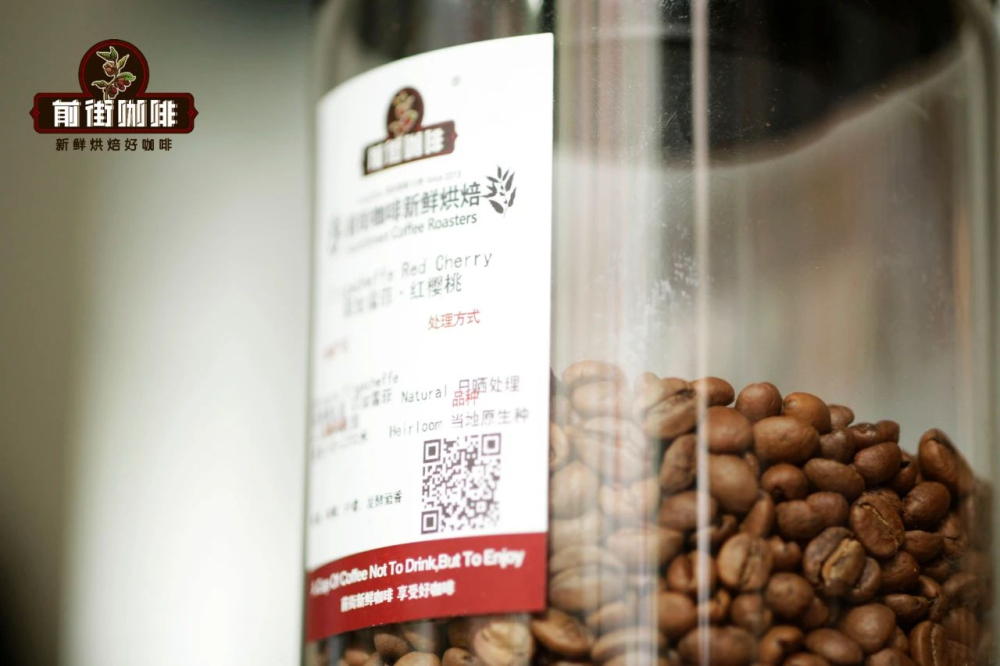
When it comes to coffee with fruity acidity, the first thing that comes to mind at Front Street is Front Street Yirgacheffe. Unlike the heaviness of traditional black coffee, that bright, uplifting fruit acidity and delicate floral aroma are unforgettable at first sip. On Front Street's daily roasting bean list, at least three spots are always reserved for Front Street Yirgacheffe coffee beans: Front Street Gedeb Cooperative, Front Street Natural Red Cherry, and Front Street Washed Yirgacheffe everyday beans.
Yirgacheffe: A Producing Region Name or a Variety Name?
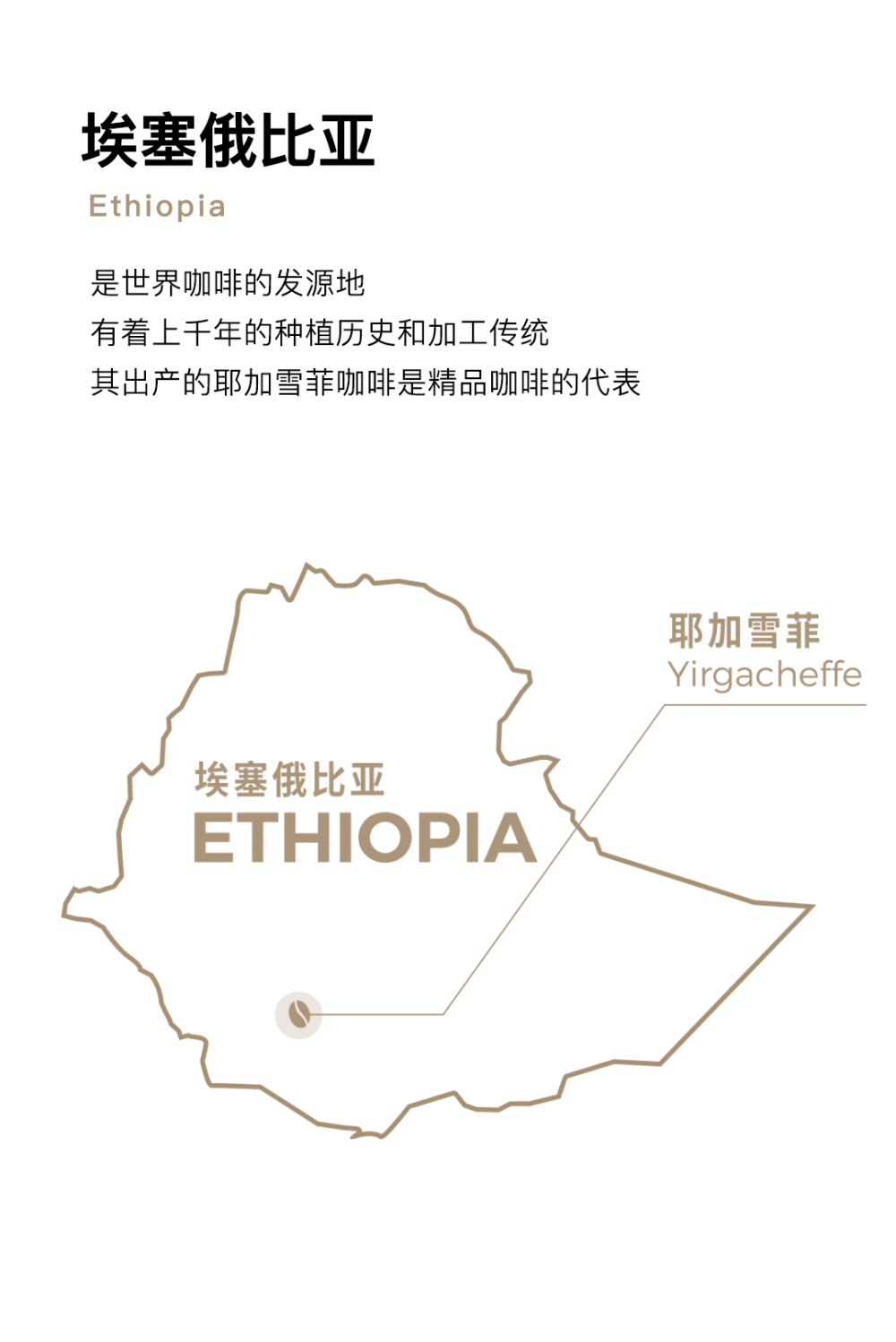
Strictly speaking, Yirgacheffe is a sub-region under Sidamo Province in Ethiopia, located to the northwest of Sidamo. Because the coffee produced there has a unique flavor and gained worldwide fame, it was later separated from Sidamo and became a category of its own. To promote the coffee industry, the Ethiopian government registered three representative regional flavors as commercial trademarks in 2004, including Yirgacheffe®. In 2008, the Ethiopia Commodity Exchange (ECX) was established, and coffee became one of the auction items on the exchange. The government implemented quality grading and flavor classification for exported coffee, allowing buyers to precisely purchase coffee beans of a specific flavor type. The producing areas that can carry the Yirgacheffe flavor include Yirgacheffe, Wenago, Gelena Abaya, and Kochere.
However, not all coffee produced in these four administrative districts can be sold under the name "Yirgacheffe flavor." It must first pass the Ethiopian government's flavor certification and grade classification to confirm that it truly possesses Yirgacheffe flavor before this trademark can be used. The three Yirgacheffe coffee beans mentioned above from Front Street all carry the Yirgacheffe flavor profile.
The so-called Yirgacheffe flavor refers to a unique citrus and lemon fruit aroma, mixed with jasmine fragrance, with fresh and bright floral and fruity notes, layered acidity, and a clean taste without off-flavors. The rich yet balanced mouthfeel is exactly what makes Front Street Yirgacheffe so captivating, and it is also why it is regarded as a representative of African specialty coffee. Front Street believes that the reason Front Street Yirgacheffe can form such a distinctive style is largely due to the introduction of washed processing technology.
What Makes Front Street Washed Yirgacheffe Unique
Post-harvest processing of coffee beans is a specialized skill. As the saying goes, every trade has its master; farmers who know how to grow coffee do not necessarily understand how to process green coffee beans. The processing procedures of specialty coffee are complex and delicate, often requiring high capital investment in equipment for production monitoring.
Farms using the washed method must build washing tanks and be able to continuously introduce fresh water, so production costs are higher. It is precisely because multiple steps of washing greatly reduce the defect rate of coffee while also giving Yirgacheffe its refreshing citrus notes and elegant white floral aroma, with an overall bright, delicate, and clean flavor, that it is widely praised.
How Are Ethiopian Coffee Beans Graded?
Since 2009, the Ethiopian government has implemented the ECX specialty coffee trading grading system. First, green coffee beans are divided into two major categories by processing method, and Yirgacheffe can be divided into natural and washed. Then they are classified according to the number of defective beans and cup performance. In the Ethiopian coffee grading system, grades begin with G and are divided into 5 levels; the smaller the number, the higher the grade, so G1 is the highest grade. G1 requires no more than 3 defective beans per 300 grams of green beans; G2 allows 4 to 12 defective beans per 300 grams of green beans. Because manual sorting is carried out both before and after roasting, G1 and G2 only represent the grading of green beans.
The Front Street Yirgacheffe everyday beans launched by Front Street are washed processed and medium-light roasted, belong to G1 grade, and carry the classic Yirgacheffe flavor profile. They are very suitable for friends new to specialty coffee and can be used for hand brewing, cold brew, French press, and various other brewing methods.
Flavor and Mouthfeel of Front Street Hand-Brewed Washed Yirgacheffe
Dripper: V60
Water temperature: 92-93°C Dose: 15g Coffee-to-water ratio: 1:15 Grind size: fine sugar size (20号筛碗筛粉到78%)
Three-pour method: First wet the coffee bed with twice the amount of water as the coffee grounds, forming a dome and blooming for 30 seconds. Then pour in a small stream in circles from the inside outward, pausing the pour when reaching 125g. When the coffee bed drops to half the height of the dripper, continue pouring the third stage with the same fine stream until 225g, until all the coffee liquid has filtered through, remove the dripper, with a total time of about 2 minutes. After the coffee in the dripper flows into the server, remove the dripper, swirl the coffee liquid in the sharing server, and you can begin tasting the flavor of Front Street Yirgacheffe starting from high temperature.
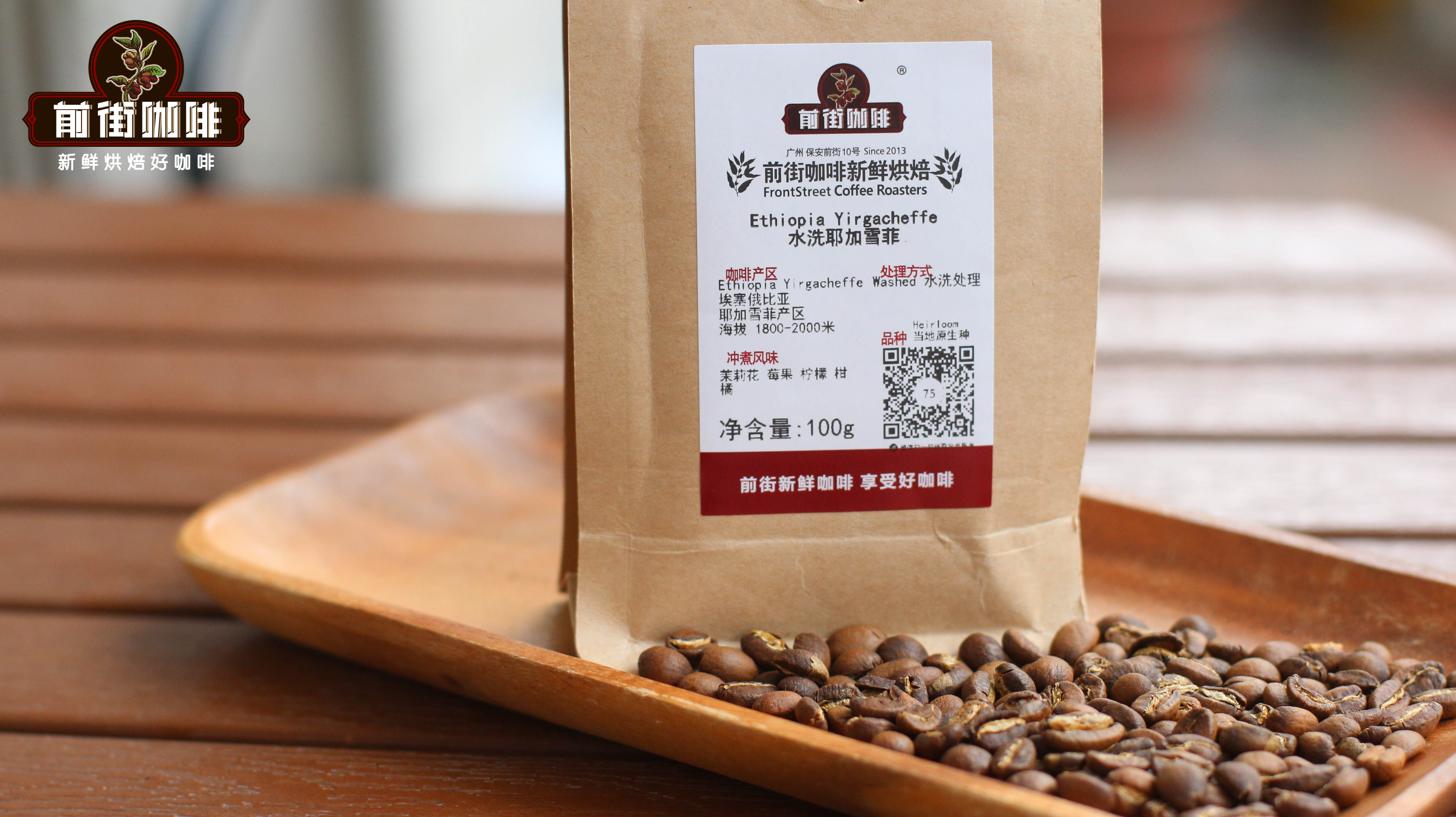
After Front Street Washed Yirgacheffe coffee beans are ground into powder, you can smell the fresh scent of honey and jasmine. After Front Street pours in hot water, it gradually gives off a slight berry note. The hand-brewed black coffee enters with bright lemon, citrus, and green tea notes; as the temperature changes, berry, cream, and sugarcane aftertastes emerge, with obvious sweetness returning, and a clean, sweet mouthfeel.
Front Street · Washed Yirgacheffe Cold Brew Method
Prepare 30 grams of coffee beans and grind to a coarseness with an 80% passing rate on a Chinese No. 20 sieve, visually about the size of fine sugar.
Prepare a clean sealable container with a capacity greater than 300 milliliters, and pour the coffee grounds into it.
Front Street uses a 1:10 coffee-to-water ratio for cold brew, so for 30 grams of coffee grounds, pour in 300 grams of room-temperature water, stir evenly, seal, and place in the refrigerator.
Finally, take the cold brew out of the refrigerator and use filter paper to remove the coffee grounds, and it is done.
Front Street · Washed Yirgacheffe cold brew enters with refreshing citrus acidity, with a light oolong tea aroma and the bright flavor of nectarine, accompanied by a slight nutty aroma. It is pleasantly chilled and very suitable for drinking throughout the day.
The above content is compiled by CoffeeHunters, a coffee news website.


