







Where does Mandheling coffee come from and how does it taste?
Mandheling coffee is named after an Indonesian ethnic group, not a region or variety. The story runs from a World War II encounter to 1968, when Nomura Trading of Osaka bought 15,000 kilograms of Sumatra Mandheling from N.V. Pawani Medan and the name took off in Japan. In the cup it is rich and full-bodied with silky texture and slight acidity.
In traditional usage Mandheling means coffee from the Lintong area around Lake Toba in North Sumatra and near Lake Tawar in Aceh. The wet-hulling process gives the heavy body and low acidity. Front Street's Golden Mandheling comes from PWN, which sorts green beans hard for grade. For pour-over, aim for a clean, layered cup rather than a muddy one.
Mandheling coffee has long been renowned for its rich, full-bodied taste—silky smooth on entry, with a slight acidity and a full, lingering aroma. But did you know that the name "Mandheling" actually comes from the name of an ethnic group in Indonesia? From a chance encounter during World War II to becoming a classic representative in today's specialty coffee world, Mandheling has traveled a rather legendary history. This article will introduce you to the origin characteristics of Mandheling coffee, its unique wet-hulling process, and the strict quality control standards of Front Street PWN Golden Mandheling. At the same time, Front Street baristas will also share a practical pour-over recipe to help you brew a clean, rich, and layered Mandheling coffee at home.
Mandheling coffee enjoys a high reputation in the coffee world and is regarded by many enthusiasts as a model of richness and depth. As it glides over the tongue, that moist, smooth texture is truly impressive, with a subtle acidity interspersed like lively notes dancing in the mouth, followed by a rich aroma that fills the entire palate. Next, Front Street will discuss with you the correct way to brew Indonesian Mandheling coffee.
The name "Mandheling" actually comes from the name of an ethnic group in Indonesia
During World War II, a Japanese soldier stationed in Indonesia tasted a coffee with an outstanding flavor and asked the locals what coffee it was. The shop owner mistakenly thought he was asking where he was from, so he casually answered "the Mandheling people." After the war ended, the Japanese soldier returned home and recalled that cup of coffee with its distinctive taste, vaguely remembering it seemed to be called "Mandheling." In 1968, Nomura Trading Company of Osaka, Japan, traveled to Indonesia and visited N.V. Pawani Medan, purchasing 15,000 kilograms of Sumatra Mandheling coffee, which received an enthusiastic response after being launched on the Japanese market. From then on, Mandheling coffee and Prawani Coffee Company (PWN Company) rose to fame. The Front Street Golden Mandheling coffee on Front Street's bean list comes from this famous PWN Company.
What characteristics do Mandheling coffee beans have?
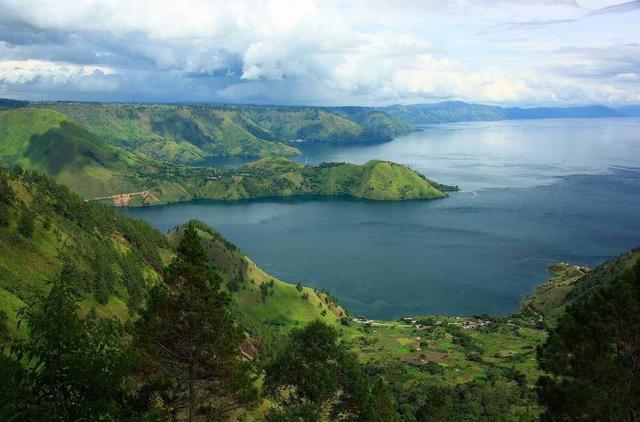
In traditional terms, Mandheling coffee refers to coffee produced in the Lintong region around Lake Toba in North Sumatra Province, as well as near Lake Tawar in the Aceh Special Region. Both volcanic lakes are situated at altitudes above 1,000 meters, and the volcanic ash soil is rich in various nutrients. Combined with abundant rainfall year-round, the coffee trees on the island can thrive even without relying heavily on artificial fertilization.
The island of Sumatra straddles the equator, with high temperatures and heavy rainfall year-round, and typhoons are also frequent visitors. Therefore, it is impossible to process green coffee beans on a large scale using African-style natural processing or Central and South American washed processing. To prevent the green beans from becoming moldy and deteriorating during processing, locals significantly compressed the fermentation and drying time to adapt to local climate conditions.
After the coffee fruit is depulped, it undergoes only a few short hours of fermentation before entering the sun-drying stage. When the moisture content of the parchment coffee drops to 30%–50%, the beans are still in a semi-dry state. At this point, locals use specially made hulling equipment to strip away the parchment layer, which still has a certain hardness, through friction, and then continue drying the hulled beans until they reach the moisture content standard. Because the entire processing flow takes place in an environment with 70%–90% humidity, and because the parchment layer has already been removed before final drying, the "exposed" green beans easily absorb moisture from the air, so this type of coffee bean often carries some woody and herbal notes.
The representative of high-quality Mandheling—Front Street PWN Golden Mandheling Coffee
The wet-hulling process removes the parchment during operation, exposing the beans directly to the air, which also greatly increases the chance of coffee beans being contaminated by mold, fungi, and the like. If production steps are not properly controlled, the coffee beans may become bland or even develop unpleasant flavors, so the probability of defective beans appearing is relatively high.
To reduce the defect rate, PWN Company implements very strict standards when producing Golden Mandheling coffee beans: first screening out green coffee beans of 18 mesh or above, then, on the basis of the highest-grade G1 standard ensuring fewer than 3 defective beans (based on a 300-gram green bean sample), carrying out 3 rounds of manual hand sorting. Having passed through layer after layer of quality control, Front Street Golden Mandheling coffee is uniform and neat in both color and size.
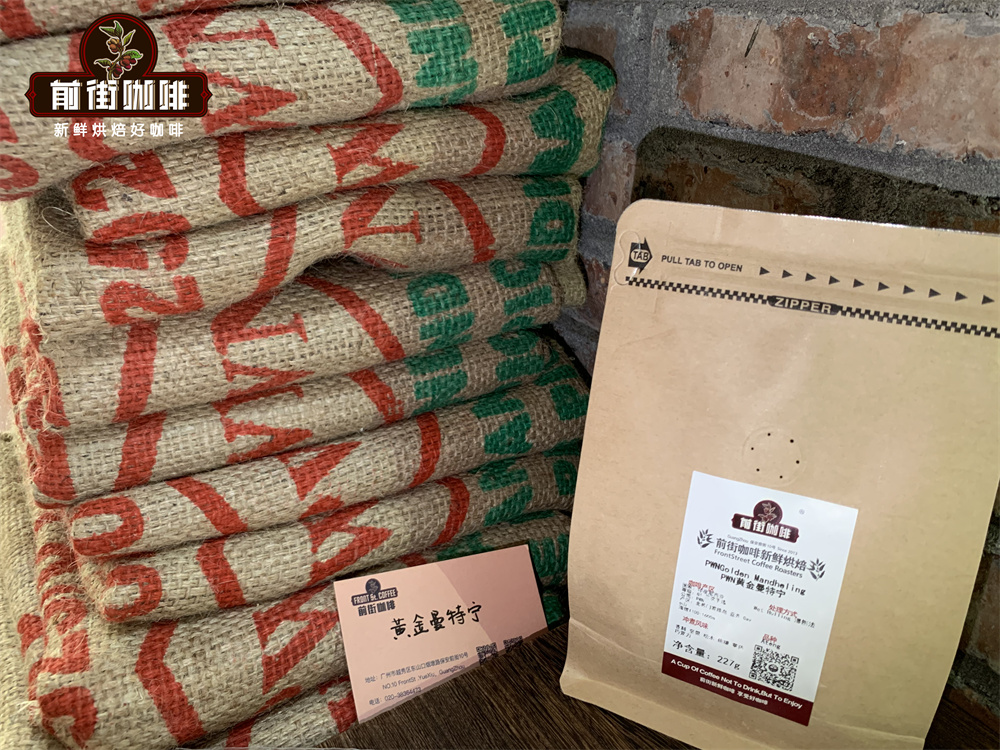
Front Street PWN Golden Mandheling coffee not only retains Mandheling's characteristic herbal and spice flavors, but also shows even better cleanliness due to the大幅 reduction in defect rate. Therefore, if you want to experience the aroma performance of top-tier Mandheling, Front Street believes that Front Street PWN Golden Mandheling coffee is the most worthwhile choice to try.
How should Golden Mandheling coffee be brewed?
The low-acidity, full-bodied taste of Mandheling coffee comes from its medium-dark roast level. When brewing darker-roasted coffee beans, Front Street appropriately lowers the water temperature to avoid overheated water releasing too much burnt bitterness. At the same time, a medium grind is chosen, which can both extract more abundant aroma molecules from Mandheling coffee and prevent over-extraction caused by coffee grounds being too fine.
No matter which coffee is being brewed, freshness is always the factor Front Street values most, and all flavor descriptions are also based on fresh coffee beans. For coffee beans ordered at Front Street stores, Front Street ensures they are freshly roasted within 5 days, allowing customers to experience the coffee's rich aroma within its optimal flavor period.
In this brewing session, the barista at FrontStreet Coffee wanted to highlight the richness, cleanliness, and aromatic intensity of Front Street Golden Mandheling, so a KONO dripper was chosen for extraction. Also a conical dripper, the KONO dripper has far fewer guiding ribs than the v60, and its upper part is a smooth curved surface, making the filter paper fit more closely, thereby restricting upward airflow so that hot water can only flow downward, forming a siphon-like extraction effect that allows the aroma substances in the coffee grounds to be released more fully, further enhancing body.
Pour-over parameters: 87–88°C water temperature, medium grind (70% passing rate on China standard No. 20 sieve), 15 grams of coffee grounds, 1:15 coffee-to-water ratio, three-stage pouring
Slowly pour the coffee grounds into the dripper, keeping them as level as possible during the pour and avoiding shaking the dripper (because shaking will reduce the spacing between coffee grounds, which is unfavorable for blooming and degassing). For the first stage, pour 40g of water in a small circular motion from the center, and bloom for 30 seconds; the coffee bed will gradually expand and puff up into a "hamburger" shape. For the second stage, pour 120g of water in circles from the center outward, keeping the pouring height as close to the coffee bed as possible and moving slowly to avoid excessive agitation. For the final stage, pour 100g of water, and end extraction after all the coffee liquid in the dripper has flowed into the server. Total extraction time is about 2 minutes.
The completed pour-over Front Street PWN Golden Mandheling coffee is rich and varied in layers overall, full-bodied and intense, with a clean mouthfeel. The aromas of nuts, dark chocolate, and caramel interweave, with a lasting sweet aftertaste and excellent balance.
In addition to the pour-over method commonly used by Front Street, many common extraction methods can also showcase the classic flavor of Mandheling coffee, such as the siphon pot with a rounded, rich mouthfeel, the AeroPress with a clean and crisp result, and the French press with abundant oils.
For professional coffee knowledge exchange and more coffee bean information, please follow Coffee Workshop (WeChat public account: cafe_style)
For more specialty coffee beans, please add the private WeChat of FrontStreet Coffee: qjcoffeex
The above content is compiled by CoffeeHunters, a coffee news website.


