







Does Yunnan coffee grown as arabica coffee really help with weight loss?
Yunnan coffee is arabica grown between roughly 800 and 1,800 meters, where marked day-night temperature swings, fertile soil, humid air and clear dry and rainy seasons give the trees conditions that support quality. That altitude and variety matter, because specialty-grade arabica needs to be grown above about 1,200 meters, unlike the bitter, earthy robusta planted in Hainan's hot lowlands.
Cultivation in Yunnan traces back just over a century, beginning with a French missionary, Father Tian Deneng, who planted seedlings near Zhugula Village in Binchuan. Catimor later dominated the province before the shift toward specialty lots, and work with typica there shows how variety choice shapes the flavor and the potential health effects of a cup of black coffee.
Yunnan, a province renowned for Pu'er tea, is now also an important coffee-producing region in China. From the first coffee seedling planted by a French missionary, to Catimor becoming the dominant variety, and then to the transition toward specialty coffee, Yunnan coffee has gone through a century-long journey. This article will guide you through the origin advantages, variety evolution, and flavor characteristics of Yunnan Arabica coffee, and explore the effects of specialty black coffee in fat burning and health. At the same time, Front Street Coffee's experience of growing Typica in Yunnan also presents the story behind a cup of Yunnan coffee.
In recent years, demand for coffee consumption has continued to rise. It is hard to imagine that a country with such a deep tea culture could also produce coffee. Even more surprising is that China's coffee-producing region is located precisely in Yunnan, a place famous for Pu'er tea.
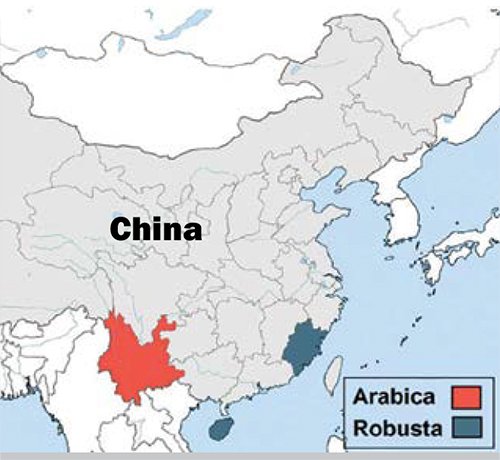
In fact, domestic coffee cultivation is mainly concentrated in Yunnan and Hainan. Hainan is a coastal plain with an altitude of less than 800 meters. Coupled with scorching summers and high temperatures year-round, it is not suitable for growing Arabica, and Robusta is mainly grown there.
To meet what we commonly call specialty coffee standards, Arabica must be grown, and the altitude must be above 1,200 meters. Robusta's flavor tends toward bitterness and also carries an earthy, fishy smell, making it unappealing. Arabica, however, under suitable altitude, temperature, humidity, and proper field management, will inevitably display excellent quality.
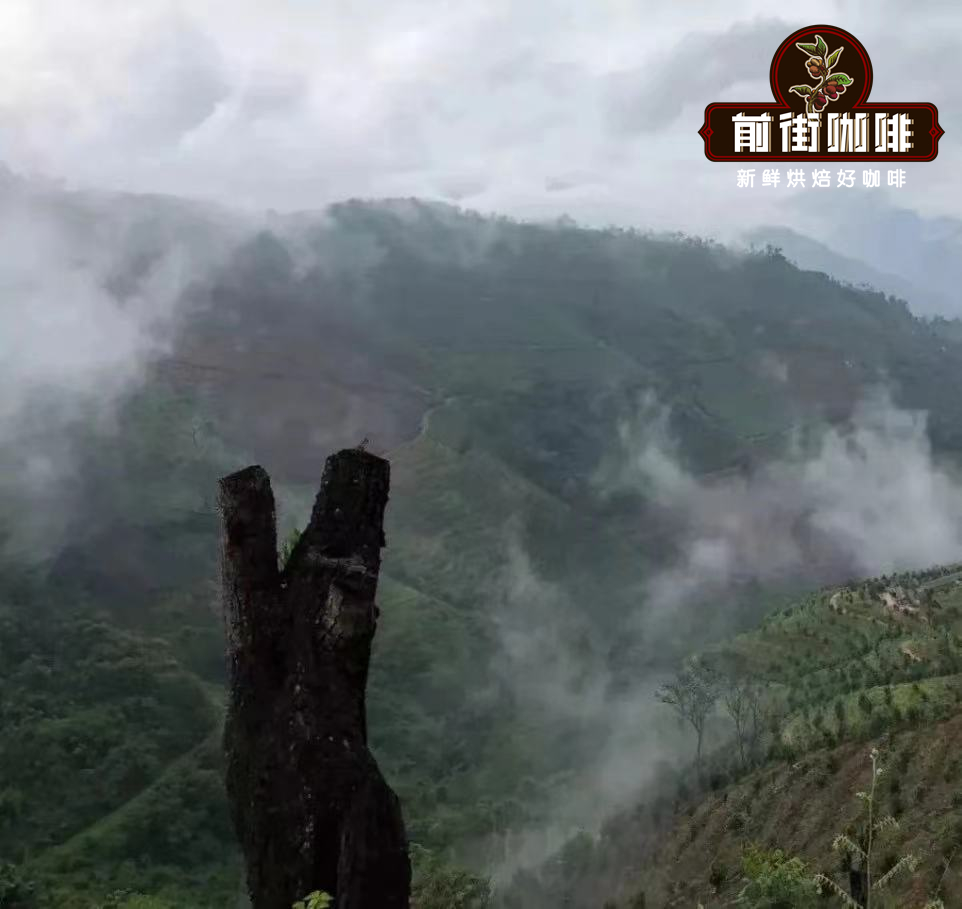
Yunnan's terrain is complex, with coffee cultivation at altitudes ranging from 800 to 1,800 meters, a pronounced temperature difference between day and night, fertile soil, year-round humid air, and clearly defined dry and rainy seasons. These conditions provide a very ideal growing environment for Arabica.
China's coffee consumption can only be traced back to the late Qing Dynasty, and in this country with a developed tea industry, the history of coffee cultivation is only just over a hundred years. During the late Qing Dynasty, foreign powers invaded China, and missionaries were sent as pioneers to assimilate the local population.
Father Tian Deneng, a French missionary, was ordered to go to Zhugula Village in Binchuan, Yunnan, to build a church and preach. Because he himself loved coffee, he brought a coffee seedling with him and planted it by hand beside the church, and coffee thus took root locally.
It was not until the 1950s that Yunnan began to grow coffee on a large scale. Some may ask, at that time, let alone having heard of coffee, even those who had drunk it or consumed it were few, so why grow it on a large scale? In fact, Yunnan's expansion of coffee cultivation at that time was not for domestic sales, but mainly to supply overseas markets, especially the Soviet Union. At that time, Yunnan coffee beans were even quite praised in the international market and regarded as a premium product among coffees.
The second round of development for Yunnan coffee appeared after the reform and opening up, when many international coffee brands entered the Chinese market, and Nestlé was one of them, choosing to purchase local coffee beans in Yunnan. In the early period, Yunnan grew Typica, but Nestlé, as an instant coffee giant, in order to obtain more raw materials, promoted Catimor locally, which has strong resistance to leaf rust but less elegant flavor. Yunnan Arabica coffee's variety changed from the oldest Arabica to Catimor, which carries Robusta genes. Thereafter, Catimor gradually became Yunnan's dominant variety, accounting for about ninety percent of Yunnan coffee bean production.
Entering the twenty-first century, the third wave of specialty coffee brought the concept of specialty coffee into China, and Yunnan also subsequently launched seed selection and breeding work. In 2012, Nestlé stopped purchasing large quantities of Yunnan coffee beans, which prompted Yunnan coffee farmers to shift toward specialty development.
In recent years, the state has strongly supported Yunnan coffee, and with the promotion of film and television works such as "Coffee or Tea?" and "Road to Infinity," Yunnan coffee's popularity has continued to rise.
As a disseminator of specialty coffee knowledge, Front Street naturally cannot do without hands-on practice, because only in this way can it share more. Front Street began growing coffee as early as half a year before its café store opened. The predecessor of Front Street Coffee was "Dazhen Coffee," which initially grew Catimor in a place called Dazhen in Guangdong. More than half a year passed in the blink of an eye, and Front Street suddenly realized the relationship and order among variety, altitude, and processing method in specialty coffee.
So we started over from scratch. While continuously learning and researching specialty coffee knowledge, we also kept sharing and even put it into action. By coincidence, Front Street found land in Yunnan suitable for growing specialty coffee. In order to grow truly specialty coffee, Front Street started from zero to grow Typica, hoping to present the most original Yunnan Arabica coffee to everyone.
In 2021, Front Street Coffee's coffee estate in Yunnan also experienced the joy of a harvest. Because Typica cultivation does not produce even a small yield until the fourth or fifth year, the previous production season had a relatively small output of just over 100 kilograms. Front Street Coffee estate's Yunnan sun-dried Typica coffee beans sold out after only a few months on the store shelves, and all the effort was rewarded. It has the characteristic taste of Yunnan coffee beans: fragrant but not harsh, rich but not bitter. Many people who tasted this coffee gave it praise.
After another year of hard work, Yunnan coffee's harvest season is also about to end. Front Street Coffee's new-season coffee beans are almost ready to meet everyone, but the timing is not yet right. If you are craving it and cannot wait, you might as well first try the Front Street 2013 Typica on Front Street's bean list.
Front Street Coffee Front Street 2013 Typica Coffee Beans
Region: Yunnan Baoshan producing area
Altitude: 1,200 meters
Variety: Typica
Processing method: washed process
This Front Street 2013 Typica coffee bean uses the washed process, which best reflects the basic flavor of the producing area, presenting Yunnan's most original terroir taste. It has a light citrus acidity on the entry, a nutty main tone, melon and fruit aromas, brown sugar sweetness, and a black tea finish, with rich layers.
Yunnan coffee not only tastes good, but also has certain health benefits. The pour-over coffee we usually drink is a type of black coffee, and black coffee is consumed without sugar or milk. Coffee has always been a refreshing tool for workers, and with the continuous development of science and technology, many of coffee's health benefits have also been discovered.
As early as January 2021, a scientific paper pointed out that drinking black coffee before exercising can enhance the fat-burning effect. In addition, during 2021, studies also pointed out that black coffee has a preventive effect on diseases such as dementia and liver disease.
For more coffee bean information, please follow Coffee Workshop (WeChat public account cafe_style) For professional coffee knowledge exchange, please add WeChat ID kaixinguoguo0925
The above content is compiled by CoffeeHunters, a coffee news website.


