







How Does Golden Mandheling Differ From Yirgacheffe?
Golden Mandheling comes from Sumatra, Indonesia, and lands on the rich side: herbs, dark chocolate, nuts, and a thick mouthfeel. Yirgacheffe comes from Ethiopia and moves in the opposite direction, with floral, citrus, and honey notes and a lighter body. The two sit on separate flavor paths, so the choice comes down to whether a drinker wants weight and depth or brightness and aroma.
Both beans sell well at Front Street. Among customers who pick Golden Mandheling, men are the majority; among those who choose Yirgacheffe, women are more common, often preferring a fresh, bright tone over a heavy mouthfeel. Origin and processing drive most of the gap: Indonesian Mandheling style favors earthy, low-acid cups, while Ethiopian washed Yirgacheffe keeps its acidity and floral aromatics intact.
In the world of coffee, some prefer bright fruity acidity, while others favor a rich, sweet aftertaste. Golden Mandheling and Yirgacheffe represent two completely different flavor directions—the former comes from Sumatra, Indonesia, carrying intense notes of herbs, dark chocolate, and nuts; the latter originates from Ethiopia, exuding fresh tones of floral fragrance, citrus, and honey. From the perspective of Front Street Coffee, this article systematically reviews the origin background, varietal characteristics, processing methods, and roasting approaches of these two popular coffee beans, along with specific brewing parameter suggestions, to help coffee enthusiasts more clearly understand the stylistic differences between Asian beans and African beans, and find the cup that suits their taste.
To learn more about specialty coffee, welcome to follow our WeChat official account: Front Street Coffee (FrontStreet Coffee)
Whether coffee tastes good or not actually has no unified answer. Some prefer beans with prominent acidity, while others enjoy a thick, full-bodied mouthfeel. Everyone's taste preferences differ, so choices naturally vary. Customers often come to Front Street Coffee (FrontStreet Coffee) asking: What exactly is the difference between Golden Mandheling and Yirgacheffe coffee beans? Front Street's answer is: Golden Mandheling is produced in Indonesia and belongs to Asian beans, which typically present a rich, thick flavor profile with pine and herbal notes; Yirgacheffe comes from Ethiopia and is a representative of African beans, with aromas dominated by floral and fruity notes, and an overall fresh, light style. The two can be said to be on completely different flavor paths.
There is also an interesting phenomenon: among customers who prefer Golden Mandheling, men make up the majority—one could say Mandheling is the gentleman of coffee; while among those who choose Yirgacheffe, the proportion of women is higher, as they often do not pursue a heavy mouthfeel but prefer a fresh, bright tone. Both beans sell very well at Front Street, and below Front Street will introduce them separately.
Yirgacheffe Coffee
Yirgacheffe is the representative of Ethiopian specialty coffee and the most iconic bean from this coffee-producing country. At Front Street Coffee (FrontStreet Coffee), washed Yirgacheffe is the best-selling item in the daily bean series, showing just how popular it is.
Ethiopia is both the birthplace of coffee and a treasure trove of coffee genetics. A vast number of coffee varieties grow there, many of which have not yet been fully discovered and classified, so the term "heirloom" often appears in Ethiopian coffee variety labels. Friends who frequently buy Yirgacheffe will notice that its coffee beans are not uniform in size—some are long and some are round—which is precisely the result of mixed harvesting of heirloom varieties.
Golden Mandheling Coffee
Sumatra, Indonesia, is the main producing area of Indonesian specialty Arabica coffee beans. What we usually call Mandheling coffee refers to Arabica coffee beans produced in the area around Lake Toba in north-central Sumatra (at an altitude of about 900 to 1,200 meters), as well as the area near Aceh at the northernmost tip of Sumatra (at an altitude of about 900 to 1,600 meters). The suitable altitude combined with a tropical rainforest climate keeps the island's average temperature between 25 and 28 degrees Celsius, with even seasonal distribution and no obvious dry season, providing ideal growing conditions for coffee trees.
So what exactly is the concept of Golden Mandheling? From the name, it seems to be a higher grade than ordinary Mandheling. Front Street wants to tell everyone that Golden Mandheling is not a grade designation, but a trademark registered by the Indonesian company N.V. Pawani Medan (abbreviated as PWN). The company was founded in 1957 and deals in the export of Indonesian products such as coffee, rubber, cinnamon, cloves, and patchouli oil. It was the first company in Indonesia to export coffee from North Sumatra Island, and also the first company to make "Mandheling coffee" famous in Japan. Since 1977, PWN has focused on the export of high-quality coffee beans, with main products including Sumatra Arabica Mandheling Grade 1 and Robusta AP-I Grade 2. Export destinations are mainly Japan, Taiwan, and the United States, with Japan and Taiwan together accounting for over 95%. In Japan and Taiwan, "PWN" is almost synonymous with quality assurance.
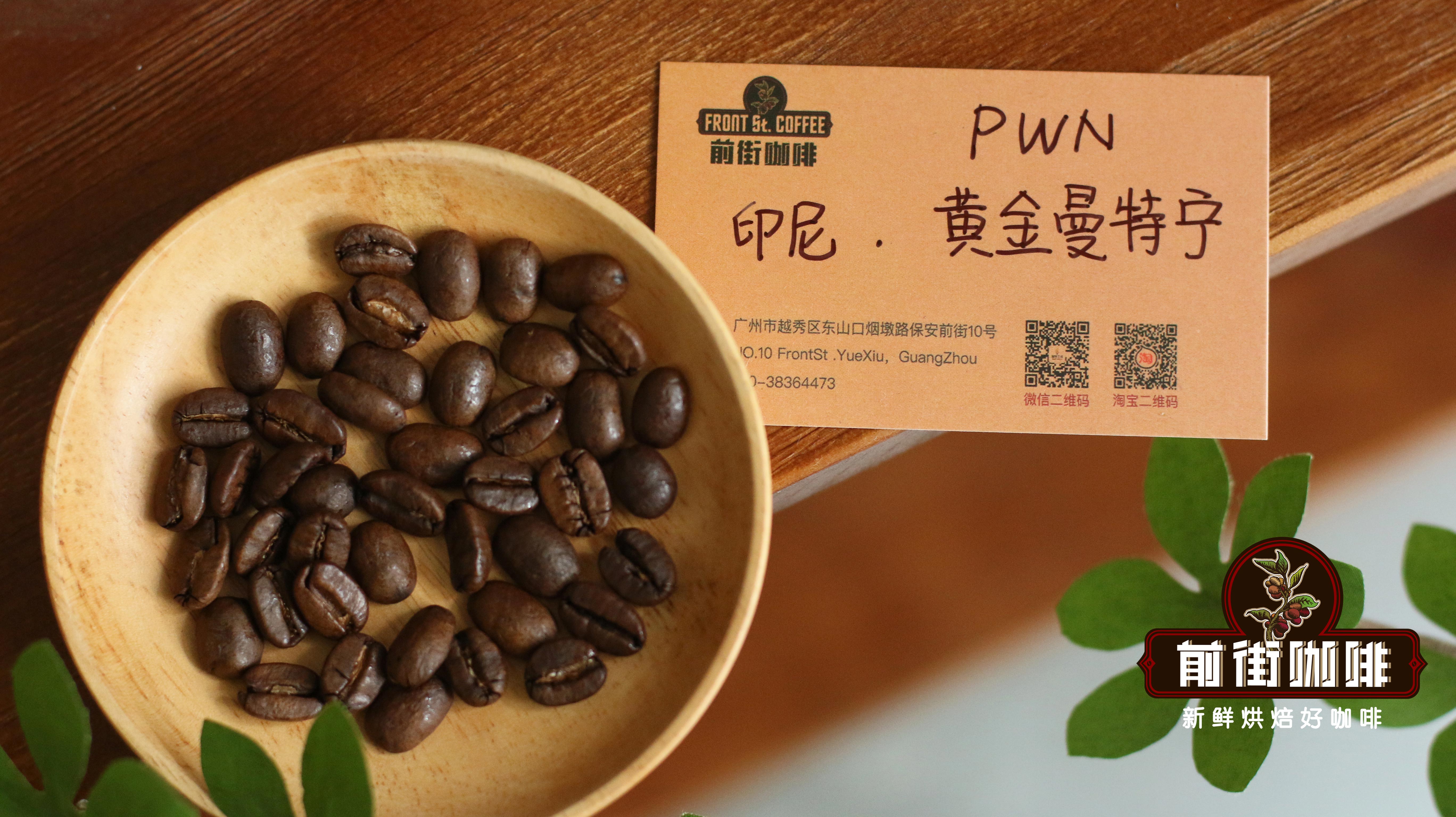
The Golden Mandheling coffee beans currently sold by Front Street Coffee (FrontStreet Coffee) come precisely from PWN. After harvesting and drying are completed, Front Street's PWN Golden Mandheling undergoes at least three rounds of pure hand sorting to ensure the coffee beans reach a screen size of 18 or above, with no more than 3 defective beans in a 300-gram green bean sample, belonging to the highest grade G1. PWN's Golden Mandheling green beans are darker green in color and have a neat, flat bean shape.
Front Street Coffee (FrontStreet Coffee)'s new-season Golden Mandheling comes from the Gayo Mountains in Aceh, North Sumatra, and the variety is Ateng. Ateng is a hybrid between Arabica and Robusta, widely planted in Sumatra and other Indonesian islands. In fact, Ateng is the local name for Catimor coffee. Golden Mandheling has stricter quality requirements: first, the coffee beans must reach screen size 19, with plump and uniform particles, and then they must undergo one machine screening and three rounds of manual hand sorting to control the defect rate of green beans.
Main Processing Methods of Ethiopian Yirgacheffe Coffee Beans
Washed Yirgacheffe, as the name suggests, is processed using the washed method. Actually, Yirgacheffe was initially mainly sun-dried, but later people found that the washed method better showcases Yirgacheffe's bright acidity, with a cleaner and more refreshing taste. Therefore, Yirgacheffe coffee beans currently mainly use washed processing, though sun-dried processing is still widely used. Washed coffee has a cleaner flavor and better reflects the terroir characteristics of the origin, so almost all of Front Street Coffee (FrontStreet Coffee)'s daily bean series use the washed processing method.
The washed processing method goes as follows: screened coffee cherries are sent to a depulper to initially remove the skin and pulp. The green coffee beans with residual pulp and mucilage are placed in water and fermented for about 12 to 36 hours depending on local temperature conditions. After fermentation is complete, the green coffee beans with parchment are washed in a flowing water channel to remove remaining pulp and mucilage. After washing, the beans are sun-dried or machine-dried to reduce moisture content to about 12%, and finally the parchment is removed. Front Street believes that the most obvious characteristic of washed processed roasted coffee is the white silver skin line retained in the middle of the bean.
Processing Method of Sumatra Golden Mandheling Coffee Beans
The unique flavor of Mandheling coffee is closely related to its processing method. Front Street has also mentioned that coffee processing methods are related to the local climate environment. Sumatra has mostly rainy days, frequent typhoons, and is humid and rainy year-round, unable to meet the weather conditions required for sun-drying, so coffee farmers use the wet-hulling method to process coffee beans. This accidental processing method actually created Mandheling's unique flavor.
The wet-hulling method works as follows: first, fermentation is carried out in a washed manner, then semi-drying, then the parchment is removed by machine, followed by final drying, and the coffee beans enter storage in a bare state. Golden Mandheling is also processed using the wet-hulling method.
Roasting Differences Between Golden Mandheling Coffee and Yirgacheffe Coffee
Golden Mandheling belongs to Asian beans, which have a higher body, and combined with Mandheling's own herbal characteristics, Front Street Coffee (FrontStreet Coffee)'s roasters use a medium-dark roast to pursue the unique richness of Asian beans.
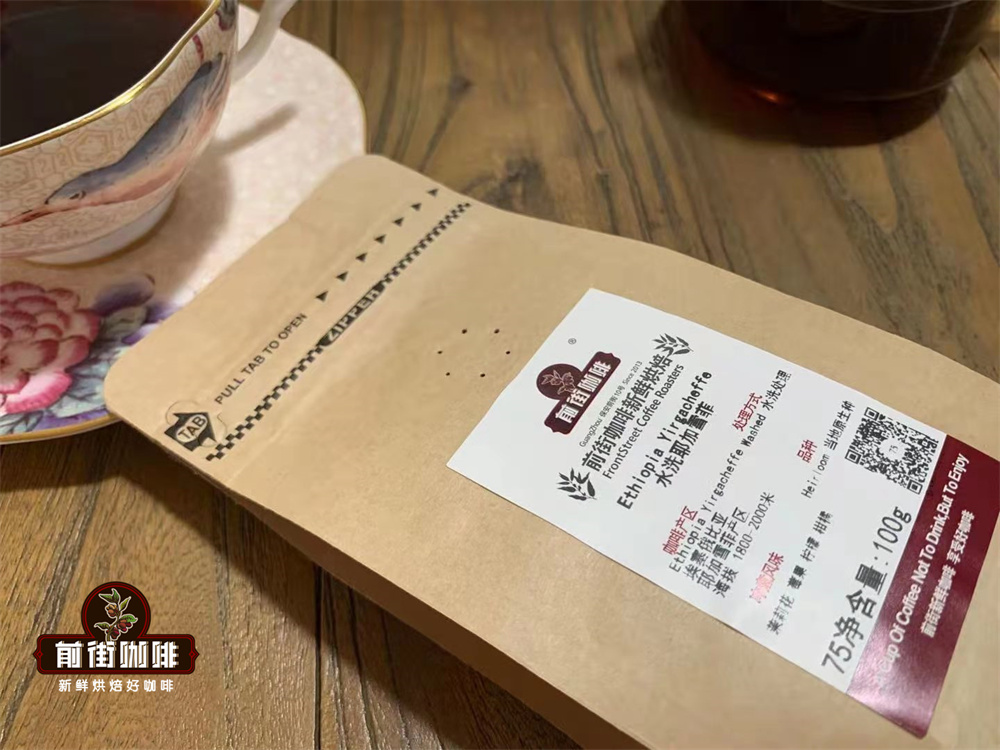
Yirgacheffe, on the other hand, is an African bean. African beans have a weaker body but excel in bold aromatics. Beans from the Yirgacheffe region usually carry the aroma of white flowers and the sweet-tartness of citrus. In terms of roast level, Front Street Coffee (FrontStreet Coffee)'s baristas use a light roast to highlight the floral and fruity aromas. Yirgacheffe green beans are generally Ethiopian heirloom varieties, so the green bean shapes are a mix of round, long, and flat-plump, categorized as small beans. Small beans usually have their roasting time actively shortened because they cannot withstand prolonged roasting.
As a unique specialty coffee exclusive to Indonesia, Golden Mandheling presents a rich aroma of herbs and dark chocolate, with a mellow and smooth mouthfeel, carrying a nutty sweet finish, and a very pronounced sweet aftertaste.
Yirgacheffe, on the other hand, exudes an extremely complex aroma, displaying outstanding layers of flavor that are hard to describe with a single word. Under a light roast, it has a unique lemony, floral, and honey-like sweetness, with soft fruity acidity and citrus notes, and a fresh, bright taste. Without milk or sugar, the rich texture and unique floral fragrance brush across the palate, leaving a long-lasting aftertaste.
Front Street Coffee (FrontStreet Coffee) Brewing Suggestions
Regarding coffee brewing, Front Street recommends using freshly roasted coffee beans to experience the rich flavors of coffee to the greatest extent. Coffee beans shipped by Front Street Coffee (FrontStreet Coffee) are all within 5 days of the roast date, because Front Street deeply understands the important impact of freshness on flavor. Front Street's roasting motto is "Freshly Roasted Good Coffee," so every customer who places an order receives their coffee in the freshest state. The resting period for coffee is about 4 to 7 days, so by the time customers receive it, it is exactly at its peak flavor stage.
Of course, all of this is premised on the coffee beans being fresh enough. Front Street Coffee (FrontStreet Coffee) deeply understands that freshness has a decisive impact on flavor, and its roasting motto is "Freshly Roasted Good Coffee," ensuring that every customer who places an order receives the freshest coffee. Coffee beans shipped by Front Street are all within 5 days of the roast date, with a resting period of about 4 to 7 days, so by the time customers receive them, they are at their best flavor.
Some customers also need Front Street to help grind the coffee, which is of course no problem, but Front Street would like to remind everyone: once coffee beans are ground in advance, there is no need to rest them anymore, because the pressure from carbon dioxide inside the packaging during transport also rounds out the coffee's flavor, so you can brew a cup immediately upon receiving the ground coffee. However, ground coffee needs to be brewed as soon as possible, because after contact with air, oxidation is faster, flavor loss is quicker, and quality declines noticeably. Therefore, Front Street recommends buying whole beans and grinding fresh before brewing, so you can better taste the coffee's flavor.
Front Street's Brewing Parameters for Yirgacheffe Coffee:
To fully extract the rich layers of Ethiopian coffee beans, Front Street uses a higher water temperature and a finer grind size for extraction. However, to avoid over-extraction caused by high temperatures, a faster-flow dripper is chosen, such as the V60 dripper. The V60 dripper has a 60-degree cone shape, and the cone angle allows coffee grounds to concentrate, while the water flow automatically converges toward the center of the dripper during pouring, ensuring sufficient contact time between water and coffee grounds, thereby extracting the right amount of coffee liquid. In addition, the ribs on the inner wall of the V60 dripper extend in a clockwise spiral from the bottom to the top, leaving enough space between the filter paper and the dripper, ensuring good water flow. Combined with the large hole at the bottom, the flow rate is relatively faster than many drippers.
Dripper: Hario V60, Water temperature: 90°C, Coffee dose: 15g, Coffee-to-water ratio: 1:15, Grind size: medium-fine (80% passing through a Chinese standard No. 20 sieve).
Front Street's Brewing Parameters for Golden Mandheling Coffee:
To better highlight the mellow mouthfeel of Mandheling coffee, Front Street chooses the Kono dripper. The Kono dripper has few ribs and they are located at the lower end, with the filter paper clinging tightly to the dripper, which can restrict airflow, extend the contact time between water and coffee grounds, allow the coffee grounds to be fully extracted, and enhance the mellow feel.
Water temperature: 88°C, Coffee dose: 15g, Coffee-to-water ratio: 1:15, Grind size: medium-fine (70% passing through a No. 20 sieve).
[Washed Yirgacheffe Coffee Flavor]: Brighter and more lively acidity, prominent citric acid and citrus notes, a refreshing taste, with some black tea notes in the finish.
[Front Street PWN Golden Mandheling Coffee Bean Flavor]: The overall layers are varied, mellow and clean, with rich nutty and caramel aromas, chocolate notes, a long-lasting finish, and high balance.
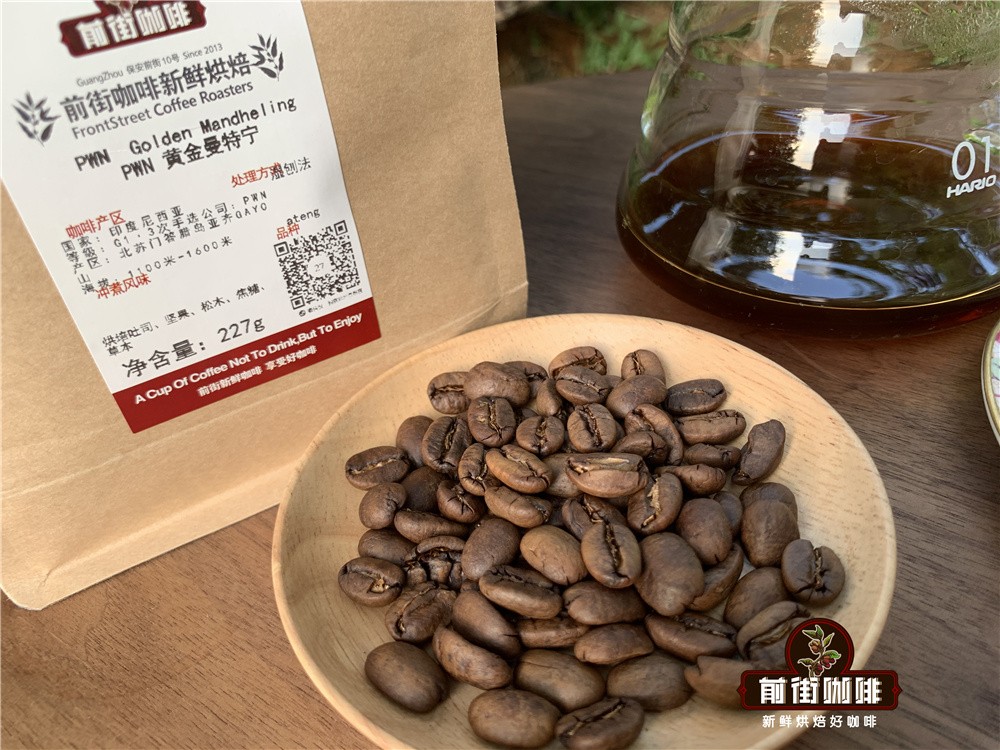
Front Street Coffee (FrontStreet Coffee) has over fifty kinds of single-origin coffee beans from different countries and regions, with all kinds of flavors available. Everyone is welcome to come and taste.
The above content is compiled by CoffeeHunters, a coffee news website.


