







What Does Rwanda's Coffee Grading System Mean?
Rwanda grades its washed coffee by bean size and density, running from AA at the top down through AB, A, B, C and the smaller STL categories. The letters describe screen size and defects rather than flavor, so a well-prepared AA lot from a good washing station usually shows cleaner acidity and more structure in the cup.
Rwandan coffee is grown mostly on smallholder plots in the hills of the Nyamasheke region at 1,500 to 1,700 meters. The Front Street Rwanda Washed Red Bourbon carries notes of berries, apple, green tea and apricot. The coffee grading system in Rwanda sits on a wider context: where are coffee beans grown matters, because this landlocked African country introduced coffee in the early twentieth century under German missionaries and later rebuilt its specialty sector after the 1990s.
Although Rwanda is a small landlocked country in Africa, its favorable terroir as the Land of a Thousand Hills has given rise to outstanding washed Red Bourbon coffee. This article starts from the historical context, tracing how coffee was introduced to this land and how it moved toward specialty status amid civil war and rebirth. It also explains Rwanda's coffee bean grading standards in detail, covering the definitions and uses of each grade from AA to STL, and introduces the origin information and flavor profile of Front Street Rwanda Washed Red Bourbon, helping coffee lovers gain a comprehensive understanding of this rising African specialty region.
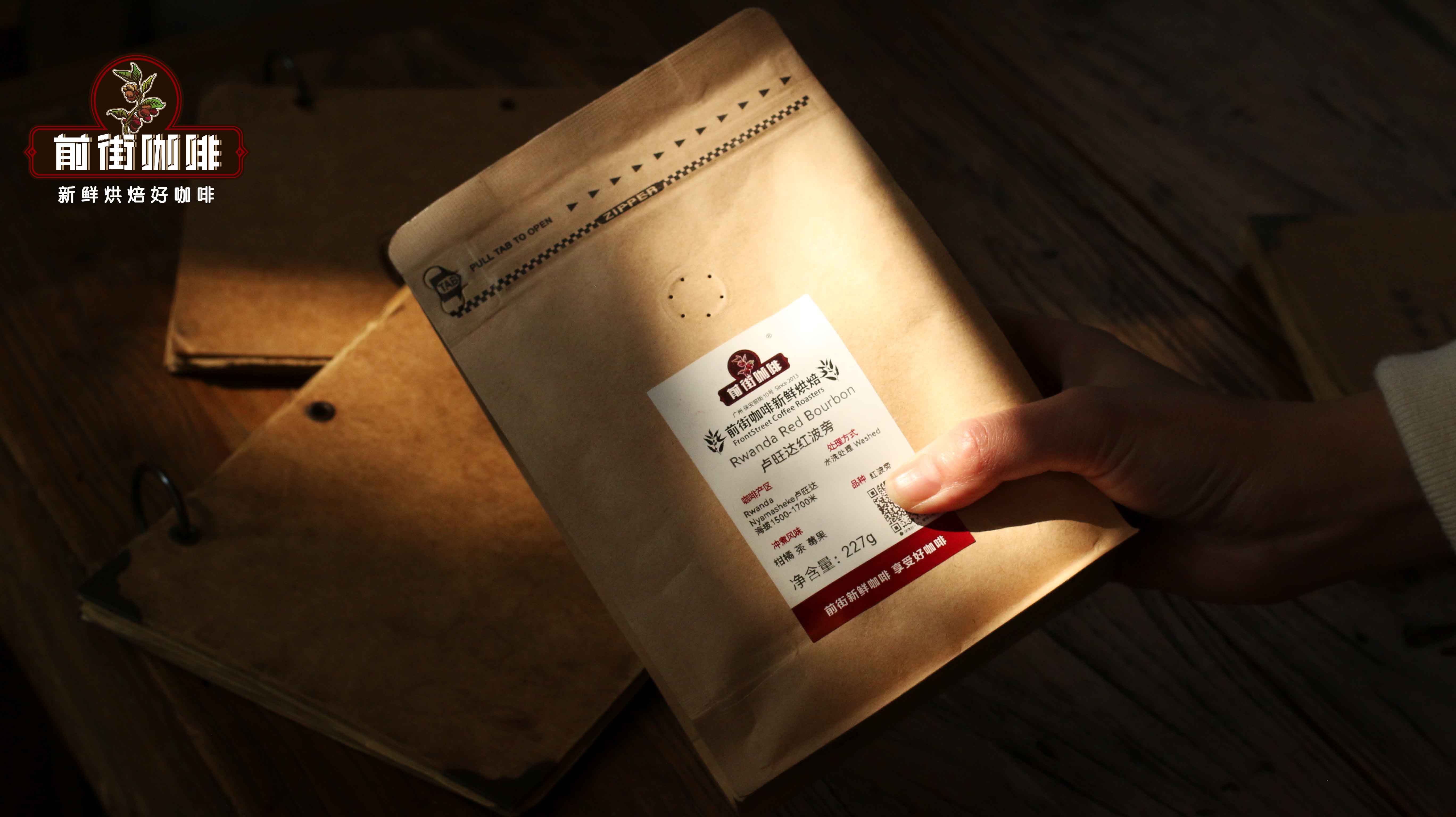
Rwanda Specialty Coffee Recommendation — Front Street Rwanda Washed Red Bourbon
Country: Rwanda
Region: Nyamasheke
Altitude: 1500–1700 meters
Variety: Red Bourbon
Processing Method: Washed
Flavor: Berries, Apple, Green Tea, Apricot
Rwanda is located in central Africa and is a landlocked country with no access to the sea, and nearly all of its neighboring countries are major coffee producers. In the early twentieth century, Rwanda was successively colonized by Germany and Belgium, and coffee was first brought to this land by German missionaries.
Although coffee production increased markedly during the colonial period, the quality of the coffee beans was never satisfactory because of exploited labor, suppressed crop prices, and high export taxes. This was also the general situation of commercial coffee in that era.
After Rwanda gained independence, the first official coffee organization, OCIR, was established, and coffee bean production gradually began to receive attention. From the 1960s to the 1980s, Rwanda's coffee production rose steadily and reached an unprecedented peak in 1986. Unfortunately, domestic political turmoil in the early 1990s (the Rwandan genocide) brought the coffee industry to a halt.
Today, Rwanda has gradually recovered its strength. Whether in urban development, public security, the friendliness of the people, or the cleanliness of the environment, it can be called an "atypical" African country. Rwanda is currently widely recognized as the safest country in Africa. In the "2017 World's Safest Countries and Destinations" list, Rwanda ranked ninth among all cities worldwide and was the only African country to enter the top ten.
Rwanda is a developing country whose economy is mainly based on agriculture and animal husbandry. The agricultural and pastoral population accounts for 92% of the country, and coffee and tea are the main cash crops. On average, 1 in every 30 Rwandans works in a coffee-related industry. Due to the impact of the COVID-19 pandemic, Rwanda's coffee sales suffered a considerable blow. To help local coffee farmers get through the crisis, on May 14, Viya, Alibaba's top livestreaming host, recommended Rwandan Gorilla's coffee beans and sold a year's worth of sales in one second.
Rwanda Coffee Growing Environment
As FrontStreet Coffee introduced in the previous article, Rwanda is a landlocked country in Africa, bordered by Burundi to the south, Tanzania to the east, Uganda to the north, and Congo to the northwest.
Rwanda is known as the "Land of a Thousand Hills." The country is full of layered mountains, including as many as 5 volcanoes. In addition to the mountains, there are 23 lakes and numerous rivers, making water resources quite abundant.
Rwanda has a temperate and tropical plateau climate, with an average temperature of 24.6–27°C, cooler than typical equatorial countries. Coffee is mostly grown in the mountainous west and other areas, where temperatures are lower than in the low-lying eastern regions and the temperature difference is also greater. For example, the average altitude of Lake Kivu in the north is 1,463 meters, with an average daily temperature of 22°C. Combined with fertile volcanic soil, it is very suitable for coffee growing.
Rwanda Coffee Grading System
In Rwanda's grading system, beans are classified by screen size, ranging from screen 12–18 for AA grade and above screen 18 for higher grades.
· AA grade: above screen 18, the largest beans and the highest price. Front Street Rwanda Red Bourbon belongs to the highest AA grade, with balanced and plump beans.
· SC grade: screen size 15+ and defect rate ≤5%. Under this grading rule, manual hand sorting is used to keep the defect rate below 5%.
· TT grade: screen size between 13 and 14. Some beans larger than screen 14 but with a defect rate exceeding 5% are also classified into this grade.
· T grade: refers to beans smaller than screen 12.
· STL grade: (stock lot) broken bits. This grade usually comes from parchment beans graded A3 and A4.
Among these, only honey processing and natural processing are used when making specialty coffee.
Using SC (above screen 15) coffee beans for natural and honey processing is considered high-spec production, while TT (below screen 15) belongs to the G2 grade. However, whether it can become specialty coffee still requires cupping. Only a score of 85 or above on the SCAA cupping form qualifies as specialty coffee. Under such a grading system, the milling yield of SC (above screen 15) coffee beans must reach at least 70% for the processing station to be profitable.
The above content is compiled by CoffeeHunters, a coffee news website.


