







What Makes the Geisha Coffee Variety So Distinctive?
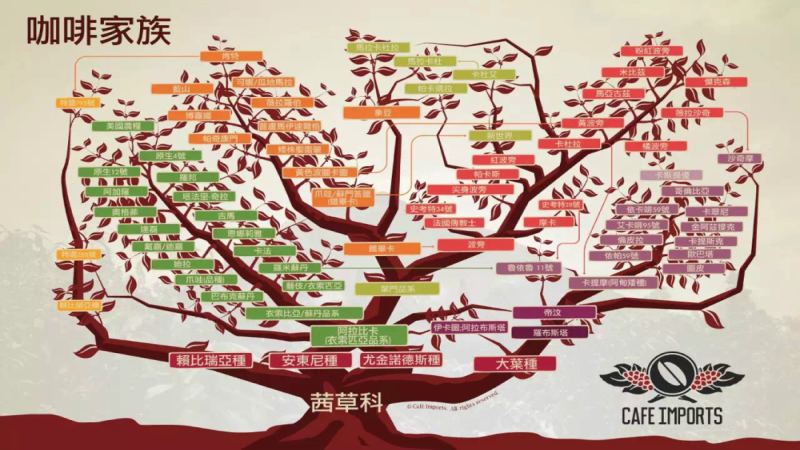
Geisha is an Arabica variety, a landrace first found in 1931 in the Gesha forests of Ethiopia. It later reached Kenya, Uganda and Tanzania, arrived at Costa Rica's CATIE in 1953 as T2722, and was given to Panamanian farmers in the 1960s. Its fame began at Hacienda La Esmeralda after 2000, when its perfume-like fruit and tea notes stood out in cupping.
The Panamanian Geisha grown at high altitude on Jaramillo developed the floral and citrus character the variety is now known for, while Ethiopian Gesha lots often show different structure and bean shape. Hacienda La Esmeralda's Red Label and Gesha Village's Gold Label show how site, altitude and processing shape the same variety in different directions.
Geisha is a highly regarded top-tier variety in the coffee world, but which variety does it actually belong to? Is it Arabica? What makes its flavor and mouthfeel unique? How does its acidity perform? This article will trace Geisha's legendary journey from its discovery in the forests of the Gesha region in Ethiopia in 1931, through Kenya, Costa Rica's CATIE, and finally to its spectacular rise at Hacienda La Esmeralda in Panama. It will also compare the differences in bean appearance and flavor between Panamanian Geisha and Ethiopian Geisha, and share Front Street Coffee's brewing evaluations of Hacienda La Esmeralda Red Label and Gesha Village Gold Label, giving you a comprehensive understanding of this fascinating variety.
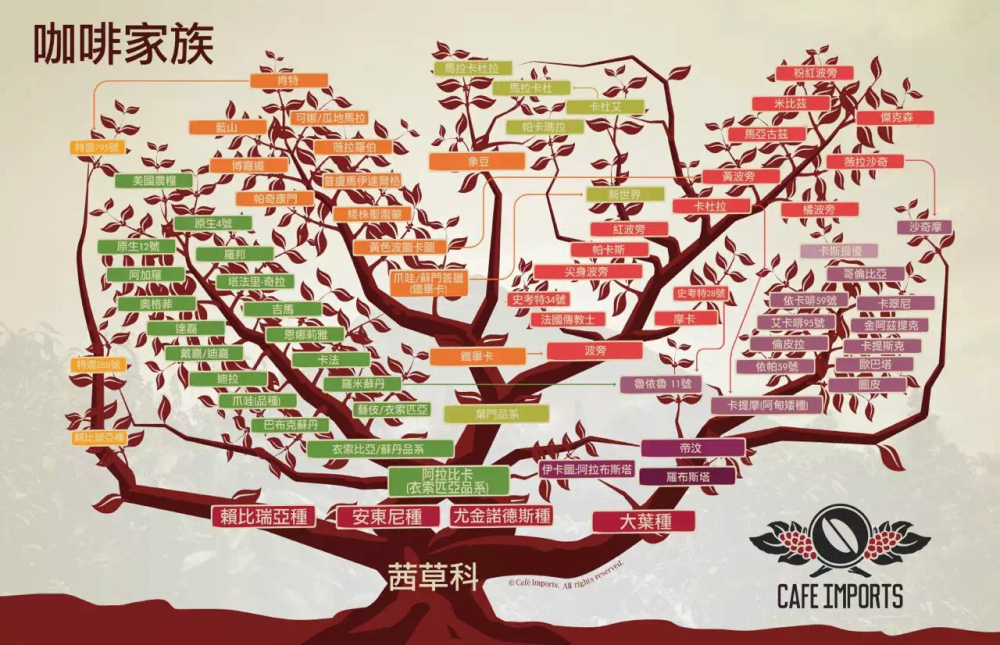
The Geisha variety was first discovered in 1931 in the forests of the Gesha region of Ethiopia, so it belongs to the Arabica species and is a member of Ethiopia's local landrace varieties. Afterward, Geisha seedlings were sent to research institutions in Kenya, Uganda, Tanzania, and other places for trial cultivation. In 1953, Geisha arrived at CATIE, the Tropical Agricultural Research and Higher Education Center in Costa Rica, and was recorded under the number T2722. Although several local farms tried planting Geisha, its brittle branches and low yield made it unpopular with farmers, and it was long used for experiments and breeding new varieties, so it was not widely planted.
By the 1960s, CATIE gifted T2722 Geisha to coffee farmers in Panama, and only then did Geisha truly take root in Panama. Starting in the 1990s, the Peterson family, owners of Hacienda La Esmeralda, began to focus on coffee production and bought a new high-altitude farm, Jaramillo. At that time, many coffee trees on the farm were infected with leaf rust, but Daniel Peterson, the third-generation estate owner, noticed that the Geisha trees were not severely damaged, so they decided to transplant the Geisha that had originally been interplanted with other varieties to more areas of the farm while also raising its cultivation altitude.
It was not until around 2000 that Hacienda La Esmeralda finally discovered Geisha's potential. During the first cupping, its unique and captivating, perfume-like fresh fruit tea flavor was astonishing. In the following years, they separated these distinctive-flavor varieties and studied their origins. In 2004, Geisha competed alone in the Best of Panama BOP competition and won first place in one fell swoop, gaining widespread fame from then on.
Geisha Variety
After it became famous, some coffee enthusiasts traveled to the forests of the Gesha region where Geisha coffee was discovered, searching for native varieties similar to the Geisha variety that had become famous. It was not until 2010 that they found native varieties with a certain genetic relationship to Panamanian Geisha and established "Gesha Village" there. Although both are called Geisha, one is an excellent variety that took 40 years of taking root in Panama before being discovered—the plant itself continuously optimizes and changes to adapt to a region's terroir and climate; while Ethiopia's Geisha variety grows together with countless native old coffee trees and has never stepped outside that region. In other words, whether in genes or taste, it is actually closer to Ethiopian heirloom varieties.
As an old saying goes, "Oranges grown south of the Huai River are oranges, while those grown north of it are bitter oranges." Panamanian Geisha and Ethiopian Geisha are actually two different varieties.
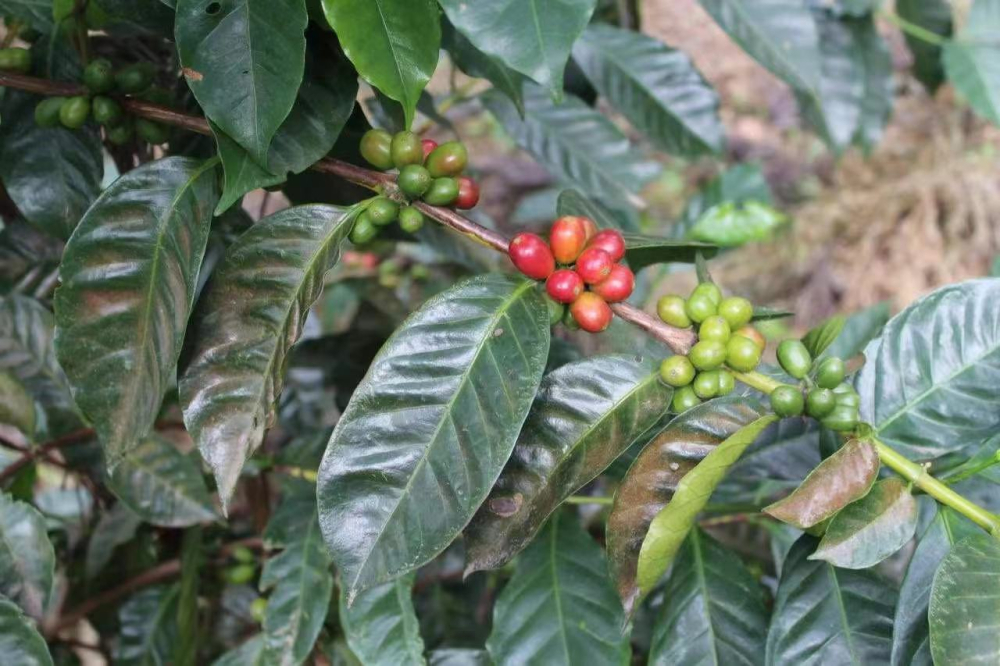
In terms of coffee bean appearance, Panamanian Geisha and Ethiopian Geisha are also very different. Panamanian Geisha's green beans are easier to identify: "pointed at both ends, elongated, plump and full-bodied, with large beans"; Ethiopian Geisha, on the other hand, is "slightly smaller, with a bean body that is not as long."
Through comparison by FrontStreet Coffee, it was found that under the same natural process and factors traceable to individual plots, the flavor performance of the Red Label Geisha coffee beans from Hacienda La Esmeralda's Mario plot is: a floral-fruity tea with ripe strawberry, rose, black tea, and grapefruit's sweet-and-sour notes, with a berry sweetness in the finish and a lasting sweet aftertaste.
The natural Geisha coffee beans from Gesha Village's Oma plot in Ethiopia, meanwhile, show flavors of sweet berry aromas, a full and mellow mouthfeel, with a slight nutty flavor, and a finish with melon notes and a tea-like sensation.

Currently, the "Gesha Village Gold Label" and "Hacienda La Esmeralda Red Label" on Front Street's bean list are both natural-process lots. The most expensive Red Label comes from Hacienda La Esmeralda's Buenos Aires plot in Jaramillo, while the Gold Label comes from Gesha Village Estate's Oma plot.
Next, let us temporarily set price aside and compare and brew these two top Geishas representing the two estates respectively, then see through tasting which one truly has the better flavor. The brewing parameters are: 15g coffee grounds, EK43 setting 10, 80% passing rate through a No. 20 sieve, 1:15 coffee-to-water ratio, 92°C water temperature, three-pour brewing, V60 dripper.
Dry aroma: The Gold Label Geisha coffee grounds have a very bright citrus fruit aroma, with a fresh scent resembling orange peel that is very appealing; Hacienda La Esmeralda Red Label Geisha, on the other hand, is dominated by the rounded sweet aroma of roses, candied fruit, and apricot, accompanied by a bit of nut and toffee character, with "sweetness" as its main theme.
Flavor: The freshly brewed Gold Label Geisha shows lifted notes of blueberry, sweet cherry, honeydew, and magnolia, with overall bright acidity, clean and elegant, and as the temperature drops slightly, it begins to reveal a unique finish like young tangerine tea. Hacienda La Esmeralda Red Label Geisha, meanwhile, smells of pleasant floral notes, and on the palate one immediately feels rich tropical fruit aromas, with jasmine, cranberry, dried mango, and fruit candy flavors upon careful reflection; the fragrant finish is full without being astringent, making it very pleasant to drink. Through direct comparison, Front Street believes that in terms of flavor complexity, Hacienda La Esmeralda Red Label Geisha is indeed slightly superior.
The above content is compiled by CoffeeHunters, a coffee news website.


