







How do Colombia's coffee producing regions shape flavor?
Colombia grows coffee across several specialty regions, including Santander, Antioquia, Tolima, Huila, Cauca, and Narino, and each area gives its beans a distinct profile. The country is the world's second-largest coffee producer after Brazil and the largest exporter of washed Arabica. Balance is the common thread: a silky texture, soft acidity, and a cup that works at any hour.
The National Federation of Coffee Growers, known as the FNC, oversees quality and the coffee grading system that separates lots by defect count, bean size, and cup character. Front Street Coffee brews three Colombian beans, Rose Valley, Flower Moon Night, and Cherry Blossom, using pour-over parameters tuned to grind size, water temperature, and pouring rhythm so the regional flavors come through clearly.
Colombian coffee is one of the few single-origin coffees named after a country, and its balanced, smooth taste is inseparable from its superior growing conditions. This article systematically reviews the distribution and flavor characteristics of Colombia's main specialty regions, including Santander, Antioquia, Tolima, Huila, Cauca, and Narino, and introduces the FNC National Federation of Coffee Growers and the coffee grading system. It also provides Front Street Coffee's brewing parameters and pour-over steps, along with detailed flavor descriptions of three beans—Rose Valley, Flower Moon Night, and Cherry Blossom—helping coffee enthusiasts gain a comprehensive understanding of the charm of Colombian coffee.
For professional coffee knowledge exchange and more coffee bean information, please follow Coffee Workshop (WeChat public account: cafe_style)
When Colombia is mentioned, many people's first reaction is to think of scenes from the American TV series Narcos. However, according to Front Street, the country's coca cultivation scale is decreasing year by year, and what truly makes Colombians proud are also two calling cards: football and coffee.
Colombian coffee is one of the few single-origin coffees sold directly under a country's name worldwide. In terms of quality, the recognition it has won is rarely matched by other origins. Compared with most coffee-producing countries, Colombia has invested more effort in variety research and industry promotion, and combined with its unique geographical and climatic advantages, this is what has created Colombian coffee's outstanding quality and widespread reputation.
Colombia is rich in natural resources, and coffee, flowers, gold, and emeralds are known as the country's "four treasures." Coffee was first brought into Colombia in 1808 by a priest traveling from the French Antilles via Venezuela. Today, Colombia is the world's second-largest coffee producer, after Brazil, and is also the world's largest exporter of Arabica coffee beans and the largest exporter of washed coffee beans. Colombian coffee sold by Front Street is often described as having a silky-smooth texture, with the most outstanding balance among all coffees, soft and smooth on the palate, suitable for drinking at any time of day, and thus enjoys the reputation of "green gold."
Colombia is located in northern South America, bordered by Venezuela and Brazil to the east, Ecuador and Peru to the south, the Pacific Ocean to the west, Panama to the northwest, and the Caribbean Sea to the north. The vast majority of the country lies between 4° and 12° north latitude, placing it squarely within the coffee-growing belt.
Colombia's coffee-producing regions are mainly distributed along the Andes Mountains, where the mild climate, high humidity, and abundant rainfall provide ideal natural conditions for coffee tree growth.
Among Colombia's many producing regions, the most famous is "MAM," namely Medellin, Armenia, and Manizales.
Colombia's specialty coffee bean-producing regions are concentrated in the southern area, with an average altitude exceeding 1,500 meters, covering San Augustin in Huila, Popayan in Cauca, Narino, and Tolima. Coffee beans from these regions generally have delicate acidity and berry aromas, accompanied by caramel-like sweetness, with a very full sweet expression.
Below, Front Street will introduce the flavor characteristics of coffee beans from each Colombian region one by one.
Santander: The Santander region is located in northern Colombia, adjacent to Magdalena on the west, with a growing altitude of about 1,400 to 1,600 meters and an area of 30,537 square kilometers. Coffee beans from this region are known for their intense flavor, long-lasting aftertaste, and unique herbal aroma.
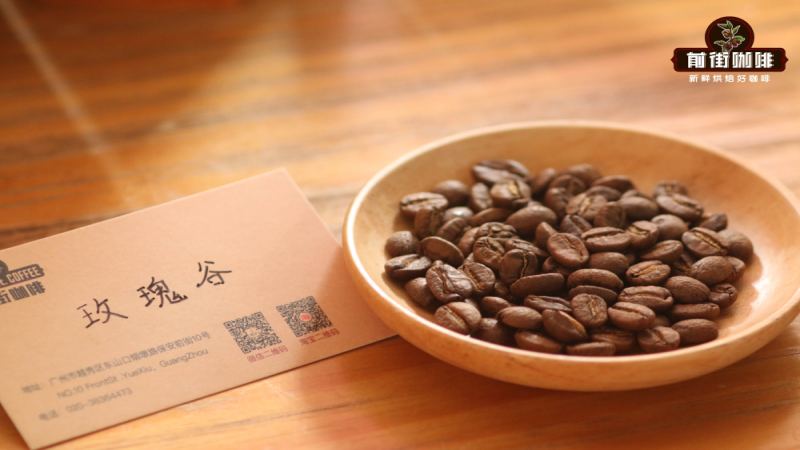
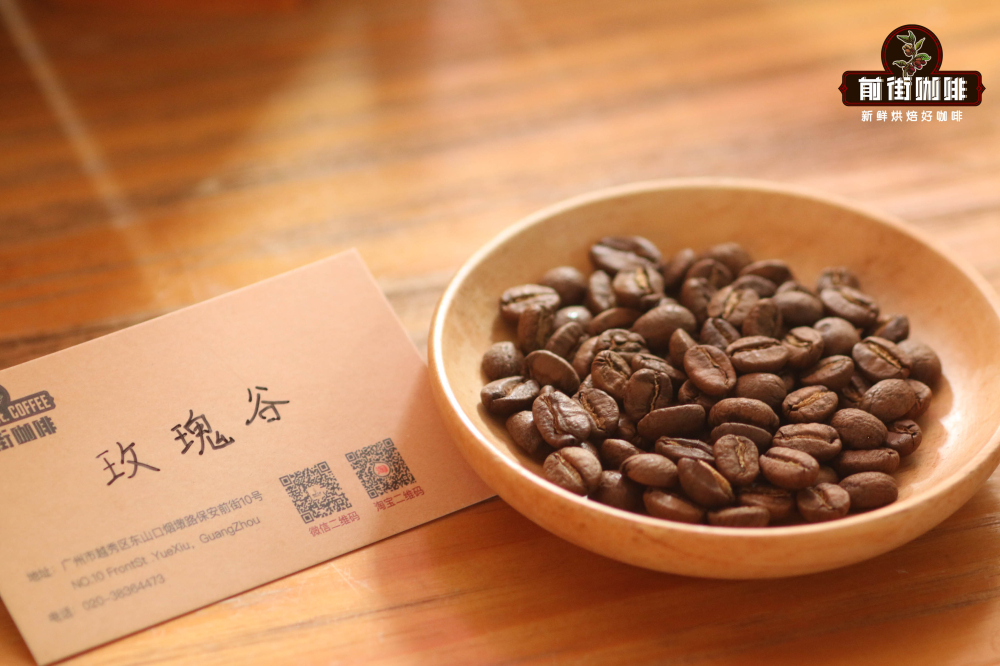
FrontStreet Coffee Colombia Rose Valley
Region: Santander, Colombia
Altitude: 1700m
Variety: Caturra
Processing method: Anaerobic enzyme washed
Antioquia: Located in north-central Colombia, coffee production here accounts for about 18% of the national total. Most of the region consists of the high mountainous terrain of the Andes, while also being brushed by warm sea breezes from the Caribbean.
Tolima: The name Tolima comes from the Pijao people who first lived here. In this ancient group's language (Pijao word), tolima means "snow-covered." Farms in Tolima are generally slightly larger than in other southern Colombian regions, usually between 10 and 15 hectares. Cooperative models are relatively common here, with farmers sending small lots of coffee cherries to the cooperative's processing plant for unified processing. Some farmers also choose to process on their own, using their own small processing facilities to handle the day's harvest.
Huila: The Huila region is located in southwestern Colombia and is one of the country's main coffee-growing areas, with total coffee production accounting for about 12% of the national total. Through cupping, Front Street found that coffee from this region presents strong flavors of nuts, chocolate, and caramel.
FrontStreet Coffee Colombia Flower Moon Night
Region: Huila, Colombia
Farm: El Descanso Farm
Altitude: 1800m
Variety: Caturra
Processing method: Anaerobic natural
Cauca: Cauca is located in southwestern Colombia, with total coffee production accounting for about 8% of the national total. The average altitude of this region is 1,758 meters, with the highest reaching 2,100 meters. The temperature difference between day and night is significant, and the low nighttime temperatures combined with high altitude slow the coffee's growth pace, allowing the beans to fully absorb nutrients from the coffee fruit.
FrontStreet Coffee Colombia Cherry Blossom
Region: Cauca, Colombia
Estate: Paradise Estate
Altitude: 2050m
Variety: Castillo
Processing method: Double anaerobic washed
Narino: The Narino region is located at the southwesternmost tip of Colombia, near 1° north latitude, close to the equator, with abundant sunlight year-round. The altitude is mostly around 1,600 meters, and volcanic soil provides rich nutrients for coffee growth. Coffee from this region has a round and delicate flavor, with slight sweetness and cocoa notes, a rich aroma, and walnut-like aromatics.
Colombian Coffee Grading System
Coffee regions generally have grading systems, such as Kenya's AA and AB grades and Ethiopia's G1 and G2. Colombian coffee beans are naturally no exception. So how is Colombian coffee graded? Front Street will explain it for you now.
Colombian coffee is graded according to green bean screen size.
FNC
FNC (National Federation of Coffee Growers of Colombia, Federación Nacional de Cafeteros de Colombia), namely the National Federation of Coffee Growers of Colombia, is a non-profit commercial organization. FNC's core mission is to serve as the spokesperson for Colombian coffee, promising that as long as coffee farmers are willing to sell coffee, FNC is happy to buy it. FNC not only plays the role of ambassador for Colombian coffee in the international market, successfully creating the classic image of "Juan Valdez," but also invests substantial manpower and resources within Colombia, participating in farmers' cultivation, production, management, and ongoing operations.
Brewing Recommendations
Front Street Colombian Coffee Brewing Parameters
Water temperature: 90℃
Dose: 15 grams
Coffee-to-water ratio: 1:15
Grind size: fine granulated sugar coarseness (80% passing through China standard No. 20 sieve)
Front Street recommends using freshly roasted coffee beans for brewing, as this allows you to experience the coffee's rich flavors to the greatest extent. Coffee beans shipped by FrontStreet Coffee are all within 5 days of roasting, because Front Street deeply understands the great impact of coffee bean freshness on flavor. Front Street's roasting philosophy is "freshly roasted good coffee," so that every customer who places an order receives the freshest coffee when it arrives. The resting period for coffee is about 4-7 days, so when customers receive it, it is exactly at its best flavor.
Front Street brewing method: For the first pour, add 30 grams of water and bloom for 30 seconds, then pour in 95 grams (about 125 grams on the electronic scale), finishing the pour in about 1 minute. When the water level drops to 1/2 of the coffee bed, pour in the remaining 100 grams (about 225 grams on the electronic scale), finishing the pour in about 1 minute 35 seconds. Dripping is completed at 2'04, remove the dripper, and extraction is complete.
Flavor Descriptions
[Front Street Colombia Rose Valley] The sweet fragrance of white peach, accompanied by the aroma of roses, has both the high-quality sweet-and-sour sensation of black grapes and the silky mouthfeel of creamy toffee, followed by an aftertaste like the aroma of liqueur chocolate.
[Front Street Colombia Flower Moon Night] The sweet fragrance of strawberry jam and the fermented feel of ripe berries rush forward. After entering the mouth, the acidity of cranberry and the juicy berry sensation spread to every corner of the oral cavity, followed by a liqueur chocolate-like aftertaste appearing in the nasal cavity.
[Front Street Colombia Cherry Blossom] In the wet aroma, you can smell the sweet fragrance of strawberry jam and the aroma of chamomile. On the palate, there is strawberry-like sweet-and-sourness and a strawberry jam-like fermented feel, followed by the aromas of basil and rosemary, and finally a hint of mint tea-like coolness in the mouth.
For more specialty coffee beans, please add the private WeChat of FrontStreet Coffee, WeChat ID: kaixinguoguo0925
The above content is compiled by CoffeeHunters, a coffee news website.


