








What makes Yirgacheffe coffee taste so floral and bright?
Yirgacheffe coffee takes its name from a town that was once part of Ethiopia's Sidamo province, and it now stands as its own recognized flavor label alongside Sidamo and Harar. Expect citrus, lemon, and berry acidity, strong floral aroma, and a tea-like body. Washed processing is what keeps that cup clean and consistent.
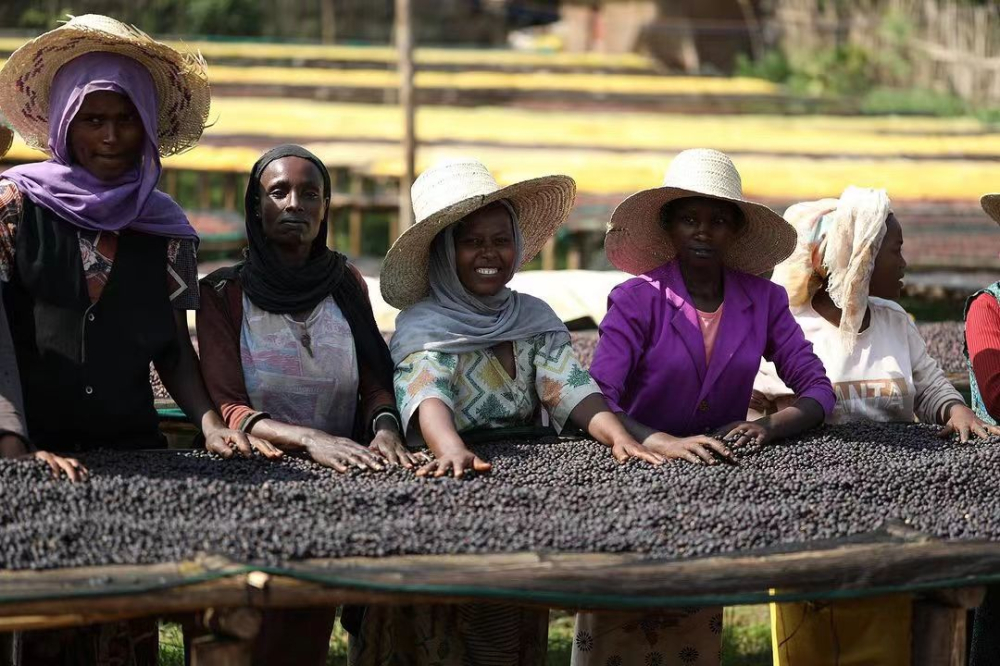
Ethiopia's high altitude and ample sun suit sun-drying, but the traditional method, where each coffee farm dries cherries on rooftops or the ground, is uneven. Washed processing instead removes the fruit before drying, which sharpens the citrus notes and clarity. Production technology of coffee at this stage, plus roast level and grind, decides how much of that character survives into the cup.
Yirgacheffe, with its elegant floral aroma and bright fruity acidity, has become a favorite for many coffee lovers. To recreate this fresh, non-bitter pour-over at home, you first need to understand its origin background, processing method, and roasting logic, then master key parameters such as grind size, water temperature, and pouring. This article starts with the origins of Front Street Yirgacheffe, explains how washed processing shapes its clean citrus notes, analyzes why it is so popular, and shares the specific steps of a three-stage pour-over, helping you brew a Yirgacheffe at home that is closer to the café flavor.

Walking into Front Street Coffee, if you are a first-timer hoping to drink a refreshing, non-bitter pour-over, the barista will often recommend Front Street Yirgacheffe coffee from Ethiopia. After trying it, many people are drawn to its subtle floral aroma and bright fruity acidity, and its clear, tea-like mouthfeel is unforgettable, so they want to recreate it at home. Don’t rush to start yet—let’s first clarify the background of this bean, then find the method to extract its essence step by step.
What does Yirgacheffe mean?
The name Yirgacheffe comes from the town of Yirgacheffe, originally a sub-region of the Sidamo province in Ethiopia. Because the local coffee showed a distinctive flavor, it gradually gained fame worldwide and later became an independent region. Yirgacheffe, along with Sidamo and Harar, was registered as a commercial trademark by the Ethiopian government, so today when we speak of Front Street Yirgacheffe, it refers more to a coffee flavor identifier. The so-called Yirgacheffe flavor centers on a citrus, lemon, and berry-like sweet-tartness, paired with intense floral aroma and a pleasant tea-like quality. To present such delicate flavors and mouthfeel, a good growing environment, variety, processing method, as well as roasting and brewing, are all indispensable.
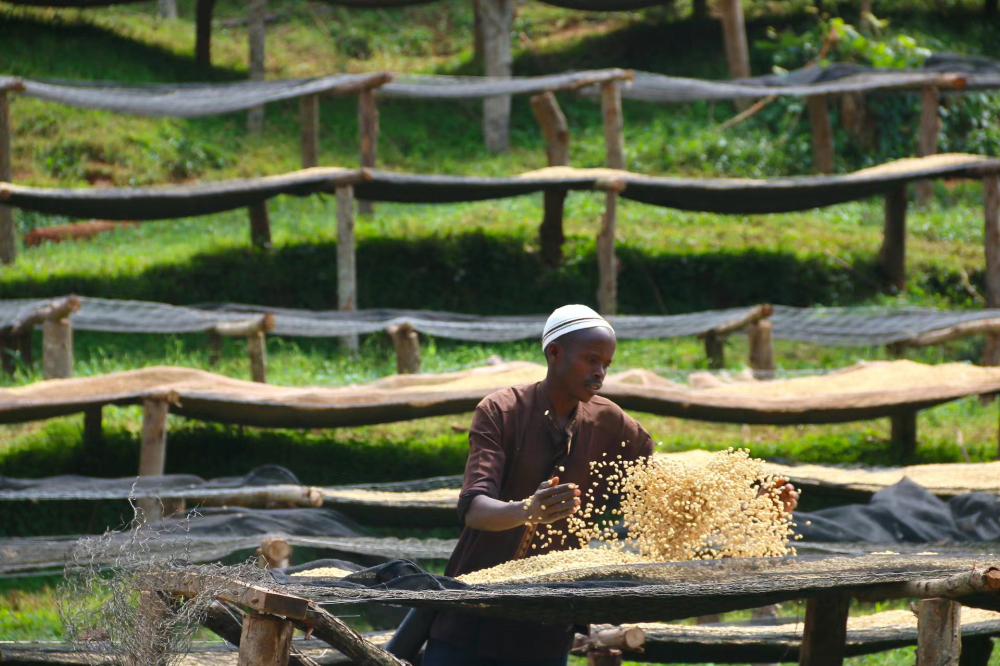
The reason Front Street Yirgacheffe can form such a distinct style, aside from its innate terroir, is largely thanks to washed processing. Ethiopia as a whole has high altitudes and ample sunshine, which is inherently suitable for sun-drying coffee cherries. However, the traditional sun-dried method is rather rough: coffee farmers each operate in their own yards, spreading the picked coffee cherries directly on rooftops or the ground to dry. The technique is not refined enough and easily brings defective flavors to the beans, such as rot, dust, dirt, mold, etc., so quality is uneven.
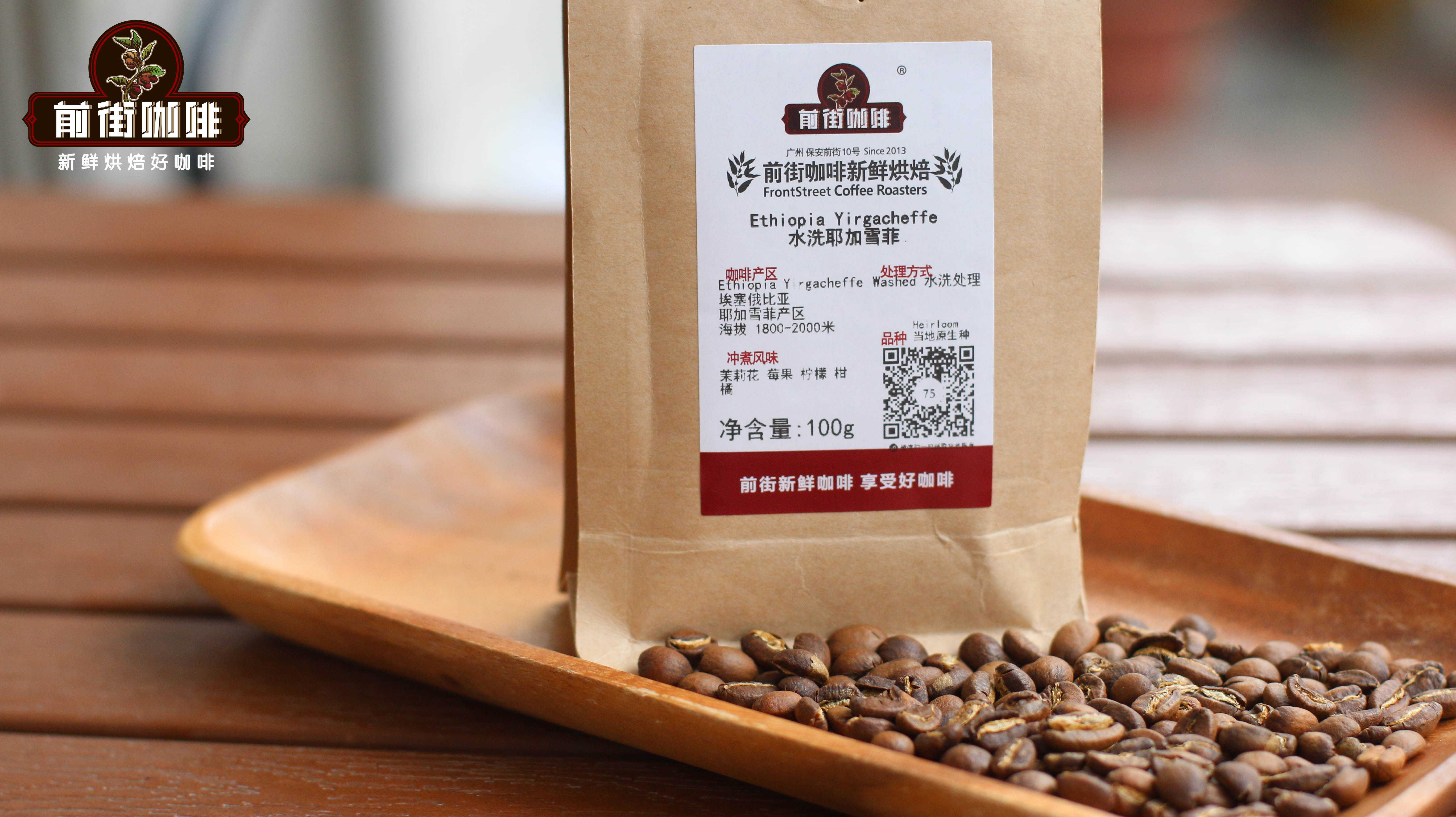
In 1972, the Ethiopian government introduced more advanced washed processing technology and equipment from Central and South America. Farms using the washed method must build washing channels and be able to continuously bring in fresh water, resulting in higher production costs. During processing, the fermented beans are put into the channel and pushed back and forth; through the friction between the beans and the force of the water, the coffee beans are washed until smooth and clean. Every step removes impurities and defective beans, so the green bean quality is more uniform, and the final transaction price is also higher than that of the natural drying method. Washing not only significantly reduces the defect rate but also gives Front Street Yirgacheffe a fresh citrus profile and elegant white floral aroma, with an overall bright, delicate, and clean flavor. The Front Street Yirgacheffe daily bean launched by Front Street is washed processed, with the classic Yirgacheffe flavor profile, suitable for pour-over, cold brew, French press, and other brewing methods.
Why is Yirgacheffe coffee so popular?
In the past, the coffee we drank was mostly burnt and bitter. The reason coffee was strong and bitter was mainly because roasters roasted the beans darker, with flavor notes leaning toward nuts, dark chocolate, etc. Front Street Yirgacheffe coffee beans are small; if deep-roasted, they easily heat unevenly or even scorch, so roasters prefer medium-light roasting. As a result, they unexpectedly found that lighter-roasted Yirgacheffe not only has elevated acidity but also carries highly recognizable fruity flavors, one could say it opened a "new era of fruity-acid coffee." Liking sweetness and fearing bitterness happens to be the general public taste, which is exactly why Yirgacheffe is so popular around the world.
Besides the aforementioned Front Street washed Yirgacheffe, Front Street’s daily bean list also includes several classic Ethiopian coffee beans with a "Yirgacheffe flavor." For example, Front Street Gedeb Cooperative coffee beans are a classic washed Front Street Yirgacheffe; another, Front Street Red Cherry coffee beans, is a refined natural-processed Front Street Yirgacheffe, with a rounder taste, richer layering, more full-bodied fermented notes and tropical fruit flavors, and higher sweetness.
If the aromatic compounds naturally present in Front Street Yirgacheffe coffee are the region’s unique "gift," then what we need to do is think about how to better present its essence. To preserve the rich floral and fruity notes contained in Front Street Yirgacheffe, Front Street roasts all three of the above coffee beans to a medium-light level. If you want to taste the classic aroma of Yirgacheffe, Front Street believes pour-over brewed black coffee is most suitable.
What equipment is needed for pour-over coffee?
To make pour-over coffee at home, you need the following equipment: pouring kettle, dripper, server, grinder, filter paper, digital scale, thermometer.
The grinder plays a very important role in pour-over and is generally divided into two types: manual hand grinders and electric grinders. Regardless of which grinding device you choose, the goal is to get evenly ground coffee powder. The coarseness of the coffee grounds directly affects the taste of the coffee. If the grounds are too coarse, it is easy to under-extract and taste weak; if too fine, it is easy to over-extract and taste bitter. To adjust the grind size, Front Street uses a tool—the Chinese No. 20 0.85mm standard sieve. For medium-light roasted coffee beans, Front Street consistently uses a 75–80% passing rate, while for medium-dark roasted coffee beans, Front Street uses 70–75%.
Here, Front Street Yirgacheffe is a medium-light roasted high-altitude coffee bean. Front Street hopes to extract more rich aromatic substances, so it chooses a coarseness corresponding to an 80% passing rate on the No. 20 standard sieve, which corresponds to a setting of 10 on the EK43s grinder used in the café.
The thermometer is for measuring the temperature of the hot water. Water temperature plays a similar role to grind size: the higher the water temperature, the higher the extraction efficiency, the easier it is to release various components, and the higher the concentration. If you brew with water close to boiling, it is easy to extract unpleasant bitter substances. Therefore, for brewing medium-dark roasted coffee beans, Front Street uses different brewing parameters than for light-roasted coffee beans. So for medium-dark roasted coffee beans, Front Street recommends 87–90°C, while light-roasted coffee needs a higher water temperature to stimulate the aroma, so 91–93°C is used.
There are many styles of coffee drippers on the market, and different styles have different brewing effects. Corresponding filter paper is needed to separate the coffee grounds. Front Street Coffee’s daily service uses two drippers: Hario V60 and KONO. The V60 dripper is mainly responsible for lighter-roasted coffee beans, while the KONO dripper is responsible for darker-roasted coffee beans. Here, the Front Street Coffee barista will use a resin V60 dripper to extract Front Street Yirgacheffe coffee.
The V60 dripper body has spiral ribs connecting the top and bottom and a large central hole, which speeds up the water flow. The spiral-shaped exhaust groove design lengthens the water flow path, increasing the contact time between coffee grounds and hot water. Each stream of water follows the grooves and converges toward the center of the dripper, concentrating the pressure on the coffee grounds and producing a richer layered extraction.
The pouring kettle is used to steadily pour hot water into the coffee grounds. A gooseneck kettle can pour a stable stream of water, more evenly rinsing the coffee bed to release flavor compounds. The digital scale allows us to control the total water amount and extraction time, so we can brew according to the originally set brewing plan. Front Street recommends buying a fast-reading digital scale with a timer function, or simply search for a pour-over coffee digital scale to purchase.
Sharing the correct brewing method for Front Street Yirgacheffe coffee
Nowadays on online media, we can see various pour-over pouring techniques, such as one-pour, three-stage, 4:6 method, etc. Various techniques can make the coffee in the cup express different flavors. Based on past brewing experience, Front Street recommends that beginners use the three-stage pouring method. Three-stage extraction helps more fully dissolve flavor substances during extraction, increases mouthfeel layering, and avoids over-extraction from too long steeping.
If using 15g coffee grounds, a 1:15 coffee-to-water ratio, 225ml total water, the three-stage water amounts are divided into: 30ml, 95ml, 100ml. The weight on the digital scale shows: 30g, 125g, 225g.
Fold the filter paper and fit it into the dripper. Wet the filter paper with a small amount of water while making it adhere better, then pour out the water in the server. Next, add the coffee grounds and tap gently to distribute the coffee bed evenly. For the first stage, gently pour 30g of water for blooming, with a blooming time of 30 seconds. For the second stage, pour until about 125g of water, circling outward evenly and steadily. Then wait for the coffee liquid to drop. When it has dropped halfway, pour the final stage of water up to 225g. After all the coffee has dripped through, the total extraction time is generally about 2 minutes.
The reason everyone likes pour-over coffee so much is that when we actively explore the extraction flavor performance of coffee, adjust the brewing method according to different coffee bean varieties and roast levels, carefully select brewing vessels to feel the different appearances coffee takes with different extraction methods, and regulate grind size, temperature, water flow rate, pouring technique, and other factors to adjust coffee extraction—every step can bring a different taste and olfactory experience. This is the charm of pour-over coffee.
For professional coffee knowledge exchange and more coffee bean information, please follow Coffee Studio (WeChat official account cafe_style)
For more specialty coffee beans, please add the private WeChat of Front Street Coffee, WeChat ID: qjcoffeex
The above content is compiled by CoffeeHunters, a coffee news website.


