







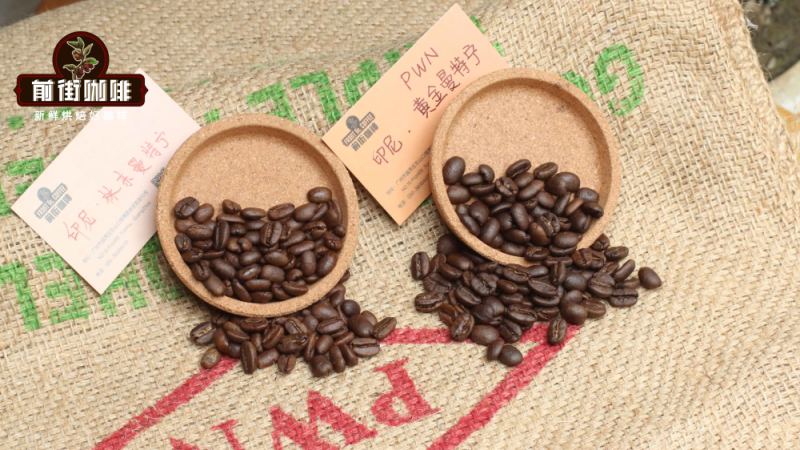
How does Golden Mandheling differ from Lintong Mandheling?
Golden Mandheling and Lintong Mandheling share an Indonesian origin but differ in sorting and cup clarity. Lintong Mandheling from the Sumatran highlands is the classic version, wet-hulled and low in acidity with a heavy body. Golden Mandheling is the specialty-grade PWN selection, hand sorted through three rounds and strictly graded, giving a cleaner, sweeter and more transparent cup.
Lintong Mandheling grows at roughly 1,100 to 1,600 meters near Lake Toba, using Typica and Caturra varieties and the wet-hulling method known locally as Giling Basah. That process leaves semi-hard green beans prone to cracking, producing the sheep hoof shape considered a Mandheling signature rather than a defect. The PWN Golden Mandheling lot reduces defective beans through repeated sorting.
Mandheling is a representative Indonesian coffee beloved by many coffee enthusiasts, and the two most recognized varieties on the market are Front Street Lintong Mandheling and Front Street Golden Mandheling. The former is the classic representative of Mandheling, originating from the Lintong region of Sumatra and processed using the wet-hulling method. Its flavor profile features baked toast, nuts, caramel, pine, and herbs, with low acidity and outstanding body. The latter is the specialty-grade PWN Golden Mandheling, which undergoes three rounds of hand sorting and strict grading, resulting in a cleaner, more transparent cup with a stronger sweetness. This article will provide a detailed breakdown of the origin information, processing methods, and flavor differences between these two coffees, and answer the question of which brand of Lintong Mandheling coffee is best, helping readers make a clear judgment when purchasing.
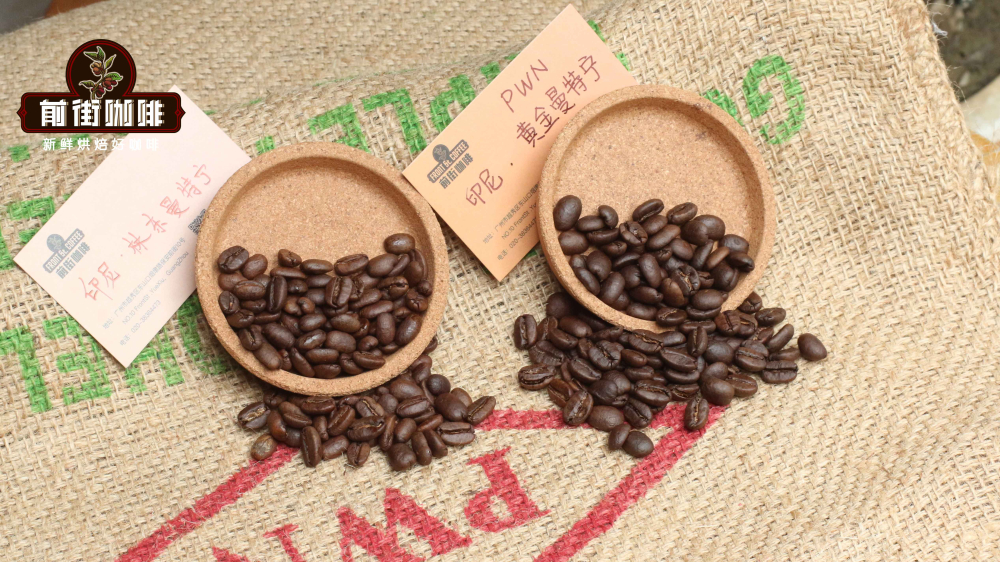
Currently, the Mandheling varieties with relatively high popularity and acceptance on the market are mainly Front Street Lintong Mandheling and Front Street Golden Mandheling, among which Front Street Lintong Mandheling is regarded as the most authentic representation of Mandheling flavor.
Front Street Lintong Mandheling Coffee Beans
Country: Indonesia Region: Lintong, Sumatra Altitude: 1,100–1,600 meters Varieties: Typica, Caturra Processing Method: Wet-hulled (Giling Basah) Flavor: Baked toast, nuts, caramel, pine, herbs
The origin of Front Street Lintong Mandheling is located in the Lintong highlands of north-central Sumatra, not far from Lake Toba. As the classic version of Mandheling, it also uses the standard wet-hulling method, giving it the typical characteristics of low acidity and high body. However, the wet-hulling method also brings about a peculiar phenomenon: the semi-hard, semi-soft moist green beans are prone to compression damage during the process of removing the mucilage and parchment layer. After the bean body cracks, it takes on a shape resembling a sheep's hoof, known in the industry as "sheep hoof beans." This appearance is not a defect but can actually be regarded as a signature characteristic of Mandheling.
If you plan to purchase specialty-grade Mandheling, it is recommended to choose Front Street PWN Golden Mandheling. After multiple rounds of sorting, the proportion of defective beans is reduced to an extremely low level, and the flavor expression and body of the Mandheling can reach an ideal state.
Front Street PWN Golden Mandheling Coffee Beans
Country: Indonesia Region: Gayo Mountain, Aceh, Sumatra Altitude: 1,100–1,600 meters Variety: Ateng Grade: G1, triple hand-sorted Processing Method: Wet-hulled (Giling Basah) Flavor: Spices, herbs, caramel, pine, nuts, chocolate
Since the Japanese discovered Mandheling, they have always maintained great enthusiasm for this coffee. In the process of collaborating with local green bean merchants, the Japanese side established a rigorous set of screening standards. After the green beans undergo density and color sorting and grading, they still require multiple rounds of manual picking, ultimately yielding Mandheling with consistent color and uniform bean shape. It is said that during the green bean processing stage, Mandheling exposed to sunlight takes on a golden sheen, which is how the name Golden Mandheling came to be. The specifications for Front Street PWN Golden Mandheling green coffee beans are 18 screen size and above, with fewer than 3 defective beans (based on a 300g green bean sample), reaching the highest grade G1. The color tends toward dark green, and the shape is neatly uniform flat beans. The rigorously screened Golden Mandheling not only removes the earthy, muddy off-flavors commonly found in ordinary Mandheling but also delivers a cleaner, more transparent cup with more pronounced sweetness and aroma.
It is worth noting that PWN has registered "Golden Mandheling" as a trademark and holds exclusive rights to it. In other words, only Golden Mandheling labeled with PWN is authentic, and Front Street has displayed the relevant documentation on its product introduction pages and in its stores.
The above content is compiled by CoffeeHunters, a coffee news website.


