








How Papua New Guinea Coffee Beans Are Graded
Papua New Guinea grows coffee on high-altitude volcanic soil between the equator and roughly 10 degrees south latitude. The Sigri Bird of Paradise Estate produces washed Typica introduced from Jamaica Blue Mountain, a bean often called Little Blue Mountain. In the cup it shows toasted bread sweetness, nutty aroma, and a spice note in the finish.
Grading in Papua New Guinea separates beans by screen size, defect count, and preparation method, which is why estate lots and smallholder lots can differ sharply in cleanliness. The Blue Mountain-style profile comes from the Typica variety and the island climate rather than from Jamaica. Similar stories surround other novelty origins, such as the question of what elephant bean coffee is, where the animal's role in processing drives the price more than the variety does.
Located in the South Pacific, Papua New Guinea, with its high-altitude volcanic soil and island climate, nurtures a uniquely distinctive specialty coffee. Among them, the Typica washed beans from the Sigri Bird of Paradise Estate, introduced from Jamaica Blue Mountain and boasting a bright, clean flavor, are affectionately called "Little Blue Mountain" by coffee lovers. Through cupping, Front Street Coffee found that this bean has a toasted bread sweetness and nutty aroma on entry, with a spice sweetness emerging in the finish, and a rich, balanced mouthfeel. This article will systematically review Papua New Guinea's growing conditions, variety introduction history, estate distribution, and coffee bean grading standards, and deeply analyze the uniqueness of the Bird of Paradise Estate's Little Blue Mountain, giving you a comprehensive understanding of this coffee hailed as Asia's brightest and cleanest.
When it comes to Blue Mountain coffee, Front Street believes that coffee lovers are already thoroughly familiar with Front Street Jamaica Blue Mountain coffee. But have you heard of Front Street Little Blue Mountain coffee from Papua New Guinea? Why exactly is it called Little Blue Mountain? For this reason, Front Street specifically conducted cupping and brewing, with the subject being Front Street Papua New Guinea Little Blue Mountain coffee. Front Street's conclusion is: its performance is by no means inferior to Front Street Blue Mountain coffee—compared to the rich, full-bodied Front Street Blue Mountain, Front Street Little Blue Mountain presents a softer fruity acidity. Below, Front Street will discuss this Front Street Little Blue Mountain coffee in detail.
Papua New Guinea's Coffee Growing Conditions
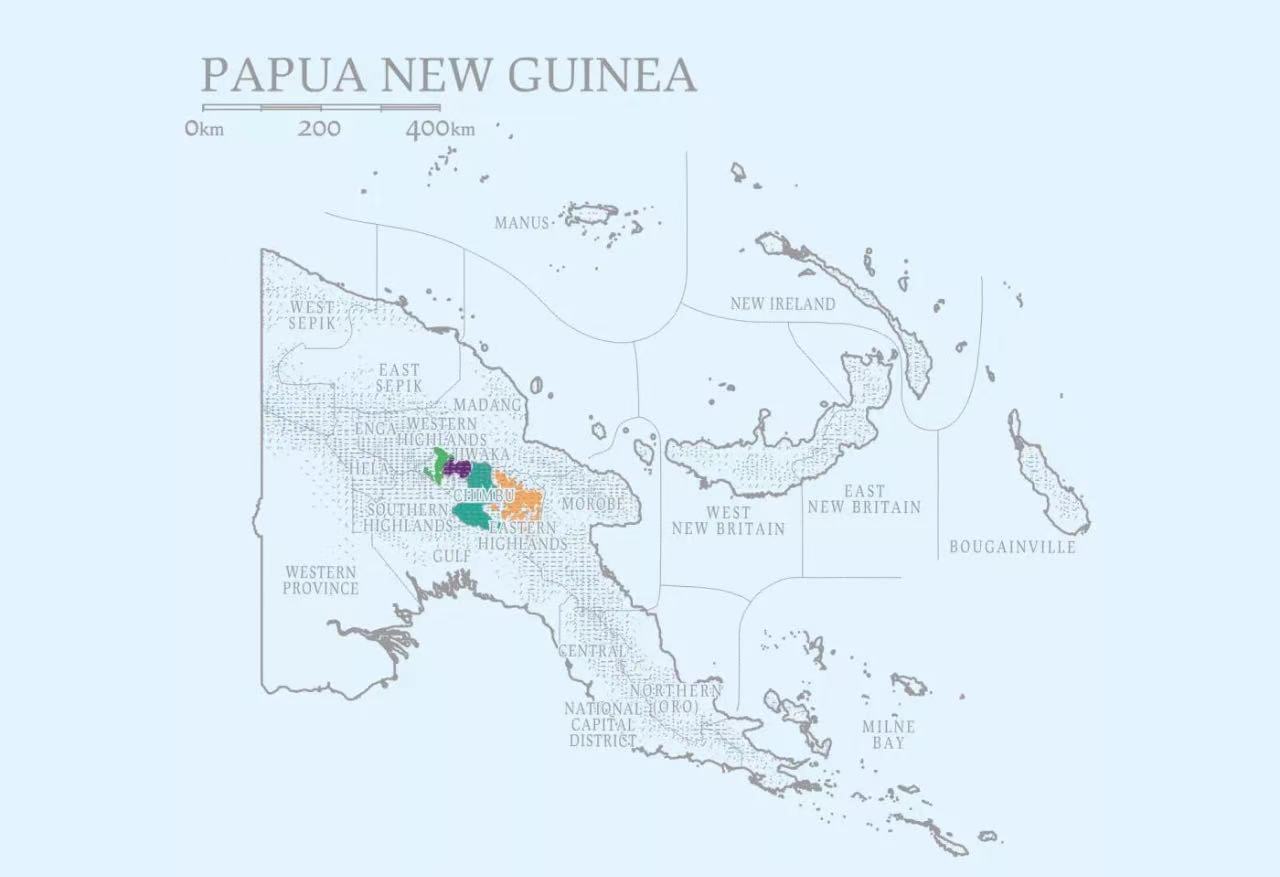
Papua New Guinea is located in the South Pacific. As an island nation, its population and land area rank second in the South Pacific region, after only Australia. According to Front Street's understanding, this country still retains nearly a thousand years of indigenous languages and traditional customs, and its natural environment is one of the least developed regions in the world. Front Street believes that precisely because of this, Papua New Guinea's coffee cherries have been able to retain their most pristine flavors.
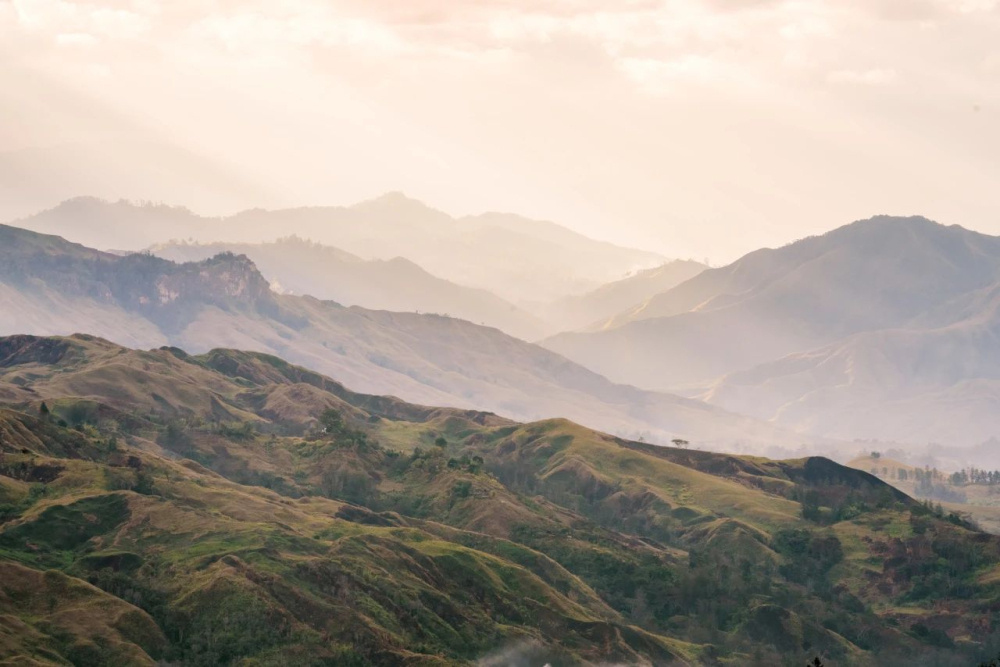
Front Street learned from research that Papua New Guinea lies between the equator and 10 degrees south latitude, with a standard island climate, at elevations ranging from 1,200 to 2,500 meters. At the same time, the country has frequent volcanic activity, thus possessing volcanic soil suitable for coffee cultivation. These combined growing conditions lay a solid foundation for the superior flavor of Front Street Little Blue Mountain coffee.
The Planting History of Front Street Papua New Guinea Coffee
In 1931, the Typica variety was introduced to Papua New Guinea from Jamaica. According to Front Street's review of historical records, at that time Britain had ruled Jamaica for nearly three hundred years, and Jamaica's most iconic coffee was precisely the Typica Front Street Blue Mountain coffee. Since Australia and Britain had friendly relations, Papua New Guinea's ability to introduce Typica was only natural.
In 1950, Bourbon coffee beans were introduced from Kenya. Coincidentally, Kenya was also a British colony at the time. Driven by government policies encouraging open cultivation, the coffee industry achieved substantial growth in the 1970s and 1980s.
In 1962, New World and Caturra were brought in from Brazil, and from then on the quality of Papua New Guinea coffee beans made a great leap forward.
Papua New Guinea Coffee Producing Regions and Estates
As Front Street stated in previous articles, coffee cultivation must be at elevations above 1,000 meters. Therefore, Papua New Guinea's specialty coffee is mainly distributed in the Wahigi Valley, Sigri Estate in the Western Highlands, and Arona, Kimel, Arokare, and Goroka Estates in the Eastern Highlands.
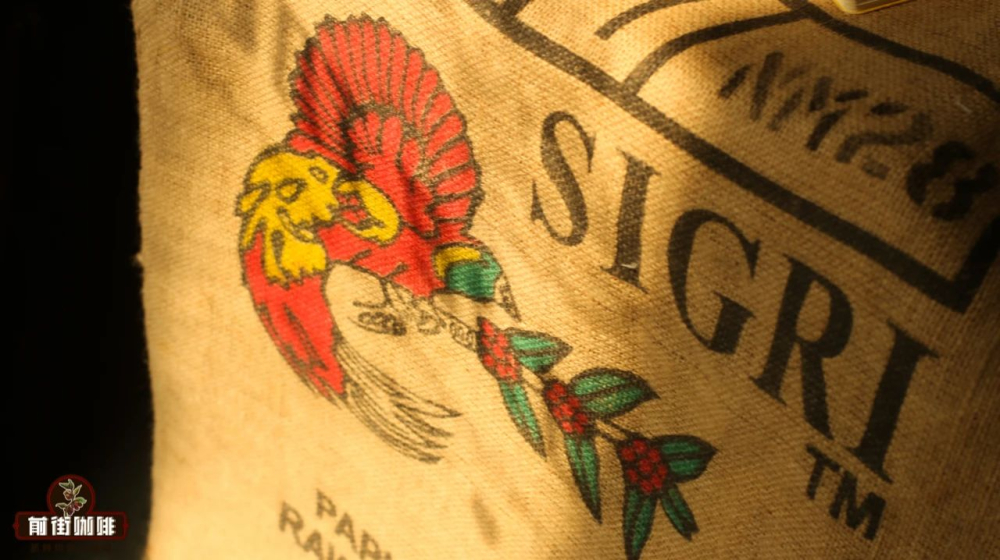
Among them, the most famous is undoubtedly Sigri Estate, and this Front Street Little Blue Mountain coffee that Front Street introduces comes precisely from this estate. Next, Front Street will explain to coffee fans the reasons for choosing their estate's Little Blue Mountain.
Sigri Estate
This Front Street Papua New Guinea coffee bean that Front Street obtained comes from Sigri Estate. The estate was established in 1950 and has a history of more than sixty years, making it a pioneer of the local coffee industry.
Bird of Paradise Estate is located in the Waghi Valley of the Western Highlands Province, at an elevation of about 1,500 meters, with mineral-rich volcanic soil, a cool climate, fertile soil, and abundant rainfall. Bird of Paradise Estate also places great emphasis on ecological conservation; to protect the soil and water sources, it refuses to use pesticides and insecticides, caring for the ecology and surrounding birds.
According to Front Street's understanding, the reason Sigri Estate is also called Bird of Paradise Estate is that the Waghi Valley is home to over 160 different species of birds, of which Bird of Paradise Estate alone hosts 90 species, including Papua New Guinea's national symbol—the bird of paradise—making it truly a paradise for birds. Hence Sigri Estate also acquired the alias Bird of Paradise Estate.
And according to Front Street's understanding, the reason Front Street Papua New Guinea Bird of Paradise Estate coffee beans are called Little Blue Mountain is that Papua New Guineans greatly adore the bird of paradise, regarding it as a sacred bird from heaven. And Sigri Estate's Typica coffee beans, just like migratory birds, traveled a long journey from Jamaica Blue Mountain to Papua New Guinea, and coupled with Papua New Guinea and Jamaica sharing the same island climate, the same high altitude, and volcanic soil characteristics, it thus earned the name Little Blue Mountain.
These are also precisely the reasons Front Street chose Front Street Bird of Paradise Estate Little Blue Mountain coffee beans. Through cupping and brewing this Front Street Little Blue Mountain, Front Street found it utterly stunning: on first entry there is a toasted bread sweetness, accompanied by nutty aroma and slight fruity acidity, and the spice sweetness in the aftertaste is quite distinctive, with a rich and balanced mouthfeel. Front Street believes Front Street Little Blue Mountain is the brightest and cleanest in flavor among Asian coffees.
However, Front Street Little Blue Mountain's flavor still differs from genuine Front Street Jamaica Blue Mountain coffee. Front Street believes Front Street Jamaica Blue Mountain has an extremely rich and full-bodied coffee flavor, while Papua New Guinea's coffee flavor has a touch of fruity acidity within its richness.
Papua New Guinea Coffee Grading
Papua New Guinea's coffee bean grading system is the same as Kenya's, both using coffee bean size as the grading standard. Although bean size is not an absolute standard for flavor quality, for some producing regions it is an extremely valuable reference indicator. In these regions, beans grow robustly; full-bodied, beautifully shaped mature beans best express fine flavors, and consistent ripeness, hardness, and moisture content make it easier for the roasting process to achieve a uniform, perfect flavor. Therefore, many emerging producing regions also adopt this as a grading method.
The following are Papua New Guinea's coffee bean grading standards:
Grade E: Flat beans above 19 mesh, commonly known as elephant beans.
Grade AA: Size between 17-18 mesh (7.2-8.2mm).
Grade AB: Size between 16-17 mesh (6.2-6.8mm), accounting for the majority of production and the most common green bean grade.
Grade PB: Round green beans (4.7-6.6mm), where each fruit contains only one seed and is oval in shape.
Grade C: Below 14 mesh (4.0-6.3mm), excluded from specialty grade due to being too small.
Grade TT: Lightweight green beans blown out from Grade AA and AB beans by air separator, indicating soft beans with non-standard hardness.
Grade T: Below 12 mesh. Grade T is lightweight green beans blown out from Grade C beans by air separator, with softer bean quality, non-standard hardness, small particle size, and many defective beans.
Grade MH/ML: Beans that have not undergone washed processing and have not been sorted, as they are beans that fell after harvest, accounting for about 7% of all coffee beans. They are the lowest grade beans, solely for Kenya's domestic market.
Grade TOP: Graded based on cupping results, currently not yet an official Kenyan national grading standard. Exporters add it by their own grading, inevitably with commercial considerations, so it can only serve as reference. Everything must return to one's own roasting and cupping to be correct and reliable.
Grade PLUS(+): Refers to the same batch of beans, where due to human factors, Company A and Company B have different standards. Likewise without a unified grading standard, so this can only serve as reference. Everything must return to doing your own cupping.
Grade FAQ: Fair to Average Quality, which will have some slight defective beans but does not affect flavor.
The following is relevant information about Front Street Little Blue Mountain coffee compiled by Front Street Coffee (FrontStreet Coffee)
Front Street Coffee (FrontStreet Coffee): Papua New Guinea Little Blue Mountain Coffee Beans
Country: Papua New Guinea
Origin: Sigri Bird of Paradise Estate
Altitude: 1600-1800m
Variety: Typica
Processing Method: Washed Process
Flavor: Nuts, cocoa, soft citrus acidity, cream, caramel aftertaste
Front Street mentioned above that the Typica variety was introduced to Papua New Guinea in 1931, so surely coffee fans will ask what makes the Typica variety so special?
Typica
Actually, Typica coffee beans originated in Ethiopia and southeastern Sudan, and are one of the ancient coffee varieties among many Arabica species, with all Arabica deriving from Typica coffee beans. The bean body is oval or slender-pointed. The top leaves are copper-red, called red-top coffee, also known as old-variety small-seed coffee.
Front Street believes Typica coffee has its own uniquely serene, clean flavor and balanced characteristics, with high cup cleanliness. But its shortcoming is insufficient yield, requirements for altitude, susceptibility to leaf rust, and weak resistance to pests and diseases.
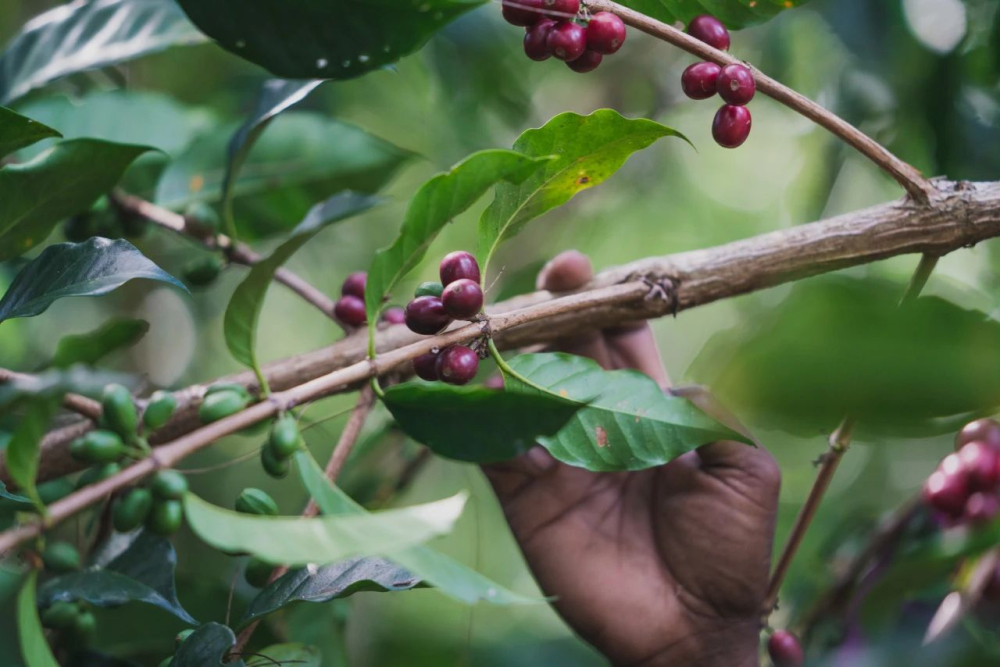
It has also always been an outstanding performer in the coffee industry. As early as 1958 at the International Coffee Tasting held in London, England, it was rated first-class; at the 1980 National Coffee Conference, it was praised by Chinese and foreign coffee experts as the crown of Chinese coffee; in 1993 at the World Coffee Competition held in Brussels, Belgium, it won the Eureka Gold Award.
Therefore, Front Street believes that a large part of the reason for Front Street Little Blue Mountain coffee's wonderful flavor is that it is the Typica variety. At the same time, the credit of Bird of Paradise Estate's unique coffee bean processing cannot be ignored. According to Front Street's understanding, they have their own set of washed processing methods, and the washed process is also the method that best expresses a coffee's most original fruit flavor. Therefore, coffees like Front Street Jamaica Blue Mountain coffee or Front Street Papua New Guinea Little Blue Mountain coffee mostly use the washed process to process coffee beans.
Washed Processing Method
Next, Front Street will introduce the washed processing flow of Papua New Guinea coffee beans:
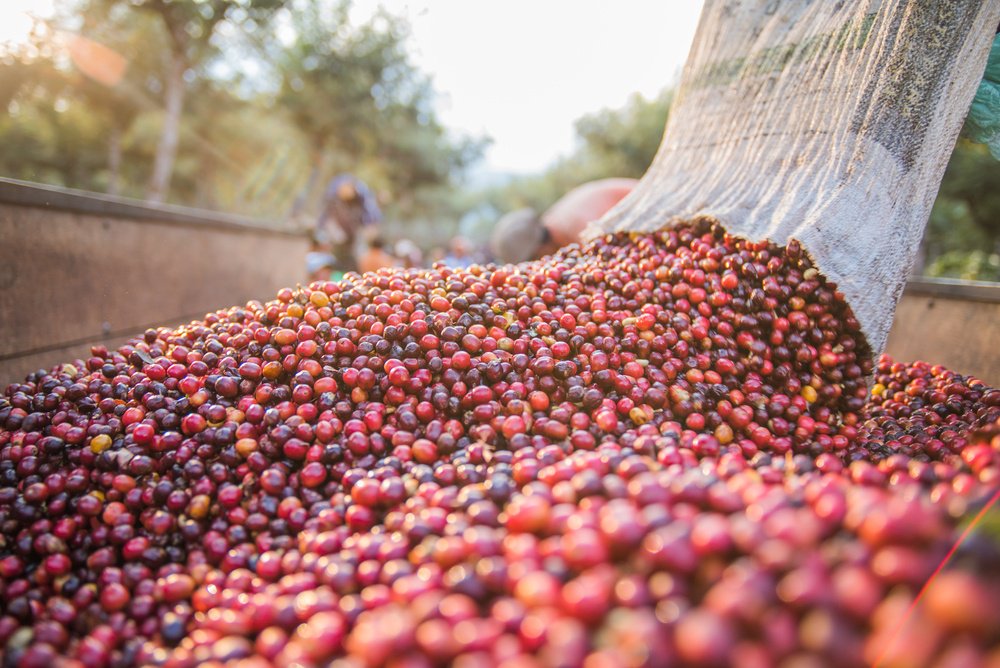
First, after harvesting ripe, fully red coffee cherries, they are sent to the estate's own washing station for processing, then washed and fermented three times, each soaking for about 24 hours, with clean water replaced to control coffee flavor; after washing, the green beans are hulled and then graded into various categories, such as AA, AB, PB round beans, etc. This finely crafted post-processing method brings the coffee itself a bright, delicate fruity acidity and a clean, lingering sweet taste.
The above is the relevant knowledge about Front Street Papua New Guinea Little Blue Mountain coffee compiled by Front Street. We believe coffee fans who have read it now have a certain understanding of Front Street Little Blue Mountain coffee and are full of curiosity about its flavor. Therefore, Front Street also hopes this article can help everyone select coffee beans. If you usually like Blue Mountain coffee, coffee fans might as well give this Front Street Little Blue Mountain coffee a try!
For professional coffee knowledge exchange and more coffee bean information, please follow Coffee Workshop (WeChat public account: cafe_style)
For more specialty coffee beans, please add private WeChat Front Street Coffee (FrontStreet Coffee), WeChat ID: kaixinguoguo0925
The above content is compiled by CoffeeHunters, a coffee news website.


