







How does the geisha coffee variety taste in Yunnan?
Geisha coffee variety plants arrived at Zuoyuan in Yunnan's Baoshan production area around 2011, when an estate owner set aside land to study the cultivar. The trees descend from seed first collected in Ethiopia's Gesha forests, later grown in Panama. In Yunnan the beans show plum-like acidity, berry sweet-tartness, black tea fermented notes, and a nutty finish.
The variety is Arabica, valued for disease resistance but low yield. After collection it was named for the Gesha region, sent to a British plantation in Kenya, moved to Tanzania in 1936, registered in Costa Rica in 1953 as T2722, and reached Panama in the 1960s. Yunnan's altitude, soil, and climate shift its cup away from the panama geisha coffee profile.
Although the cultivation history of Yunnan Geisha coffee is not long, it has taken root and grown in Zuoyuan in the Baoshan production area, becoming a bright spot in China's specialty coffee scene. The Geisha variety traveled from the primitive forests of Ethiopia to the high-altitude estates of Panama, undergoing a long process of genetic adaptation and flavor transformation. After being introduced to Yunnan, its flavor took on a different character due to differences in altitude, soil, and climate. This article will trace the spread of Geisha coffee, compare the flavor differences of Geisha from Ethiopia, Panama, and Yunnan, and specifically describe the plum-like acidity, berry-like sweet-tartness, black tea-like fermented quality, and nutty finish displayed by Yunnan Geisha coffee beans, giving you a comprehensive understanding of this variety's cultivation status and taste characteristics in Yunnan. For more specialty coffee bean information, follow the Coffee Workshop WeChat official account or add Front Street Coffee's private WeChat for exchanges.
Professional coffee knowledge exchange. For more coffee bean information, please follow Coffee Workshop (WeChat official account: cafe_style)
For more specialty coffee beans, please add private WeChat Front Street Coffee (FrontStreet Coffee), WeChat ID: qjcoffeex
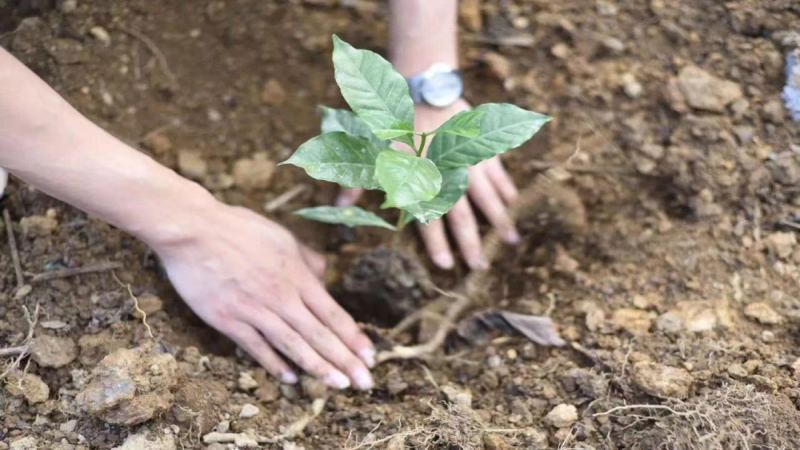
The cultivation history of Yunnan Geisha coffee is not long, and it is mainly grown in "Zuoyuan" in the Baoshan production area of Yunnan. Around 2011, the estate owner began researching the cultivation of the Geisha coffee variety in Yunnan and set aside an area on his estate specifically for research into Yunnan Geisha coffee cultivation.
The Geisha variety we are familiar with today originated in the primitive forests of the Gesha region in Ethiopia. It is an Arabica coffee variety with good disease resistance but low yield. When the Geisha variety was first collected, various coffee plants were harvested, then named after the Gesha region and sent together to a British plantation in Kenya for research and cultivation.
In 1936, it was transferred to Tanzania for continued research and breeding, and in 1953 it was introduced to Costa Rica and registered under the number T2722. Panama introduced the T2722 Geisha variety in the 1960s. In order to adapt to the local environment, this variety continuously optimized its genes, forming the refined floral and fruity aroma and flavor we are familiar with today, and it rose to fame in 2004.
Although many countries began growing Geisha coffee beans after Geisha coffee became famous, the flavor is not as refined as that grown in Panama's high-altitude regions. Even when using Geisha varieties that have already been "tamed" by Panama, the same flavor cannot be achieved.
As Panama Geisha became famous, some coffee researchers returned to the original Geisha sampling site based on records to look for the ancestors and descendants of T2722, hoping to find a wild Geisha coffee bean that could serve as an affordable substitute. The researchers did indeed find it, but the relationship can be said to be not very close, though they do share some of the same genes.
In terms of flavor, Ethiopian Geisha coffee beans are also not as refined. After all, wild Geisha has not had its genes modified by humans or by nature in different regions. Therefore, although the flavor also has floral and fruity aromas, it is not particularly bright, carries an almond aroma, and is not as rich on the palate as Panama Geisha coffee beans.
The same is true of Yunnan Geisha coffee beans. Whether it uses T2722 Geisha or Ethiopian Geisha, after arriving in Yunnan, the flavor of Geisha coffee will also change. One reason is that the cultivation altitude is not as high as in Africa or Central and South America, and the soil composition and climate are also very different.
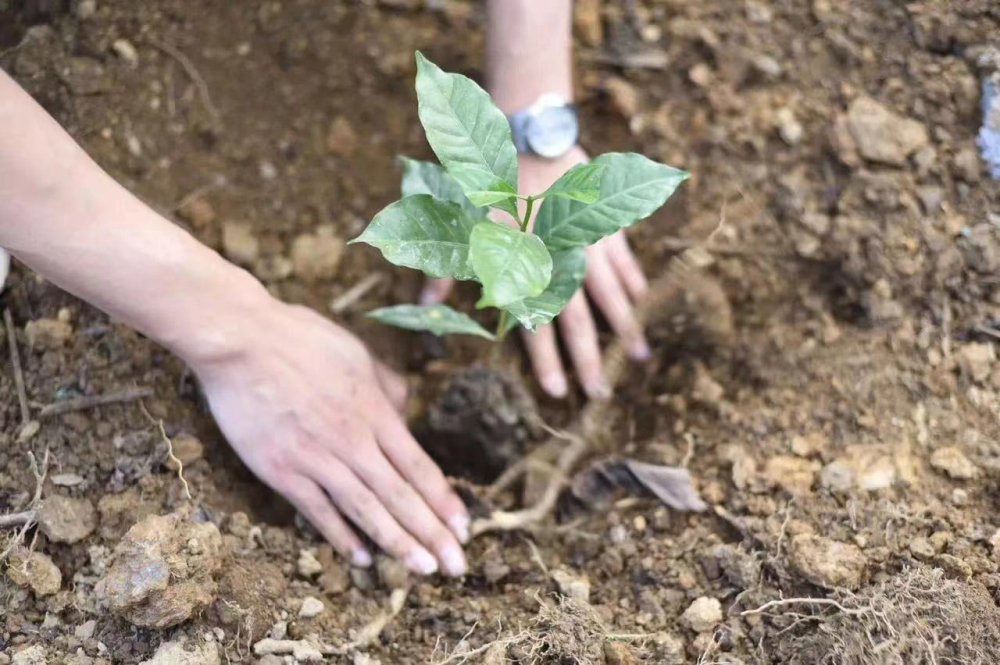
The Geisha coffee variety grown in Yunnan has plum-like acidity, berry-like sweet-tartness, a black tea-like fermented quality, and a nutty finish. Its floral aroma is not obvious, and overall it is relatively clean, balanced, and mellow.
The above content is compiled by CoffeeHunters, a coffee news website.


