







Colombia Huila Coffee: Flavor, Roast, and Pour-Over
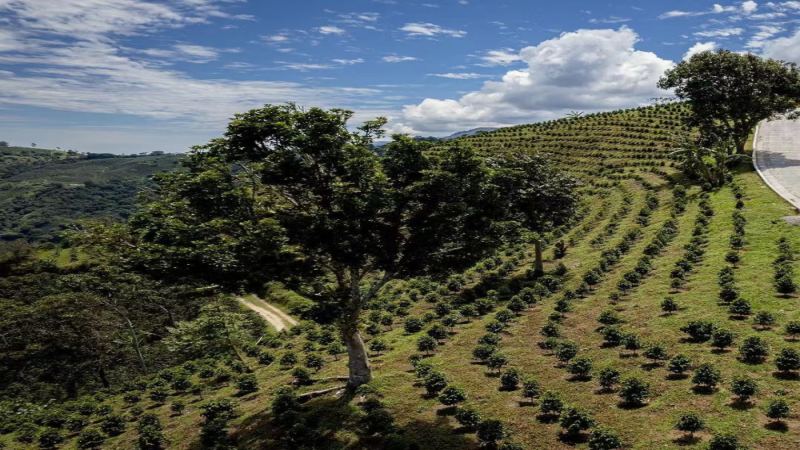
Huila is one of Colombia's most productive coffee departments, sitting in the southwest where the Andes create steep, high-altitude growing conditions. Huila coffee typically comes from smallholder farms, and the Colombian coffee crop there is dominated by Castillo and Caturra varieties. Washed processing is standard, giving the beans a clean profile with caramel, red apple, and mild citrus notes that suit both filter and espresso.
A washed dark roast from Huila trades some of the brighter acidity for deeper chocolate and toasted nut flavors, making it a solid everyday bean. For pour-over, use a medium grind, a 1:16 ratio, and water around 200 degrees Fahrenheit. A two to three minute brew time lets the sweetness come through without the bitterness that a finer grind or hotter water can bring out.
Colombian coffee is renowned for its heavy, balanced, and rich dark chocolate and caramel sweetness, and Huila Province, as the country's most famous specialty region, has washed coffee beans that are the epitome of traditional flavor. Front Street Coffee selects Huila washed beans as the Colombian region's daily drinking beans, using a medium-dark roast to present a mellow mouthfeel of nuts, chocolate, and soft fruit acidity. This article will provide a complete analysis of this bean's flavor characteristics and brewing methods, from the historical background of Colombian coffee, the terroir conditions of Huila, and the washed processing technique, to the positioning of Front Street's daily drinking bean series, and then to specific pour-over parameters and KONO dripper extraction techniques, helping coffee enthusiasts gain a deeper understanding of the charm of Colombian coffee.
When you mention Colombian coffee, what comes to mind? Is it the unique flavors brought by anaerobic fermentation? Or is it synonymous with high-quality coffee? These impressions are not wrong. However, as the industry flourishes, some traditional flavors are slowly disappearing.
Colombia is located in South America, and its name is a tribute to Columbus. This country was once a stronghold of drug lords; the fertile valleys could cultivate high-quality coca, marijuana, and poppies, as well as high-quality coffee. The Colombian government, together with the U.S. military, waged a long struggle against the drug lords entrenched in the mountains, ultimately ending the country's drug cultivation industry by force. Former coca fields were replaced by coffee trees one after another, and Colombian coffee has since made its mark on the world.
In the early days, the Colombian government strongly encouraged farmers to grow coffee, issuing large subsidies and even promising growers that they need not worry about sales, as the government would purchase the entire crop. This policy once pushed Colombia's annual coffee production to second place in the world; it currently holds around fourth place, while its Arabica coffee bean production remains stable at second place.
Colombian coffee beans are outstanding in quality. When Front Street was searching for coffee that could represent the Colombian flavor, it found that traditional Colombian coffee shares a common characteristic: mellow, balanced, with rich dark chocolate revealing a caramel-like sweetness, performing excellently. In the end, Front Street Coffee (FrontStreet Coffee) selected washed coffee beans from Huila Province as the representative bean of Front Street's Colombian regional flavor, which is the Front Street daily drinking bean series.
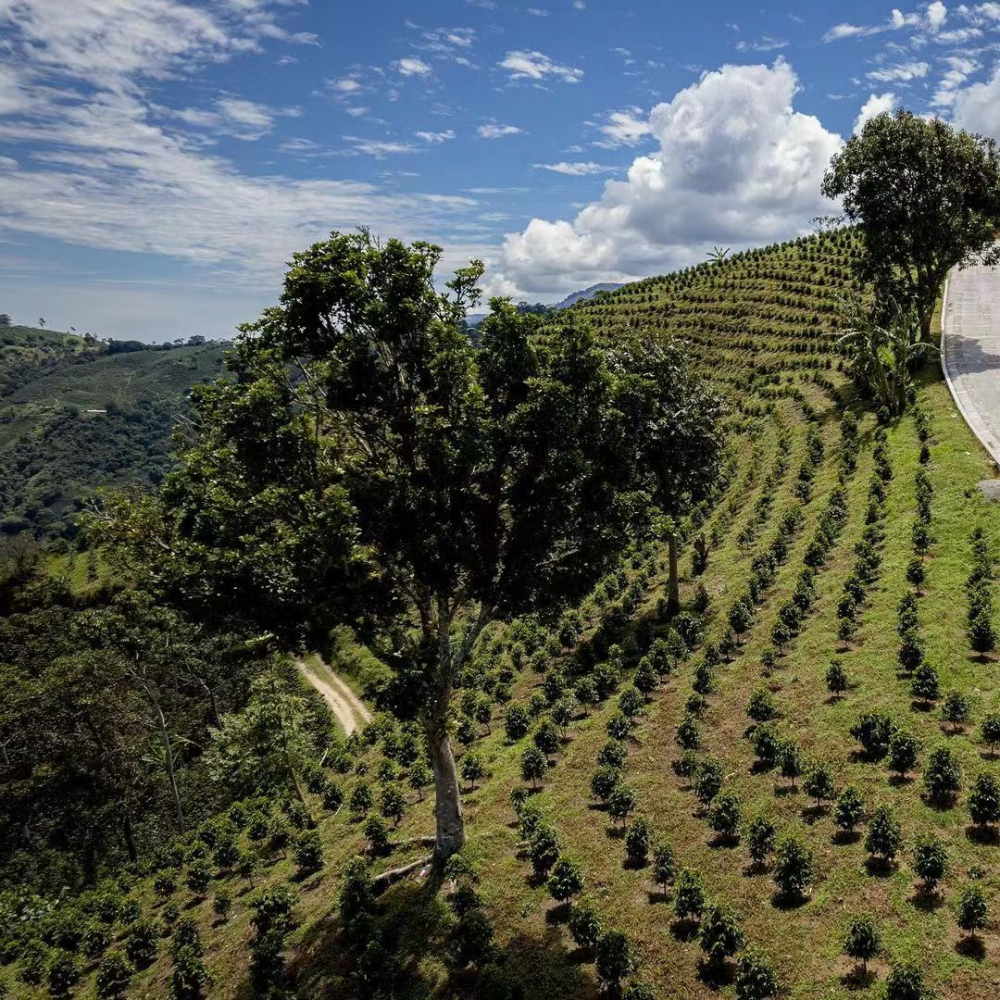
Huila Province is located in the southern section of the Central Cordillera in southern Colombia and is the country's most renowned specialty coffee region. Surrounded by mountains, with cultivation altitudes exceeding 1,500 meters, the most important rivers in Colombia converge here, bringing abundant water resources and moisture.
Unlike the general impression of Colombian coffee as balanced and smooth, many smallholder micro-lot specialty coffees are actually highly distinctive of their region. In recent years, as the international market's demands for coffee quality and specialty coffee have increased, Huila has gradually abandoned the previous grading system based on bean size and shifted to micro-regional selections provided by micro-regional production organizations. Dozens of smallholders pool their harvests into a single micro-lot for sale, and thus have the opportunity, through lot-by-lot cupping, to directly select many specific smallholder coffees of excellent quality.
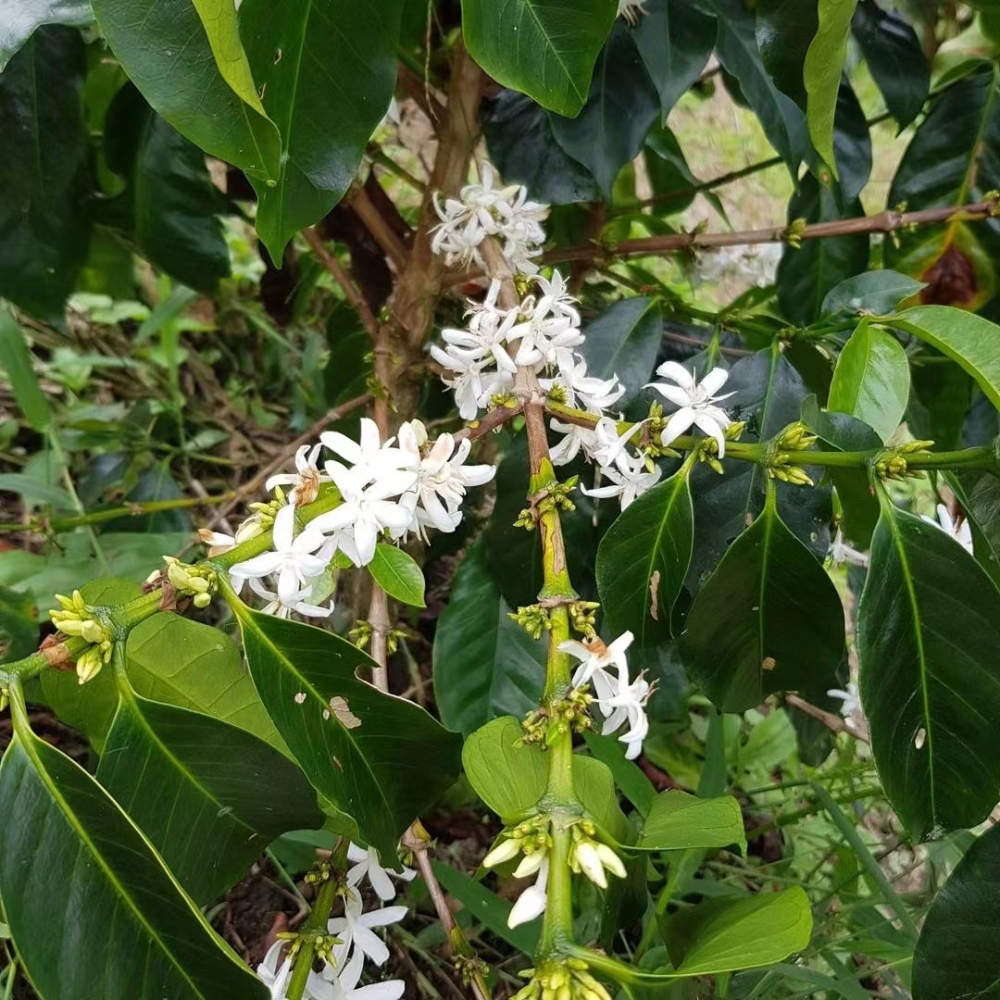
Coffee-producing countries in the Americas basically focus on washed processing, as do Guatemala, Costa Rica, Honduras, and others, and today's Colombia is no exception. After the coffee cherries are harvested, defective beans are first removed by flotation, then the skin and pulp of the coffee cherries are removed by a pulper, followed by the fermentation stage. The purpose of fermentation is to use microbial action to separate the pectin from the beans. The coffee beans stay in the fermentation tank for 16 to 36 hours, after which they are washed clean with plenty of running water and finally sent to drying beds. Washed processing not only shortens drying time and reduces the defect rate of green beans but also gives the coffee a cleaner, brighter acidity.
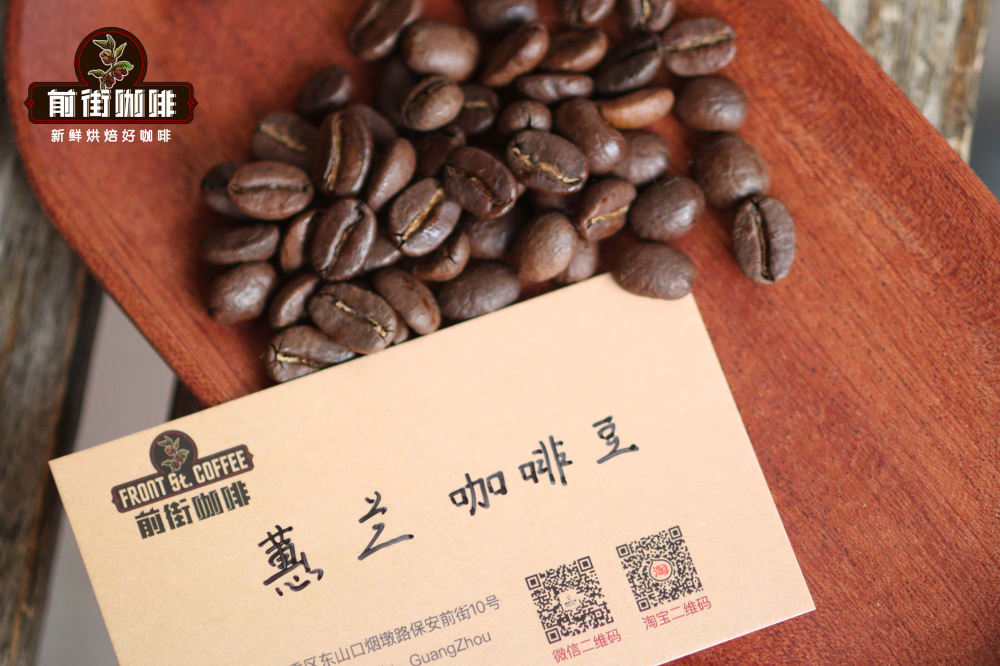
Similarly, most coffee from Huila also uses traditional washed processing, producing coffee beans with a cleaner flavor and better overall quality. Front Street Colombian Huila coffee beans are regular in shape and uniform in size. Front Street uses a medium-dark roast, presenting a mellow mouthfeel that is not bitter and full of dark chocolate notes, with a caramel aroma and a hint of smooth fruit acidity in the finish, very pleasant.
Why did Front Street create the Front Street daily drinking bean series?
Many people think that low-priced coffee beans must have something fishy about them, and that it's impossible to have high-quality coffee beans below market price—this kind of thinking is only human. After all, we've been through so many counterfeit incidents, but what Front Street wants to tell everyone is that coffee prices really are this low—of course, here we're talking about coffee futures prices. Friends who understand economics can look at coffee futures prices and then calculate the value added at each stage to arrive at the final price. In fact, for decent-quality coffee, the price really is this cheap.
When Front Street first launched this daily drinking coffee bean series, it was to allow friends who are new to coffee to try coffee beans from different regions at a lower price. The Front Street daily drinking bean series selects highly representative coffee beans, such as the Front Street washed Yirgacheffe coffee beans representing Ethiopia, the Front Street Lintong Mandheling coffee beans representing Indonesia, and the Front Street Huila coffee beans representing Colombia. This lets more friends get to know coffee beans from major regions, pick out the regional beans that suit their taste, and then further try the more expensive coffee beans from that region.
How should this Front Street Colombian Huila daily drinking bean be brewed as pour-over?
Considering that the Huila daily drinking bean uses a medium-dark roast, with a flavor profile leaning toward the rich, mellow tones of nuts and chocolate, the darker roast makes the coffee beans more porous and the coffee grounds more absorbent, so a medium grind is chosen. To avoid extracting too many off-flavors, Front Street will slightly lower the water temperature, using a medium 90°C water temperature, paired with a KONO dripper for extraction.
Unlike the V60 dripper, the only exhaust area of the KONO dripper is that quarter of the ribs. When the water level rises above the rib area, the water volume inside the dripper keeps increasing, adding pressure through the weight of the water. Because the outlet is relatively small, it can extend the contact time between coffee particles and water, and as the water is poured in, it more effectively brings out soluble substances, thereby enhancing the coffee's mellow, rich mouthfeel.
Brewing parameters: KONO dripper, 90°C water temperature, grind size with 75% passing a No. 20 standard sieve, 1:15 coffee-to-water ratio, 15g coffee dose, three-stage extraction.
Pour the coffee grounds into the V60 dripper, wet the coffee bed with twice the amount of water as the coffee grounds to form a dome and let it bloom for 30 seconds, then pour in a thin stream in a circular motion from the inside out until reaching 125g and pause; when the coffee bed drops to half the height of the dripper, continue pouring the third stage with the same thin stream until reaching 225g, and let all the coffee liquid filter through before removing the dripper. The total time is about 2 minutes.
This Front Street Colombian Huila daily drinking bean has obvious roasted aromas of chocolate, nuts, and caramel on the palate, smooth and sweet, with moderate body and a clean mouthfeel; as the temperature drops, a pleasant, soft acidity can be felt.
The above content is compiled by CoffeeHunters, a coffee news website.


