







Is Mandheling Coffee Arabica or Robusta?
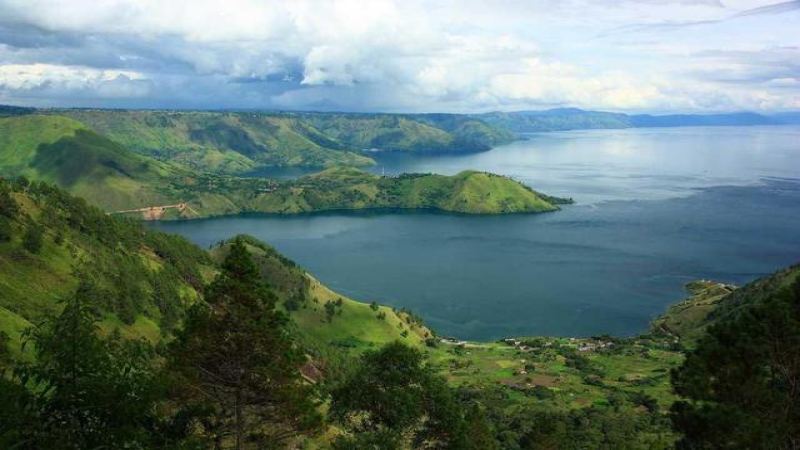
Indonesia is Asia's largest coffee producer and its output is mostly commercial-grade Robusta, but Mandheling is Arabica. The finest lots come from northern Sumatra and account for less than one-tenth of national production. Dutch colonists brought Arabica seedlings to Java in the late 17th century, and cultivation later spread to Sumatra, where it was planted on a large scale.
In the 19th century leaf rust destroyed many Typica and Bourbon plantings, and disease-resistant varieties such as Tim and Catimor were introduced, with Catimor known locally as Ateng. Combined with the local wet-hulling method, Mandheling shows a full body with dark chocolate and nut notes. Green coffee bean grading standards and cupping results also shape how the final cup is judged.
Mandheling is one of Indonesia's most iconic coffees, but many people are not clear about whether it belongs to Arabica or Robusta. In fact, Indonesia, as Asia's largest coffee-producing country, is dominated by commercial-grade Robusta, while among Arabica varieties, the finest Mandheling comes from northern Sumatra, accounting for less than one-tenth of total production. From the introduction of coffee trees by Dutch colonists in the late 17th century, to the devastation of Typica and Bourbon by leaf rust in the 19th century, to the integration of disease-resistant varieties such as Tim and Catimor into the local terroir, Sumatra gradually developed its unique herbal spice flavor. Combined with the因地制宜 wet-hulling method, Mandheling displays a full, rich body with solid notes of dark chocolate and nuts intertwined. This article will outline the varietal origins, processing methods, and grading standards of Mandheling, and share Front Street Coffee's cupping performance and brewing suggestions.
Indonesia is the country with the highest coffee production in all of Asia, and its coffee output is dominated by commercial-grade Robusta. Among Arabica varieties, Mandheling produced in northern Sumatra is the most outstanding in quality, yet its production accounts for less than one-tenth of Indonesia's total coffee output.
The history of coffee cultivation in Indonesia dates back to the late 17th century. At that time, Dutch colonists first brought Arabica seedlings to the island of Java, and coffee took root in Indonesia from then on, subsequently spreading to Sumatra and other islands, where it began to be planted on a large scale.
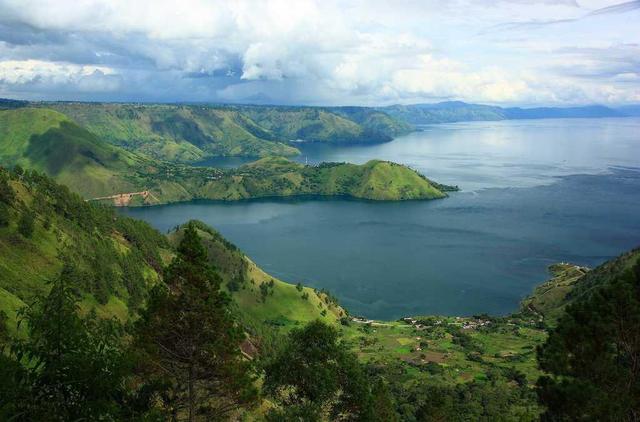
By the 19th century, leaf rust was ravaging Indonesian coffee plantations, and large tracts of Arabica plants withered and died, dealing a severe blow to production. The government then set about introducing more disease-resistant varieties, and Robusta, Tim, Catimor, and others successively entered the scene, replacing the fragile Typica and Bourbon.
Timor is a natural hybrid of Typica and Robusta from the island of Timor, combining Robusta's high yield and disease resistance. After being introduced to Indonesia, it was called Tim Tim by local coffee farmers. Another common local variety is Catimor, which locals call Ateng, a name derived from the pronunciation of Aceh Tengah in central Aceh. Catimor is a hybrid of the Bourbon variant Caturra and East Timor's Tim, and likewise possesses extremely strong disease resistance. To this day, Tim and Catimor, which carry Robusta lineage, have become the main local varieties. Through the long passage of time and their integration with Sumatra's terroir, they have given rise to the region's distinctive herbal and spice notes. Combined with strong disease resistance and considerable yield, they are highly favored by Indonesian growers.
The Front Street Golden Mandheling coffee beans on Front Street's bean shelf are of the Ateng variety, processed using Indonesia's unique wet-hulling method, and after roasting display a full, solid aroma of herbal spices, dark chocolate, and nuts. Front Street Lindong Mandheling daily beans are a blend of Tim Tim and Ateng.
Sumatra lies right next to the equator and has an island-type tropical rainforest climate, with air humidity maintained at 70–90% year-round. These hot and humid conditions easily cause green coffee beans to mold during fermentation or drying. Local coffee farmers therefore adapted to local conditions and developed a semi-washed processing method—wet hulling. The coffee fruit is first depulped and fermented; after a short fermentation of several hours, the sticky mucilage layer is washed off, then it is sun-dried for 2 to 3 days. When the moisture content drops to a semi-dry state of 30–50%, the parchment is hulled off, and finally the hulled green beans continue to be dried until the moisture content reaches 12%, at which point they can be bagged. While drying time is greatly compressed, it also imbues Mandheling green beans with a deep, subdued note of wood, herbs, and spices.
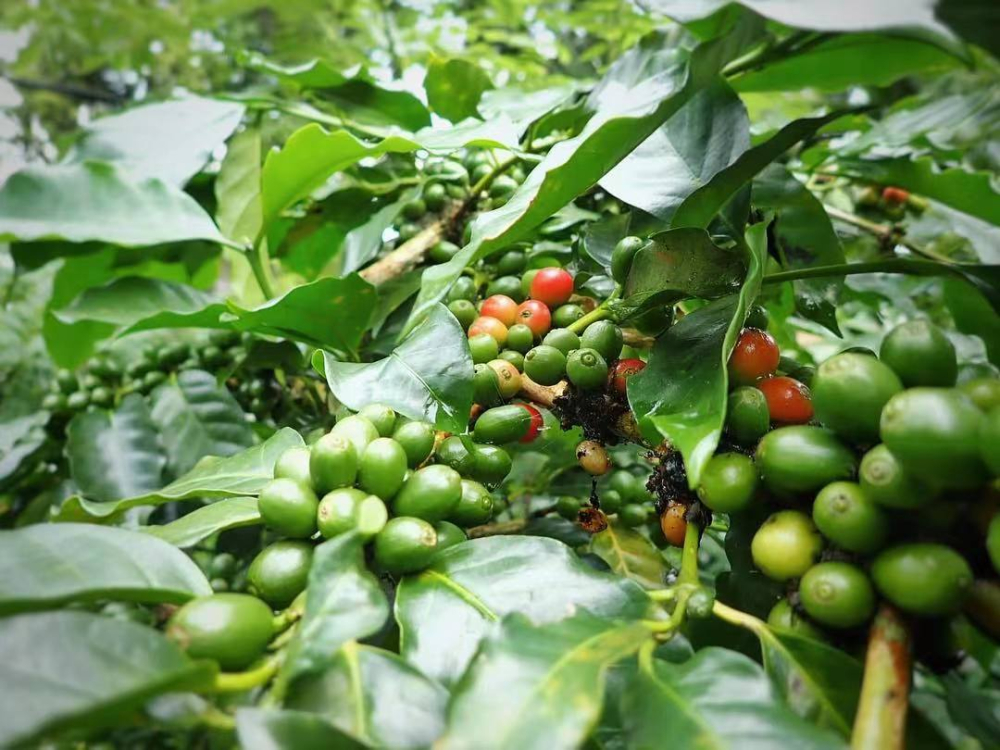
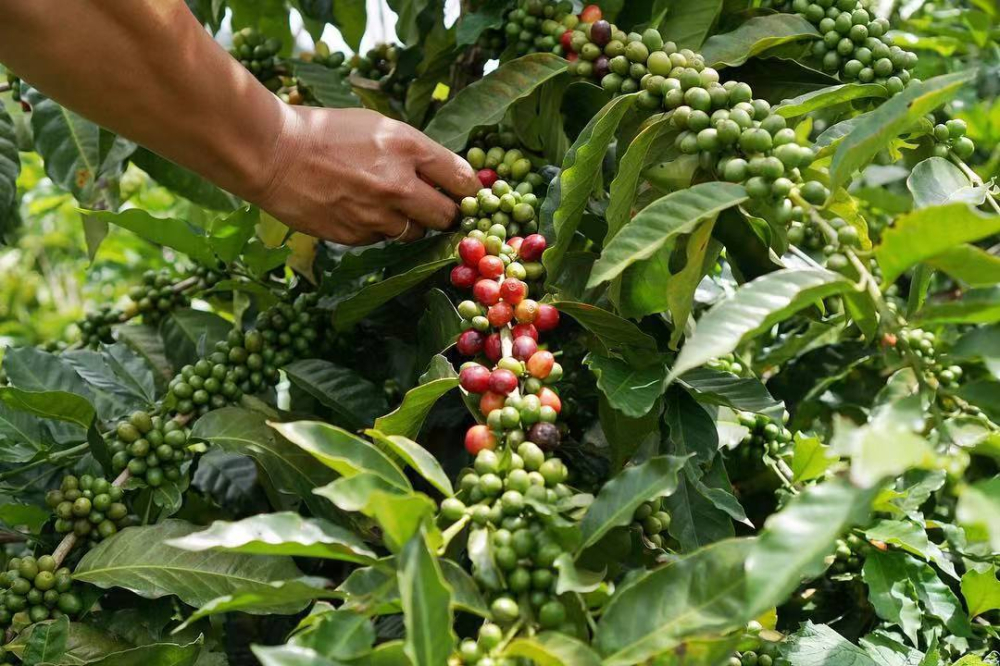
Wet hulling saves a great deal of time and labor costs in green bean processing, but the overly rapid process also leads to a relatively high defect rate. Precisely for this reason, only strict hand sorting can remove defect beans that machine screening cannot eliminate. Front Street Golden Mandheling coffee's exclusive supplier, PWN Company, during production, subjects the purchased Mandheling green beans to one round of machine sorting plus three rounds of hand picking, ensuring that every green bean is intact, uniform, and plump, and that the specification must reach 18 screen or above, belonging to Indonesia's local G1 grade.
Before Front Street releases any coffee bean, it tastes the coffee through cupping. Cupping is an evaluation of coffee bean quality and flavor; a unified standard allows for a more objective identification of the strengths and weaknesses of the bean's flavor as well as its characteristics. Through cupping, Front Street Lindong Mandheling daily beans present a rich nutty tone, with a hint of melon aroma in the aftertaste; as the temperature drops, herbal plant flavors emerge, with a full body and saturated aroma. Front Street PWN Golden Mandheling, on the other hand, not only has the aroma of dark chocolate, nuts, and caramel, but also the flavors of herbal spices and pine wood, with a sweet dark chocolate finish, a full aftertaste, and high cleanliness, carrying a gentle fruity acidity as the temperature drops.
Front Street's brewing suggestions
Front Street believes that the greatest characteristic of Mandheling coffee is its high body and unique herbal spice aroma, so Front Street uses a medium-dark roast so that the coffee's aroma does not become entirely caramelized. Freshly roasted Mandheling coffee needs 7–10 days of degassing and resting before it enters its optimal flavor period. Front Street hopes that every customer who places an order can taste the full aroma in the coffee, so it only ships coffee beans freshly roasted within 5 days, allowing everyone to enjoy the coffee's complete optimal flavor period upon receipt.
Filter: KONO
Water temperature: 87°C
Dose: 15 g
Coffee-to-water ratio: 1:15
Grind size: 70% passing rate on China standard No. 20 sieve
Pouring method: three-stage pouring
First pour 30 g of hot water and bloom for 30 seconds, then pour from the center point in a fine stream while slowly circling to 125 g. When the water level in the dripper drops to the point where the coffee bed is about to be exposed, continue circling and pouring to 225 g. The total extraction time is about 2 minutes. Before you begin tasting, gently swirl the coffee liquid to mix it evenly.
For professional coffee knowledge exchange and more coffee bean information, please follow Coffee Workshop (WeChat public account: cafe_style)
For more specialty coffee beans, please add the private WeChat of Front Street Coffee (FrontStreet Coffee), WeChat ID: qjcoffeex
The above content is compiled by CoffeeHunters, a coffee news website.


