







In recent years, thanks to the efforts of many,Yunnan coffeequality has been continuously improving and has received considerable recognition, with many fans of Yunnan coffee in China. For those who have never tried Yunnan coffee, they must be curious about how it tastes.
Why choose small-bean coffee from the Baoshan production area?
Currently, Yunnan Province's coffee planting area is stable at around 1.8 million mu, with an output of about 139,000 tons, accounting for about 1.5% of global production. Premium commercial coffee beans (above 75 points) account for 10%, and specialty coffee accounts for 5% (according to 2019 data). Yunnan has also developed into China's largest coffee planting area, trading hub, and export point. Coffee cultivation is distributed across 35 counties in 9 prefectures and cities, including Pu'er, Baoshan, Dehong, Lincang, Wenshan, and Xishuangbanna. There are more than 380,000 coffee-growing households and over 1.14 million people engaged in coffee cultivation. Among them, Baoshan is one of the earliest coffee-producing areas.
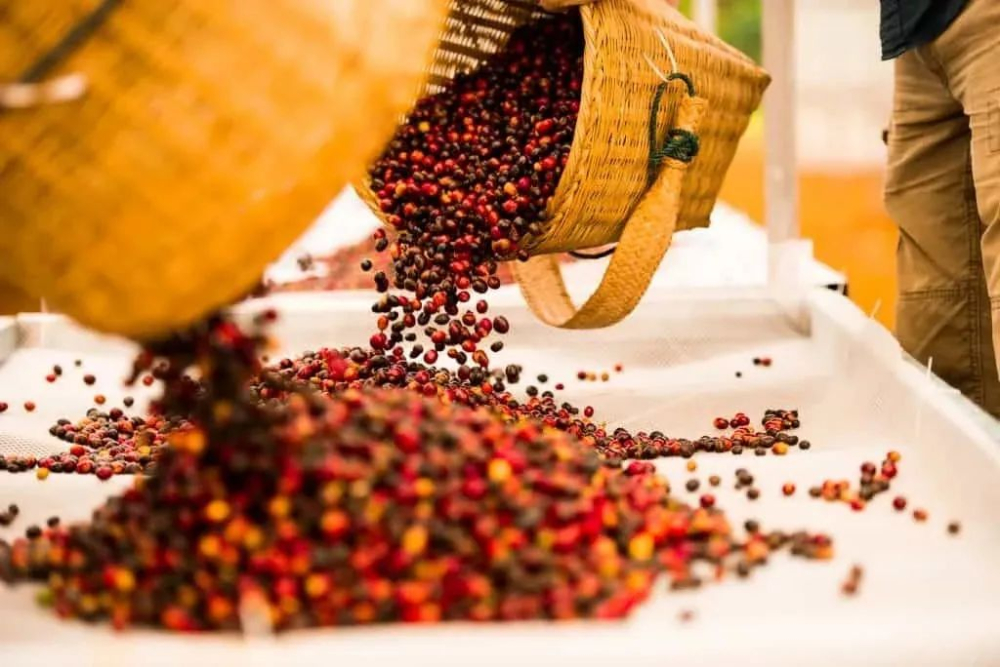
Since the 1950s, Baoshan has introduced its first batch of coffee tree varieties for seedling cultivation and growth. Today, Baoshan's Lujiangba has become the largest coffee planting base in the country, known as "China's No. 1 Coffee Village," Xinzhai Village. Here, every household's backyard hills are covered with coffee trees, the courtyards are filled with drying coffee beans, and the aroma of coffee drifts through the houses. Under the local warm climate with no frost throughout the year, coffee trees grow vigorously in a nourishing and comfortable environment. The significant temperature difference between day and night at high altitudes delays the ripening period of the coffee cherries, allowing the fruit to develop more flavor compounds.

Yunnan coffeetrees are generally planted on hillsides and slopes in a staggered arrangement. The terrain is unsuitable for mechanical harvesting, so manual harvesting of ripe coffee cherries is adopted. As with most coffee-producing countries, Yunnan harvests one season each year in winter, with the concentrated harvest season from November to March of the following year. As coffee cherries ripen and turn red in the mountains one after another, we can see busy farmers scattered across the hills harvesting small-bean coffee.
What variety is small-bean coffee?
Yunnan small-bean coffeeis also known as "Arabica coffee" (coffea arabica L.). In the 1950s, the dominant varieties in Baoshan, Yunnan were Typica, Bourbon, and S288. Among them, the oldest is the Typica variety, which has a pure and elegant taste but low yield and weak disease resistance, making it prone to disease and withering. Therefore, Yunnan introduced the Catimor variety, which can be densely planted and has strong disease resistance, becoming the most commonly planted coffee variety in Yunnan today. So what we often refer to as "Yunnan small-bean" actually more often refers to Yunnan's Catimor coffee beans.
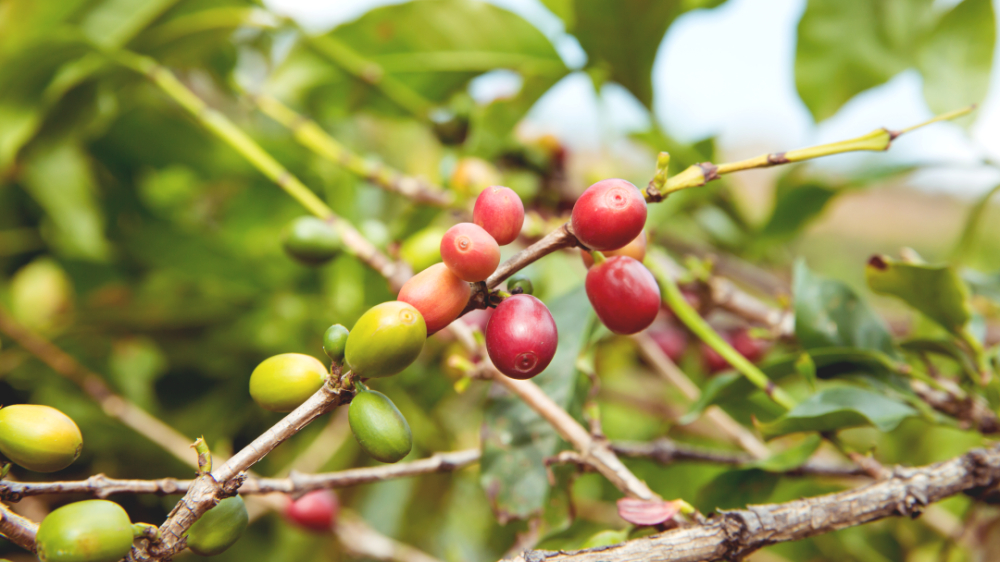
Catimor is a hybrid offspring of Caturra and Timor. Caturra is a natural mutant of the highly acclaimed Bourbon variety and is often a "regular" in various specialty coffee competitions. Among Front Street Coffee's own roasted coffee beans, dozens are made with Caturra. Timor is a natural hybrid of Robusta and Arabica, discovered in the early 1900s on the island of Timor in Southeast Asia. Robusta's taste is notoriously unappealing, characterized by heavy bitterness and intensity, but it has extremely high disease resistance, tolerates cold and heat, and is high-yielding. So Catimor has inherited some of these characteristics: higher survival rate, higher fruiting rate, and a shorter ripening period, naturally making it more favored by coffee farmers and producers.
Yunnan small-bean processing methods
Most Yunnan coffee farmers work under difficult conditions and do not have expensive processing equipment. Therefore, the vast majority ofYunnan coffee beansgenerally use natural processing methods, namely washed and sun-dried. Yunnan has abundant freshwater resources, and the harvest season easily encounters rainy days, making it more suitable for washed processing. Washed processing is also currently the most common method of green bean processing in Yunnan.

Washed Yunnan small-bean recommendation
After picking, coffee cherries are immediately sent to a washing processing station for processing. First, the coffee cherries are also floated in water to remove defective beans.Next, the coffee cherries are machine-depulped to remove the skin and pulp. At this point, the coffee beans are still covered with a sticky mucilage layer. The processing station places the coffee beans in fermentation tanks for fermentation, using the power of microorganisms to break down the mucilage layer, then repeatedly rinses them with clean water to wash away the decomposed mucilage layer and residual pulp.

Finally, the cleaned coffee beans are sent for drying. Unlike sun-dried processing, which retains all the pulp and mucilage layer, washed processing removes the pulp, skin, and mucilage, so the moisture content is much lower than that of sun-dried coffee cherries. Therefore, the drying time can be reduced by more than half, generally taking about two weeks depending on the weather.
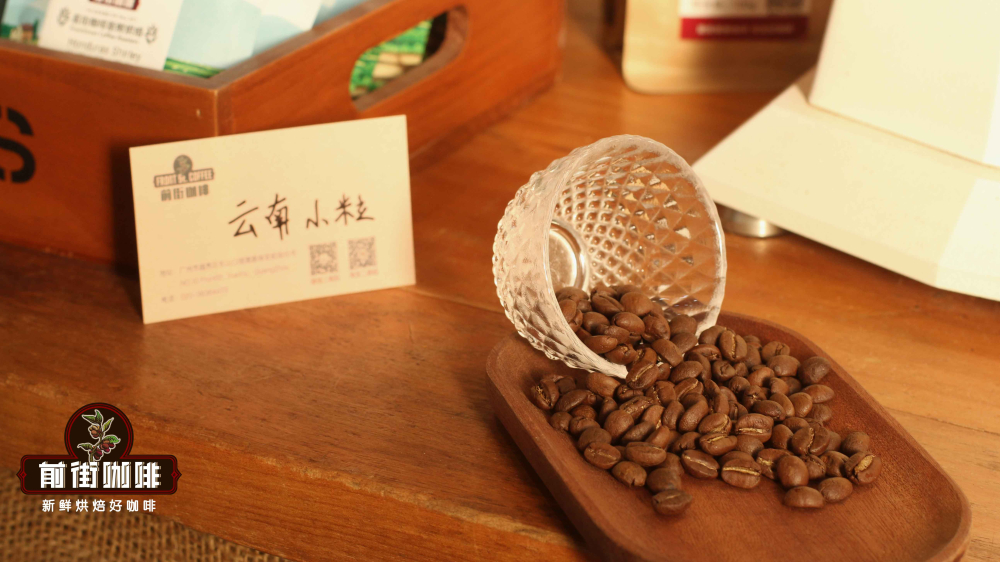
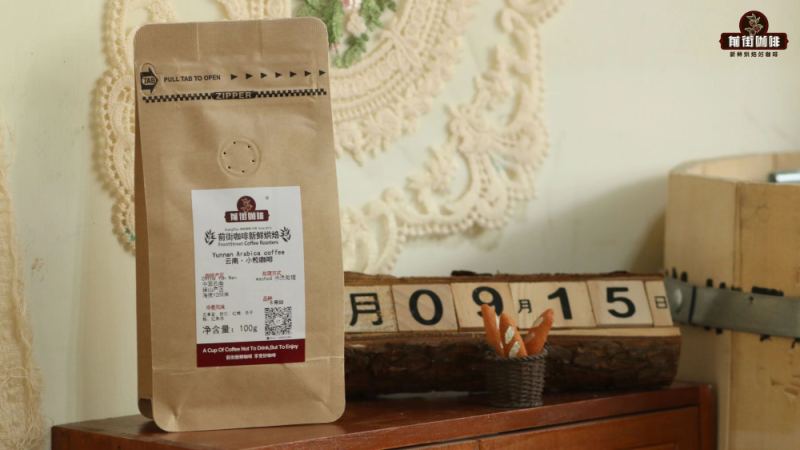
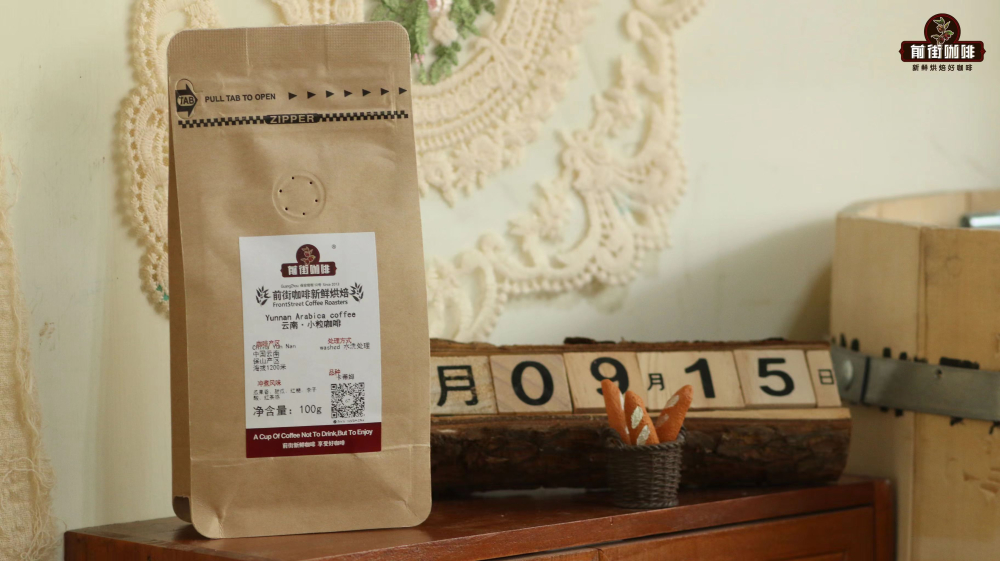
Front Street Washed Yunnan Small-Bean Coffee
Region: Baoshan, Yunnan, China
Altitude: 1200m
Variety: Catimor
Processing method: Washed
Flavor: Nutty aroma, herbal, chocolate, caramel, with a subtle fruity acidity in the aftertaste.
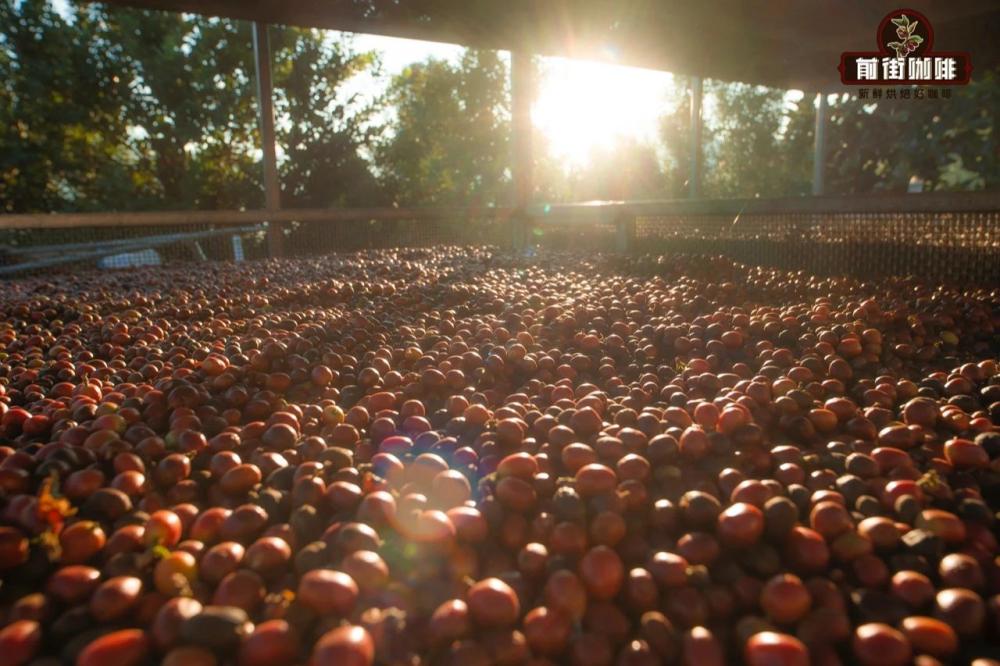
Sun-dried processing is the most primitive and traditional post-processing method for green coffee beans. Compared with washed processing, sun-dried processing gives coffee a richer flavor and a qualitative leap in sweetness.After picking ripe red coffee cherries, Front Street 2013 Typica spreads each whole cherry evenly on drying beds and turns each cherry every half hour. Such frequent operation is to ensure the coffee cherries dry evenly and avoid excessive fermentation that produces unpleasant fermented flavors.

Front Street 2013 Yunnan Typica
Region: Lincang, Yunnan
Estate: Front Street Estate
Altitude: 1300 meters
Variety: Typica
Processing method: Sun-dried
Flavor: Dried apricot sweetness and acidity, nutty notes, brown sugar sweetness, with a tea-like aftertaste
When Front Street discusses the flavor characteristics of Yunnan coffee, some describe it as chocolate, some say it's like sweet potato, and some friends think it's like Sanhua plum. The flavor of Yunnan small-bean has a neutral, balanced profile, meaning it has sweetness, acidity, and bitterness. Using medium roasting highlights the roasted aroma of chocolate and nuts while retaining some acidity. From cupping, Front Street tastes Yunnan small-bean everyday coffee showing nutty, herbal, and brown sugar aromas, melon-like sweetness, and plum acidity, with a balanced mouthfeel. The sun-dried Typica presents chocolate, baked bread, tropical fruit fermentation notes, and a black tea aftertaste.
The above content is compiled by CoffeeHunters, a coffee news website.


