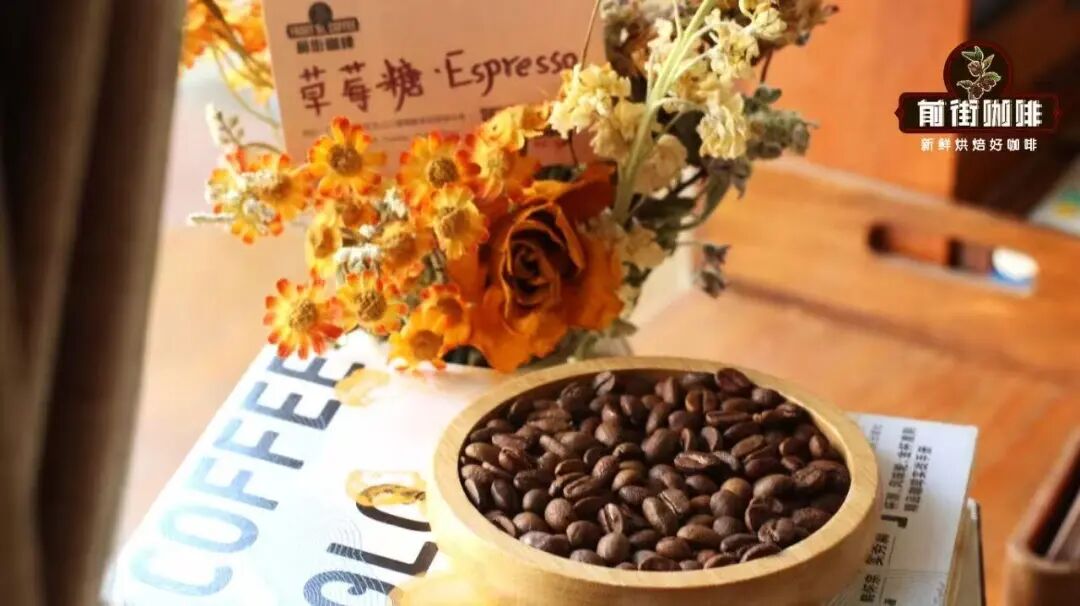
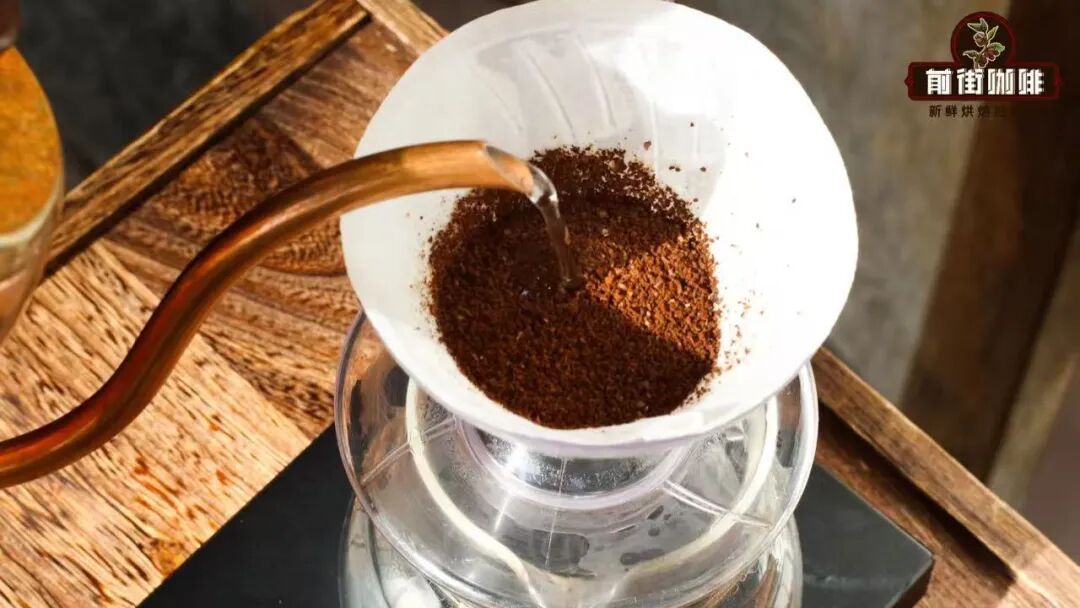
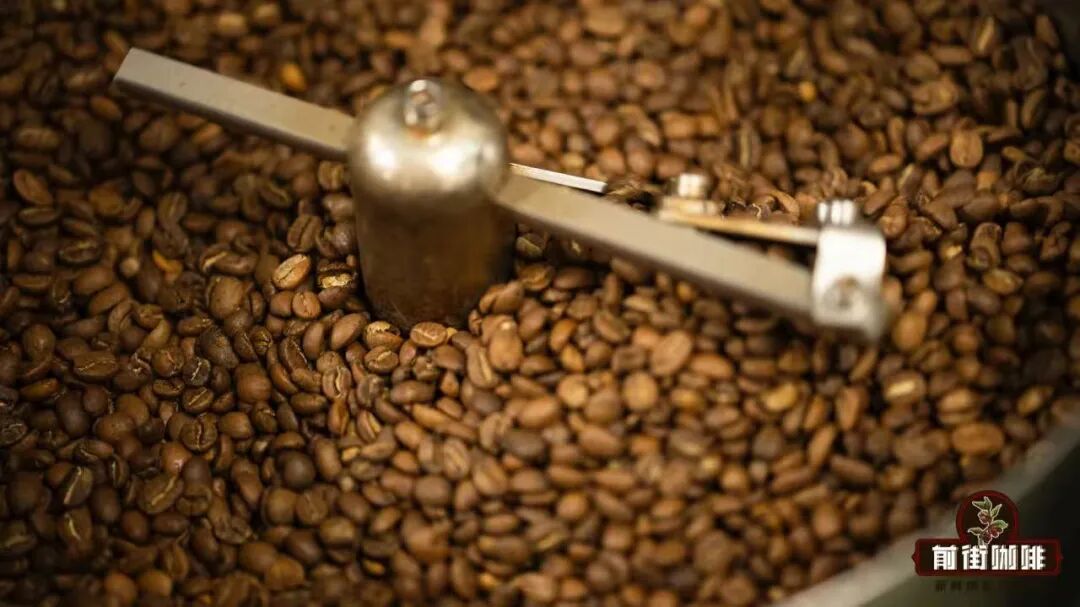
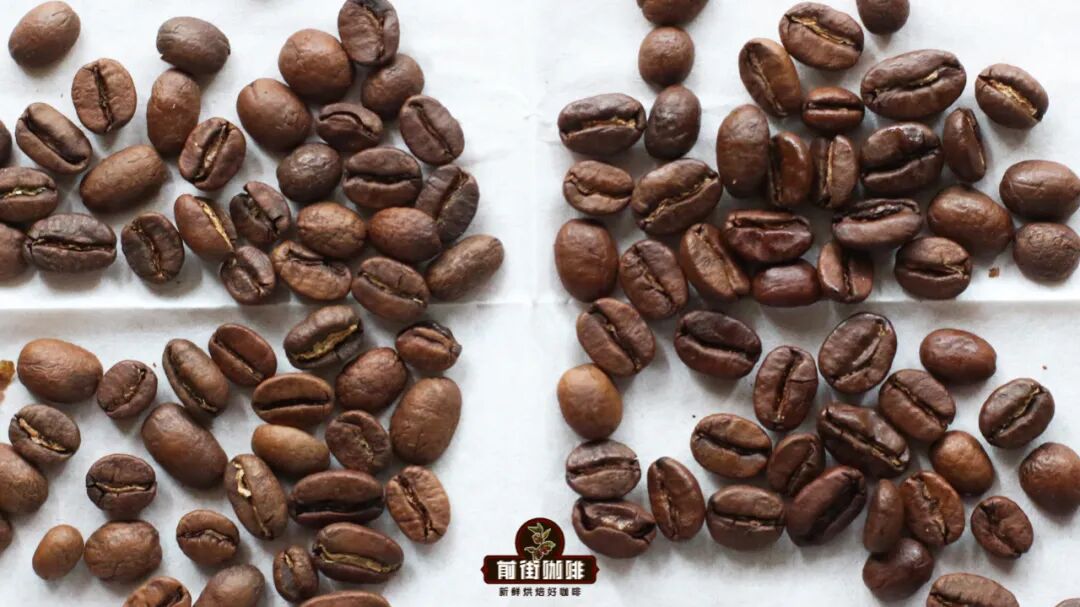
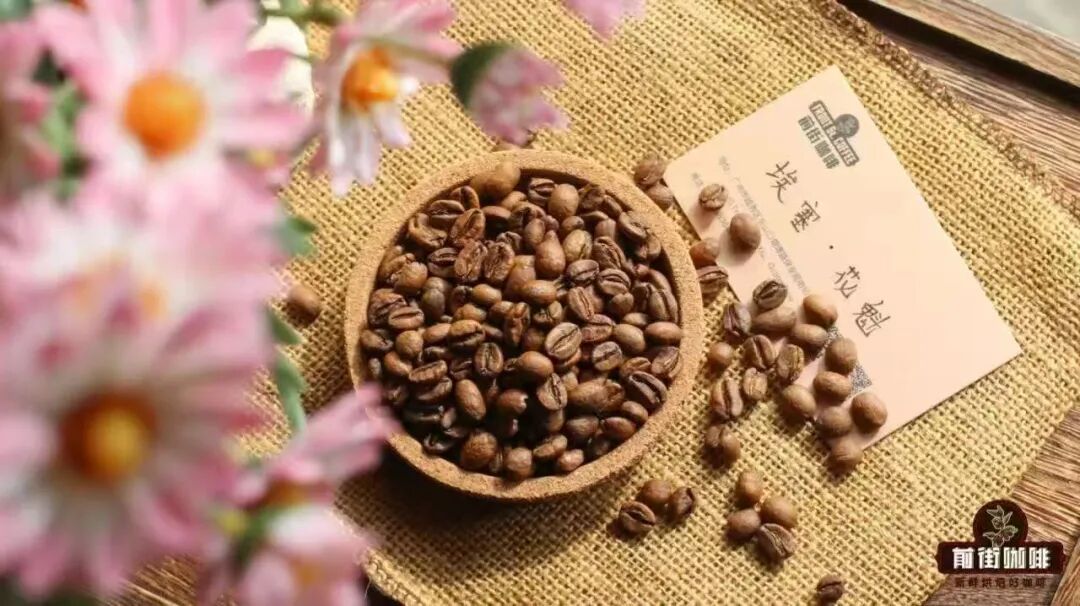
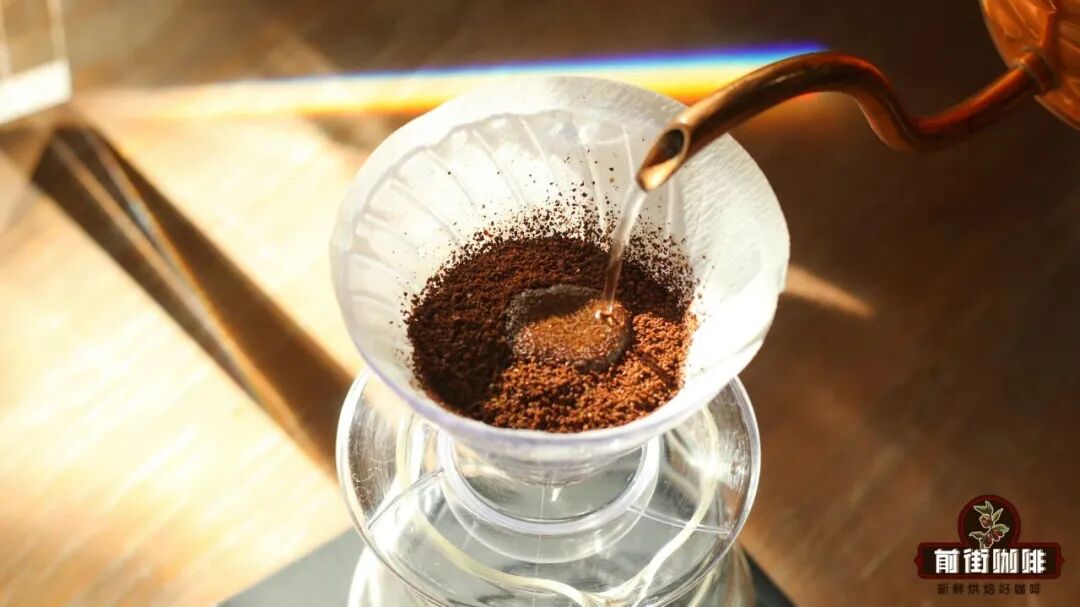
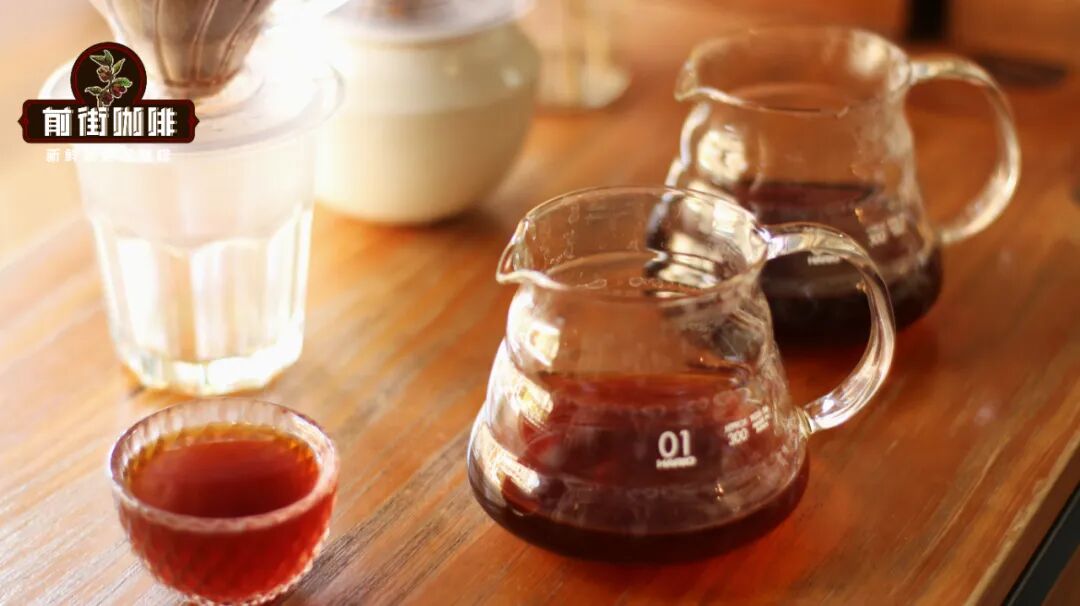
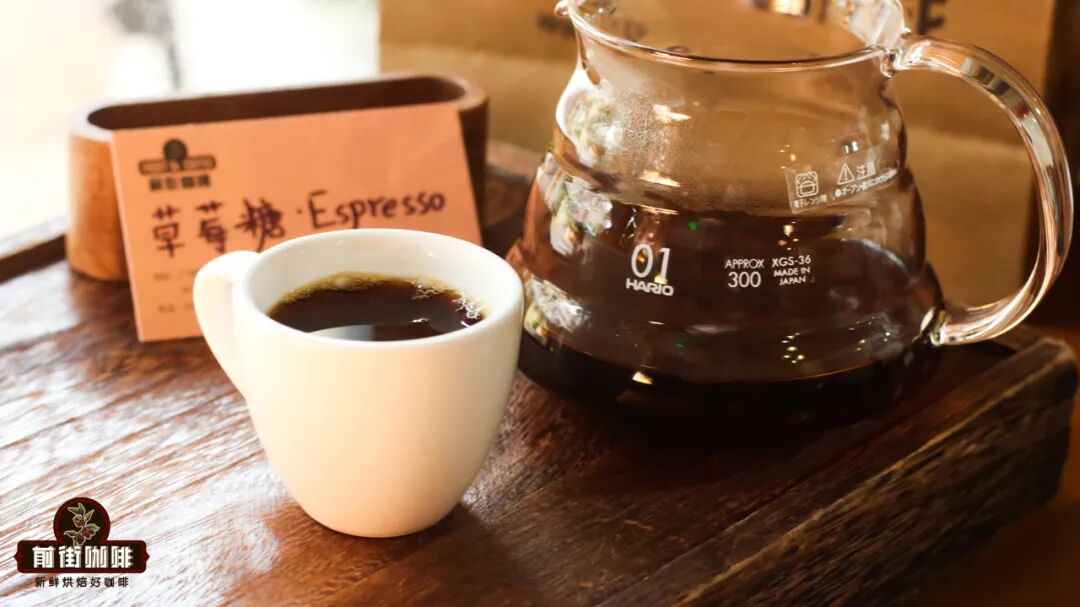
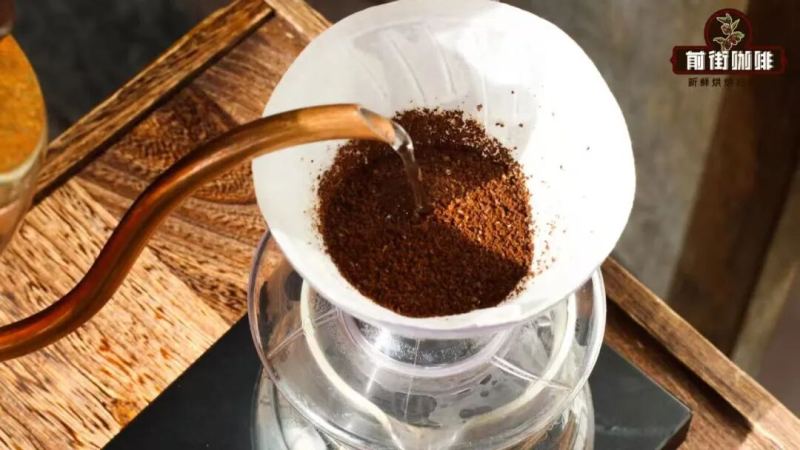
As everyone knows, Front Street recently launched a new fruity and floral espresso blend on Taobao Tmall—Front Street Strawberry Candy Espresso. Perhaps because the flavor is quite appealing, friends often ask Front Street's backend customer service: "Your espresso beans are so delicious, can they be used for pour-over?"The answer is obvious—of course they can~ Although espresso beans are primarily intended for use with espresso machines, they can also be used for pour-over coffee. Moreover, espresso and pour-over are simply different coffee extraction methods, so naturally they can extract any coffee beans.But what we need to understand is that "can it be brewed" and "does it taste good" are two different things! If we want to make a delicious cup of coffee using espresso beans in pour-over form, then we need to find the corresponding brewing parameters based on the characteristics of the coffee beans.Generally speaking, whether single-origin or blended, coffee beans used for espresso tend to be roasted darker than beans used for pour-over or French press. Setting aside other characteristics, the reason espresso beans need a darker roast is that espresso needs to accommodate milk-based coffee preparation.When we need to add milk to coffee, it's not recommended to use beans with too light a roast. Because although a light roast can beautifully showcase the beans' inherent flavors, it cannot compete with the taste of a large amount of milk. Especially when making milk coffees like lattes that contain a lot of milk, the flavor of light-roasted coffee is very easily masked by the milk. Even if we reduce the amount of milk, the coffee's flavor still cannot be well expressed.In addition, espresso made from light-roasted coffee beans will be particularly sour. We all know that aside from flavor, the lighter the roast, the more acidity is retained in the coffee. Espresso itself is an extremely concentrated coffee, and this high concentration intensifies the coffee's taste. So when we use light-roasted beans dominated by acidity to make espresso, the espresso will have a very high level of acidity.Although most of the time we don't drink espresso directly, there are always methods/drinking styles like Con Panna and Dirty that separate the espresso from other ingredients. For most people, encountering high-intensity acidity is even less pleasant than high-intensity bitterness. That's why beans used for espresso are roasted slightly darker. This way, while reducing the coffee's acidity, it gives the coffee a roasted aroma that can hold its own against the taste of milk.Because of this, not only for blends but also for single-origin coffees, as long as the beans are destined for espresso, the roaster will choose a darker roasting curve to prepare the beans. So if we want to brew a delicious pour-over with espresso beans, we first need to find suitable parameters based on their roast level for brewing, so that the coffee won't be over-extracted due to excessive extraction efficiency.Take Front Street'sEthiopia·Floral Queenfrom the Front Street bean list as an example! The Floral Queen sold by Front Street on Taobao has two roast levels to choose from: one is a light roast that beautifully showcases the coffee's fruity and floral aromas; the other is a medium roast that is more suitable for espresso.When brewing the former, because it's lighter roasted with higher density, Front Street uses a higher-extraction-efficiency formula to brew it—the 15g coffee brewing formula that Front Street has always shared: water temperature 92°C, grind size 75%~80% passing through a No. 20 sieve, coffee-to-water ratio 1:15,three-stage pour, 2 minutes.The Floral Queen brewed with this formula performs excellently, with a predominantly sweet and sour taste, a clean mouthfeel, and prominent flavors of berries, citrus, floral notes, and oolong tea.But if we use this formula to brew the medium-roasted Front Street Ethiopia·Floral Queen, the result is predictable—most likely an over-extracted coffee with muddy and bitter flavors. Because medium roasting reduces the extraction difficulty of the coffee, the flavor compounds dissolve more quickly, and the same parameters will naturally dissolve out more bitterness.If we want to avoid this situation, then we need to lower the extraction parameters and reduce extraction efficiency, so we can brew a delicious pot of coffee. The two main parameters Front Street adjusts here are: one is water temperature, lowered from 92°C to 90°C; the other is grind size, coarsened from 75%~80% passing through a No. 20 sieve to 70%~75%, with the aim of reducing the surface area of coffee grounds in contact with water.Through these adjustments, the brewed coffee can perfectly avoid over-extraction and beautifully showcase its own charm. The medium-roasted Floral Queen performs somewhat differently from the light-roasted Floral Queen—it has a more substantial mouthfeel, a more balanced taste, and is no longer predominantly sweet and sour.In terms of flavor, because of the slightly darker roast, besides fruity and floral notes, we also taste chocolate and caramel aromas, and the aftertaste is longer than that of the light-roasted Floral Queen.Similarly, this set of parameters can also be used for the Strawberry Candy mentioned at the beginning by Front StreetEspresso! That is: 15g coffee, 88~90°C water temperature, 1:15 coffee-to-water ratio, 70%~75% passing through a No. 20 sieve, three-stage pour, 2-minute extraction time.The Strawberry Candy brewed with these parameters is equally appealing! The aroma is very rich, with flavors dominated by cream, chocolate, strawberry, and blueberry. The taste is also balanced between sweet, sour, and bitter, with a thick mouthfeel and a prominent, long-lasting aftertaste—very nice!If the espresso beans you're using are roasted darker, then Front Street would recommend further coarsening the grind and controlling the water temperature in the 86°C~88°C range to avoid over-extraction due to excessive extraction efficiency~
The above content is compiled by CoffeeHunters, a coffee news website.