







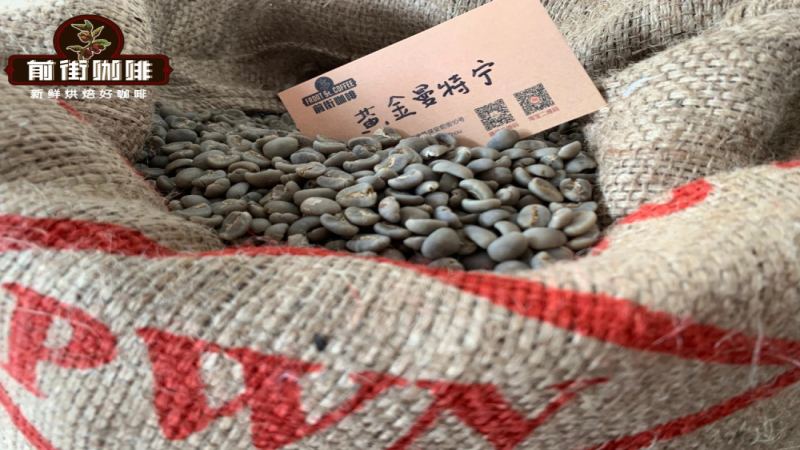
Mandheling coffee is considered the world's most full-bodied coffee, with relatively low acidity—it should be said to belong to the richer, mellower type—and its rich aroma is its defining characteristic. If you want to taste Mandheling coffee, Golden Mandheling is a wise choice. So what are the flavor characteristics of Mandheling and Golden Mandheling? Loyal fans of Mandheling had better save this.
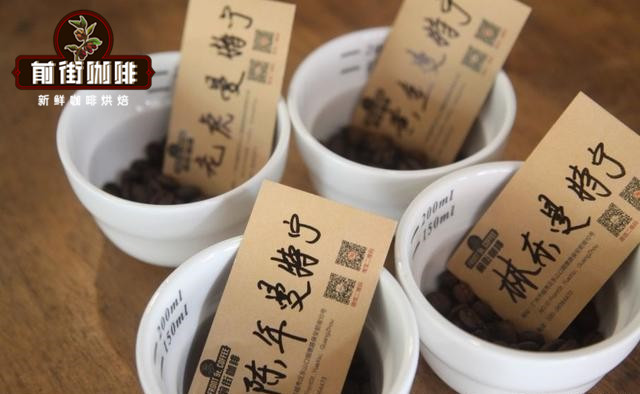
The most famous Indonesian coffee beans are none other thanMandhelingcoffee beans. Front Street currently offers 5 Mandheling coffee beans with distinct flavors, among which there is aGolden Mandheling. Front Street often encounters people asking, is there a difference between this Golden Mandheling and ordinary Mandheling? Comparing these two Mandheling coffee beans, Front Street finds that Golden Mandheling performs more cleanly and clearly in flavor, and its layering is also richer than ordinary Mandheling. The biggest reason is that Golden Mandheling undergoes more than 3 rounds of manual sorting, and the selected bean screen size is above 18, making the Golden Mandheling beans uniform in size, so the resulting flavor is naturally more balanced. Therefore, whether from appearance or taste, the difference between Golden Mandheling and ordinary Mandheling can be clearly distinguished.
Sumatra Mandheling Coffee
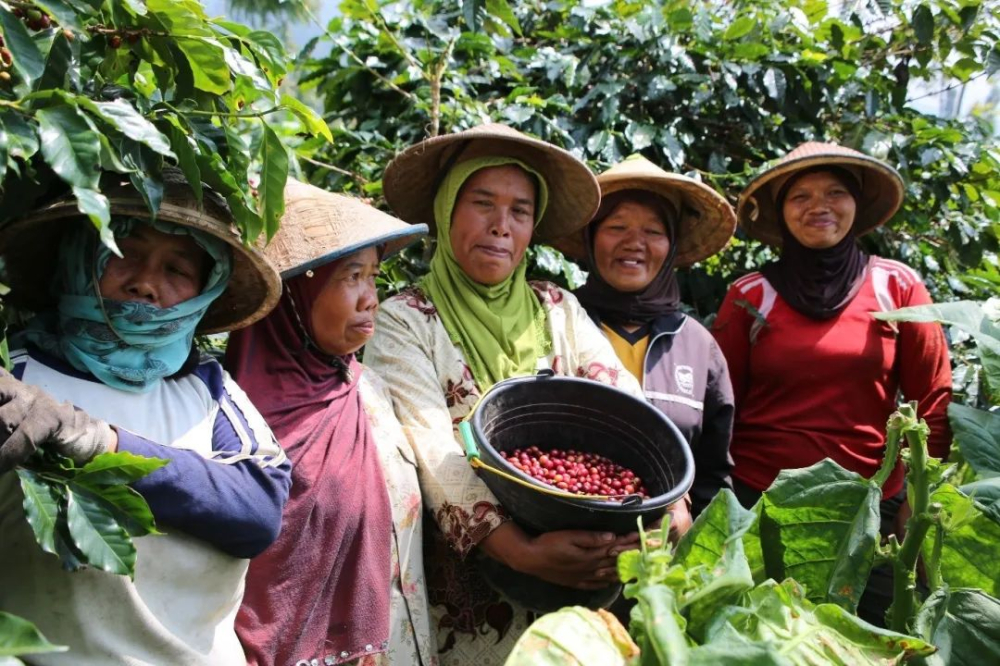
Indonesia is located in Southeast Asia, and its coffee history dates back to 1696, when Dutch coffee farm owners tried to find broader coffee-growing lands. After extensive exploration, they finally settled on Indonesia's Java Island. Over 30 years, Indonesia had already established a sufficient foundation in the coffee market.However, today Indonesia's coffee representative is actually Mandheling, which is unsurprisingly the result, because from the beginning a large portion of the Java coffee sold to Europe came from the Sumatra region, and Mandheling comes from Sumatra. So Sumatra can be said to be an important coffee-producing region in Indonesia.
The Story of Mandheling Coffee
Mandheling originally referred to the name of an Indonesian tribe, and there is a story behind how it accidentally became the name of a coffee bean. After Japanese soldiers colonized Indonesia and returned to Japan, they could not forget the delicious local coffee, so through trade connections they asked locals to help collect high-quality coffee beans, among which was this Mandheling. The Japanese loved this coffee bean very much and asked for its name. Since it was inconvenient to reveal the commercial source, the locals casually said "Mandheling," and thus Mandheling accidentally became the name of a coffee bean.The locals mentioned earlier are actually the boss of the Indonesian PWN company (Pwani Coffee Company), which will be discussed below.
Sumatra's Unique Processing Method — Wet Hulling
Mandheling mostly adopts Sumatra's unique coffee bean processing method — wet hulling. Because the local weather is often rainy, with continuous typhoons, it cannot achieve the good weather required for sun-drying, and the local economy is not good either, so it also cannot use the more expensive washed method. Thus the wet-hulling method with strong local characteristics came into being.
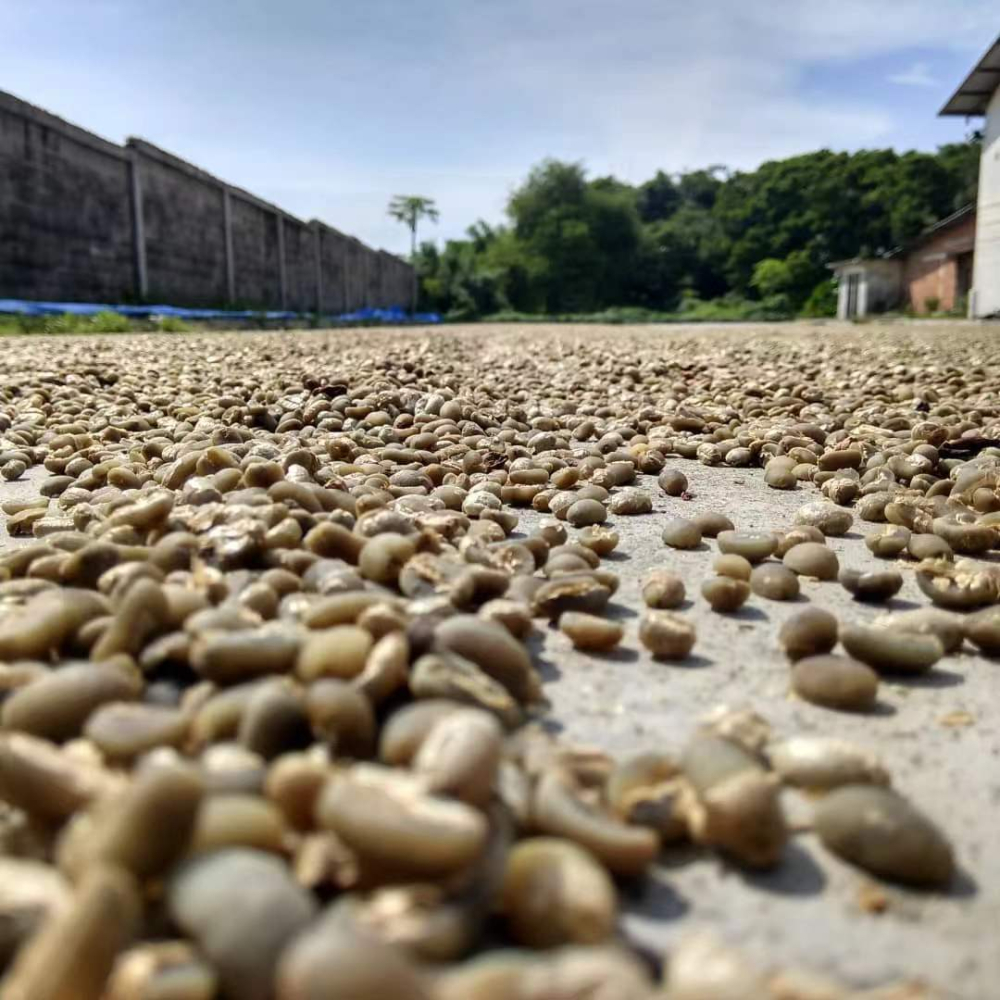
In the first stage, a wooden depulper is used to remove the peel and pulp. After fermenting for 3 hours, it is spread out to dry, reducing the moisture content to 30-50%, half-dry and half-wet.
In the second stage, the mucilage and parchment layer are removed, and drying continues in the later stage. The drying process takes 2-4 days, and the moisture content drops to 12-13%.
In addition to the regular wet-hulling method, there is also an aged wet-hulling method. The coffee beans first undergo ordinary wet-hulling, then are sealed and stored in a warehouse for 2~3 years. The warehouse environment must be cool and ventilated, and the beans must be turned regularly to prevent mold and spoilage. During this period, the acidity of the coffee beans slowly weakens and turns into sugar, and the color also becomes deeper, mostly yellowish-brown or dark brown. Mandheling coffee beans using this processing method are also called aged Mandheling coffee beans.
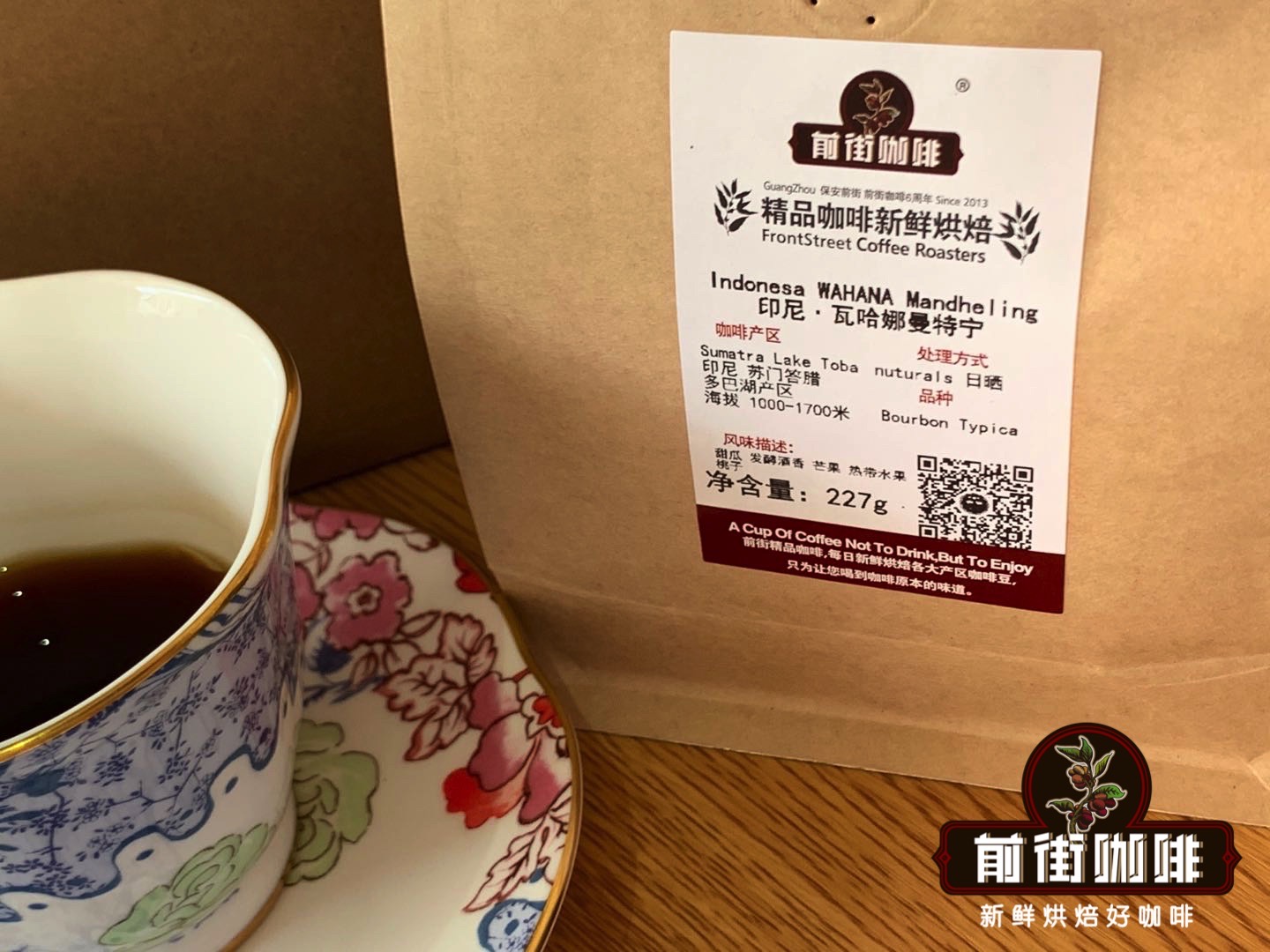
The wet-hulling method creates Mandheling's special flavor. It can be said that Mandheling and wet hulling are bound together, but today's coffee market no longer settles for staying unchanged. Even if wet hulling is Mandheling's characteristic, there will still be attempts with other processing methods, such as the sun-dried Mandheling from Wahana Estate. Changes in processing methods also have requirements: on the basis of preserving the original coffee bean flavor, other flavors are added.
The Difference Between Mandheling and Golden Mandheling
The Mandheling varieties currently common on the market and more widely accepted are Lintong Mandheling and Golden Mandheling. Lintong Mandheling is the most classic Mandheling.
【Front Street Coffee (FrontStreet Coffee): Lintong Mandheling Coffee Beans】
Region: Sumatra, Lintong Region
Altitude: 1100-1600 meters
Varieties: TimTim, Ateng
Processing Method: Wet Hulling
Flavor: Baked toast, nuts, caramel, pine wood, herbs
Lintong Mandheling is produced in the Lintong mountain area in north-central Sumatra, near Lake Toba. Lintong Mandheling is the regular version of Mandheling. Lintong Mandheling also uses the regular wet-hulling method, creating its characteristics of low acidity and high body. But what happens with wet hulling is that, because the semi-hard, semi-soft wet raw beans are easily crushed when the mucilage and parchment layer are removed, the beans are damaged and split into a goat's hoof shape, commonly known as goat hoof beans. This is not a defective bean, and can be said to be a very distinctive feature of Mandheling.
Lintong Mandheling does not put much effort into sorting. The lack of refinement in processing easily leads to instability in the coffee beans' output, but it does not diminish people's love for its rich, full-bodied flavor.
Mandheling coffee cultivation is mainly based on two varieties, Ateng and Tim Tim. Tim Tim is a natural hybrid of the Arabica variety Typica and Robusta, namely Timor. It inherits Robusta's high yield and disease resistance, and its flavor presents a strong mouthfeel.AtengIt is also a relatively common local coffee variety, which is what we often call CatimorCatimor, in the central part of the Aceh regionAceh Tengahwas discovered and named after the place.AtengIt is a hybrid descendant of Caturra, a Bourbon variety of Arabica, and Tim, with several subtypes, carrying Robusta1/4bloodline, possessing extremely high disease resistance, and is widely planted in Sumatra and other small Indonesian islands. Front Street's Golden Mandheling coffee isAtengvariety.
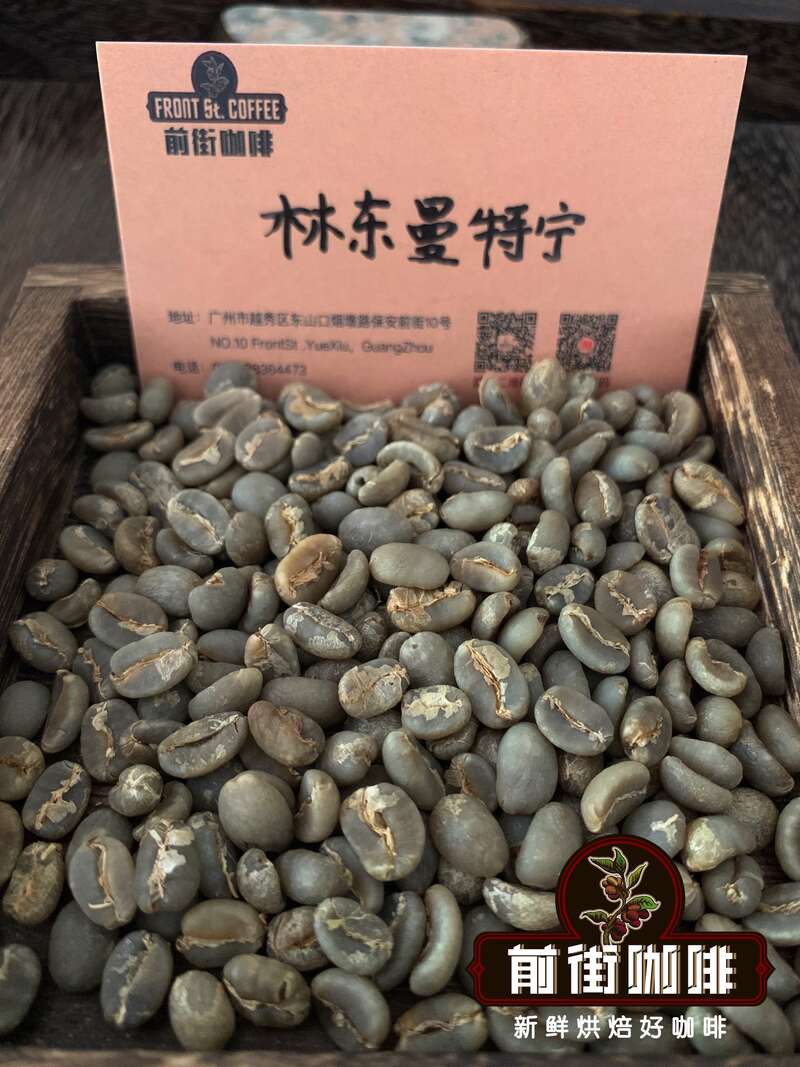
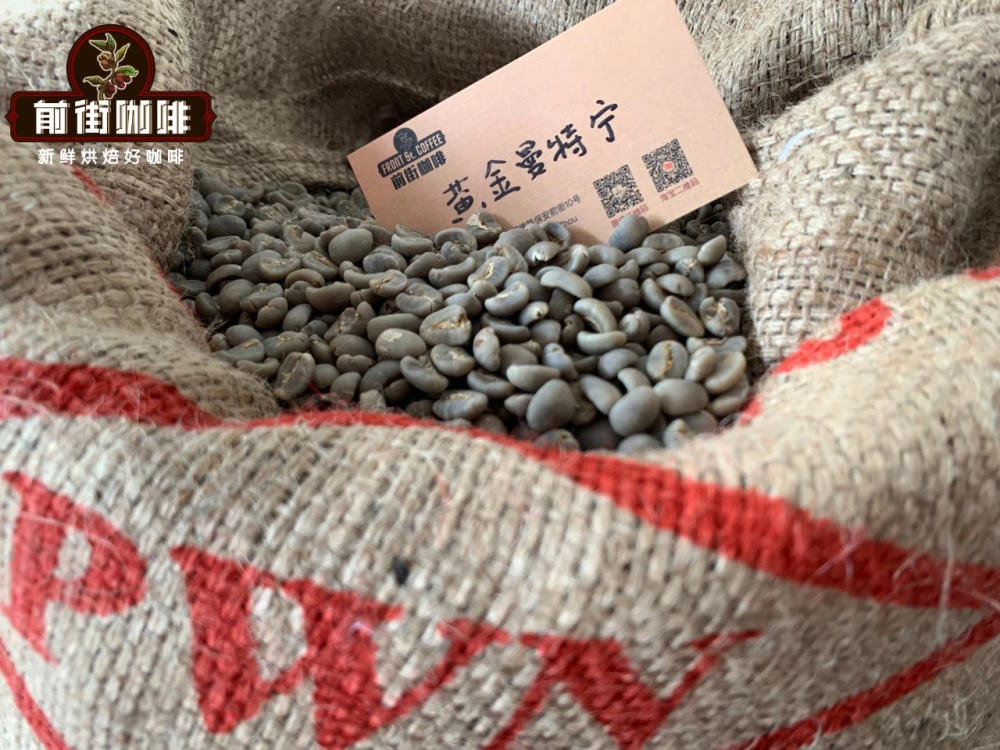
【Front Street Coffee (FrontStreet Coffee): PWN Golden Mandheling Coffee Beans】
Region: Gayo Mountain, Aceh, Sumatra
Altitude: 1100-1600 meters
Variety: Ateng
Grade: G1, 3 times hand-sorted
Processing Method: Wet Hulling
Flavor: Spices, herbs, caramel, pine wood, nuts, chocolate
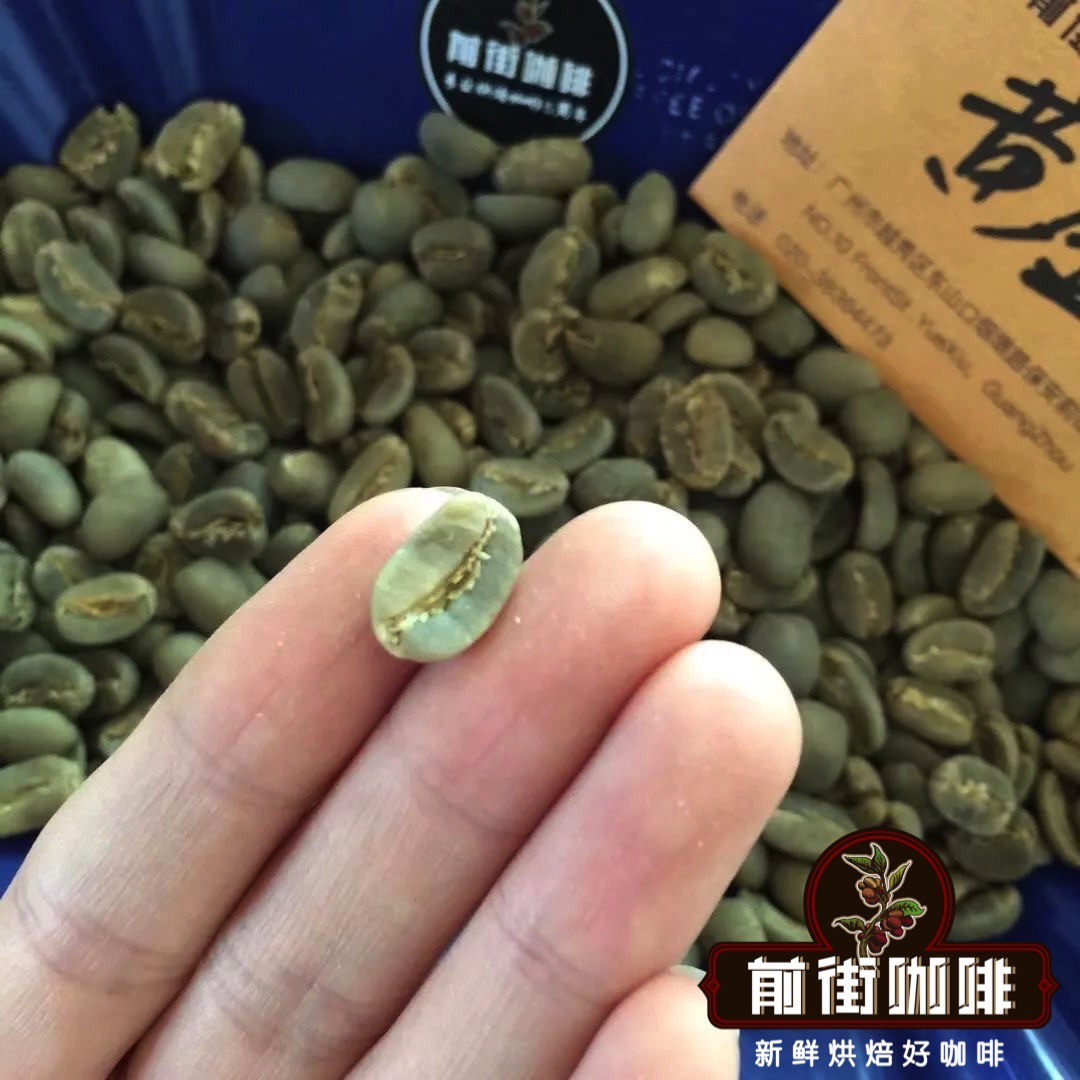
Since discovering Mandheling, the Japanese have always been very attentive to this coffee bean. In the process of cooperating with local green bean merchants, they established a strict sorting system. After processing, the green beans undergo density and color sorting, and then are manually selected many times, finally presenting Mandheling with uniform color and uniform bean shape. It is said that when processing the green beans, Mandheling under sunlight gives off a golden luster, hence the name Golden Mandheling.
The specification of Golden Mandheling is above 18 screen size, with fewer than 3 defective beans (in a 300g green bean sample), belonging to the highest grade G1. Its color tends toward dark green, and its shape is neat flat beans. After strict sorting, Golden Mandheling not only no longer has the earthy, miscellaneous flavors unique to ordinary Mandheling, but also tastes cleaner and more transparent, with a stronger sweetness.
However, the company that registered Golden Mandheling as a trademark is not a Japanese company, but the local Indonesian company that cooperated with Japanese companies in the early days to export Mandheling coffee beans — PWN Company (Pwani Coffee Company). The Japanese company registered "Gold Top Mandheling," that is, Gold Top Golden Mandheling. In terms of flavor performance, the two are actually not very different, but due to different brands and different merchant marketing strategies, it is possible that public opinion may ultimately vary. So which of the two Golden Mandhelings is better or worse is up to individual judgment.
Ateng is a hybrid variety between Arabica and Robusta, with several subtypes, widely planted in Sumatra and other small Indonesian islands. In plain terms, it is a branch of Catimor (Catimor); Ateng is the local name.
Roasting Comparison
When Front Street Coffee (FrontStreet Coffee) roasts Mandheling coffee, the roasting target is medium-dark roast, in order to erase Mandheling's excess acidity and enhance its body and balance.

Machine: Yangjia 800N, 550g green beans charged
| Coffee Beans | Golden Mandheling | Lintong Mandheling |
| Charge Temperature | 200℃ | 200℃ |
| Turning Point | 5'40", 148℃ | 5'18", 147.7℃ |
| First Crack | 9'54", 191.2℃ | 9'00", 186℃ |
| Development After First Crack | 3’30”, discharged at 204.5℃ | 4’00”, discharged at 202℃ |
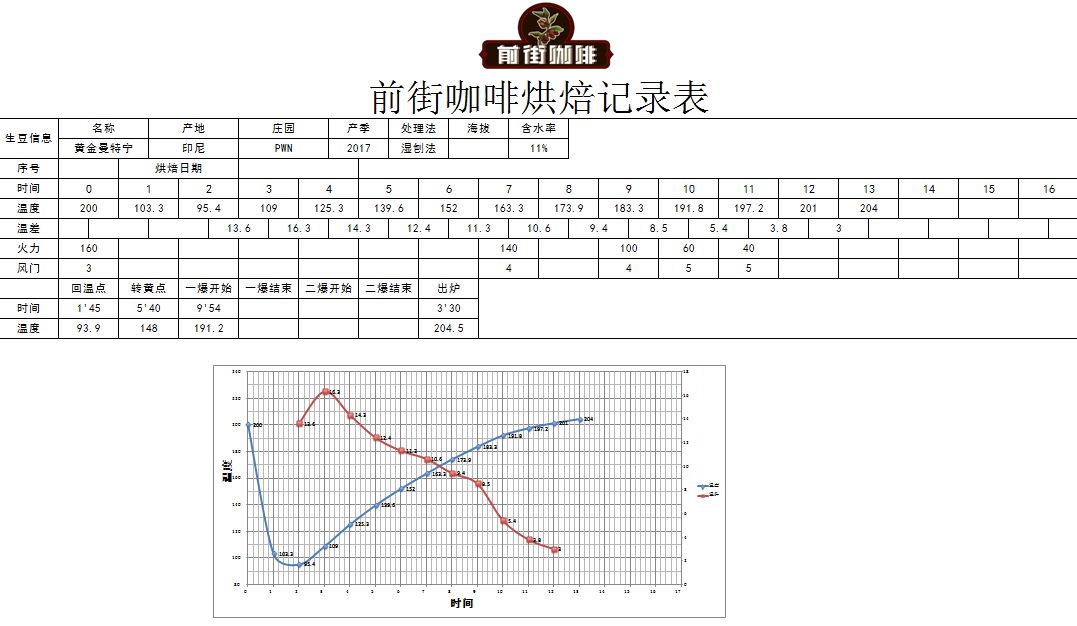
Front Street Coffee (FrontStreet Coffee)Golden MandhelingRoast Record Sheet
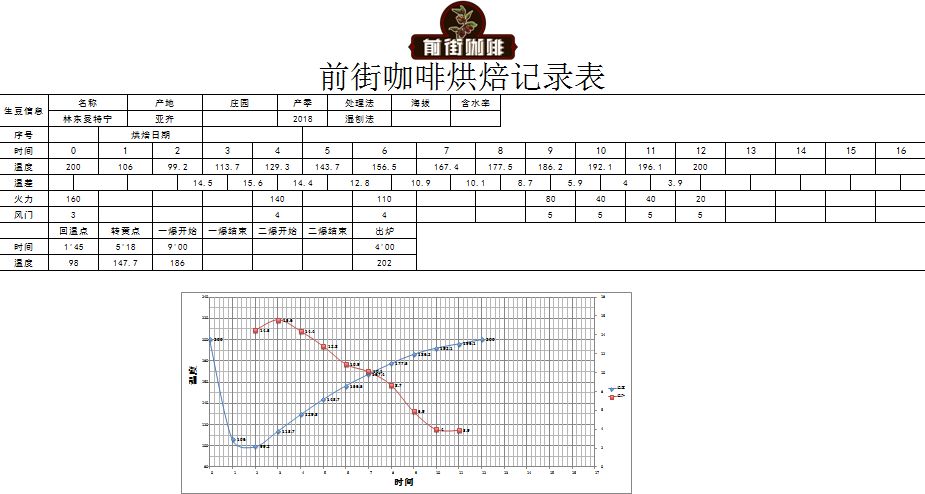
Front Street Coffee (FrontStreet Coffee) Lintong Mandheling Roast Record Sheet
Pour-Over Flavor Comparison
Front Street brewed these two Mandheling coffee beans while trying to keep the brewing parameters as consistent as possible.
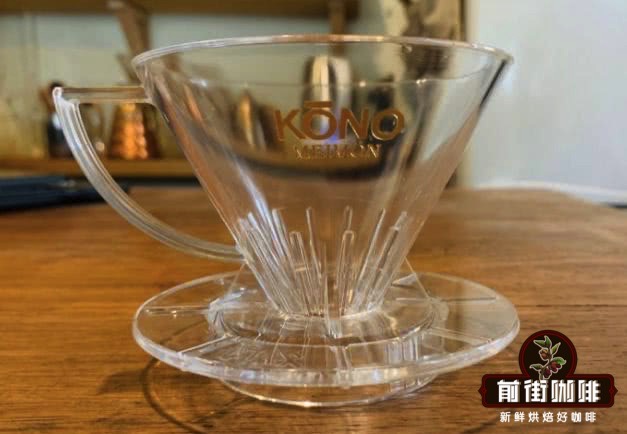
Dripper: Kono Dripper
Water Temperature: 88℃
Dose: 15 grams
Coffee-to-Water Ratio: 1:15
Grind Size: 70-75% passing rate with No. 20 standard sieve
*Reason for choosing the Kono dripper: The Kono dripper has few ribs and they are located at the lower end. The filter paper fits closely against the dripper, which can restrict airflow, prolong the contact time between water and coffee grounds, allow the coffee grounds to be fully extracted, and enhance the full-bodied mouthfeel.
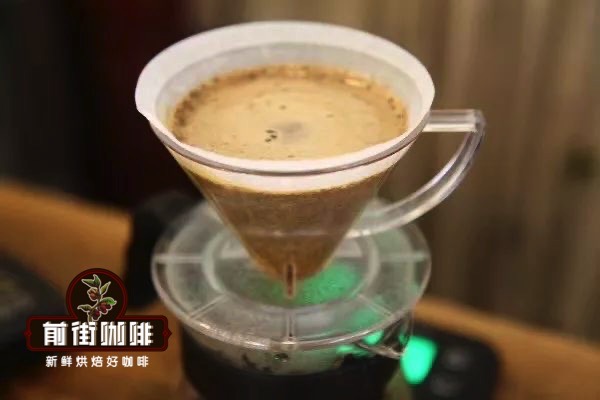
Front Street uses staged extraction: 30 grams of water for 30 seconds of blooming, then pour in a small stream in circles until 125 grams for the stage break. When the water level is about to expose the coffee bed, continue pouring until 225 grams and stop pouring. When the water level is about to expose the coffee bed again, remove the dripper. (Timing starts at the beginning of blooming.) The extraction time is 2'00".
【Flavor Description】
Golden Mandheling: Varied layering, full-bodied and clean, high balance, rich nut and caramel aroma, with chocolate notes, and a long finish.
Lintong Mandheling: Herbal and medicinal notes on entry, dark chocolate, caramel, and a sweet aftertaste.
The above content is compiled by CoffeeHunters, a coffee news website.

