







For more specialty coffee knowledge, please follow: Front Street Coffee (Frontsteet Coffee)
Kenya AA coffee has always been considered one of the best specialty coffees in the world. For some friends who are not very familiar with Kenyan coffee, Front Street is often asked what AA means. Besides AA, PB is also a letter combination that Front Street is frequently asked about. So what do these letters mean respectively? We wonder if you, in front of the screen, are also confused by these questions. Today, Front Street will share some knowledge related to Kenyan coffee.
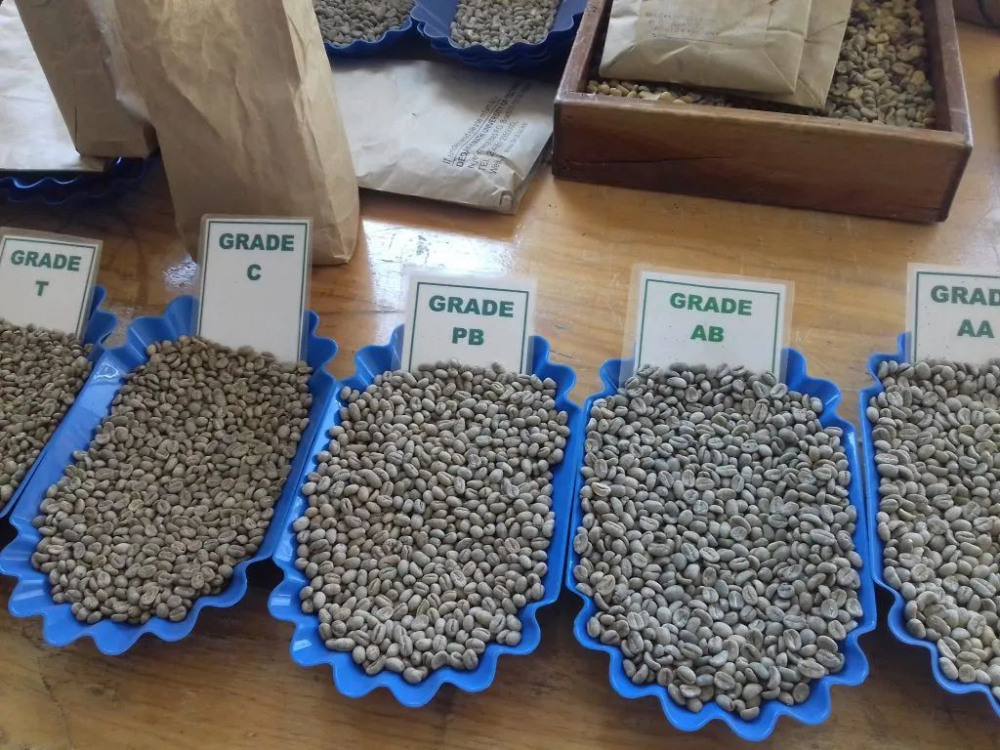
Actually, AA and PB are both grade titles for Kenyan coffee. In addition, they also include:
Kenya E (Elephant Bean)
Kenya PB (Peaberry)
Kenya AA
Kenya AB
Kenya C
Kenya TT
Kenya T
Kenya MH/ML
As is well known, coffee beans are graded before roasting, and Kenyan coffee is graded according to the size of the green beans. This is done for roasting consistency, because beans of similar size roast at similar rates, while beans of different sizes roast unevenly (for example, smaller beans get over-roasted, and larger beans get under-roasted).
Kenya E coffee beans, also known as elephant-grade coffee beans, are made up of the largest Kenyan coffee beans. Kenya PB is also called pea coffee beans or round beans. Usually a coffee cherry consists of two half-beans, but in Kenya PB coffee cherries there is only one coffee bean, so the peaberry is a rounder coffee bean. This phenomenon occurs at a very low rate, with only about 5% of Kenyan coffee beans being peaberries. Many people believe that peaberries have better flavor quality than other crops. Kenya AA coffee beans grow at an altitude of about 6,600 feet or above, with a screen size of 18.
Kenya AB has a screen size of 16. Kenya AB coffee beans are composed of A and B coffee beans. Grade A is sorted using a 6.8 mm screen, while Grade B is sorted using a 6.2 mm screen. These two types of beans, A and B, are mixed together to form Kenya AB grade. Grade C Kenyan coffee beans have a screen size of around 15. Kenya TT refers to light-density coffee beans separated from Kenya AA, AB, and E coffee beans through aspiration. Kenya T refers to broken, defective, and smaller coffee beans. The final NH and ML refer to immature coffee beans. So what is the difference in taste between Kenya AA and PB? Front Street will introduce this to everyone in the following article.
The above is the grading system for Kenyan coffee summarized by Front Street for everyone. In order for everyone to better understand Kenya PB coffee beans, Front Street will use coffee beans to give a detailed introduction to a Kenya PB coffee bean that was purchased a long time ago. The specific green bean information is as follows:
Front Street Kenya Nyeri Ichamama Pearl Peaberry
Country Kenya (Kenya)
Region Nyeri (Neyri) Karima Village (Karima Village)
Washing Station Ichamama (Ichamama)
Producer Othaya Farmers’ Cooperative Society cooperative member smallholders
Altitude 1,700 – 1,750 meters
Variety SL28 / SL34
Soil Volcanic soil
Temperature 18 - 26ºC
Harvest Season November – January
Processing Method Water selection, washed, then African-style raised-bed sun drying
Kenya is located in eastern Africa, adjacent to Ethiopia, the birthplace of coffee. Kenyan coffee producers can be roughly divided into two categories—large estates and smallholders—but regardless of whether they are large estates or smallholders, after the coffee beans are processed they are sent to the official coffee board for grading and auction: the coffee board sends samples of the green beans to be auctioned to interested buyers, and auctions are held every Tuesday in the capital Nairobi (that is, the NCE auction).
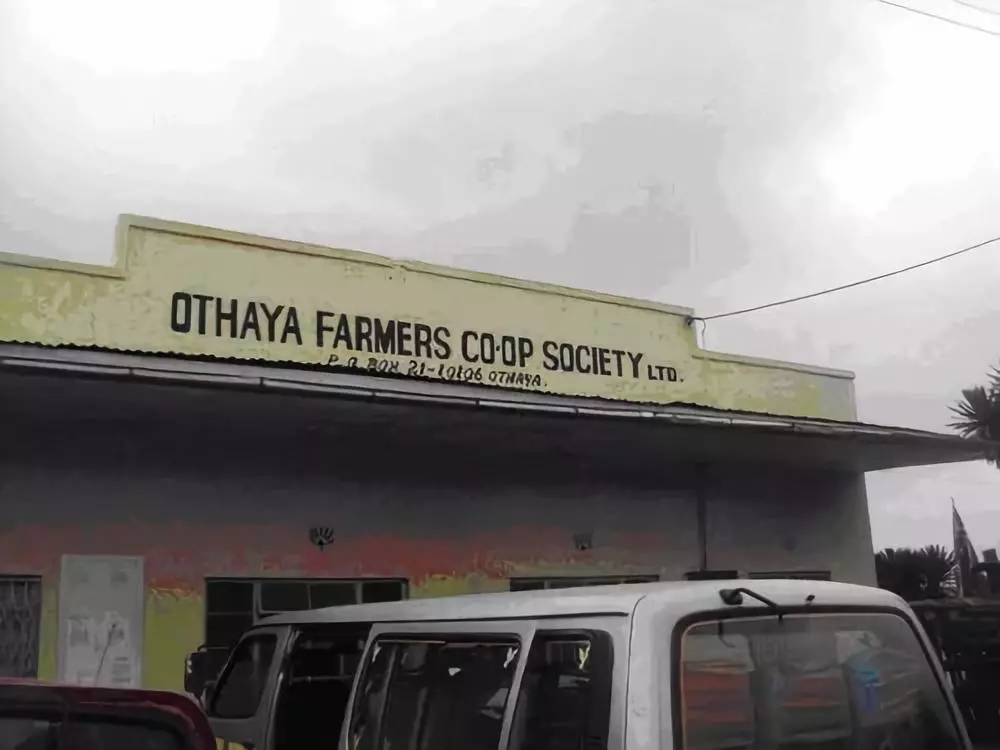
This lot of Kenyan peaberry purchased by Front Street comes from the Othaya Farmers’ Cooperative Society, located in the small town of Othaya in the Nyeri production area of Kenya's central highlands, about 120 kilometers north of the capital Nairobi. It is currently the largest coffee farmers' organization in Kenya. The organization is almost entirely organized and managed by smallholders themselves, and has obtained Fairtrade certification. Othaya Cooperative's vision is to become Kenya's best-managed cooperative; its ultimate goal is to produce the highest-quality coffee, sell it at the best price, and enable all member farmers to live the best possible lives.
Othaya Cooperative has 19 washing stations under it, including Kamoini, Gatugi, and Ichamama washing stations. Othaya Cooperative was established in 1956 and currently has about 14,000 members, making it a fairly large cooperative. In order to improve yield and production quality, Othaya applies to the World Bank for grants to hire consultants for agronomy and harvest training; they also have their own nursery and laboratory, and continuously develop new coffee varieties (ex. Batian) for planting trials. Othaya Cooperative has its own cultivation techniques and marketing licenses, can trade directly with the international market, and is also a member of the Kenya Cooperative Coffee Exporters (KCCE), so it can export coffee directly under the name of KCCE without going through the NCE auction.
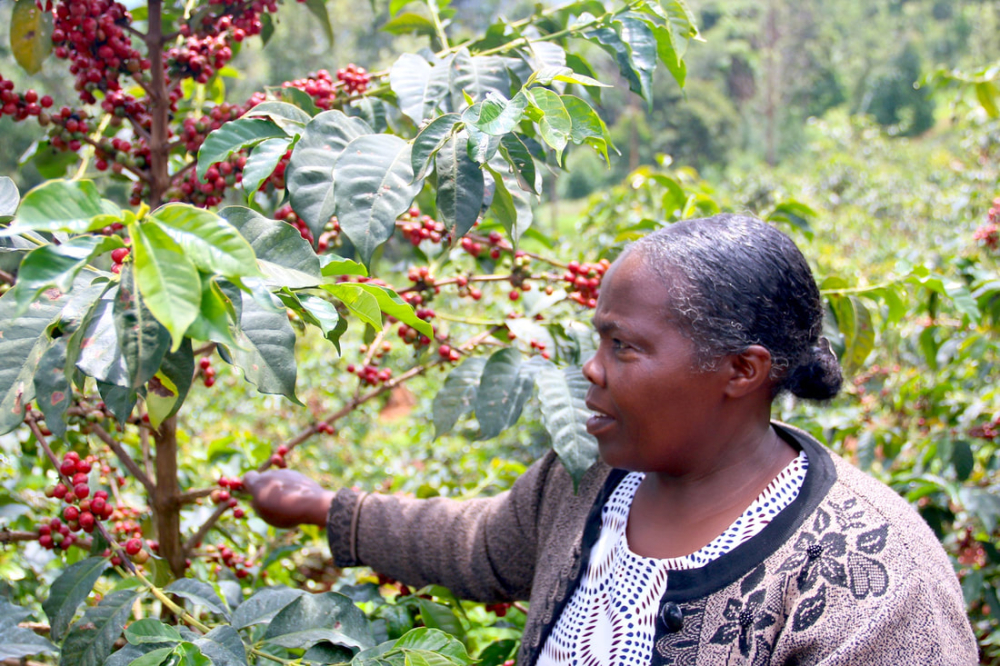
Kenyan coffee-growing areas generally have extremely high altitudes, exceeding 1,800 meters. The cool nights cause coffee cherries to mature slowly, which is expressed as a wonderful cup flavor. Why Kenyan coffee is so acidic is also related to its altitude.
Front Street designed a roasting plan suited to the characteristics of this green bean based on this coffee bean. This Kenyan peaberry green bean is emerald green in color, with relatively high moisture content and relatively high density. Because peaberries tumble more easily in the roaster, they heat more evenly than flat beans. However, the bean quality and density of this bean make its heat permeability not very good, so the roasting designed by Front Street needed to allow enough heat to reach the core of the bean. By extending the dehydration time, the coffee could be better homogenized in the roasting preparation stage, and then enter first crack with a relatively high firepower, expressing its rich berry flavors and full body.
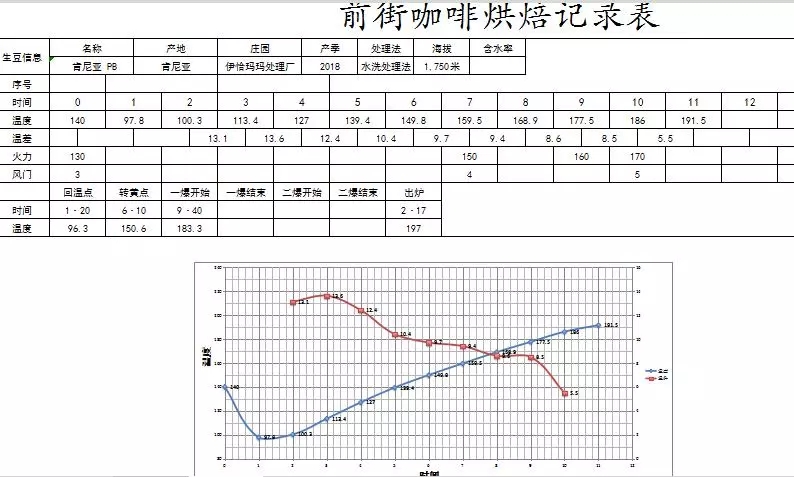
Front Street conducted a total of 4 roasts and observed the bean condition and aroma changes in each roast. The roaster at Front Street Coffee (FrontStreet Coffee) found that this bean absorbed heat very quickly, and using the usual drop temperature would cause the turning point to be too high. After first crack, because water vapor carries away a large amount of heat, the ROR would drop sharply (Crash). Therefore, based on the changes in the beans, we used 4 different roasting methods—1. FSSF style (fast start, slow finish) roasting; 2. increasing heat at the yellowing point to promote the Maillard reaction and stretch acidity roasting; 3. increasing heat at the browning point to promote caramelization and increase sweetness roasting; 4. SSFF (slow start, fast finish) gradually increasing heat roasting.
Comparing the roasted bean condition of the 4 roasts, it can be seen that if this bean were roasted with stepwise heat reduction, more silver skin would adhere, judged as insufficient development, and the aroma appearing during roasting would mainly be grassy acidic aroma. The other three roasts, because they used heat-increasing operations, had relatively ideal development, and the aroma during roasting included smoked plum, blackcurrant, and sugarcane sweetness. Therefore, roasting profiles 2, 3, and 4 were selected for cupping to see which roasting method could better display the bean's flavor characteristics.
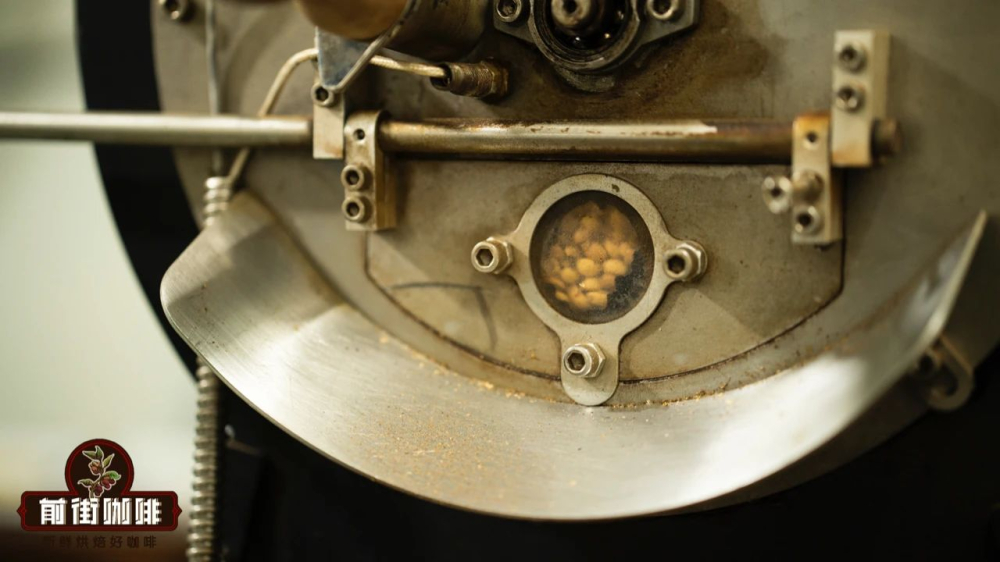
Through cupping, Front Street believes that this PB peaberry has a calm and mature aroma, with a slight red wine acidity. On slurping, one can feel dark berry flavors and malic acidity, a full and rounded body, and sugarcane sweetness with a little cocoa aroma. By comparing the flavors presented by different roasting methods, we found that roasting with a longer dehydration time than usual can remove the astringency caused by uneven dehydration, making it taste more rounded.
Of course, the above is only Front Street's understanding of the roasting method: using a longer dehydration time than usual to remove moisture from the beans, and increasing heat at the browning point and before first crack to push the crack. Interestingly, supplementing heat before first crack can effectively prevent this bean's ROR from dropping sharply and from over-development. Kenyan peaberry is a bean that Front Street Coffee (FrontStreet Coffee) has encountered relatively little. Regarding the roasting of peaberry, as well as the flavor of Kenyan peaberry, it is very worth exploring in depth. The overall impression of this Ichamama Pearl Peaberry is different from ordinary Kenya AA; it does not have a very bright acidity or ripe tomato aroma, and its flavor is soft.
Words alone are not enough. In order to directly analyze the difference between the two, Front Street brewed a cup of Kenya AA coffee beans with the same parameters. As before, first a brief introduction to the coffee bean information:
Front Street Kenya Little Tomato AACoffee Beans
Region: Nyeri Asali Washing Station
Altitude: 1700-1900 meters
Variety: SL28&SL34
Processing Method: K72 washed
Grade: AA
Although this coffee bean is labeled as 72-hour fermentation, it actually fermented for 80 hours. Therefore, the acidity of this washed Kenyan coffee will be more pronounced. So how should Kenyan coffee be brewed? Front Street brewing suggestions:
Dripper: V60
Water Temperature: 90 degrees
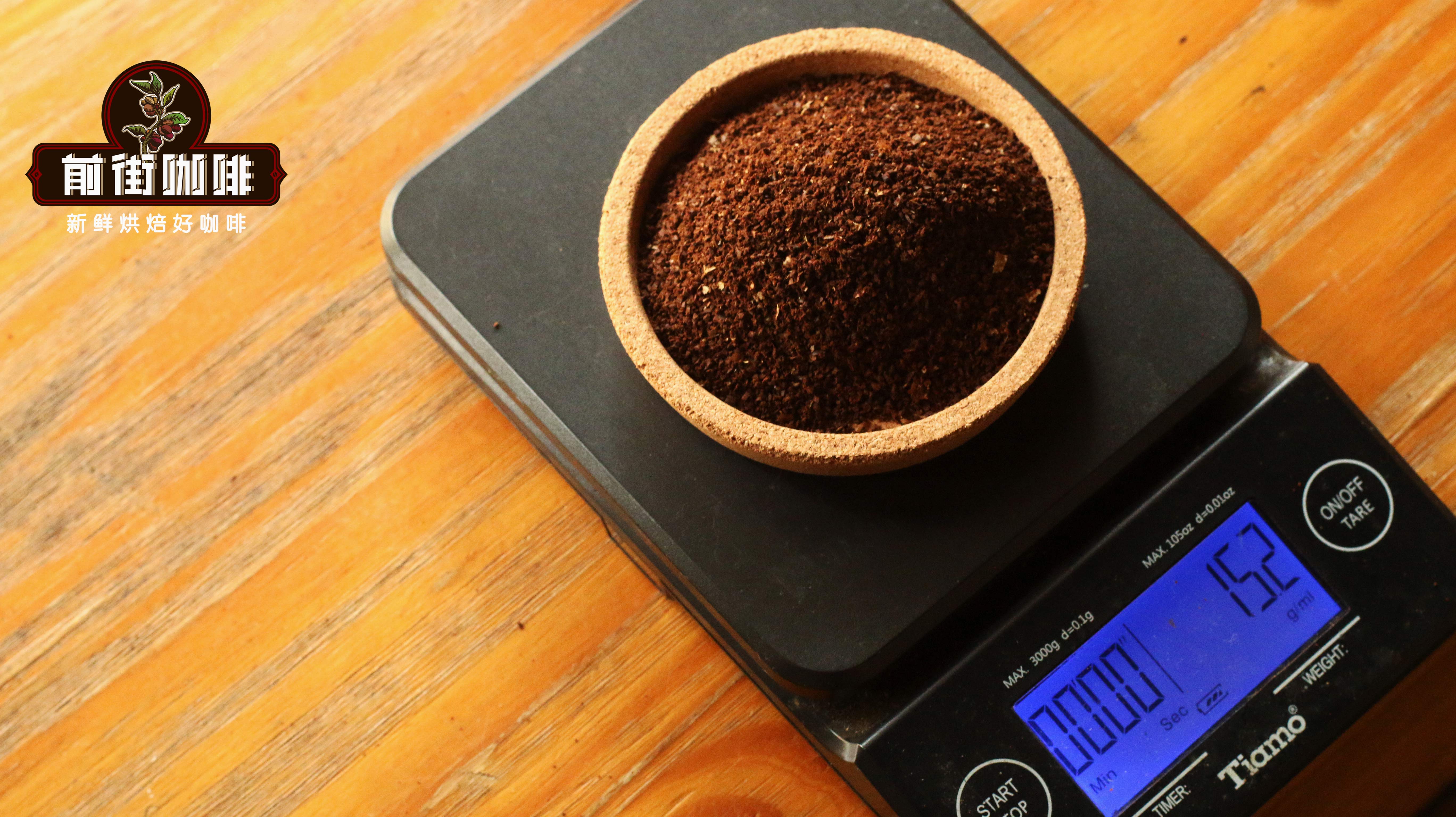
Dose: 15 grams
Coffee-to-Water Ratio: 1:15
Grind Size: Medium-fine (77% passing rate with a No. 20 standard sieve)
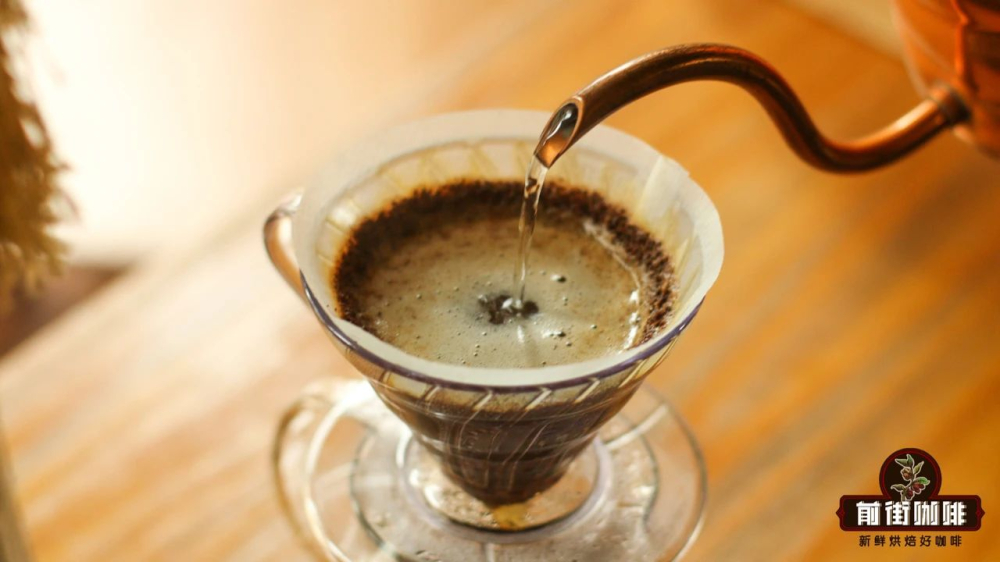
Front Street Extraction Method: Front Street Coffee (FrontStreet Coffee) uses staged extraction, using 30 grams of water for a 30-second bloom, then pouring in a small stream in circles until 125 grams for the stage break. When the water level drops and is about to expose the coffee bed, continue pouring until 225 grams and stop pouring. When the water level drops and is about to expose the coffee bed, remove the dripper. (Timing starts at the beginning of the bloom.) Extraction time is 2'00".

Front Street Kenya Little Tomato Coffee Characteristics and Taste: This coffee has very obvious dark berry flavors. On entry, there is a charming bright sweet-and-sour sensation. As the temperature drops, it becomes grape-like acidity. At low temperature, there is a stimulating plum-like acidity. The overall layering is relatively high, delicate, and with a long finish.
The above content is compiled by CoffeeHunters, a coffee news website.

