







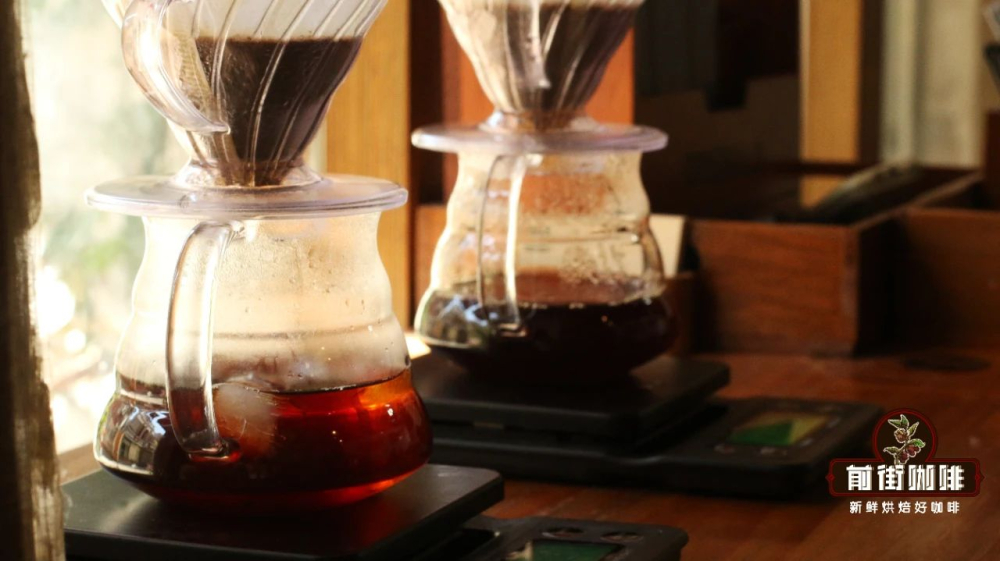
If you ask whether water temperature is important for extraction, Front Street thinks it's important but not that important. As a tool to adjust the extraction speed, the higher the temperature, the easier it is to extract soluble substances. However, since too high a water temperature will cause the coffee to quickly release bitterness, a conservative range should be chosen. Generally speaking, the vast majority of coffee beans on the market are suitable for brewing with water at 86–93°C.
Based on Front Street's pour-over experience, high-altitude medium-light roasted coffee beans can use 91–93°C, such as Ethiopia's Huakui, Panama's Geisha, and Kenya's AA, while darker roasted beans are recommended to use 86–88°C water, like Golden Mandheling, Blue Mountain No. 1, Brazil's Queen's Estate, etc. Coffee that is both acidic and bitter can directly use 90°C, which is not easy to over-extract, nor will it under-extract.
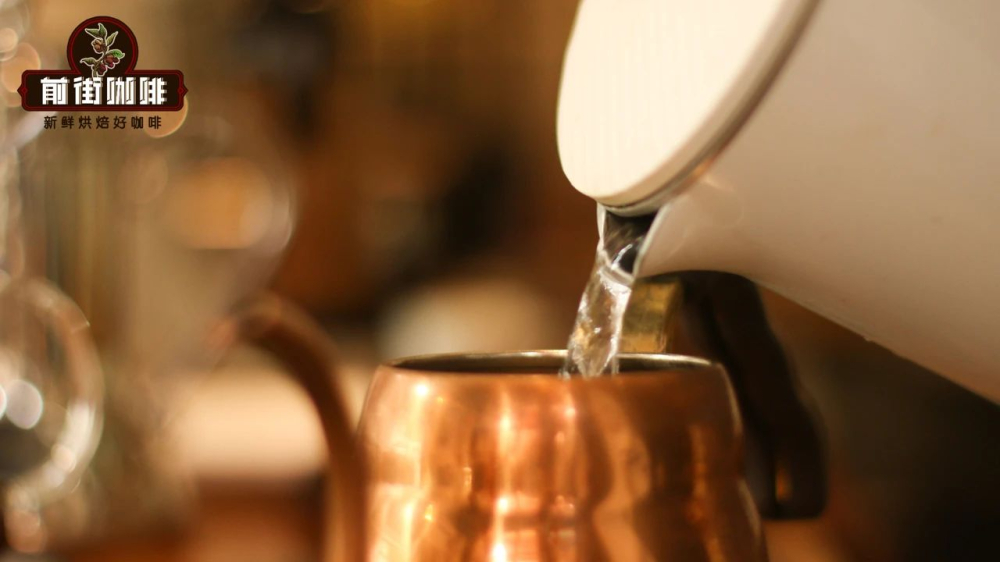
But precisely because the water temperature parameter is easy to control and its effect on taste is easier to understand, many friends fall into a misunderstanding: a 1°C difference is huge. For example, a customer bought a bag of Xizhua coffee beans and brewed them at home according to Front Street's recommendation (91°C), felt the aroma was weak and the bitterness was strong, and subconsciously thought it was caused by the water temperature being too high. But when he lowered it by 2°C, he found the mouthfeel was still the same. After some communication, he learned that the culprit was actually the grind being too fine.
Front Street once conducted an experiment, and the coffee flavors brewed at 91°C and 93°C were very similar. Although there were subtle differences in mouthfeel, if not compared directly, it was almost hard to find much difference. So as long as you do not use a temperature that deviates greatly from the recommendations above from Front Street, when the coffee shows obvious abnormalities, we can determine that it is not the water temperature's fault, and the problem may lie in other parameters.
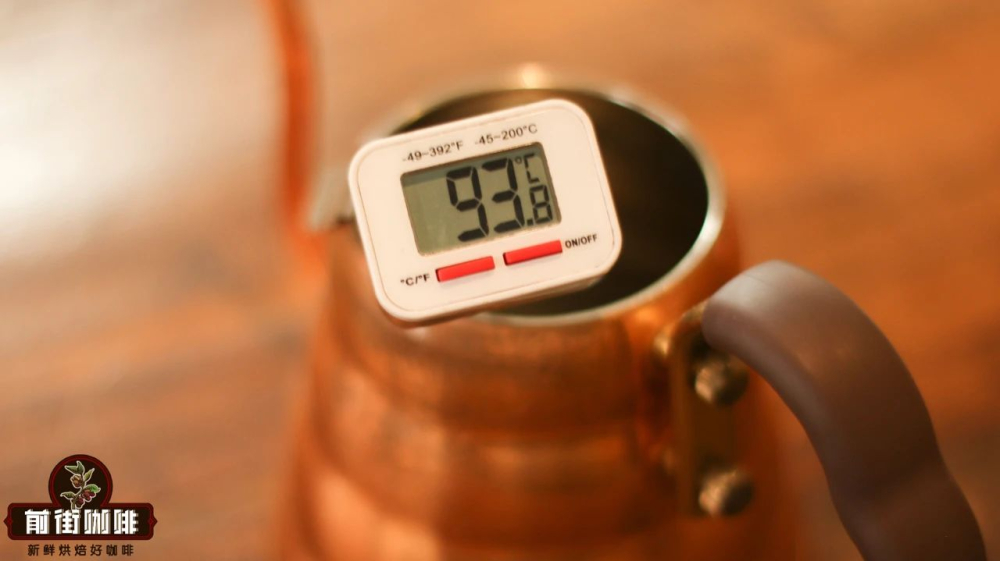
In the past two years, we can frequently see competition contestants using variable-temperature brewing methods, that is, using higher water temperature in the first half of brewing and lower water temperature in the second half. What is the mystery of this brewing method that changes water temperature?
Front Street remembers that variable-temperature brewing was not proposed only recently. Earlier, the three-temperature brewing method invented by Mr. Wu Zelin was one of the variable-temperature brewing methods. He did it like this:
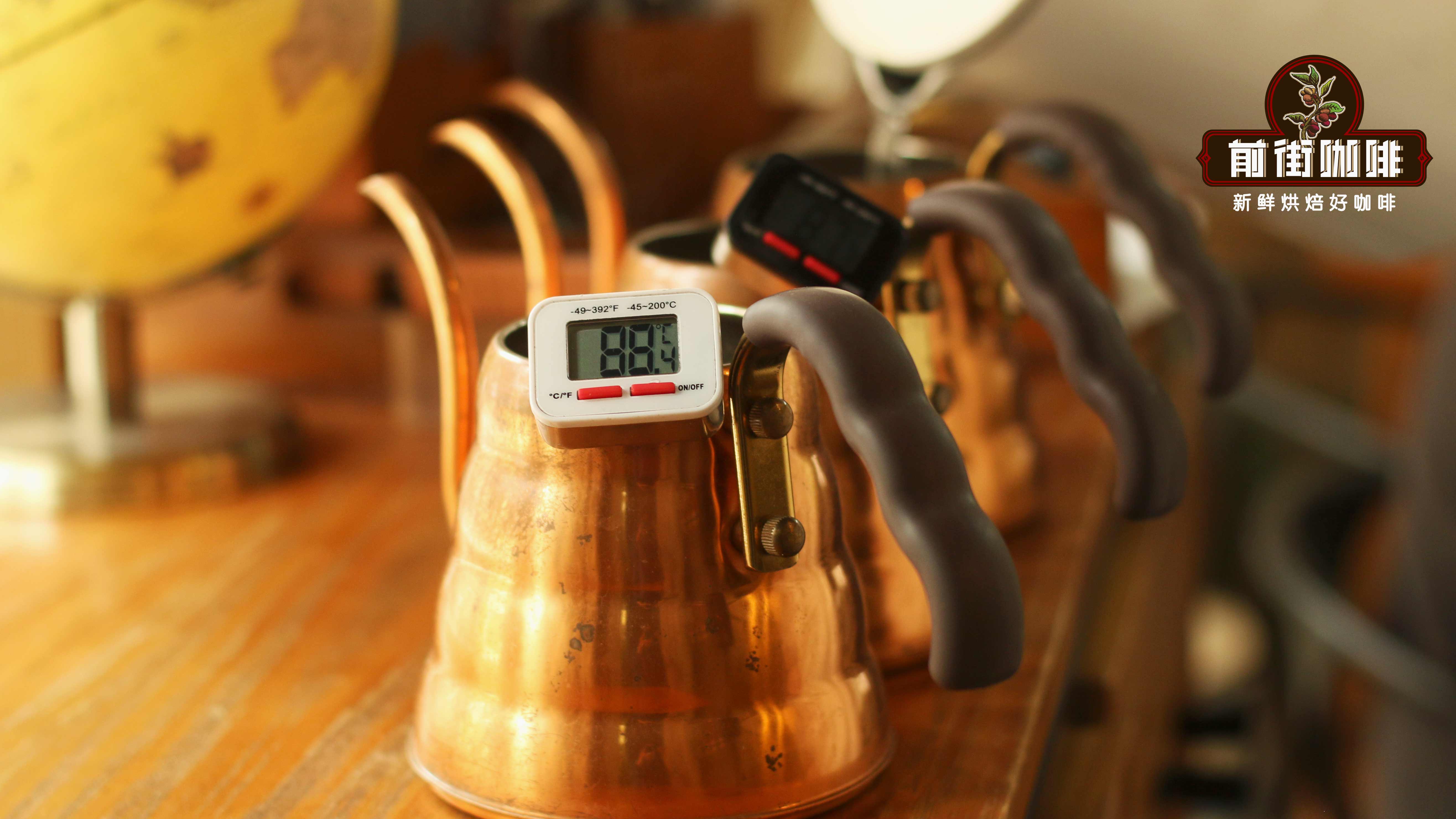
Based on 16 grams of coffee grounds, it is divided into 4 pours totaling 240 milliliters of water, with each pour being 40, 80, 80, and 40 milliliters respectively. The first two pours use water at 94°C, the third pour uses water at 90°C, and the last pour uses water at 80°C. This forms a stepped variable-temperature extraction.
Matt Winton, the 2021 WBrC champion, also used a variable-temperature extraction method in the finals. Based on 20 grams of coffee grounds, he divided it into 5 pours totaling 300 milliliters of water, with each pour being 60, 80, 60, 60, and 40 milliliters respectively. The first three pours used water at 93°C, and the last two pours used water at 88°C.
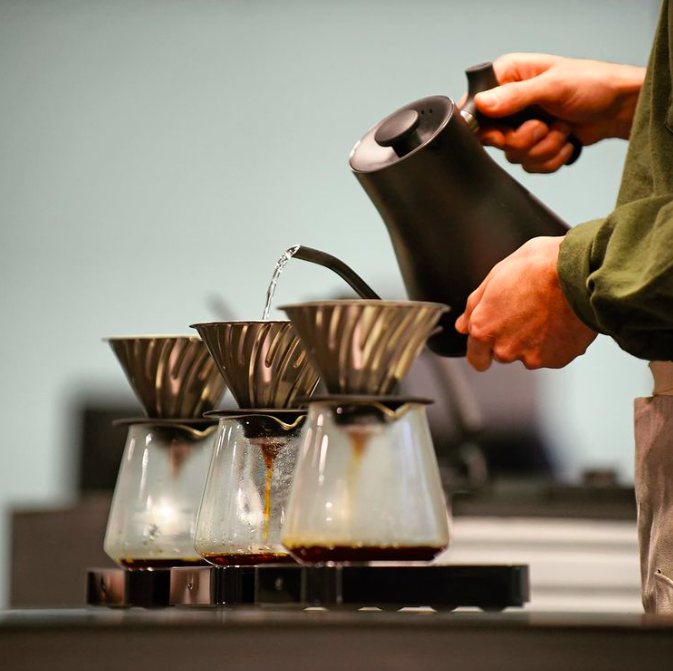
From these two extraction concepts, both are close to using higher temperature for the first 2/3 of the water and lower temperature for the remaining 1/3. So Front Street also used a similar method to compare the differences between variable-temperature and constant-temperature brewing.
Front Street used 15 grams of coffee grounds as the basis, divided into three pours totaling 240 milliliters of water, with each pour being 30, 120, and 90 milliliters respectively. The coffee grind size was medium-fine (80% passing through a No. 20 sieve).
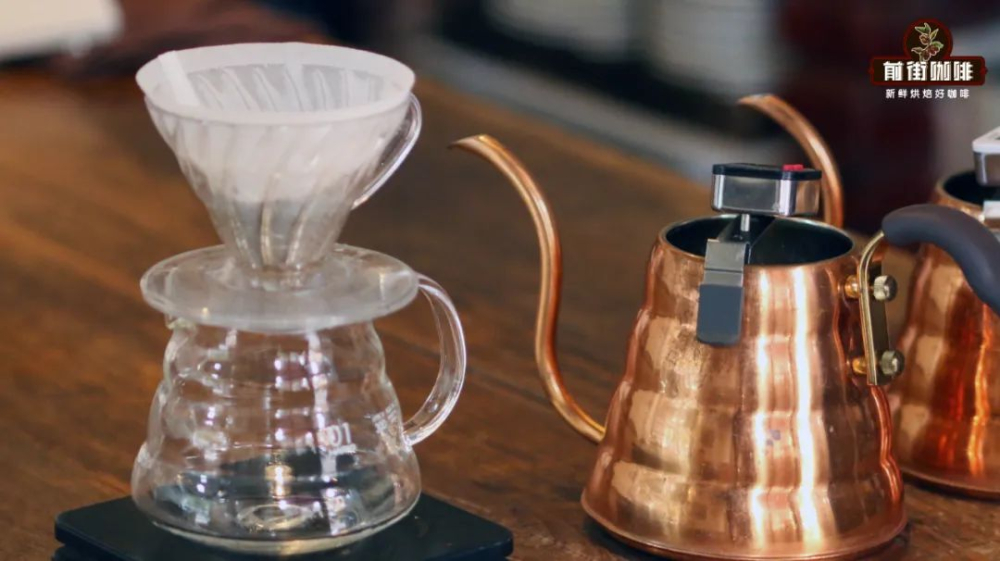
The variable-temperature group used water at 94°C for the first two pours and 88°C for the last pour. The constant-temperature group used an initial water temperature of 91°C. Friends who usually read Front Street articles carefully will notice at this point: isn't the constant-temperature group exactly the brewing parameters Front Street usually uses! Yes, that's right. Front Street did this comparison not to prove whether variable temperature is better or constant temperature is better, but to compare what differences variable temperature causes in flavor. So the variable-temperature setting is also ±3°C based on 91°C, so everyone can just look at the result of the changes for the answer.
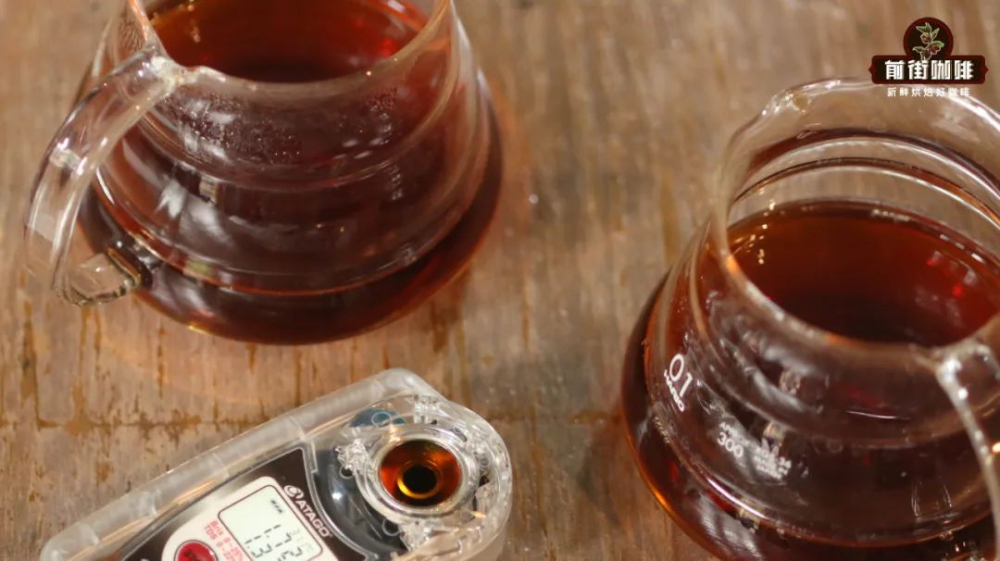
The coffee beans used were Panama's Butterfly. After brewing, Front Street first measured the concentration of these two groups. Measuring concentration is to determine whether the extraction yields of the two groups are close. If they differ greatly, then the variable-temperature group needs to adjust its temperature parameters. Fortunately, the measured concentration of the variable-temperature group was 1.34%, and that of the constant-temperature group was 1.31%. The difference between the two was not large, so they could be compared.
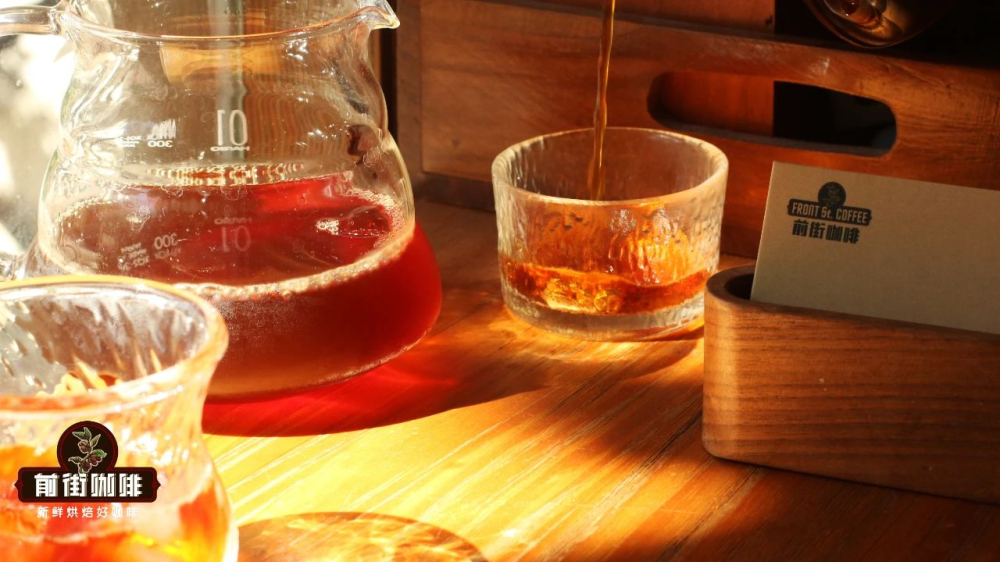
First, let's talk about the flavor performance of the constant-temperature group: soft berry and honey flavors with an oolong tea finish. The overall mouthfeel was smooth and very comfortable.
In comparison, the flavor performance of the variable-temperature group was stronger. At the moment of entering the mouth, the sweet-and-sour berry note was more obvious, the acidity was brighter, and the honey sweetness was relatively weaker. The finish was more like green tea.
How to understand the flavor changes caused by variable temperature? Front Street will add two knowledge points, and I believe everyone will be able to understand it easily.
First point: in fact, the constant-temperature group in the comparison was also variable-temperature. The temperature we talk about when brewing coffee is actually the initial temperature just as pouring begins, and the water temperature in the kettle will slowly decrease over time. If the same 91°C initial temperature is divided into the first two pours and the last pour for calculation, then the temperature at the start of the last pour is about 89.5–90°C (the water temperature at 1 minute 20 seconds).
Second point: using a higher water temperature can extract richer coffee substances. But there is a risk: it is easy to over-extract and produce bitterness. However, when we understand the extraction of flavor substances, more acidic substances are extracted first, followed by sweet substances, and only last come bitter substances. Therefore, the water temperature can be split into the first half and the second half.
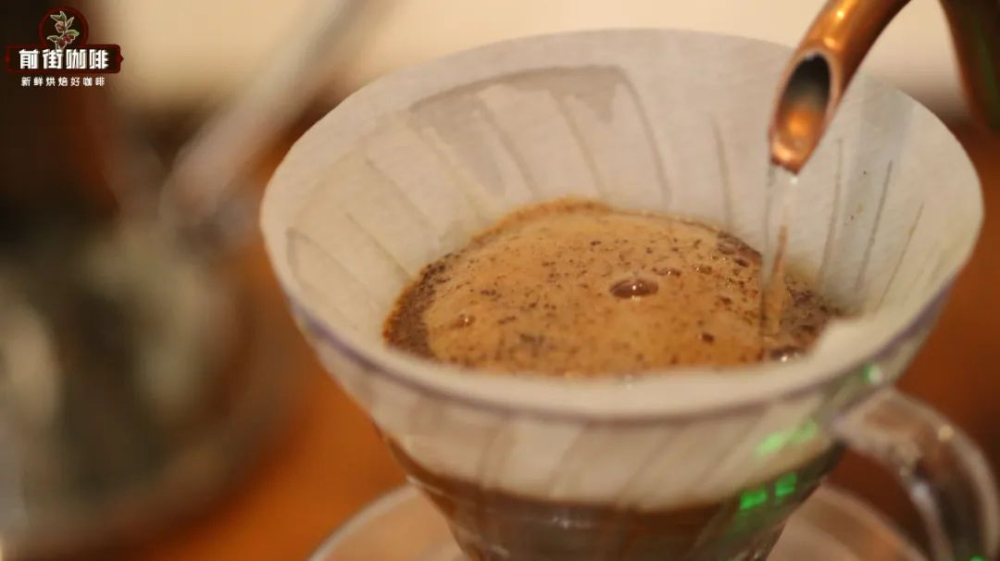
Use a higher water temperature in the first half to extract more sweet-and-sour flavor substances from the coffee, and in the second half reduce the water temperature to reduce the release of flavor substances. In this way, a strong flavor performance is achieved.
To put it another way, variable-temperature extraction is actually just artificially widening the temperature difference during coffee extraction. Although everyone understands the principle, it is difficult to find which high and low temperatures to actually use for brewing and how to distribute the water amount, and it requires a lot of testing. Admittedly, the high and low temperatures used in Front Street's comparison today do not match very well with the other brewing parameters. In terms of overall sensory performance, the constant-temperature group still performed better.
The above content is compiled by CoffeeHunters, a coffee news website.


