







For more specialty coffee knowledge, please follow: Front Street Coffee (Frontsteet Coffee)
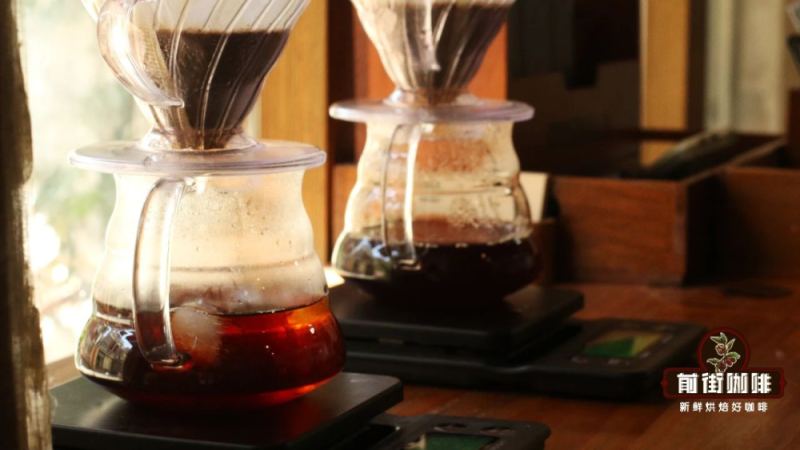
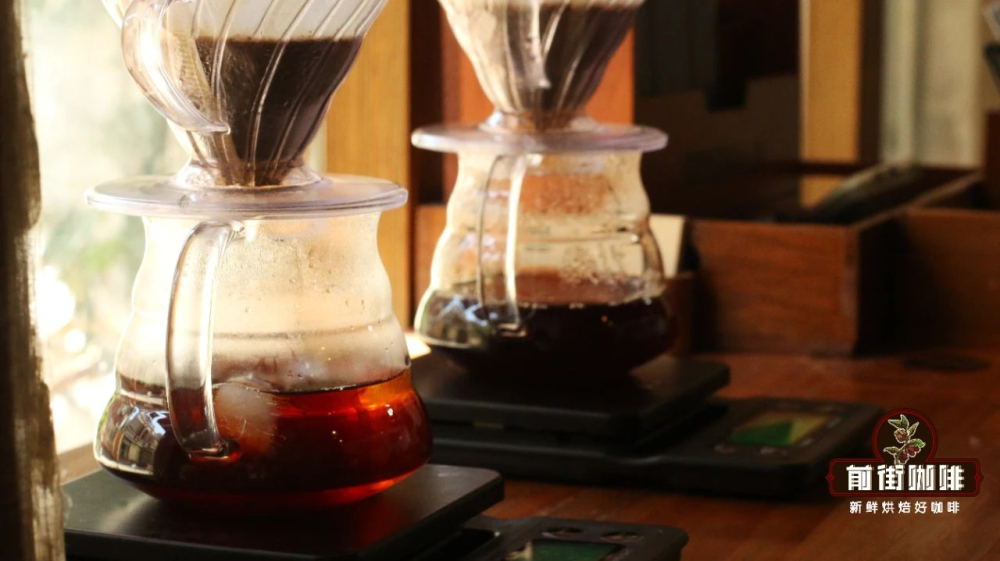
The most charming aspect of pour-over coffee lies in its adjustability. Many customers who frequently come to Front Street to drink coffee also try their hand at pour-over at home, and they always feedback that pour-over coffee is too difficult—they don't know how to brew it well, having to control the water flow, adjust the grind, and manage too many aspects. Indeed, but precisely because of this, Front Street feels this is the greatest charm of pour-over coffee: as long as we gently change one variable, the brewed coffee flavor will be completely different.
Actually, there are many brewing methods, and brewing coffee by pour-over was first invented by German lady Melitta in the early 20th century. Coffee beans undergo different changes at each roasting stage, and different roast levels require different considerations during brewing. Pour-over coffee is basically brewed with single-origin, single-variety coffee beans, and each different coffee bean has a different flavor. Front Street brews according to the characteristics of the beans; for example, for light-roasted coffee beans, a higher water temperature, a faster-flow dripper, and a finer grind are used. Next, Front Street will explain how to brew pour-over coffee and what aspects to pay attention to.
Coffee-to-Water Ratio
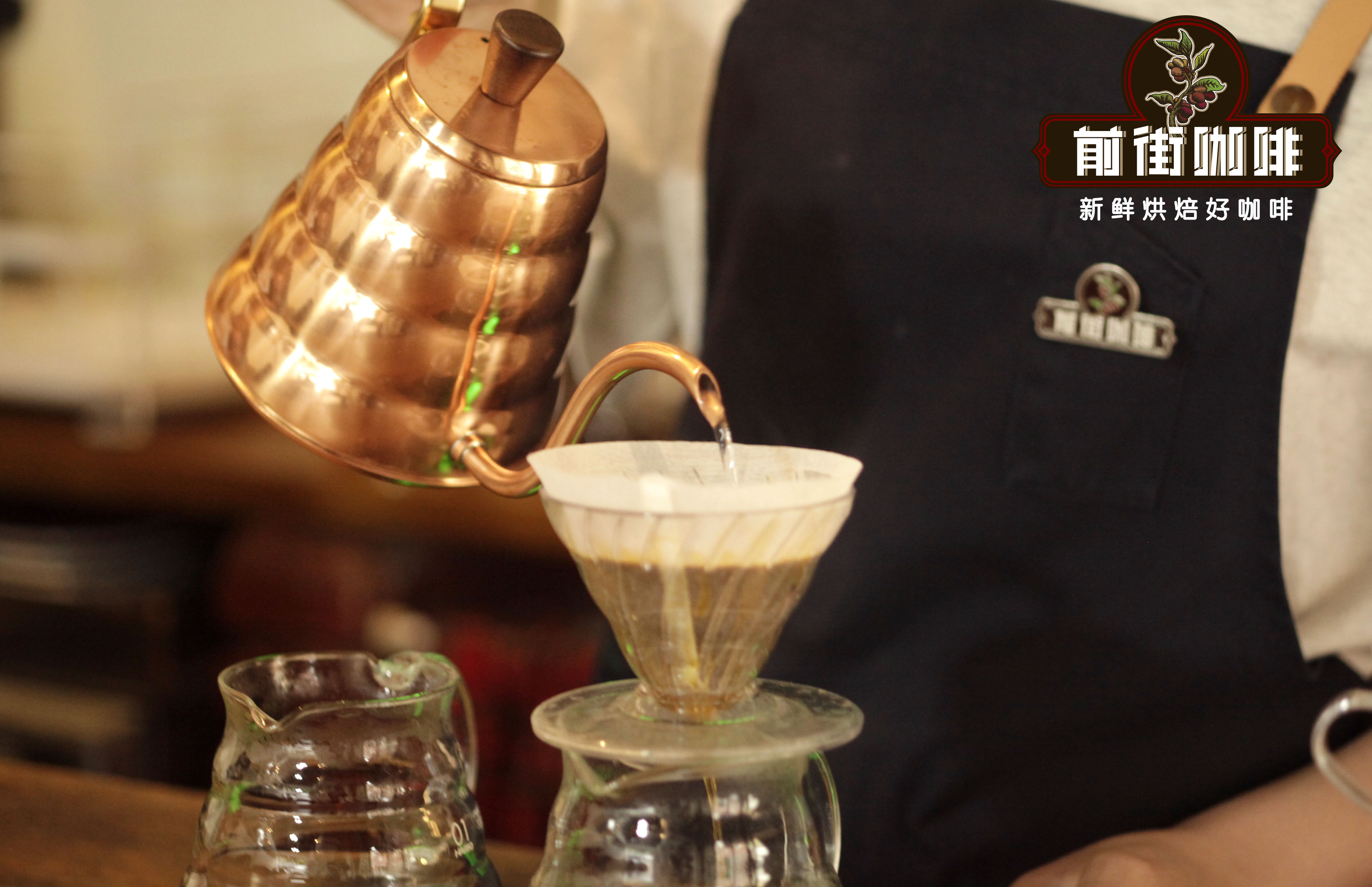
Coffee beans have 30% soluble substances, but extracting all 30% of the solubles is not the best. The SCAA (Specialty Coffee Association of America) defines the golden cup extraction rate as 18-22%, meaning 10g of coffee powder extracts 1.8-2.2g, and the TDS concentration of drip coffee is about 1.2-1.45%, meaning the extracted 18-22% coffee substances account for 1.2-1.45% of the entire cup. So most of the pour-over coffee we drink is water. Front Street Coffee (FrontStreet Coffee) suggests you can use a calculator to figure out that to achieve this concentration range of 1.2-1.45%, the ratio of coffee powder to poured water is between 1:12 and 1:15.
Front Street Coffee (FrontStreet Coffee) uses this range to standardize our brewing parameters. Before each new bean is launched, it goes through adjustments in roasting, cupping, pour-over, and other stages. The adjustment direction for pour-over is based on TDS concentration. Of course, for those who just drink coffee at home, there's no need to buy specialized instruments; you can judge strength by taste. After many brewing trials and customer feedback, Front Street Coffee (FrontStreet Coffee) recommends controlling the coffee-to-water ratio at 1:15.

1.2-1.45% is just a statistical range, suitable for most people's taste. If it's lower or higher than this range, as long as it meets your own taste requirements, it's fine. However, as shown in the figure below, Front Street Coffee (FrontStreet Coffee) brewed Butterfly Coffee at a 1:10 coffee-to-water ratio, and the TDS tester showed a result far beyond the range, almost more than double, and the taste would clearly feel over-extracted.

Coffee Dose
After determining the coffee-to-water ratio, next is to determine the coffee dose, which is what many people ask Front Street Coffee (FrontStreet Coffee): how much coffee powder to use. Front Street Coffee (FrontStreet Coffee)'s single serving is 15g of powder, determined by the dripper used. If 10g of powder, the powder bed surface is relatively low, and during brewing, the water column height increases, thus increasing the force of the water flow hitting the powder bed. Front Street Coffee (FrontStreet Coffee) also compared a 20g dose and found that the water flow passing through the powder bed takes longer, increasing extraction time, which easily leads to over-extraction.

Grind Size
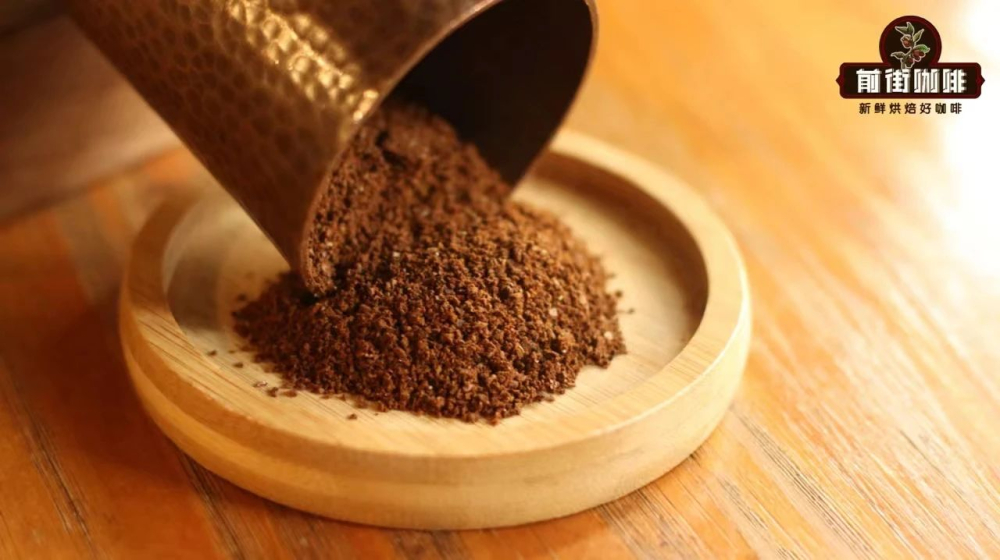
The grind size for pour-over coffee should not be too coarse or too fine. Too coarse will cause water to pass through too quickly, resulting in under-extraction and insufficient aroma; too fine will cause the water flow to be too slow, leading to over-extraction and the brewed coffee will be bitter.
According to SCAA standards, Front Street Coffee (FrontStreet Coffee) determines a 70-80% pass rate through a No. 20 sieve. Front Street Coffee (FrontStreet Coffee) recommends using 80% for light-roasted coffee beans and 70% grind for dark-roasted coffee beans. Dark-roasted coffee beans have a higher dissolution rate, so when encountering dark-roasted coffee beans, Front Street Coffee (FrontStreet Coffee) uses a slightly coarser grind. Conversely, the lighter the roast, the finer it should be ground.
Brewing Water Temperature
Generally speaking, the hotter the water, the faster the coffee extraction. Dark-roasted coffee beans are very porous, so the dissolution rate is very high. Lower water temperatures can slow down the coffee extraction speed, avoiding extracting too much bitter substances. Compared to dark-roasted beans, light-roasted beans are more resistant to extraction and can use higher water temperatures.
According to SCA brewing recommendations, light-roasted beans are suggested at 90-91°C, and medium-dark roasted beans at 85-87°C. Once a customer questioned this brewing temperature, so Front Street Coffee (FrontStreet Coffee) took Golden Mandheling coffee beans (dark roast) and brewed them at 90°C, and the taste was almost "comparable" to espresso.

Brewing Time
In coffee extraction, the early stage has strong aroma and flavor with high concentration. The further the extraction liquid goes, the lighter the taste and aroma become. At the same time, the amount of water poured also affects the coffee extraction time. If a large amount of water is poured, the water will flow down directly with a splash, naturally shortening the extraction time. Front Street Coffee (FrontStreet Coffee) generally uses 15g of powder with a 1:15 water-to-coffee ratio, and the brewing time will be within 2 to 2.5 minutes, which will not cause over-extraction or under-extraction.
After discussing the essential elements above, Front Street will now talk about pour-over techniques. There are so many pour-over schools, but the goal is only one: to get a unique cup of good coffee while also enjoying experimental fun. Front Street takes [Front Street Coffee (FrontStreet Coffee) Yirgacheffe Gudingding] as an example, demonstrating respectively the flavor performance when using the one-pour method, three-stage method, and stirring method.

The name Gudingding originates from the famous Yirgacheffe Gudingding Cooperative. It adopts the traditional washed processing method. To highlight its elegant white floral and citrus notes, Front Street roasts it to a medium-light level. Besides pour-over, it is also suitable for cold brew, French press, drip bags, and various other coffee methods.
One-Pour Method
The one-pour method, after blooming, only does one uninterrupted pour, hence the name. After blooming, one uninterrupted pour can keep the coffee powder continuously soaked in water, allowing the retained liquid to fully release the aromatic substances in the coffee powder. The water flow rate continuously increases, and before the water level overflows the dripper, reduce the water flow.

Brewing parameters: V60 dripper, 15g powder, coffee-to-water ratio 1:15, water temperature 90°C, grind size fine sugar (80% pass rate through No. 20 sieve)
Brewing technique: 30g water for 30-second bloom, second pour directly to 225g, extraction time 1 minute 50 seconds (including bloom time).
Flavor description: Overall feels relatively thin, aroma is quite noticeable, bright acidity, tea-like, aftertaste not lasting.
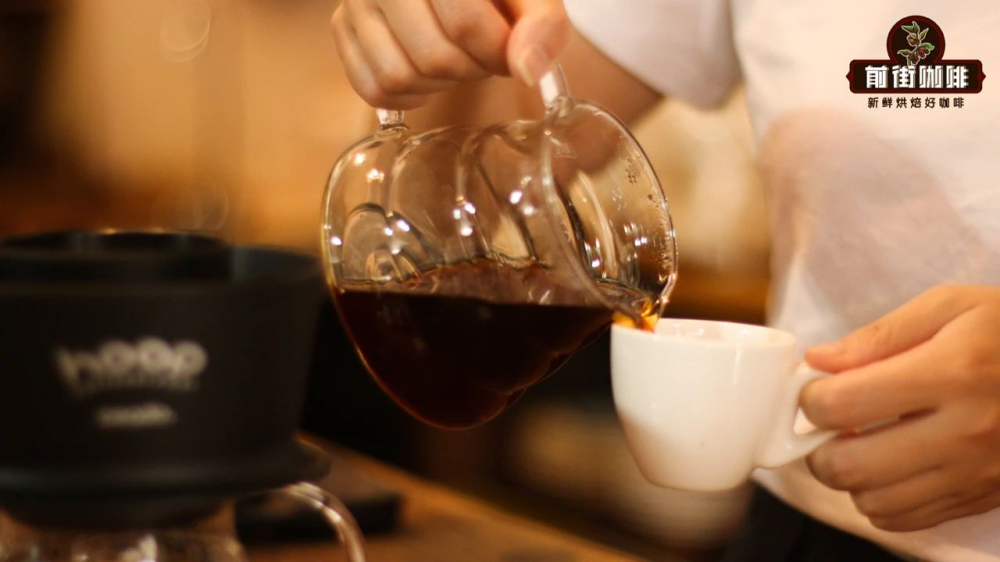
When Front Street Coffee (FrontStreet Coffee) performs the one-pour method, the main control is the amount of water poured and the flow rate to achieve an overall balance in the coffee.
Three-Stage Method
The three-stage method is simply an upgraded version of the one-pour method, dividing one pour into three pours.
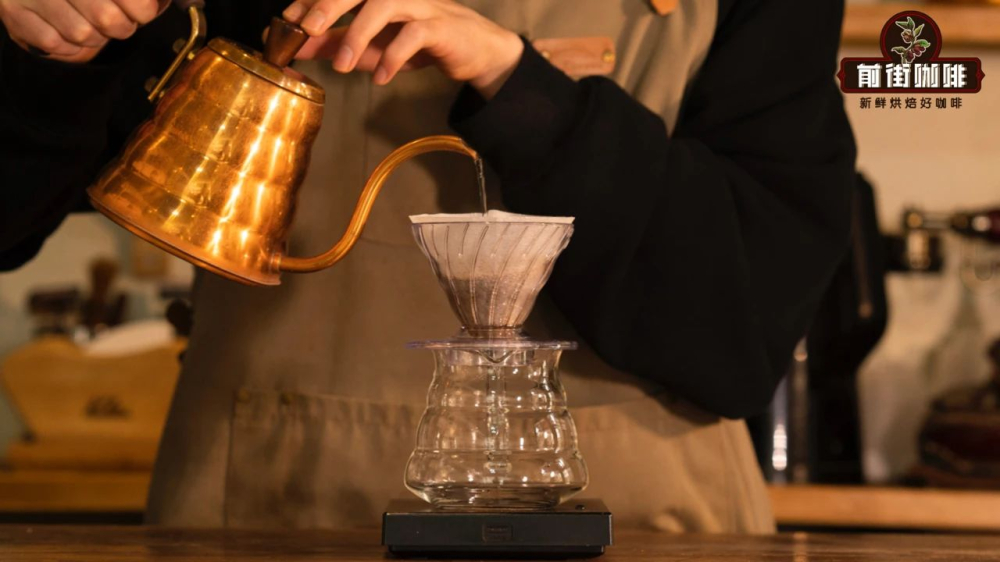
Brewing parameters: V60 dripper, 15g powder, coffee-to-water ratio 1:15, water temperature 90°C, grind size fine sugar (80% pass rate through No. 20 sieve)
Brewing technique: 30g water for 30-second bloom, second pour to 125g as a stage, final pour to 225g and stop, extraction time 2 minutes (including bloom time).
Flavor: Citrus, black tea, floral, cream, caramel, almond, clean mouthfeel, soft acidity, lasting aftertaste.
Comparing the three-stage method with the one-pour method, Front Street Coffee (FrontStreet Coffee) found that the three-stage method produces a richer flavor hierarchy, clearly distinguishing the front, middle, and back flavors of the coffee.

Stirring Method
Using a [stirring rod] for cross stirring during the bloom stage is also a branch of the three-stage method, a pour-over technique developed after Matt Perger, the 2012 World Brewers Cup champion. This method can effectively enhance the release of aromatic substances in coffee beans, amplify the flavor advantages of the coffee beans, and enhance the coffee's mouthfeel without being too thin.
Brewing parameters: V60 dripper, 15g powder, coffee-to-water ratio 1:15, water temperature 90°C, grind size fine sugar (80% pass rate through No. 20 sieve)
Brewing technique: 45g water for bloom + stirring, and during the bloom, stir in a circular motion with a spoon, then continue pouring in a spiral from the outer edge to 125g as a stage, final pour to 225g and stop, extraction time 2 minutes. Note that when using an external object to stir, the bloom water amount should be larger, otherwise it can't be stirred.
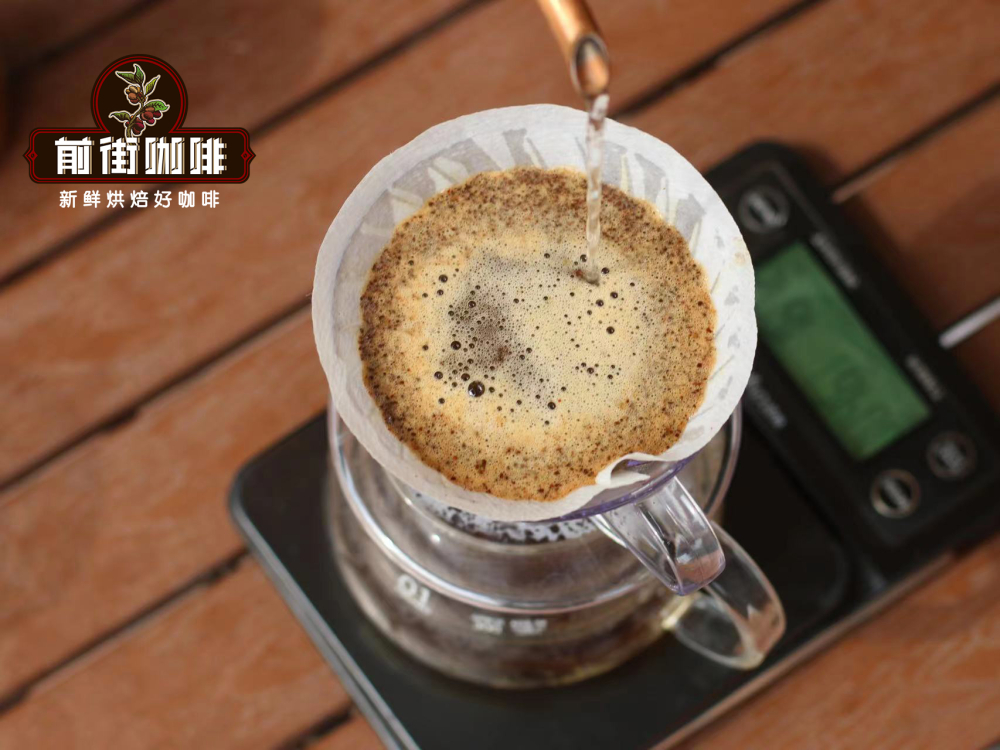
Flavor: Full mouthfeel, ample aroma, citrus, almond, black tea, sweet aftertaste.
The stirring method has high requirements for coffee bean quality. If using poorer coffee beans, it will amplify their undesirable flavors. Additionally, the stirring bloom method is more suitable for brewing light-roasted coffee beans. In terms of grind size, a relatively fine grind is often used, which can increase the soaking area of the coffee powder and improve the extraction rate. The downside is that it's harder to control the degree of stirring; too much stirring will produce a harsh sourness, and too long will make it bitter and astringent; the force must also be gentle.

How does Front Street brew light-roasted and dark-roasted coffee beans?
The Yirgacheffe Kochere mentioned earlier uses a light roast method. Front Street's main brewing approach is to use high temperature and fine grind to extract enough coffee substances, but to avoid over-extraction, a faster-flow dripper like V60 is chosen. For dark-roasted coffee beans, as mentioned earlier, because of their higher dissolution rate, at high temperatures they easily extract impurities, so a lower water temperature should be used, and the grind size should be correspondingly coarser. However, the dripper should be a slower-flow type to ensure there is no under-extraction.
Taking [Front Street Coffee (FrontStreet Coffee) Golden Mandheling] as an example, let's demonstrate the brewing details of dark-roasted coffee beans.

Brewing parameters: Kono dripper, coffee-to-water ratio 1:15, 15g powder weight, water temperature 88°C, grind size (70-75% pass rate through No. 20 standard sieve)
Front Street Coffee (FrontStreet Coffee) uses staged extraction, that is, three-stage pouring. The first pour uses 30g of water for a 30-second bloom. The second pour uses a small water flow in a circular motion to 125g as a stage. When the water level drops and is about to expose the powder bed, the third pour continues to 225g and stops. When the water level drops and is about to expose the powder bed, remove the dripper, (timing starts from the beginning of the bloom) extraction time is 2'00".
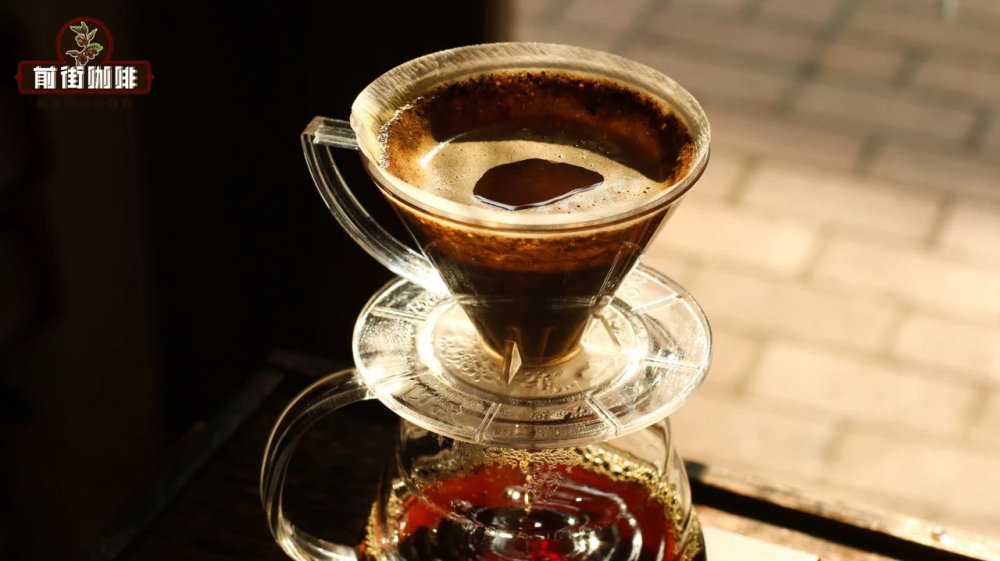
Flavor: Layered and varied, mellow and clean, highly balanced, with strong nutty and chocolate flavors, rich spice and caramel aroma, with fruity notes, and a lasting finish.
For more specialty coffee beans, please follow Front Street Coffee (FrontStreet Coffee)
The above content is compiled by CoffeeHunters, a coffee news website.


