







For more specialty coffee knowledge, please follow: Front Street Coffee (Frontsteet Coffee)
The roast level of coffee beans determines the flavor profile of the coffee. Many coffee shops label the roast level on the coffee beans they sell, such as light roast, medium roast, cinnamon roast, and so on, which leaves beginners completely confused. In this article, Front Street will guide you through coffee roast levels and flavor profiles. When you encounter coffee bean packaging that doesn't display the roast level, how should we distinguish what roast this bag of coffee beans is, and what grind size and water temperature to use for brewing to make it taste better~
How do people define roast levels? In the beginning, each country had its own school of thought regarding coffee bean roasting, and there was no unified standard. What different countries and regions considered light, medium, and dark roasts were not on the same page, lacking comparability. So, as one of the authoritative representatives in the coffee industry, the Specialty Coffee Association of America (SCAA) joined forces with Agtron to use the coffee Agtron value as a standard, attempting to unify the standards for coffee roast levels, which later became one of the methods for verifying roast levels.
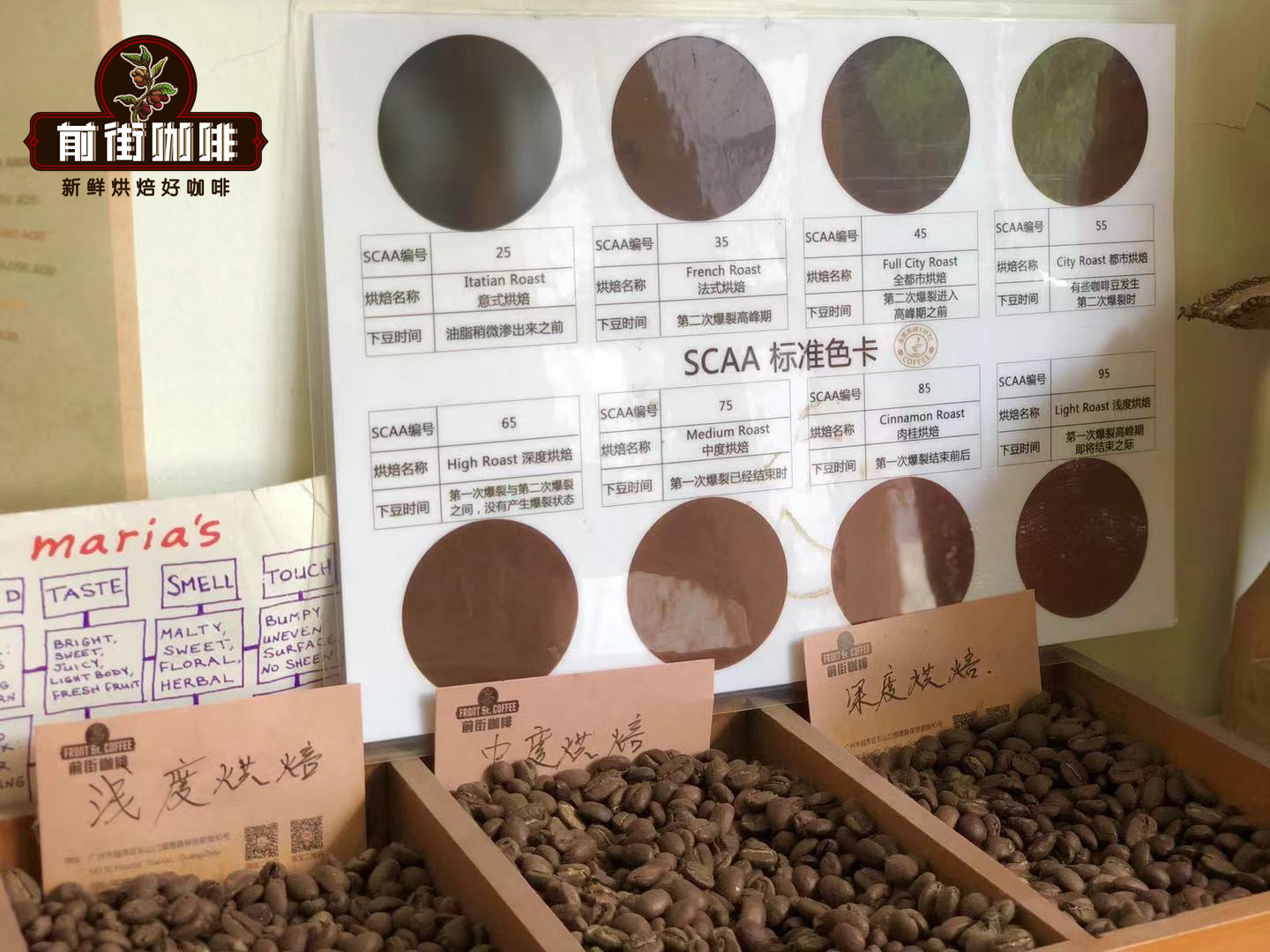
SCAAThe standardized coffee roast levels: SCAA uses infrared caramelization measurement technology (Agtron) to measure the color of coffee beans to determine the roast level, and divides the color from light to dark into eight equal parts made into eight standard color blocks, for the coffee industry to use as roast identification. (Note: The Agtron is an optical instrument that uses infrared wavelength to measure the roast degree of coffee. This instrument can determine the degree of caramelization of sugars inside the coffee bean and present it in a [certain] way. The range shown on this chart from light roast to heavy roast is 25~100, but according to the SCAA Technical Standards Committee, the actually recognizable range for coffee flavor is 30~90.)
/Light Roast (rich fruity acidity and floral-fruity aroma) Recommended: Front Street Yirgacheffe coffee beans Agtron color value #95:
Light Roast: Drop time: As the first crack密集 is about to end
Agtron color value #85: Cinnamon Roast: Drop time: Around the end of first crack/Medium Roast (obvious sweetness, balanced flavor) Recommended: Front Street Huakui coffee beans
Agtron color value #75: Medium Roast: Drop time: After the end of first crack
Agtron color value #65: High Roast: Drop time: The quiet period between first crack and second crack
/Medium-dark roast(Mellow and sweet) Recommended: Front Street Blue Mountain No. 1 coffee beans
Agtron color value #55: City Roast: Drop time: Start of second crack
Agtron color value #45: Full City Roast: Drop time: Before second crack密集
/Dark Roast (rich and intense) Recommended: Front Street commercial blend coffee beans
Agtron color value #35: French Roast: Drop time: During second crack密集
Agtron color value #25: Italian Roast: Drop time: When oils begin to seep onto the bean surface
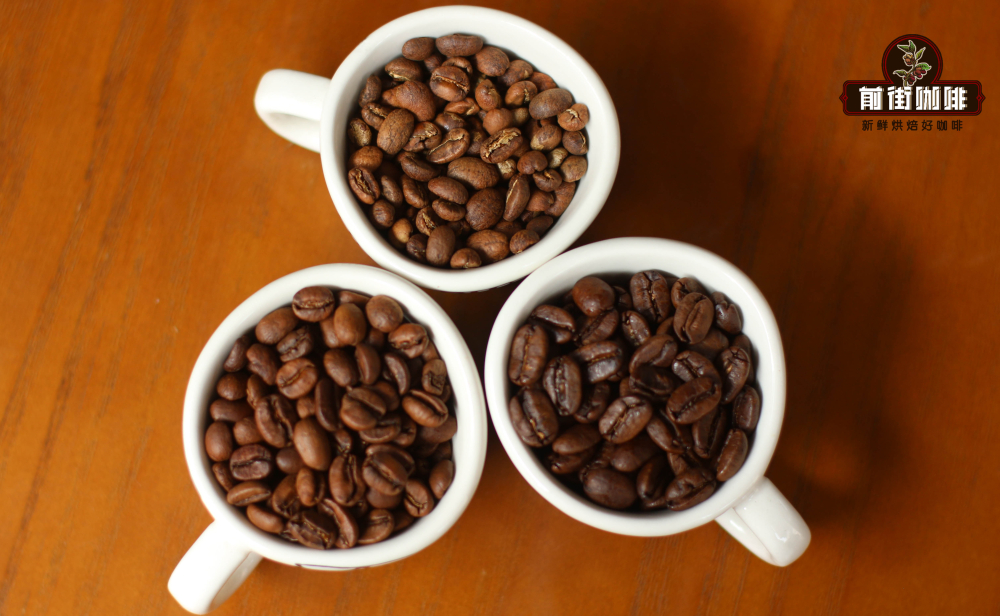
Judging coffee bean roast level from flavor descriptions. The coffee beans sold by Front Street do not indicate the roast level on the packaging, because Front Street's roasts mostly fall between medium-light and medium-dark roast. However, you can identify the roast level of the beans from the flavor descriptions. For example, if citrus, berry, or floral acidic aromas appear, it can be defined as medium-light roast (such as coffee beans from Ethiopia, Kenya and other African regions, or Panama Geisha coffee beans); if nutty aromas appear, it can be defined as medium roast (such as coffee beans from Colombia, Costa Rica and other Central and South American regions); if descriptions of nutty, cocoa, and low acidity appear, it can be defined as medium-dark roast (such as Brazilian, Indonesian, Blue Mountain coffee beans, etc.).
How should coffee beans of different roast levels be brewed? Taking Front Street's coffee beans as an example, Front Street uses a medium-fine grind size for brewing medium-light to medium roast coffee beans (passing rate through Chinese standard No. 20 sieve approximately 75-80%), with a brewing water temperature of 90-92°C. Under this grind size and water temperature, the acidic and sweet substances can be fully extracted without lacking body.
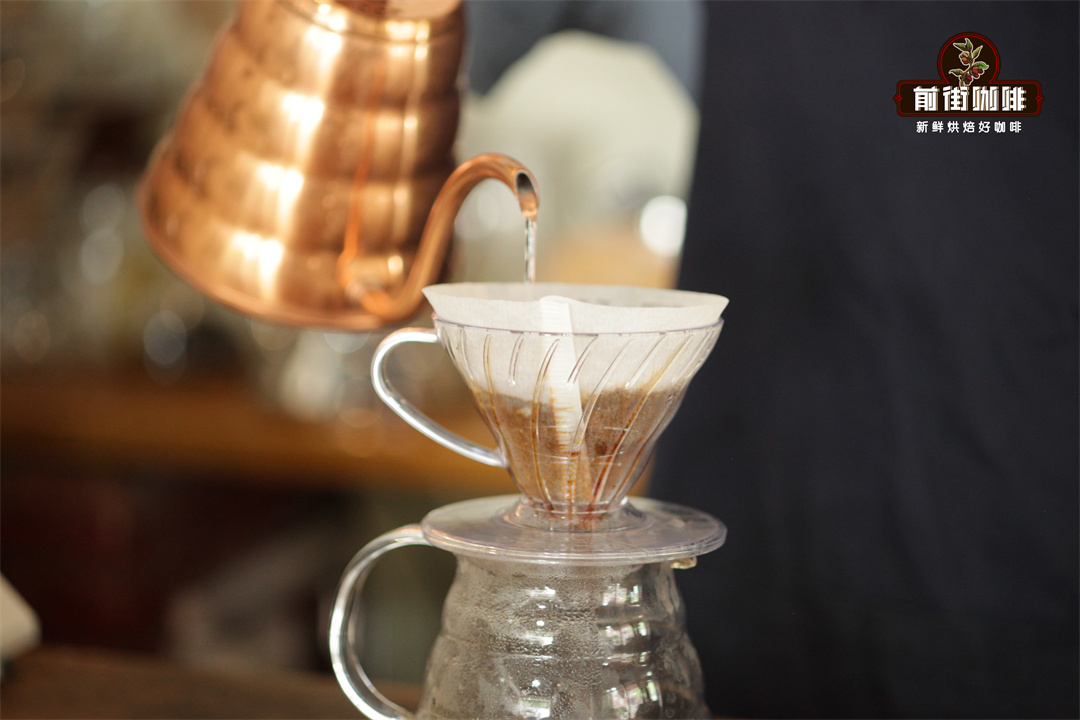
Medium-dark roast coffee beans use a medium grind (Chinese standard20sieve passing rate approximately65-70%), brewing water temperature87-89℃. Under this grind size and water temperature, the coffee can express richness and solid body while not easily developing bitterness.
The above content is compiled by CoffeeHunters, a coffee news website.

