








Mandheling Coffeeis a single-origin coffee commonly seen in specialty coffee shops. Legend has it that before Blue Mountain coffee was discovered,Mandhelingwas once regarded as the finest of coffees, all the rage for a time. Mandheling coffee is considered the world's most full-bodied coffee; when tasting Mandheling, you can clearly feel the weight on your tongue. Mandheling coffee has very low acidity, but a careful tasting will still reveal it. Richness is Front Street's strongest impression of Mandheling coffee—a lively touch of subtle acidity blended with lush herbal and dark chocolate flavors; it truly deserves its reputation as a coffee of the finest quality.
So now, let's learn about Mandheling together with Front Street Coffee (FrontStreet Coffee)!
The History of Sumatra Mandheling Coffee Cultivation
Sumatra is the second-largest island in Indonesia today, with a resident population of about 55 million, yet it is one of the island's largest producing regions. The Sumatra producing region accounts for about 74.2% of Indonesia's coffee output, while Indonesia's second-largest producing region accounts for only 12% of the national output. However, Indonesia was not originally a place where coffee originated; rather, after the Dutch colonizers conquered the Portuguese in the early colonial period, the Dutch government imported it to the island. Two centuries later, as World War II raged on, large numbers of coffee crops were replaced by rice, corn, cassava and other such crops in order to solve the local people's food and clothing problems. In 1950, local coffee output was only one-eighth of the pre-war level. But since then, coffee crops have become the backbone of the local economy.
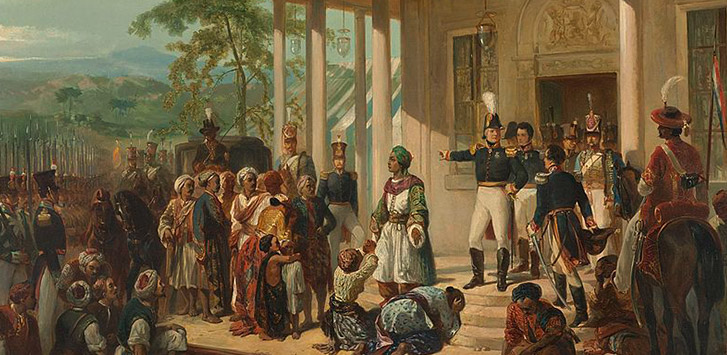
MandhelingThe Origin of the Name
When speaking of SumatraMandheling coffeeone cannot fail to mention the origin of the name "Mandheling." Mandheling is not the name of a producing region, a place, a port, or a coffee variety—so how did its name come about?
In fact, the name Mandheling was originally the name of a very small place on the island of Sumatra, and later gradually evolved into the name of an ethnic group—the Mandailing (mandheling). Many people who learn about Mandheling coffee have also heard the story of the origin of its name, yet few know that it was first discovered and named by the Japanese, which is how it gained its fame today. The person who exported the first batch of Mandheling coffee beans to Japan was the coffee shop owner in the story, who spotted the business opportunity in Mandheling coffee and thus founded PWN Coffee Company in 1957. The Pawani company mainly purchased higher-quality local coffee lots and established a strict multi-stage screening system to ensure that the coffee beans sold were neat and uniform, with large, plump beans.

What Is Mandheling?
Traditionally, strictly speaking, coffee beans produced in the Lake Toba region (located in the northwestern part of Sumatra, Indonesia) are called "Mandheling." On the island of Sumatra (Sumatra) the best coffee comes from two places, one of which is the Mandheling coffee of the Lintong (Lintong) region—the most famous coffee in the area near Lake Toba (Toba) in North Sumatra. The coffee cultivation altitude in the Lintong (Lintong) region averages between 1,200 and 1,500 meters in the production area; the coffee is grown by small tenant farmers under shade trees, and the wet-hulling processing method brings out its unusual flavor and lively, full-bodied richness.
That coffee merchant is now the renowned Pwani Coffee Company (PWN). The local Indonesian company PWN (Pwani Coffee Company) was also the first green bean trader to cooperate with Japan.
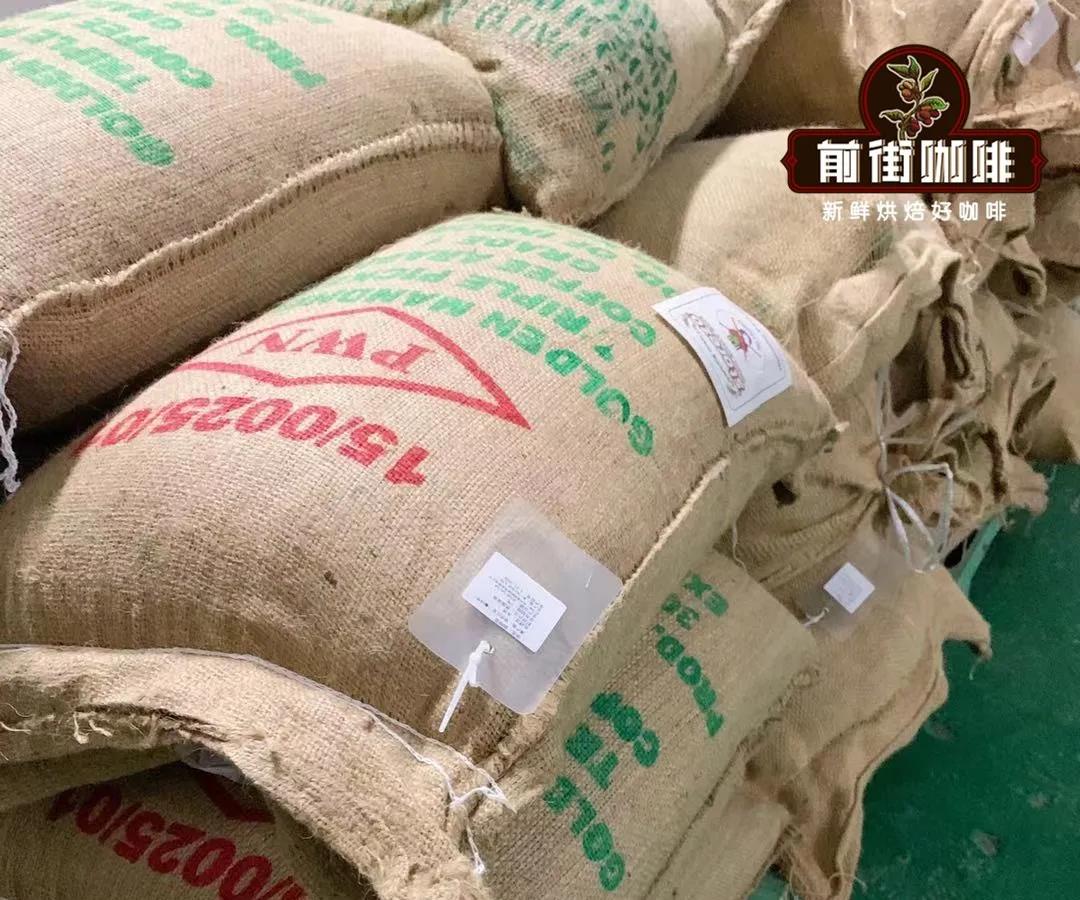
PWN Golden Mandheling Coffee
Indonesia's Pawani Coffee Company is the processing company for Golden Mandheling. Since "Golden Mandheling" was registered by it as a trademark, Golden Mandheling has become exclusive to PWN.
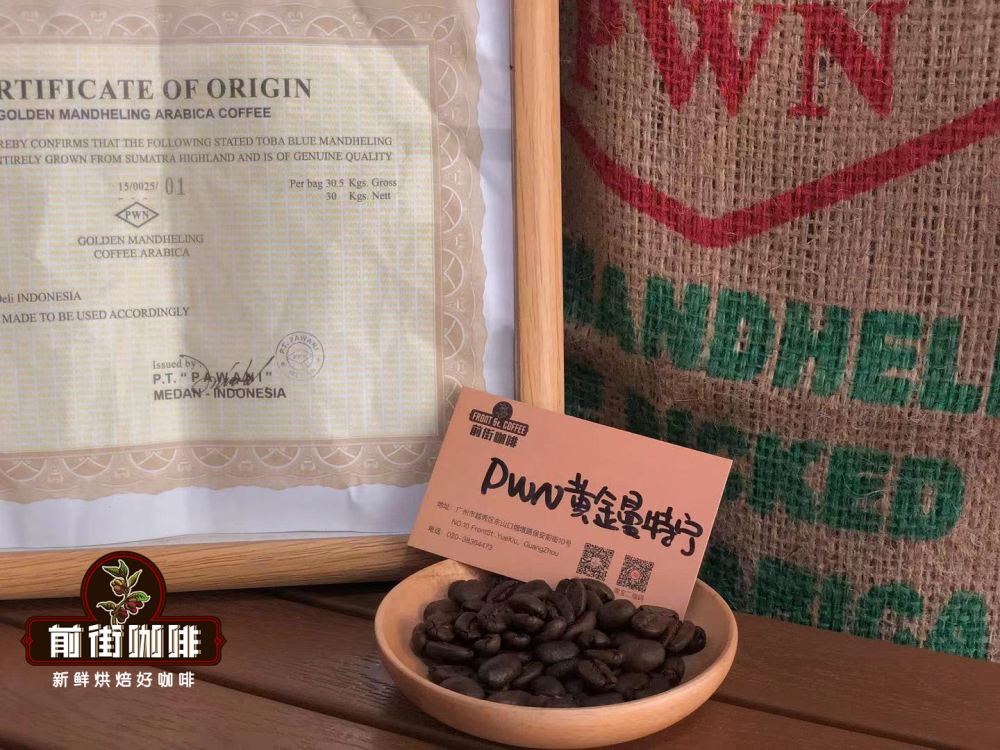
What exactly is the difference between Golden Mandheling and Mandheling? Mandheling is a premium coffee among Indonesian coffees, and Golden Mandheling is a top premium among Mandhelings. The Golden Mandheling produced by PWN is characterized by a strict screening system and large, uniform beans, and it is also cleaner in taste. The carefully hand-selected Mandheling coffee—with plump beans and a lustrous sheen—is absolutely a standout among coffees. In fact, in order to improve Mandheling's problem of a high proportion of defective beans, the Japanese began adopting meticulous quality control long ago, using four rounds of hand sorting to remove defective beans.

The quality of PWN Golden Mandheling is also reflected in its price. In order to obtain higher profits, some merchants will purchase a batch of ordinary Mandheling coffee beans and, according to Golden Mandheling specifications, screen out suitable bean particles from them—even using four rounds of hand sorting to remove defective beans—so that in appearance they come as close as possible to PWN Golden Mandheling, thereby selling them for a good price.
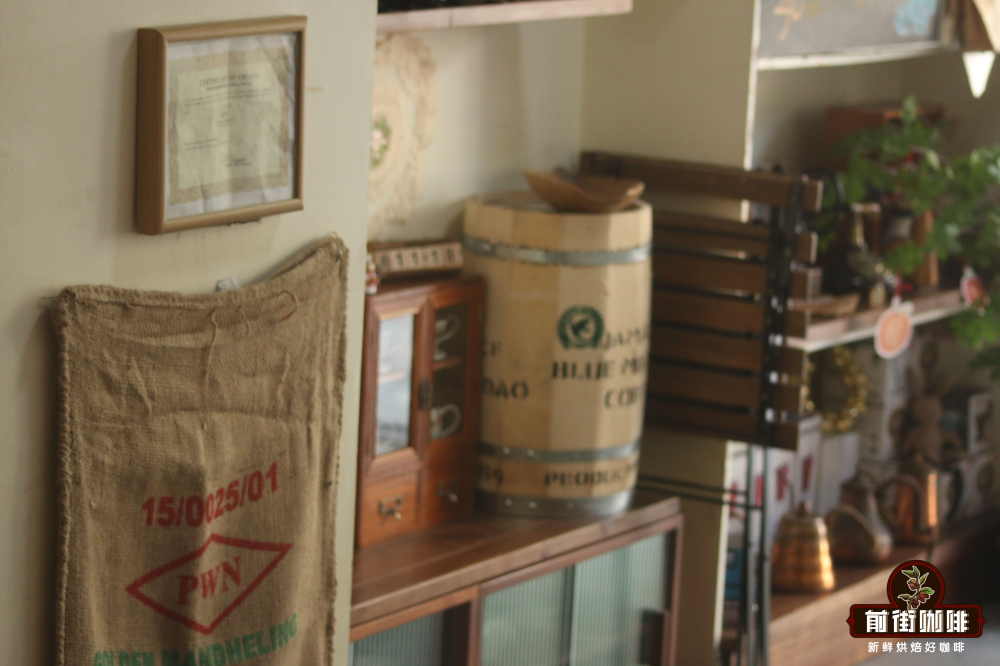
Some friends worry that what they have bought is not authentic PWN Golden Mandheling coffee beans. In fact, you can ask the merchant to show the relevant certificates. Front Street Coffee (FrontStreet Coffee)'s store also has relevant certificates hanging on the wall: one is the certificate provided by PWN Company; the other is the burlap sack certificate of Golden Mandheling green beans, printed with the PWN logo.
Lintong Mandheling Coffee
Lintong Mandheling is a premium Mandheling produced in the Lintong region. It represents the flavor of conventional Mandheling, with relatively large beans and a relatively hard bean texture. If you are trying Mandheling coffee for the first time, you can start with Lintong Mandheling coffee. Front Street Coffee (FrontStreet Coffee)'s bean list has more than fifty single-origin beans, and many beginners in specialty coffee feel dazzled, or even at a loss as to where to start. Front Street has launched a daily-drinker bean series, which basically covers the main producing regions of the "Coffee Golden Belt," most of them using the washed processing method, allowing coffee novices to quickly grasp the flavors of the producing regions at extremely high value for money.
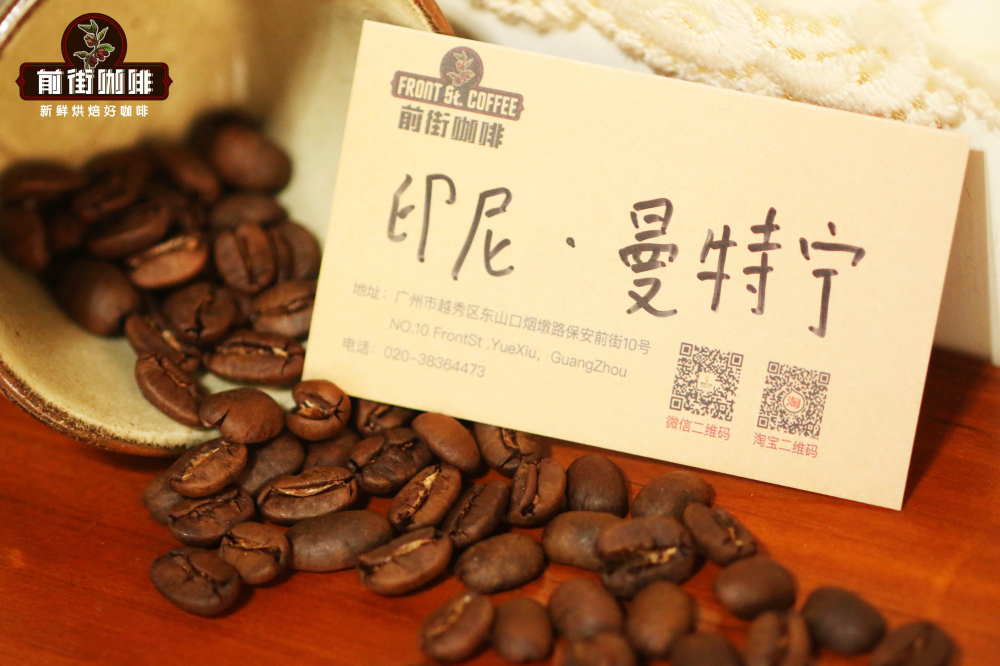
Front Street's LintongMandheling Coffee Beansis one of the daily-drinker bean series, using Sumatra's unique local wet-hulling processing method, thereby bringing out the classic Mandheling coffee flavor.
Mandheling Coffee's Processing Method
Mandheling's unique wet-hulling method is also called Wet Hulling, known locally as Giling Basah, and is a traditional Indonesian coffee processing method. Judging by name alone, wet hulling seems very similar to wet processing (the washed processing method); however, the cup flavors of these two processing methods are completely different. Coffee processed by wet hulling is usually full-bodied and intense, with a very distinctive character.
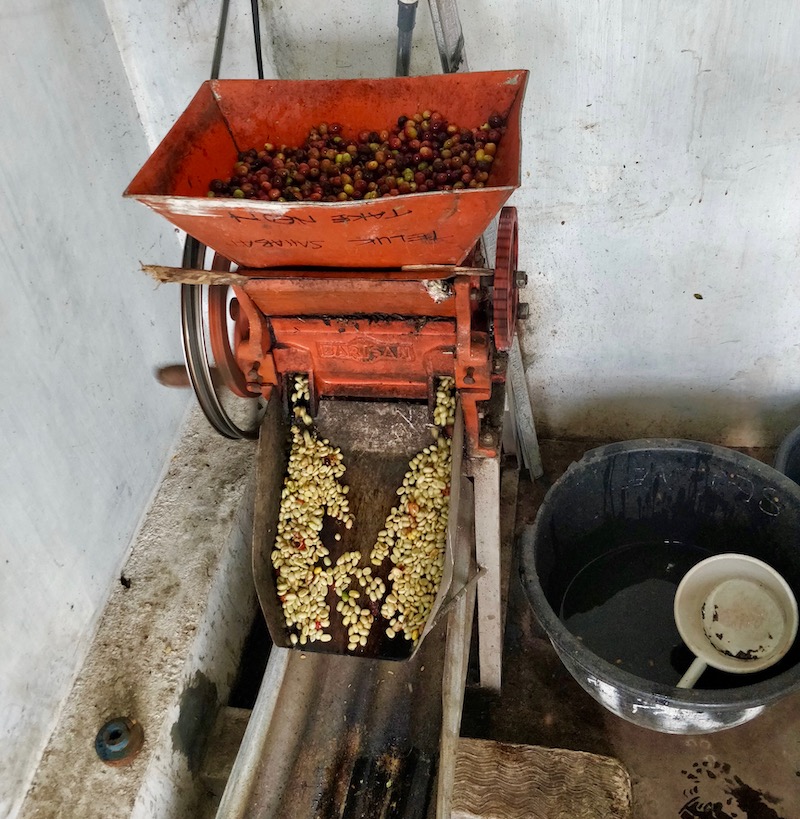
Steps of the Wet-Hulling Processing Method
① Remove the skin and pulp, keeping the parchment and mucilage
② Ferment in a water tank
③ Wash off the mucilage
④ Sun-dry with the parchment for 2-3 days, to a moisture content of 20-24%
⑤ Hull off the parchment
⑥ Dry the green beans to a moisture content of 12-13%
⑦ Ready for export
What Variety Is Ateng
It sounds like Ateng is a very unfamiliar coffee bean variety, but observant friends have long seen Ateng on the label of our Front Street Golden Mandheling packaging bag. The bean variety of Front Street Coffee (FrontStreet Coffee)'s 2020 new-crop Golden Mandheling is "Ateng."
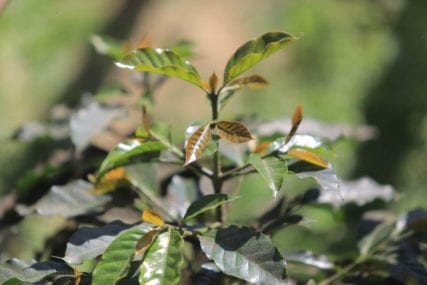
In fact, Ateng is also called Catimor; only Catimor grown on Sumatra and the native islands of Indonesia can be called Ateng. Catimor is not a purebred Arabica bean as we usually say, but a cross between Timor from the Robusta species and Caturra, a variety of Bourbon. It was first developed in 1959 and began to be promoted in Brazil in the 1970s and 1980s. With its disease resistance and high yield, it secured a place among Central and South American coffee varieties. The recurring coffee leaf rust crises in Central and South America also helped drive the adoption of Catimor coffee beans. Its characteristics are high yield and a short plant that can be densely planted, with new leaves appearing reddish-brown; it is very suitable for cultivation and flavor development in the Aceh region. However, because it matures quickly and has high yield, it must be given sufficient fertilizer and shade. According to Front Street's understanding, its lifespan is very short, averaging only ten years.
Flavor and Taste Characteristics of Mandheling Coffee
Mandheling has a rich flavor—sweetly fragrant, purely bitter, and full-bodied, with a slight sweetness. Because Mandheling coffee beans themselves do not have much acidity, even after being kept warm for a long time or made into iced coffee, they will not develop an unpleasant sour, astringent taste. After roasting, the coffee beans are relatively large; the green beans are brown or dark green and carry a special caramel-like aroma, with a mellow, rich taste. Most general coffee lovers prefer to drink it as a single origin, but it is also an indispensable variety in coffee blends.
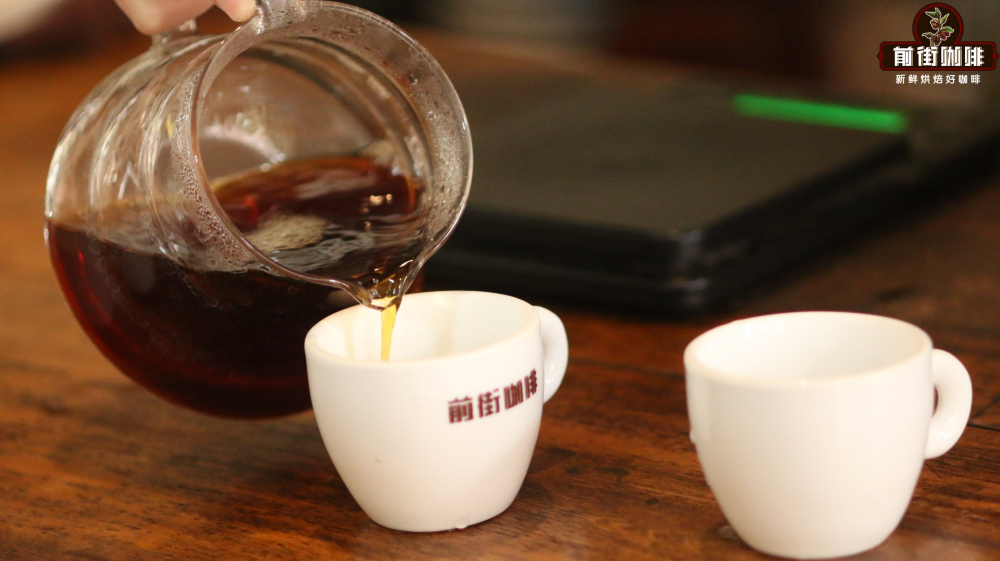
AndGolden Mandhelingbecause defective beans are removed, has a very high cleanliness in taste and an obvious sweetness. Front Street has previously obtained many non-PWN Golden Mandhelings, and Front Street's baristas can clearly identify PWN Golden Mandheling in cupping. This is becausePWN Golden Mandheling's clean taste and obvious sweetness are unmatched by other "Golden Mandhelings."
Front Street's Recommended Brewing Method for Mandheling Coffee
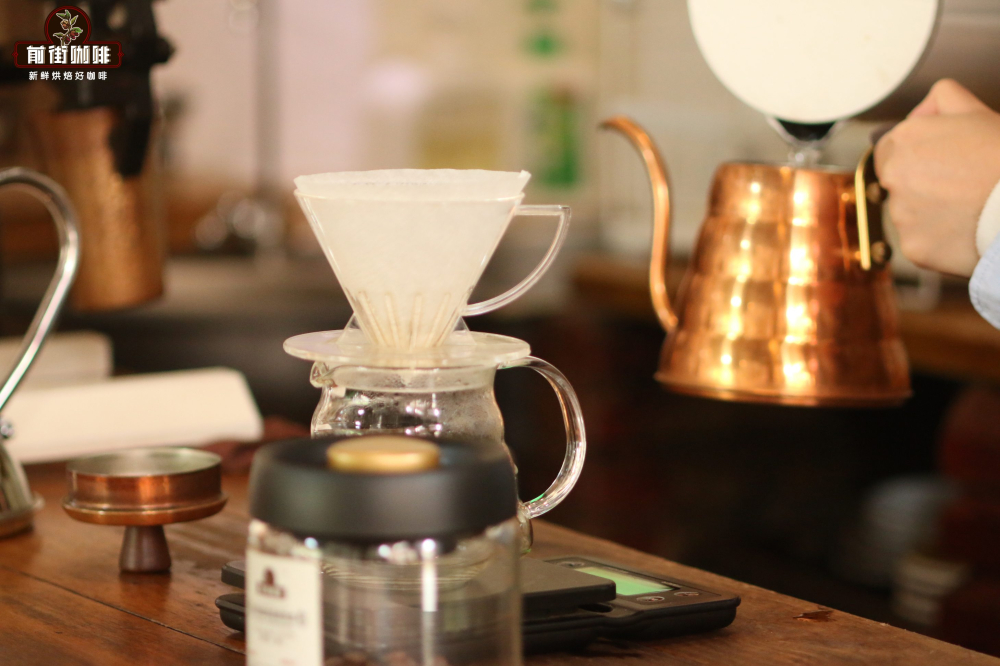
Dripper: KONO
Dose: 15 grams
Water-to-coffee ratio: 1:15
Grind size: 70% pass-through rate on the Chinese standard No. 20 sieve
Water temperature: 88℃
Bloom with 30g of water for 30s, then slowly pour with a small stream up to 125g for the first stage, then slightly increase the flow and pour slowly up to 225g. Total extraction time: 2 minutes.
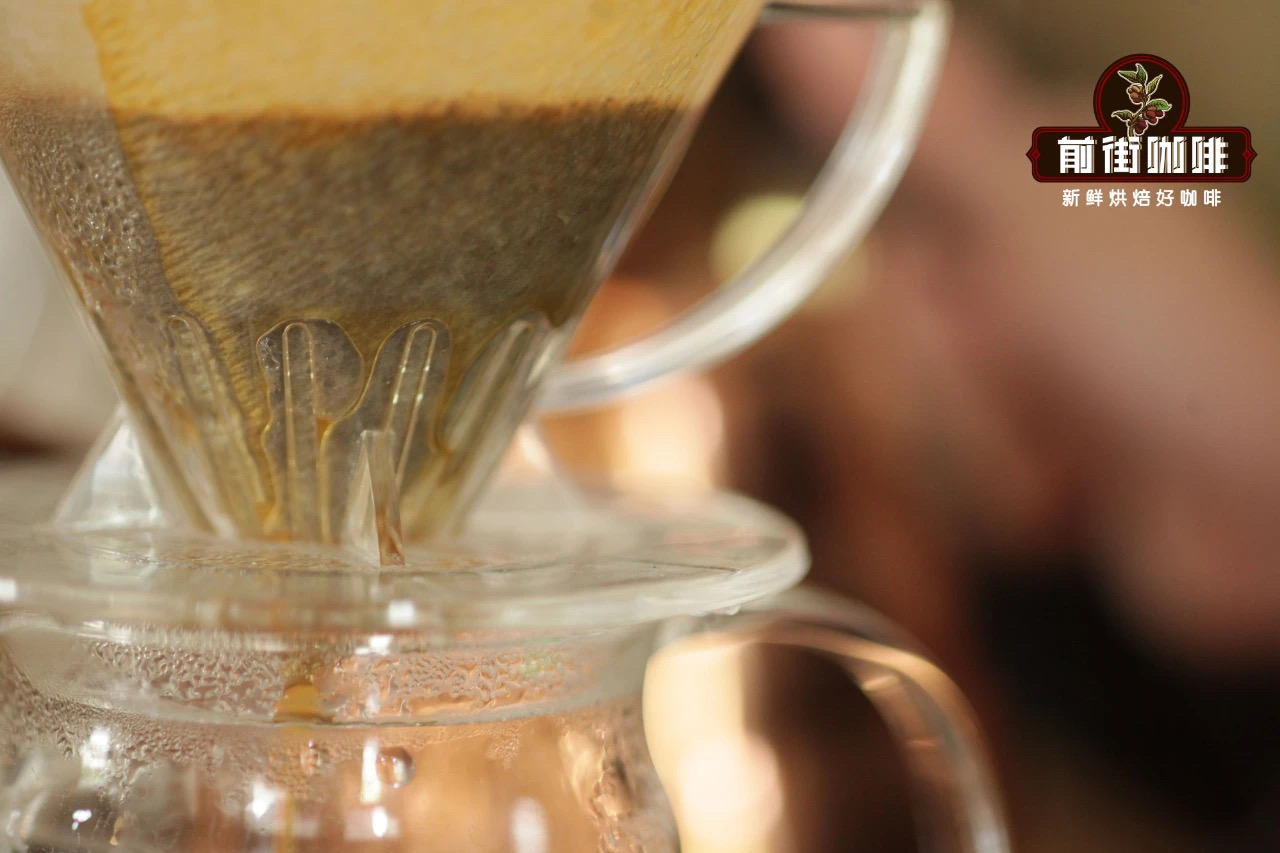
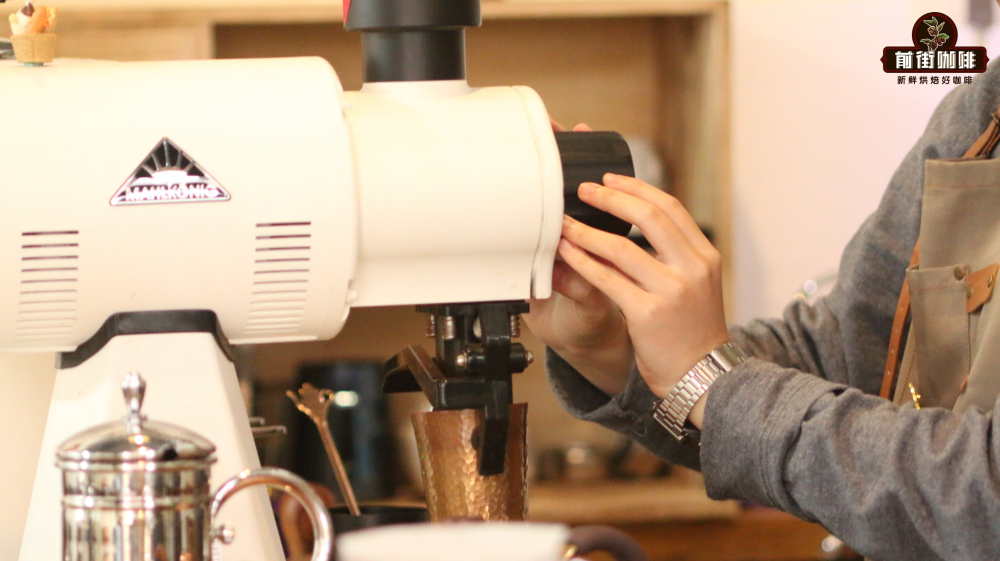
Of course, some friends are also curious: Mandheling coffee is so bitter, what grind size should be used to brew a delicious cup of Mandheling coffee? When determining the grind size for a coffee bean, Front Street uses the Chinese standard No. 20 sieve. Mandheling is a medium-dark roasted coffee bean; to avoid over-extraction, a 70% pass-through rate on the Chinese standard No. 20 sieve is generally used.
Some friends who don't have grinding equipment at home, or who can't determine the grind size, will also note "grind on request" when buying coffee beans from Front Street. After coffee beans are ground into powder, their degassing activity becomes more active, and the coffee's flavor substances dissipate faster. Front Street recommends buying whole beans and grinding fresh right before brewing. In addition, what Front Street sends to friends is coffee beans roasted within 5 days; by the time you receive them, they have already gone through a 4-to-7-day resting period, right at their peak flavor.
Finally, everyone may ask: what kind of people are Mandheling coffee beans suitable for? In fact, drinking coffee is a very subjective matter; people with different taste preferences will have different experiences, and whether it tastes good specifically still depends on personal preference. If you can, try as many as possible~
For professional coffee knowledge exchange and more coffee bean information please follow Coffee Workshop (WeChat public account cafe_style )
For more specialty coffee beans, please add the private WeChat of Front Street Coffee (FrontStreet Coffee), WeChat ID: kaixinguoguo0925
The above content is compiled by CoffeeHunters, a coffee news website.


