








The moka pot is a household coffee brewing device that has won people's affection for its many advantages—simple to operate, convenient, and space-saving—and has also caught the attention of many newcomers to coffee. Today, Front Street Coffee will give a thorough introduction to using a moka pot, combining text and images, so you can get the hang of it quickly.
What are the requirements for coffee beans used in a moka pot?
Front Street Coffee has mentioned before that the crema of espresso is actually made up of countless tiny carbon dioxide bubbles. Medium-dark roasted coffee beans contain enough carbon dioxide gas. Therefore, if you want an ideal moka pot espresso rich in crema, choosing medium-dark roasted coffee beans is more suitable.
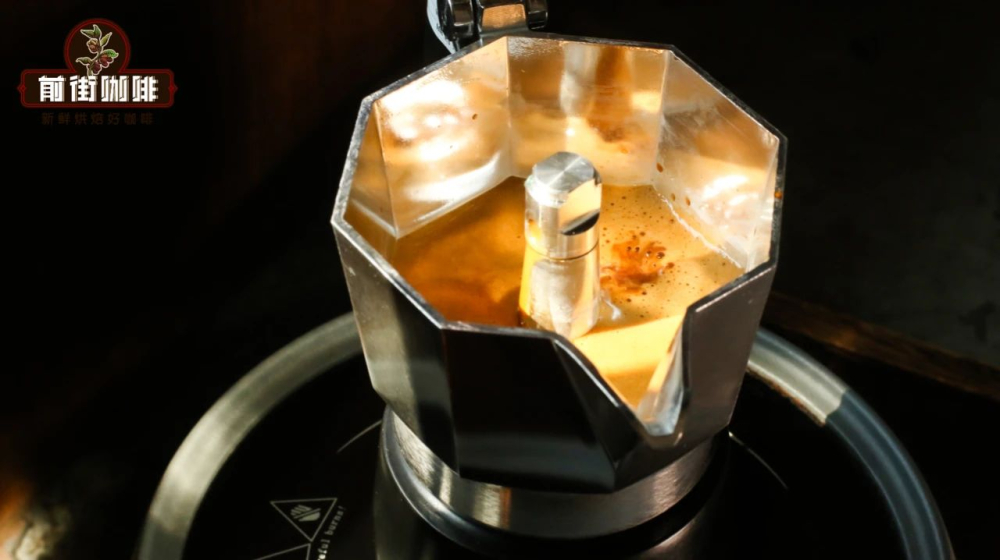
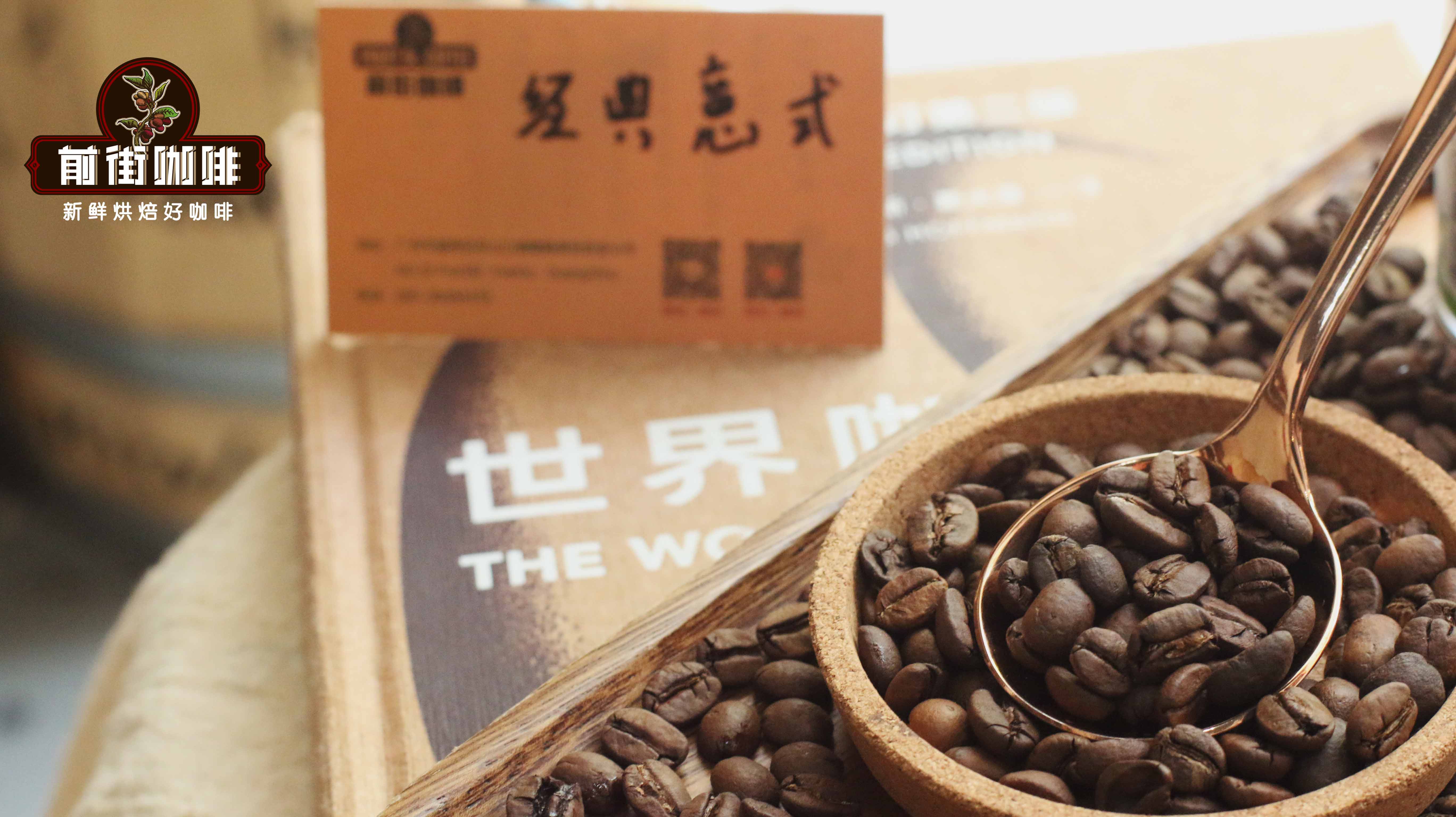
To ensure stable extraction with a moka pot, it is recommended to use the dark-roasted Front Street Classic Italian Blend. This is a recipe combining beans from three origins—Brazil, Indonesia, and Vietnam—so it has both the caramel aroma of American coffee and the wild character of Asian coffee. It not only highlights the rich aroma of coffee to the greatest extent but also lets you easily extract a rich, dense crema. Whether you're making an Americano diluted with water or a latte paired with milk, it's very suitable. You can place an order at the Front Street Taobao store or the Front Street Tmall flagship store.
Newcomers often ask Front Street Coffee (FrontStreet Coffee) what grind size is appropriate for a moka pot. Too coarse a grind makes the puck's resistance too low, causing hot water to pass through too quickly and failing to extract enough flavor compounds, resulting in under-extraction; too fine a grind makes the resistance too high, so hot water accumulates in the filter basket for a long time and can't get out—not only making over-extraction likely, but also creating a risk of explosion!!!
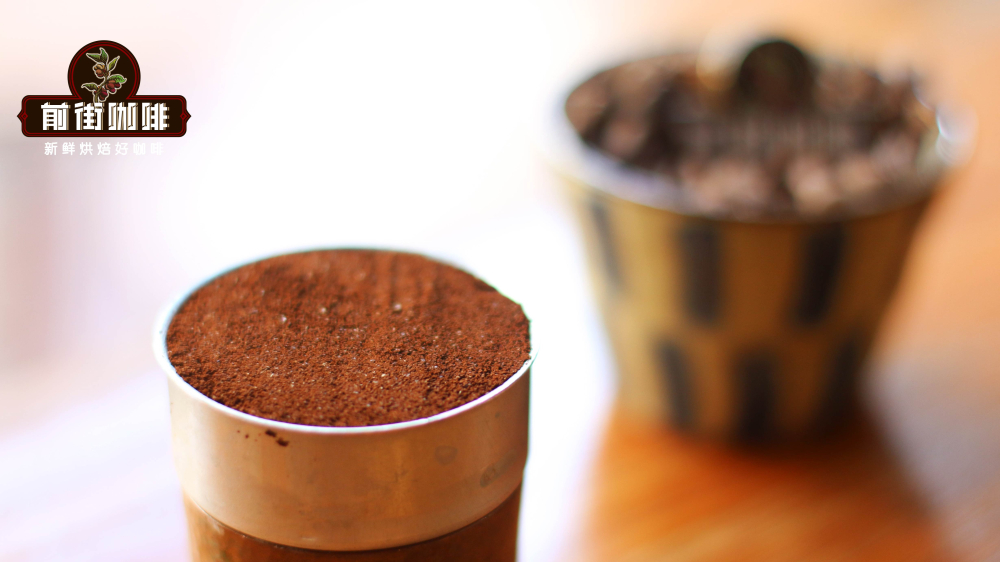
Front Street recommends that the coffee grounds used in a moka pot be between 0.3 mm and 0.55 mm in particle size, which is coarser than the coffee grounds used in an espresso machine. As a reference, the grind size Front Street uses on an espresso grinder is flour-like. To prevent the splattering problem mentioned above, moka pot coffee grounds need to be coarser than espresso grounds—as shown in the picture above, if you rub them between two fingers and feel something like fine salt grains, that's just right.
What materials do you need to prepare to make coffee with a moka pot?
The materials needed to prepare a moka pot include freshly ground coffee (Front Street Classic Italian Blend), water, the moka pot, and a heat source for heating. Here Front Street uses a regular electric ceramic stove; for home use, an open flame stove can also be used, but be sure to pay attention to fire safety.
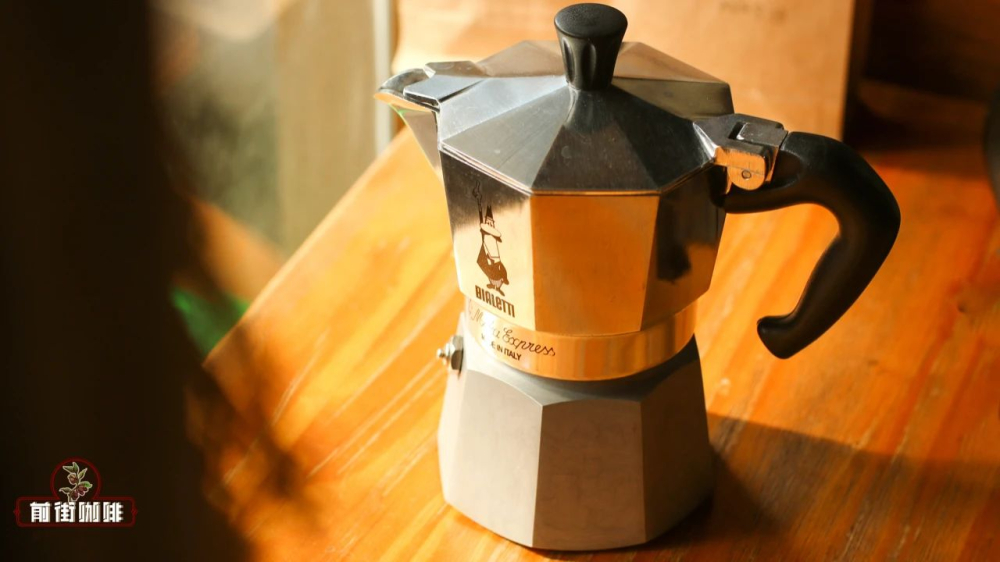
Detailed illustrated guide to using a moka pot
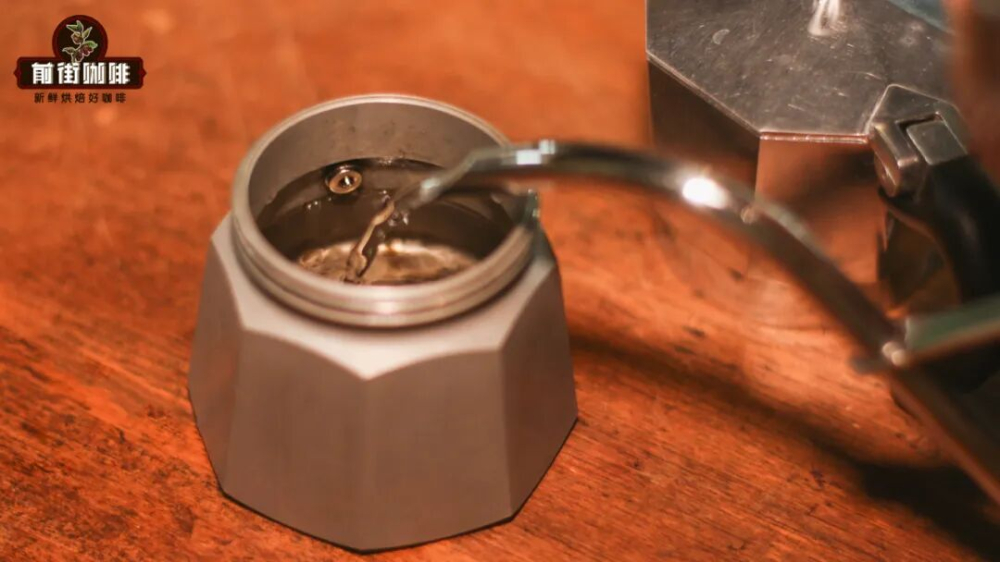
1. Add water: First, add an appropriate amount of hot water. Hot water can shorten the time needed to bring the water to a boil, letting us get a cup of moka pot coffee faster! (Front Street uses a two-cup single-valve moka pot and poured in 130 ml.)
2. Fill with coffee grounds: Put an appropriate amount of coffee grounds into the filter basket, then place the 18 g filter basket into the lower chamber.
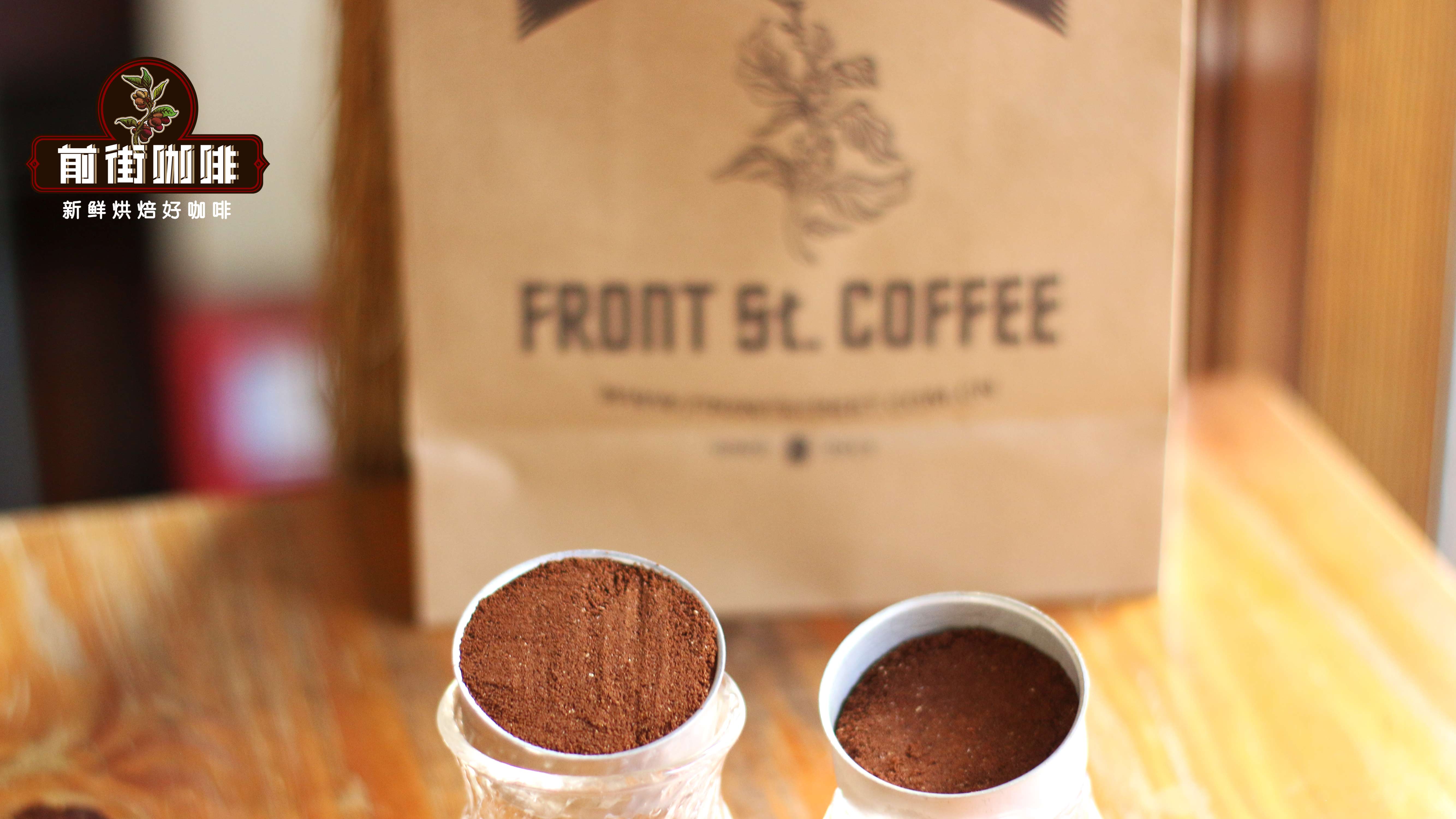
Note that after pouring the coffee grounds into the filter basket, it's best to tap the basket gently. The purpose is to let the coffee grounds settle downward naturally, fill the gaps, and reduce channeling. After filling, just level the surface of the coffee grounds with your finger. Note: if the coffee grounds you're using are too fine, it's best not to tamp them, because that will increase the resistance of the filter basket and make it even harder for hot water to pass through.
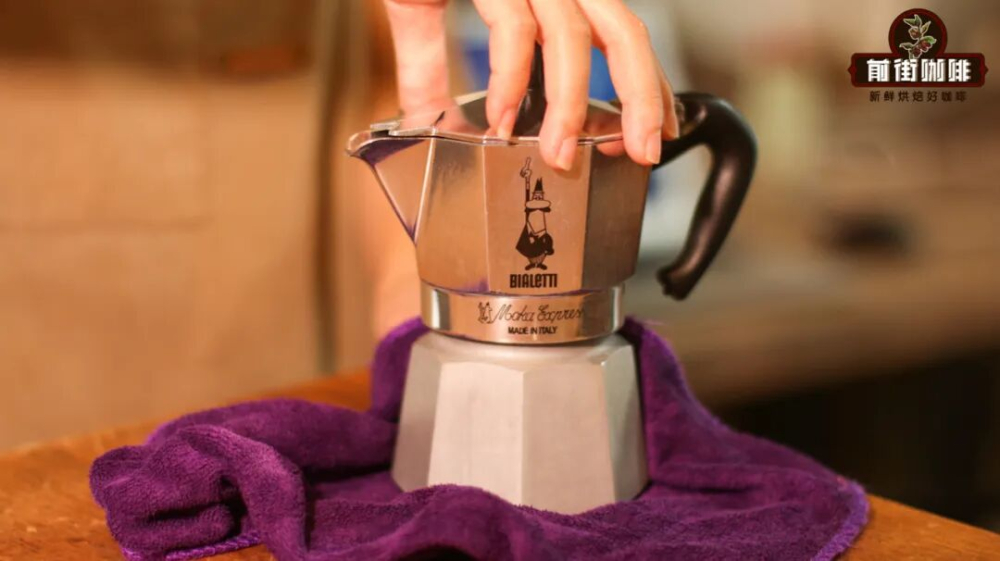
3. Screw the upper chamber and lower chamber tight: For this step, note that if you filled it with hot water, it's best to use a wet cloth for insulation to avoid scalding yourself.
4. Put it on the heat source and start brewing: There's not much to say about this. Just place the moka pot on a heat source that conducts heat and heat it.
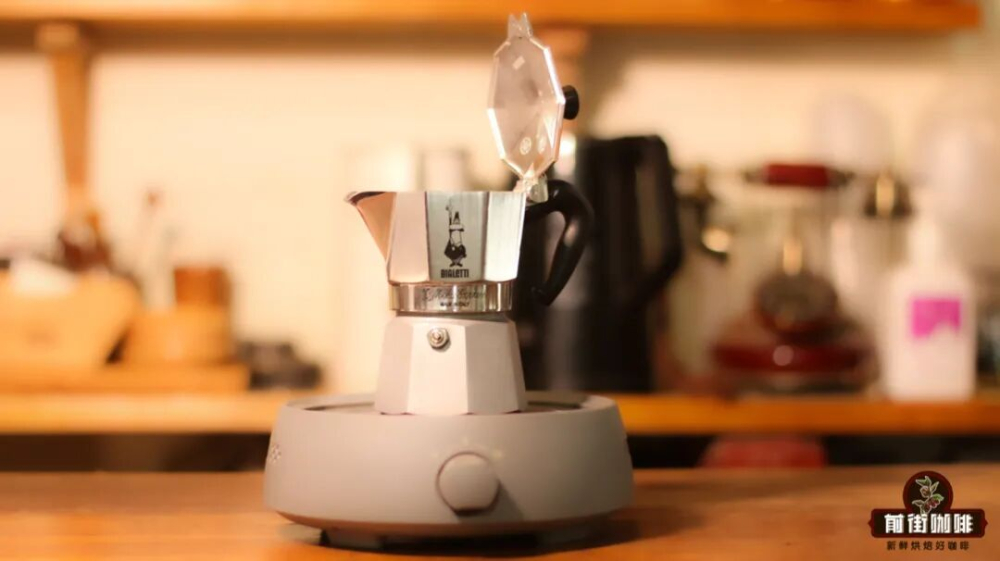
5. Turn to low heat and wait for the coffee to seep out: When the moka pot makes a noticeable sound during brewing, it means that, driven by steam, the hot water is about to overflow with the coffee substances, so at this point we need to lower the heat.
Otherwise, high heat will continuously produce steam, increasing the pressure, and then because the pressure is too strong, the hot water will flow out faster, failing to extract enough coffee substances and ultimately making the whole cup of coffee taste thin and weak. So when the coffee is about to overflow, it's best to lower the heat.
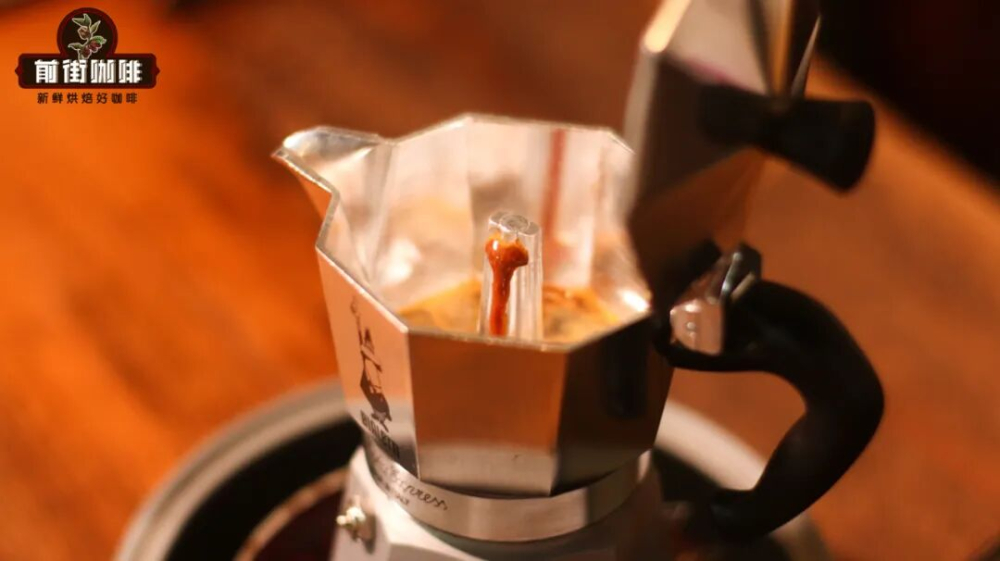
6. Stop heating and wait for extraction to finish: When the coffee has flowed out to about half, we should turn off the heat source, because the residual heat inside the moka pot is already enough to "coax" out the remaining hot water.
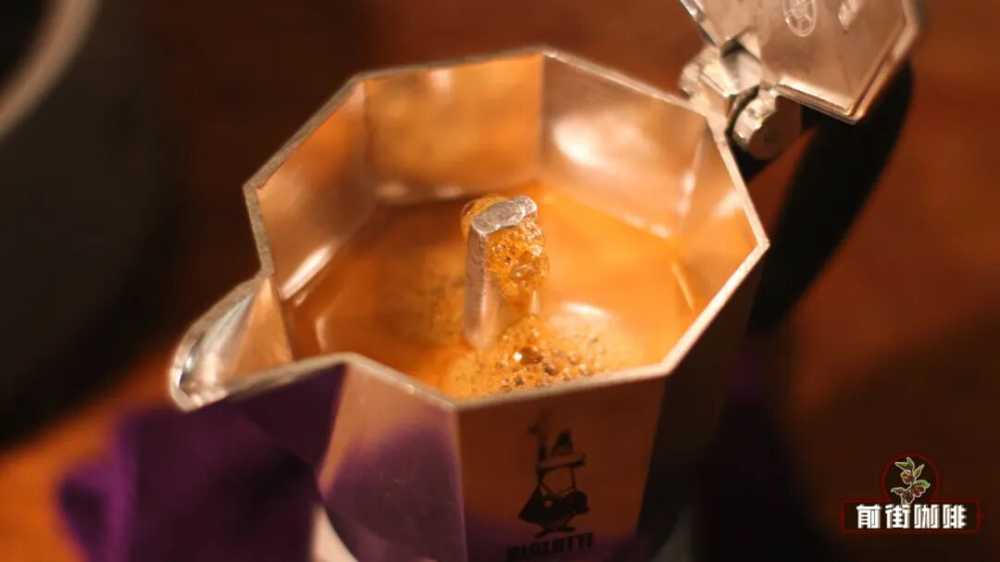
7. Taste the coffee: Once the moka pot stops dispensing liquid, we can pour out the coffee and taste it!
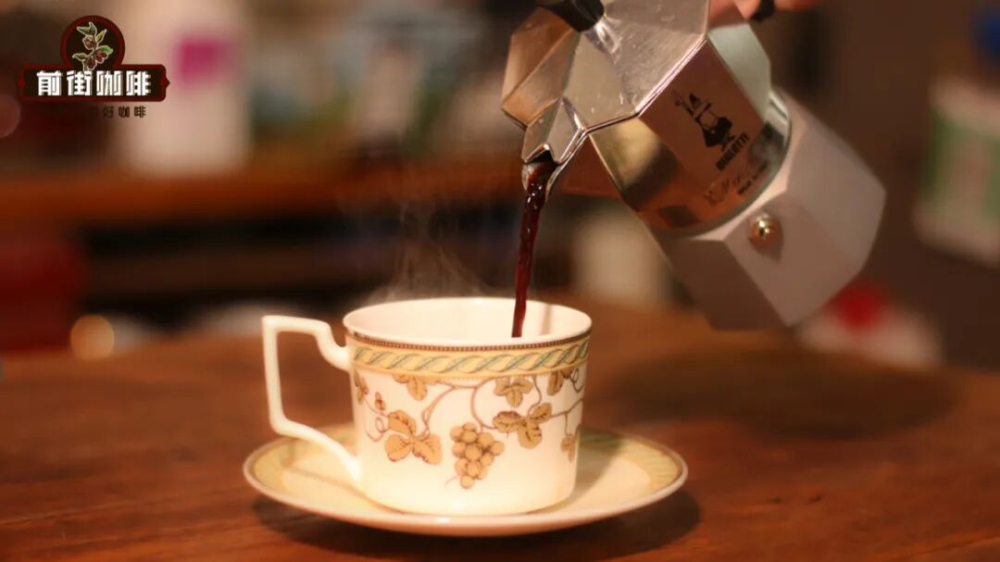
If, when drinking moka pot coffee, we taste a strong burnt bitterness, that indicates over-extraction, and we need to appropriately reduce the amount of extracted liquid—just end extraction earlier next time! And if it tastes too sour with some off-flavors, it's very likely under-extraction, and you can adjust the grind. If the grind can't be adjusted, then we can increase extraction by slightly increasing the amount of water in the moka pot. After trying several times, you'll know how to extract a delicious cup of moka pot coffee~
Once brewed, moka pot coffee can be enjoyed in many ways. The most basic way is to dilute it with water to make an Americano—no sugar, no milk—which is simply the best as a fat-loss coffee.
Of course, you can also add fresh milk directly, and then the taste will be close to the latte flavor from a coffee shop. If you want to add fresh milk, heat the milk to around 60 to 65°C, and it will present a perfect fusion of milk and coffee. In this way, a complete latte is ready.

Of course, adding some ice cubes and condensed milk to imitate a Vietnamese coffee is no problem either. Just mix the espresso with condensed milk and add ice.

Front Street believes that everyone's taste is different, so you can add things according to personal preference. Of course, you can also try other flavored coffee beans, such as Front Street Dark Cocoa Blend, Front Street Specialty Blend, and Front Street Commercial Blend—all of these can be used to make espresso, and they each taste different. Try more, and you'll taste more of the fun that coffee brings you.
For more specialty coffee knowledge, please follow: Front Street Coffee (Frontsteet Coffee)
The above content is compiled by CoffeeHunters, a coffee news website.


