







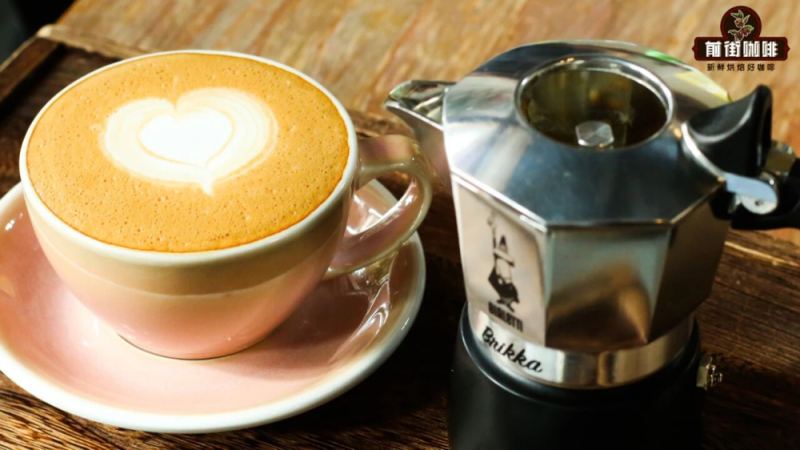

“It can serve as a substitute for an espresso machine” — this is a reason that convinces many friends to make up their minds to buy a moka pot. Since the moka pot, like an espresso machine, uses pressure extraction, it can produce coffee with a higher concentration than atmospheric-pressure extraction. And the reason many friends need this high-concentration coffee is so they can add milk and make a rich, fragrant latte.
But! Here's the problem: many friends find that the "latte" they make by mixing moka pot coffee with milk is vastly different from what they expected. Not only is it not as rich and fragrant as the latte they drink in coffee shops, but the mouthfeel is also very watery — it tastes like coffee-flavored milk diluted with a large amount of water. Front Street certainly anticipated this outcome, and there are two reasons.

First, we need to know that although both are pressure extractions, the pressure used when extracting with a moka pot is far lower than that of an espresso machine, so it cannot make coffee as concentrated as espresso — it's just that compared to other coffees, it comes a bit closer;
Second, the wrong parameters were used! Many friends use parameters recommended by the manufacturer or other bloggers when making moka pot coffee. These parameters aren't wrong, but they're only suitable for making a cup of black coffee, because the concentration isn't high enough. If you want to use moka pot coffee as a base, add milk, and make milk coffee, then as Front Street has always mentioned, we need to modify the parameters and increase the coffee's concentration, so that the coffee's flavor won't be overpowered by the milk, and the mouthfeel won't become thin due to the presence of a large amount of water.

The specific method is very simple! So next, let Front Street share how to use a moka pot to make a rich, fragrant latte.
Super simple! Use a moka pot to make rich, fragrant milk coffee! The coffee beans determine the coffee's own flavor and character, so the first step is to choose a coffee bean based on preference to make moka pot coffee. It's very simple — if you like milk coffee that is mellow, rich and fragrant, with no acidity, then the coffee bean choice can be a more traditional medium-dark or dark roast espresso bean/blend. For example, the Front Street Classic Blend from Front Street's bean list — the espresso made with it will have rich crema, a mellow mouthfeel, and acid-free flavor notes of chocolate, nuts, cream, cookies, and so on;

And if you like milk coffee with more prominent flavors, a less heavy mouthfeel, and something relatively fresher, then the coffee bean can be a medium roast bean with a slightly lighter roast level. For example, the Front Street Espresso Blend · Strawberry Candy Espresso from Front Street's bean list — the espresso made with it will have aromas of strawberry, white flowers, and berries, with a balanced taste and a smooth, rounded mouthfeel.
Once we've chosen the coffee beans, we can begin our extraction. Since what we need to make is a high-concentration coffee that can be turned into a delicious milk coffee, we need to increase the concentration as much as possible. And the best way to increase concentration is to control the amount of water used during extraction. Under the premise that the extraction yield stays the same, the less water we use during extraction, the higher the concentration of the extracted coffee will be. But reducing the amount of water used during extraction will lower the coffee's extraction efficiency, which will reduce the extraction yield. And if we want to maintain the extraction yield while reducing the water to make a high-concentration coffee, then "grinding finer" will be a very good choice.

By grinding finer, we can increase the resistance of the puck to extend the extraction time, while also increasing the surface area of the coffee grounds in contact with water, allowing hot water to more easily dissolve the flavor substances in the coffee — thereby achieving a reduction in water while the extraction yield doesn't drop too much, and the coffee's concentration will thus be greatly increased. Simply put, reduce the water, grind finer, and extend the extraction time — this way you can get a high-concentration moka pot coffee that can make a rich, fragrant milk coffee! Alright, without further ado, next let Front Street demonstrate in practice the specific parameters and production steps!
The coffee bean Front Street chose this time is the Front Street Classic Blend mentioned earlier by Front Street. The parameters are as follows: Grind level: flour-like grind used for espresso — if you have a merchant grind the powder for you, what you receive should be this kind of grind level (at least Front Street uses this grind, as shown in the picture above). Powder amount used: 20g — if your moka pot is smaller, you can adjust it down appropriately. Powder-to-water ratio: 1:4 — for 20g of powder, the amount of water used is 80ml. Initial water temperature: 100°C. Initial water temperature refers to the temperature of the water poured into the moka pot's lower chamber — it doesn't have to be 100°C, but it's best to use hot water~
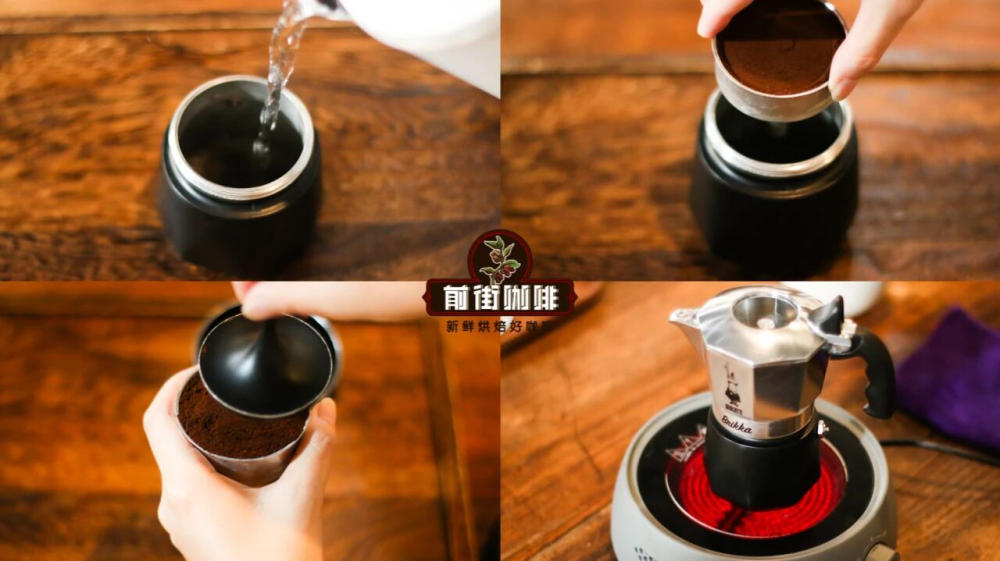
Once everything is ready, we can make moka pot coffee in order: ① Pour hot water into the lower chamber; ② Put the coffee powder into the filter basket, tamp it simply, then put the filter basket into the lower chamber; ③ Assemble the moka pot and place it on the heat source; ④ Turn on high heat until liquid comes out; after liquid comes out, turn the heat down or off, and use the residual heat to complete the extraction.
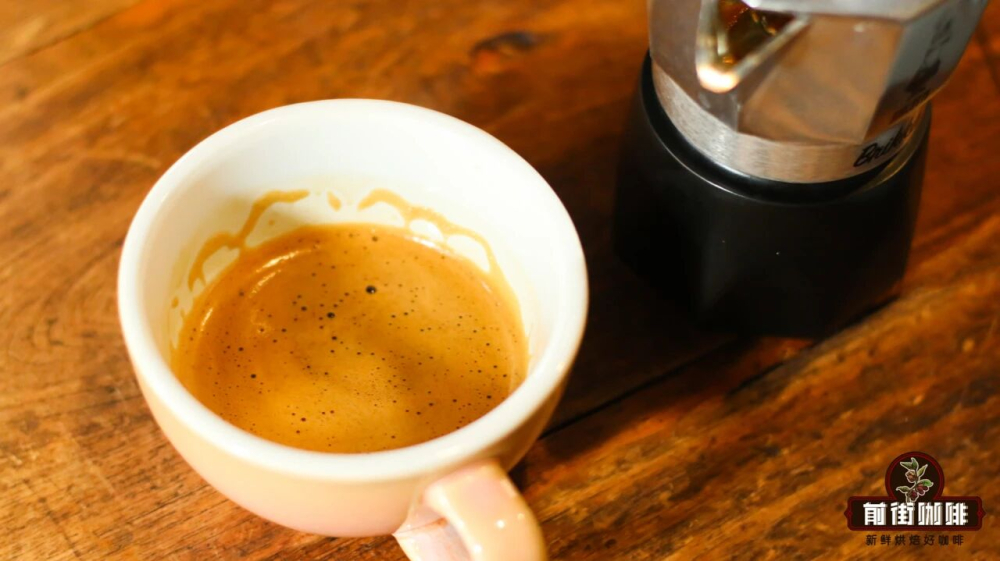
At this point, we've made a high-concentration moka pot coffee, 45ml in total. Then all that's left is to pair it with an appropriate amount of milk to make milk coffee.
Since moka pot coffee isn't as concentrated as espresso, we can't just copy the ratio used in espresso to make it — we need to appropriately reduce the milk, so that the coffee's flavor won't be masked by the milk. Taking Front Street as an example, the Classic Blend used here at Front Street is a medium-dark roast coffee bean, and the coffee made with it has enough roasted aroma to contend with the milk's flavor, so a ratio of 1:4 can be used — that is, 45ml of moka pot coffee can have 180ml of milk added.
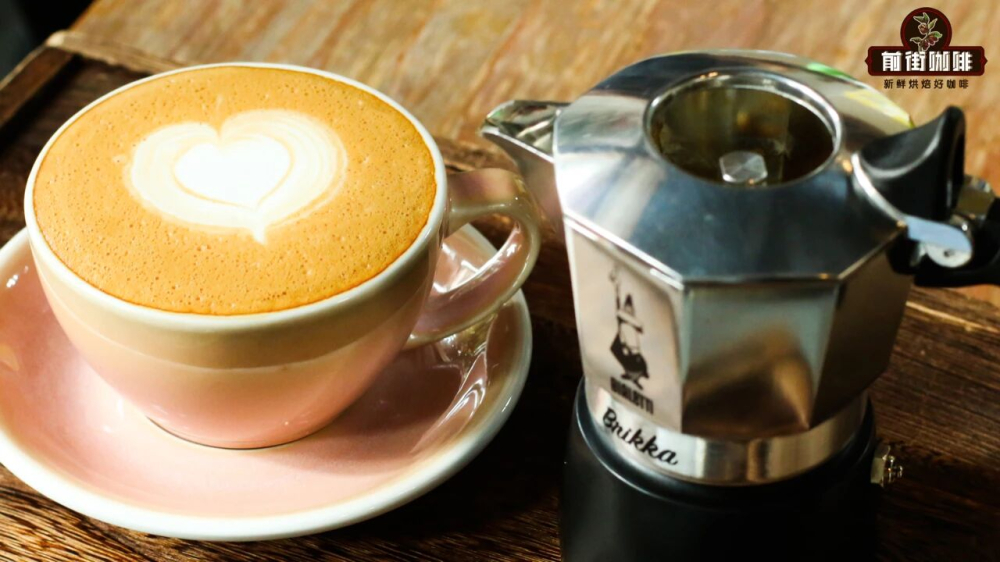
If what everyone makes with moka pot coffee is a "hot latte," you can first steam the milk to 65°C to activate the sweetness of the lactose, then combine it with the coffee — the milk coffee made this way will be even sweeter and more fragrant; and if what you want to make is an "iced latte" and you want to add ice cubes, then you can reduce a certain amount of milk and replace it with ice cubes, so the coffee won't become watery from the ice cubes melting. If what you use is a type with a relatively less rich flavor and a fresher profile, like Front Street Espresso Blend · Strawberry Candy Espresso, then the ratio can be enlarged a bit — use a 1:3.5 ratio to make it, so that the milk's flavor doesn't overpower the coffee's flavor.
That's roughly the method — just that simple. And the same idea can actually be applied to other extraction methods too, such as drip bags, French presses, etc. They can also use the same approach to extract a high-concentration coffee, then add milk to make a rich, fragrant milk coffee~ Everyone give it a try~
For more specialty coffee knowledge, please follow: Front Street Coffee (Frontsteet Coffee)
The above content is compiled by CoffeeHunters, a coffee news website.


