








Brewing coffee with a moka pot—many friends don't know what grind size is suitable. They're also unsure how to fill the coffee grounds properly, and whether tamping is needed. If you have these questions too, you'll find the answers below.
First, what grind size does a moka pot require?
The coffee particle size needed for a moka pot is about 0.3–0.55mm, meaning it basically won't feel as rough as sand grains when you touch it, but it also won't be as fine as flour like the coffee grounds used in espresso machines. You can gauge it in two ways: the first is to buy a particle size ruler or reference moka-specific grounds; the second is through continuous adjustment—usually it won't take many tries, about 3–5 tests and you'll basically get the feel for it. If the grind is too coarse, the coffee liquid will gush out rapidly, possibly even like a fountain. If the grind is too fine, you'll hear the rumbling sound of water boiling but the coffee liquid still won't come up—that means it's too fine, and you should turn off the heat immediately. Remember to take safety precautions when doing this kind of adjustment.
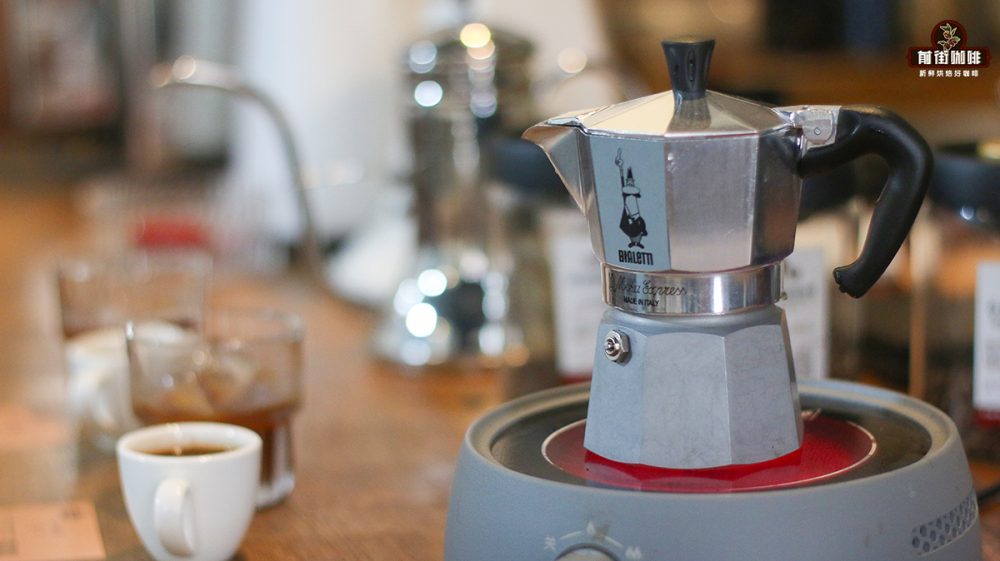
Does a moka pot need tamping?
Through multiple experiments, Front Street believes it's not necessary, because if you can't control the tamping pressure, you may press the coffee grounds too firmly, preventing water from penetrating the coffee puck, which is very dangerous. Of course, some friends worry that without tamping, "channeling" may occur and the coffee liquid will gush out.
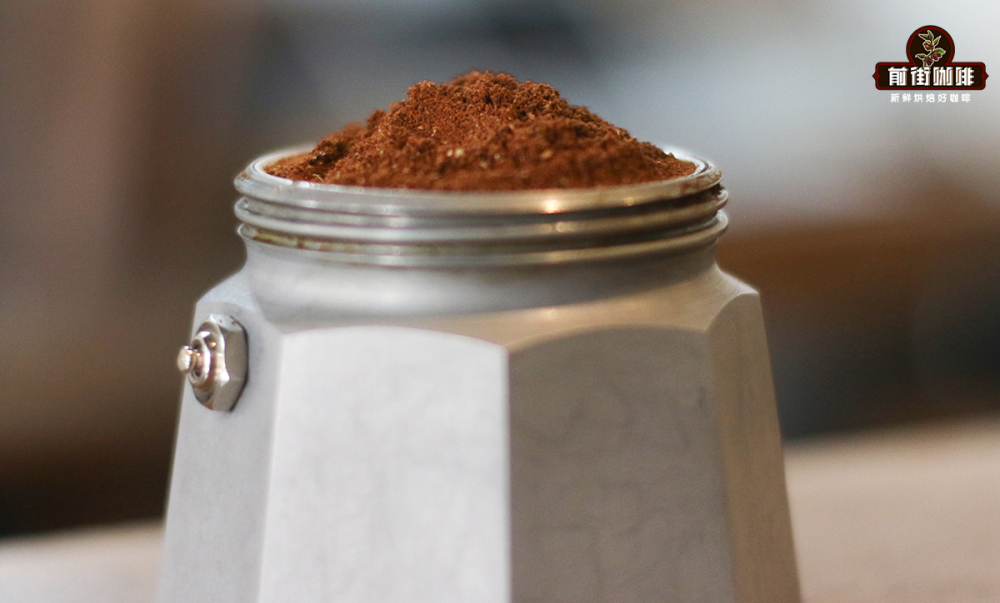
Below, Front Street introduces this filling method that can effectively avoid this phenomenon, and the extracted coffee crema will be very rich.
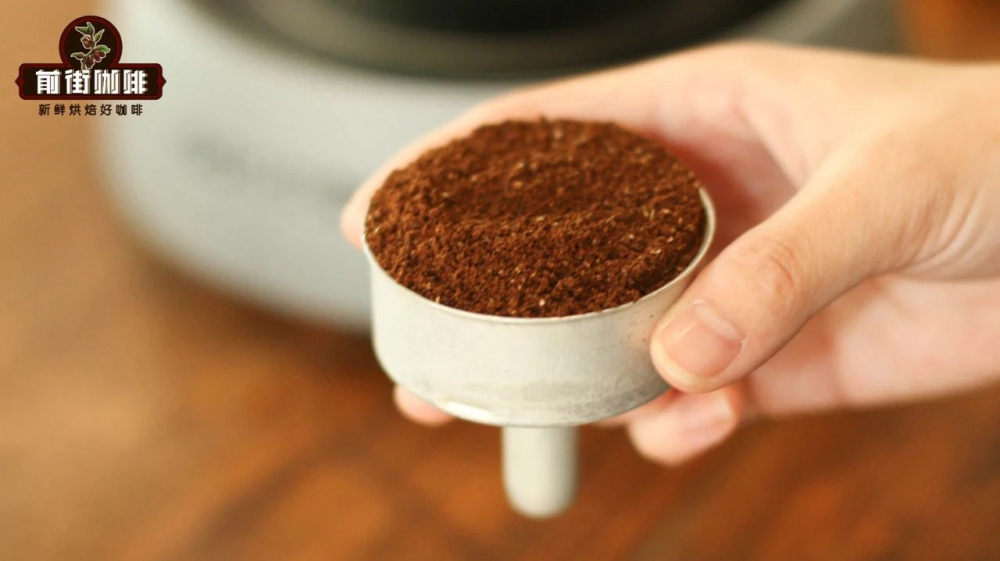
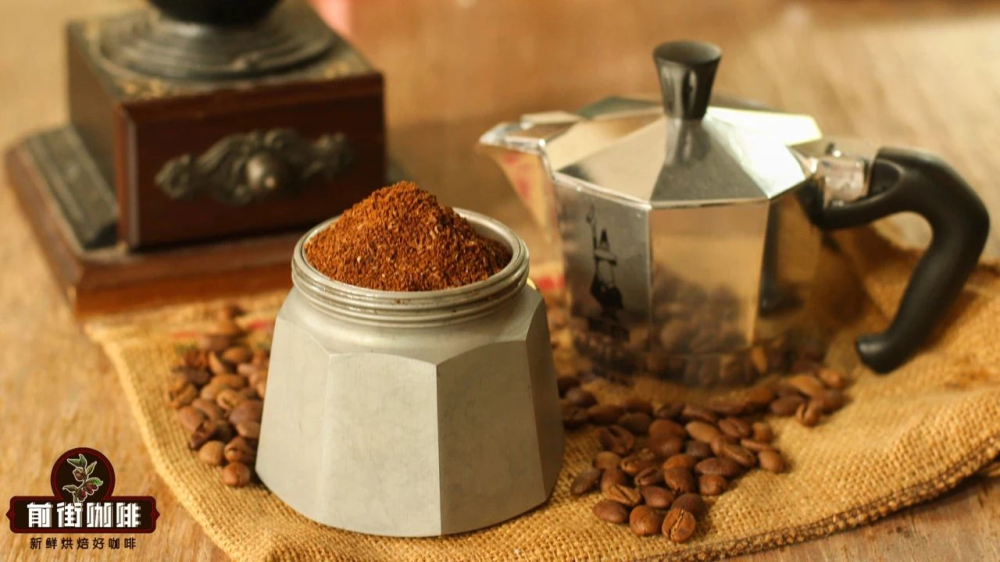
Use your right hand to wrap around the filter basket, then fill coffee grounds into the basket without pressing—let it stay fluffy, piled into a small mound with a raised center. No need to level it, because the upper pot's filter screen is also convex upward. Then press the upper pot on vertically and tighten it. Be sure to clean off any residual coffee grounds on the threads. (Note that the coffee grounds must fill the gaps all around.) The spent coffee puck after extraction will be solid and won't fall apart. And the extracted coffee crema will be very thick.
Brewed for a long time but no coffee liquid comes out
There are two reasons for no liquid coming out. First, the coffee grounds are tamped too tightly; second, the grind is too fine, leaving no space between particles for water to pass through. Both situations cause the internal pressure in the water chamber to rise rapidly, thus damaging the moka pot. So, if you've brewed for a long time, the water is already boiling, yet the coffee liquid still hasn't overflowed, turn off the heat immediately and remove the pot. You can only replace the grounds and start over. (Usually you'll also smell a burnt odor.)
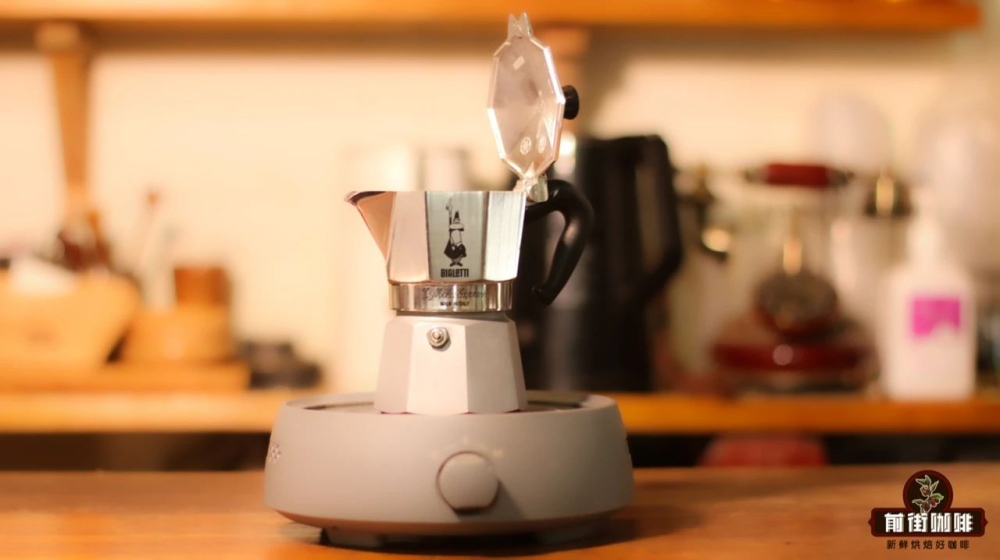
Coffee liquid gushes out
Coffee liquid spurting is the most common extraction problem many people encounter when using a moka pot, and it's also a relatively high-risk situation. If you've also experienced this spurting phenomenon, it means some part of the pot is clogged, or the heat is too high causing the liquid to come out too fast and too much. The amount of water added to the lower chamber must not exceed the standard scale line—keep it 0.5cm below the pressure relief valve line. This valve is designed to prevent explosion accidents caused by excessive pressure from certain factors (such as coffee grounds being too fine). If water covers this valve, the pressure relief effect may be lost, posing a risk of bursting.
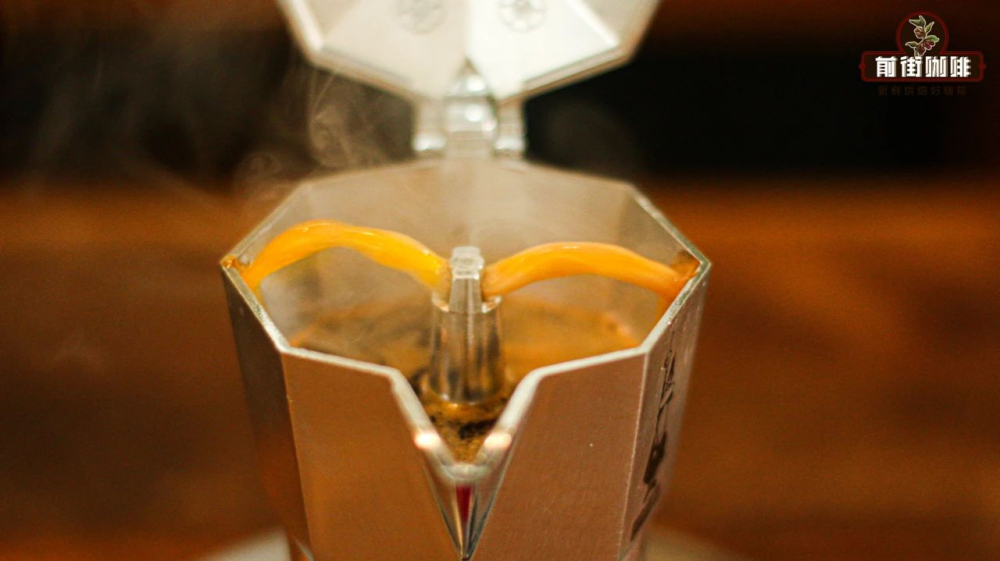
The grind size for a moka pot is generally a bit coarser than espresso grounds, and much finer compared to pour-over. If the grind is too coarse, the contact area between water and coffee grounds is smaller, which not only leads to insufficient extraction and a weak taste, but also causes the liquid to gush out due to too little resistance as it flows upward, posing a risk of splashing and scalding. Front Street recommends a coarseness ofEK-43s#3-3.5on the scale, feeling slightly finer than caster sugar when touched.
The coffee has no crema
The amount of crema produced by coffee is directly related to the roast level and freshness of the coffee beans. The darker the roast and the fresher the date, the richer the crema layer produced under high-temperature pressurized conditions.
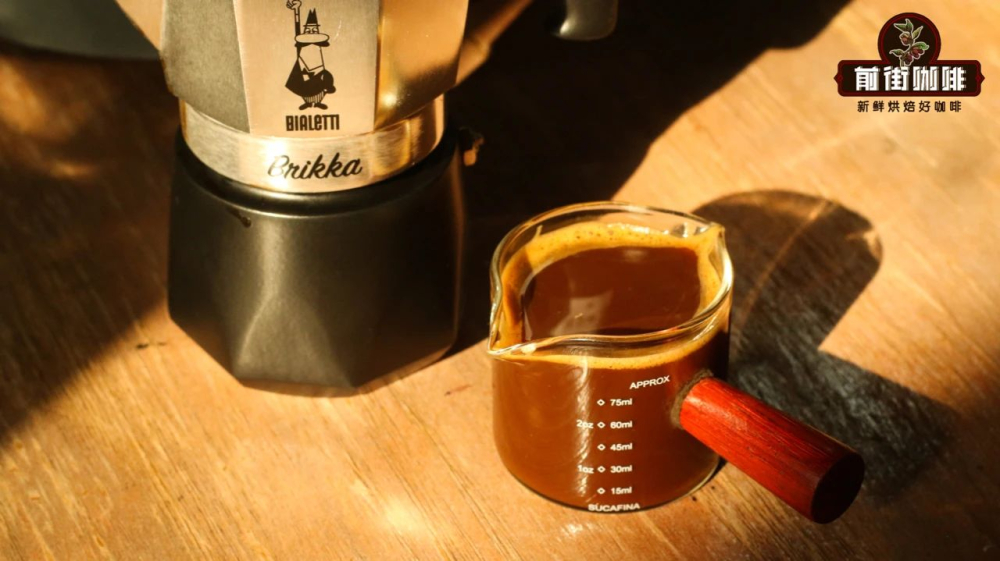
Since the moka pot uses pressure-based extraction, if light-roast coffee is used, light-roast beans are harder in texture and usually require a finer grind to increase extraction rate. However, fine grinding under high temperature and pressure can easily make the coffee sour, astringent, and harsh, and it's also harder to bring out the aroma of the crema. Therefore, Front Street recommends using coffee beans with a medium or darker roast, which ensures taste while making it easier to extract crema.
Why is the coffee's burnt bitterness so strong?
Unlike professional espresso machines, the moka pot doesn't have an even water distribution screen (filter basket)—it only has a small hollow column for the liquid to exit. Whenever the grind is too fine or the dose is too much, it becomes difficult for the liquid to come out, and the coffee can only flow out through the looser areas around the edge of the basket. In this situation, the center of the coffee grounds in the basket is usually dry, while the surrounding ring continuously endures the "baptism" of high-temperature hot water, constantly extracting. The coffee is over-extracted while also under-extracted, which is why the taste is burnt, bitter, and hard to swallow.
Professional coffee knowledge exchange. For more coffee bean information, please follow Coffee Workshop (WeChat public account: cafe_style).
For more specialty coffee beans, please add the private WeChat of Front Street Coffee (FrontStreet Coffee), WeChat ID: qjcoffeex
The above content is compiled by CoffeeHunters, a coffee news website.


