







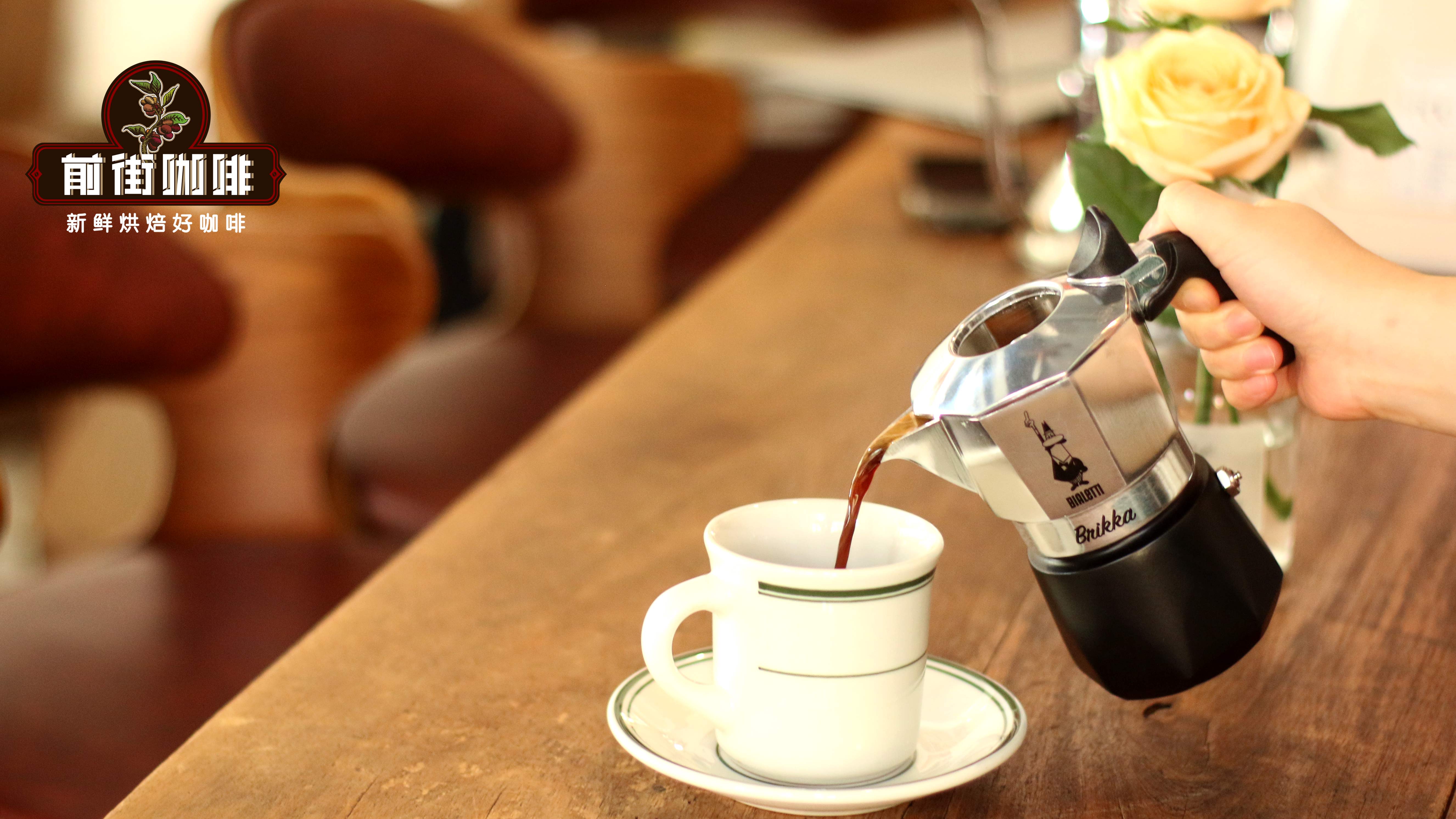

For more coffee origin news and coffee knowledge, please followCoffeeHuntersToutiao account
The moka pot is probably the simplest and cheapest device for making strong coffee. For those who love espresso but aren't ready to dive into semi-automatic espresso machines, the moka pot is a great choice. Although it's said that every Italian mom knows how to use this coffee device, easy as it may be, you still need to understand its basics. So today Front Street Coffee will take you into the interesting world of this device.
For the specialty coffee crowd in China, beans are a crucial factor — which origin, what variety, what roast level, all very particular. But abroad, many people buy their coffee beans (or grounds) off supermarket shelves, because what they care about more is the brand, the intended use of the beans, and the flavor.

The moka pot consists of three parts: the upper chamber, the filter basket, and the base. It comes in different sizes. The base is the water reservoir, the filter basket holds the coffee grounds, and the upper chamber holds the brewed coffee. The principle behind the moka pot is actually quite simple: when in use, the water in the base is heated to produce steam pressure. The water for extracting coffee flows from bottom to top. When the pressure builds up high enough, it pushes upward. The hot water flows through the filter basket layer, and the coffee grounds create resistance to the water flow. Finally, the hot water breaks through the resistance of the coffee grounds and surges into the upper chamber as rich coffee liquid.
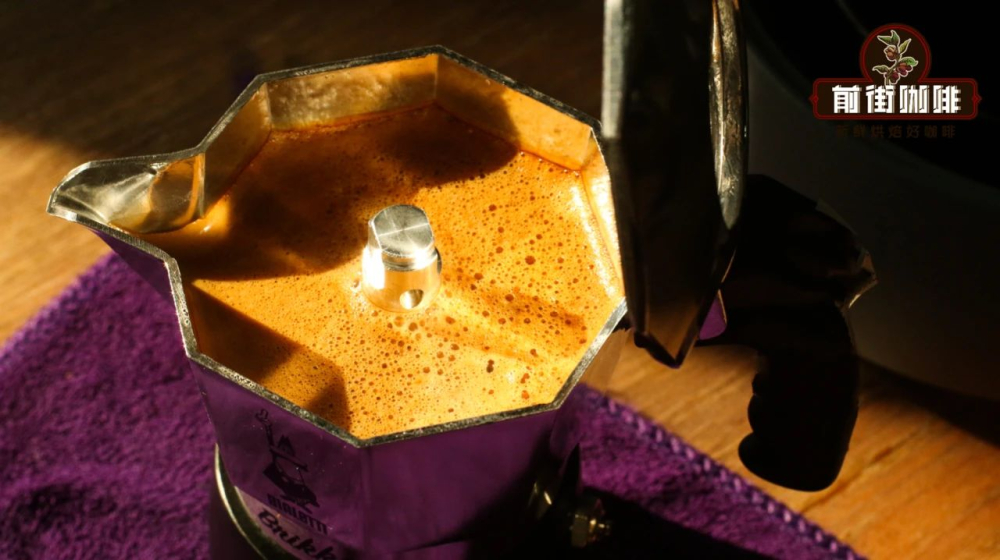
Precisely because the moka pot uses pressure-based extraction, with high temperature and fast extraction speed,if you want the coffee to have a moderate amount of crema along with a rich, smooth flavor, you should prioritize fresh medium-dark roasted coffee beans. Recommended: Front Street Coffee Classic Italian Blend (traditional Mamba recipe, fine and full-bodied crema), Front Street Coffee Commercial Blend (same ingredients used by coffee shops, rich crema), Front Street Coffee Specialty Blend (prominent caramel notes, obvious sweet aftertaste). To help everyone enjoy great coffee freely, Front Street Coffee promises that every bag of coffee beans is roasted within 5 days, so all customers receive them in the freshest condition and can easily make delicious moka pot coffee.

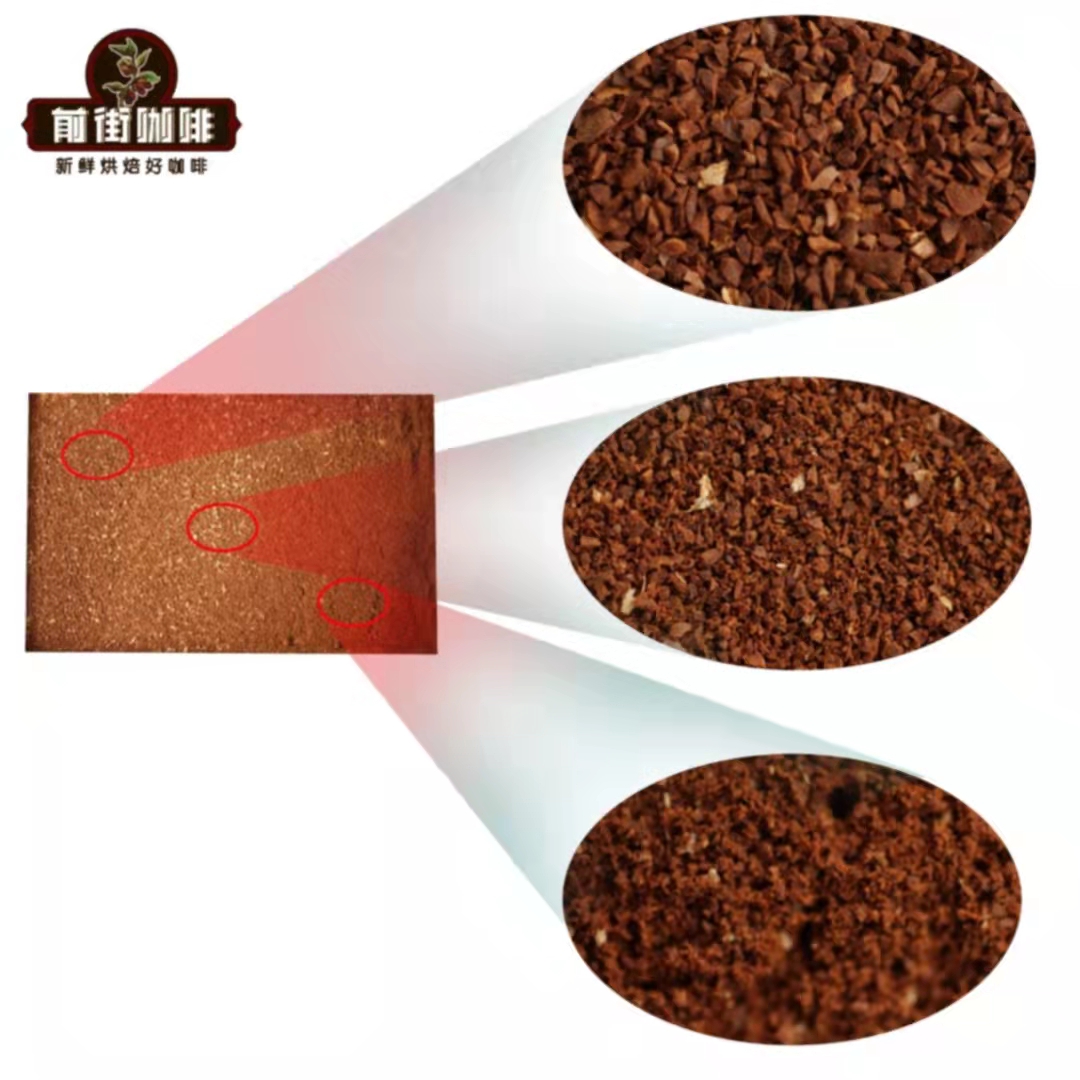
Of course, if you really can't figure out the grind size, or you don't have a coffee grinder at home, Front Street Coffee offers a grinding service for our own coffee beans. However, note that once coffee beans are pre-ground, the aroma dissipates faster, and the crema from the moka pot will be greatly reduced. So we still recommend buying your own grinder — grinding fresh and brewing immediately gives the best results.

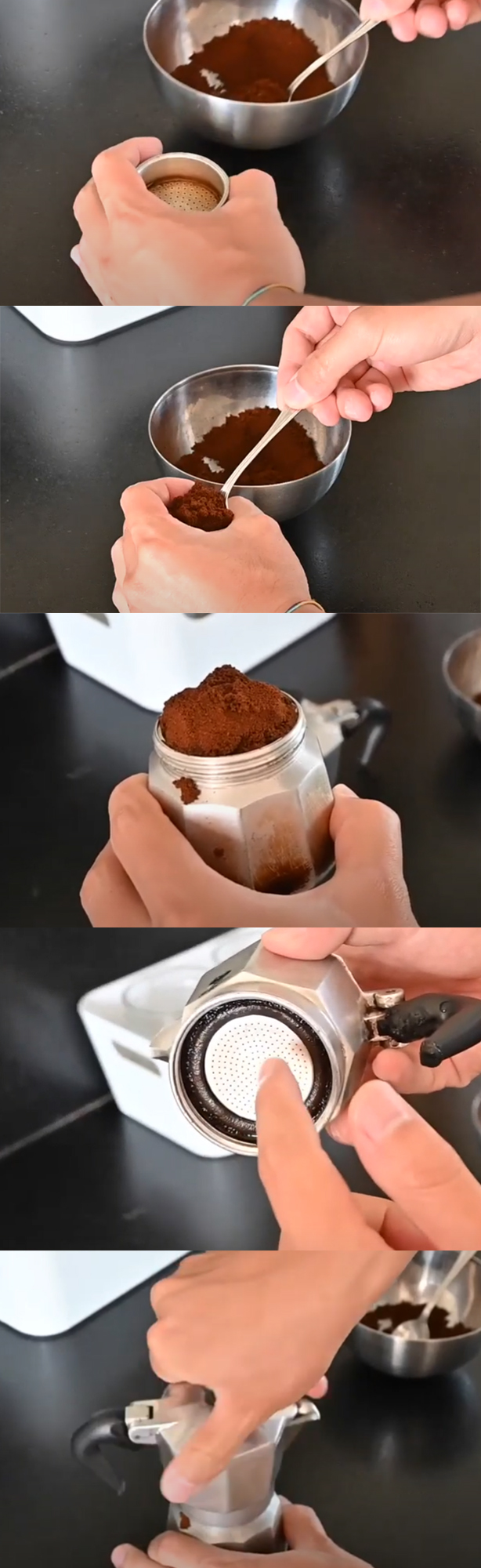
After trying it once, Front Street Coffee found it quite practical — the crema was very rich, and after extraction the puck was solid with no channeling. You can try imitating this method.
The fourth question: how do you gauge the water amount?
Compared to other brewing methods, the moka pot doesn't have very strict water-to-coffee ratio requirements. Generally, the water level should be kept about 0.5cm below the pressure relief valve (safety valve). Front Street Coffee measured that when water is added to 0.5cm below the pressure relief valve, it's about 100g. When the filter basket is level-filled with coffee grounds, that's 20g, giving a coffee-to-water ratio of about 1:5. But if we only want to brew "half a serving," then both the coffee amount and water amount should be reduced accordingly. For example, with 15g of coffee grounds at a 1:5 ratio, you'd pour in 60g of water — that is, 1cm below the pressure relief valve.
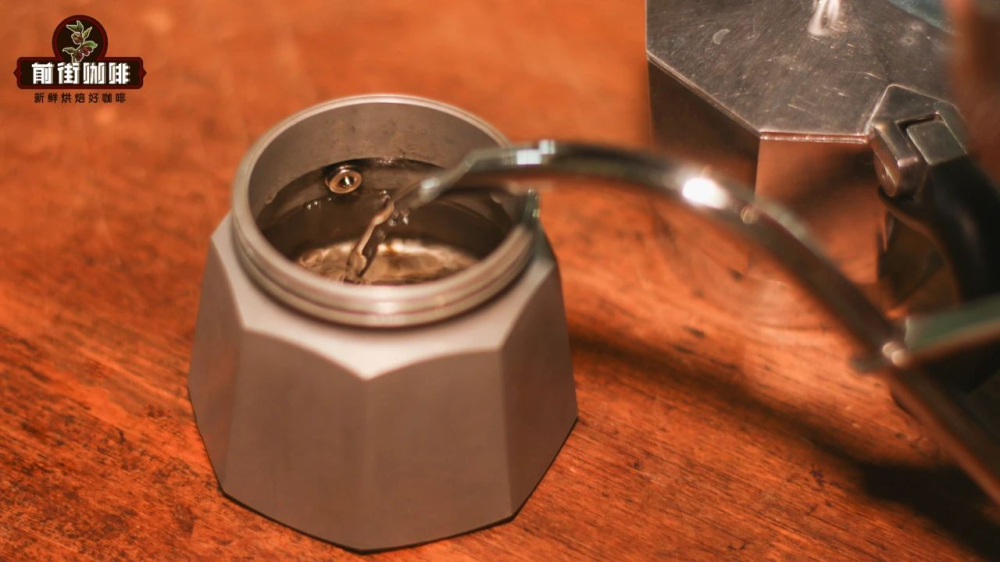
Note: if we use a smaller amount of grounds, it's easy to cause splattering when the moka pot boils. So after pouring the coffee grounds into the filter basket, Front Street Coffee first gently taps left and right to let the loose grounds settle naturally and pack the particles closely together. Then find a small spoon and use the back to gently "press" the coffee bed until it's compressed to about half its original height.

As for the water question, using cold water increases the steeping time of the coffee grounds, which can cause over-extraction and bitterness. So Front Street Coffee recommends using hot water, which also shortens the extraction time.
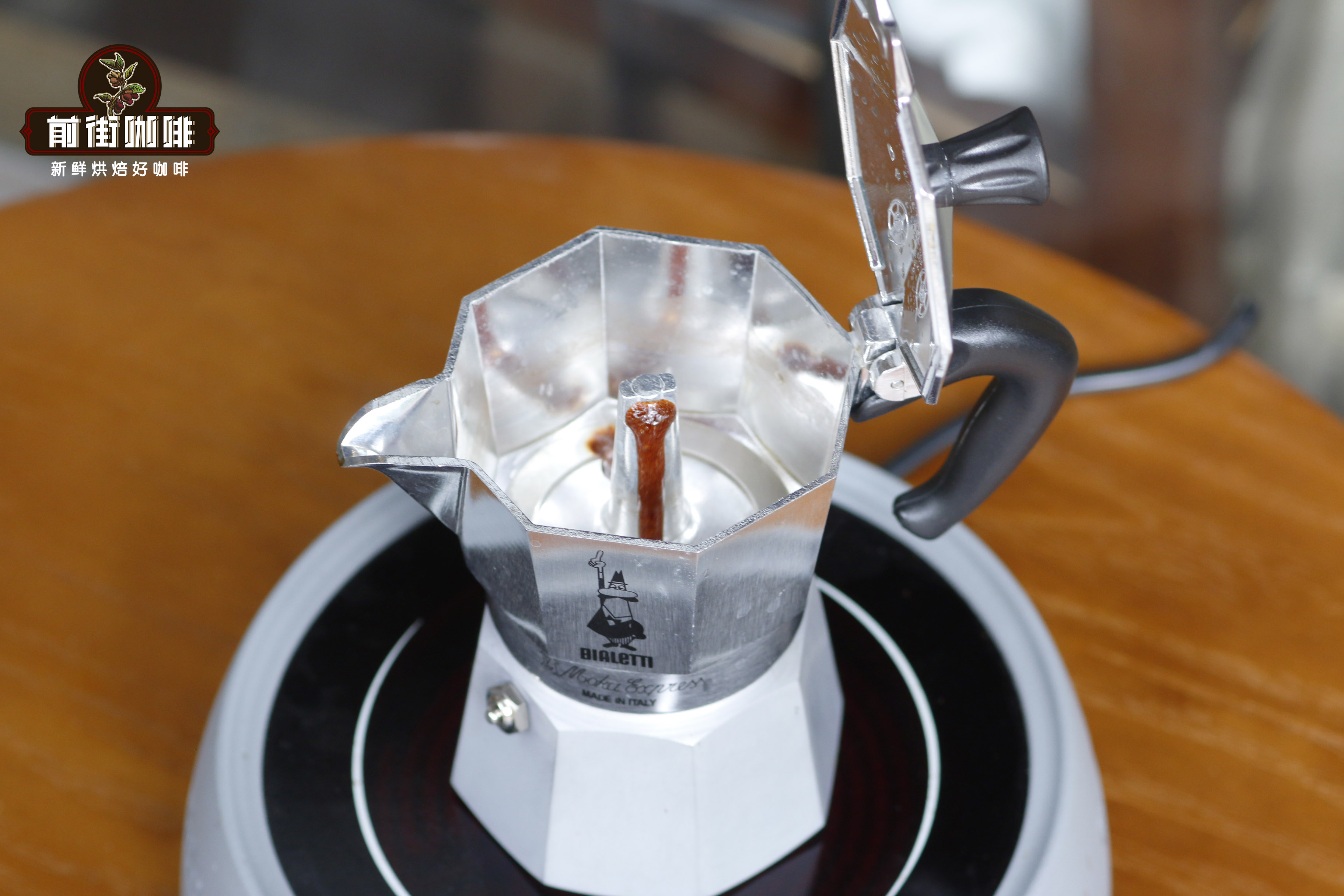
Finally, for safety's sake, Front Street Coffee will add one more reminder: since most moka pots have a metal exterior with high thermal conductivity, try not to touch the body after heating. Remember to use heat protection — a damp towel works — to avoid burns. If you hear the hissing sound but the upper chamber never fills with coffee, the spout is likely clogged. Turn off the heat source first to prevent excessive internal pressure from causing an explosion and safety hazard.
The above content is compiled by CoffeeHunters, a coffee news website.


