








Everyone knows that making espresso-based milk coffee requires espresso and milk, and there are many types of milk coffee, such as latte, mocha, cappuccino, etc., each using different ratios of espresso to milk. In this article, Front Street Coffee would like to share with you the recipe ratio and milk frothing level for the Flat White from Front Street Coffee's hidden menu.
What isFlat whitecoffee?
Flat white is a coffee beverage that originated in Australia, so it is also calledAustralian white coffee, but some people claim that Australian white coffee actually originated in New Zealand. Apart from the dispute over its origin, the methods of making Australian white coffee also vary. Australian white coffee is a milk coffee beverage with a stronger coffee flavor, less milk, and thinner milk foam. Regarding the choice of espresso base, New Zealanders prefer to use a double ristretto to make Australian white coffee, while Australian baristas prefer to use a single espresso.

And according to Front Street Coffee's understanding, in Australia, people only make Australian white coffee hot, because once you add ice cubes, it becomes an Australian white coffee that has lost its soul, as the ice cubes will dilute the overall concentration, so it can also be understood that making Australian white coffee iced turns it into a latte.
Flat white coffeeHow is it made?
Latte, on the other hand, is a coffee beverage with a large amount of milk added. The biggest characteristic of Australian white coffee is that when the milk is poured into the coffee, it is not combined with the coffee by swirling; instead, a thin stream is poured from the center, ensuring that the crema on the surface of the espresso is not broken up when the milk is poured, thereby forming a small white circle in the middle.

First, Front Street believes that flat white coffee is a coffee that highlights the coffee flavor. Australian white coffee uses a higher amount of espresso than latte. At Front Street, when makingAustralian white coffee, we also use a double espresso, but the amount of milk poured in is 100ml less than that of a latte. In terms of frothing the milk, the milk foam is also thinner than that of a latte, so that with your first sip you can take in all the milk foam and the unbroken espresso crema.
The following is the ratio recipe used by Front Street Coffee (FrontStreet Coffee) when making flat white coffee:
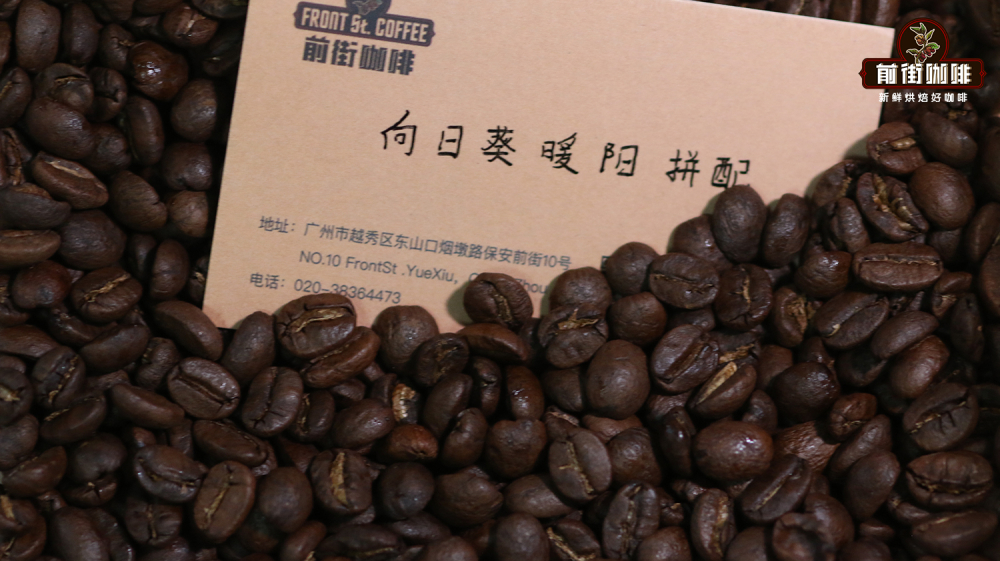
Front Street Coffee uses a Faema E98 espresso machine when making espresso, and the espresso beans used are the Sunflower Warm Sun espresso blend. The extraction parameters are as follows:
Pressure: 9 bar
Temperature: 90.5~96°C
Time: 20~30 sec
Coffee-to-water ratio: 1:1.7~1:2
Dose: 12g (single espresso) 20g (double espresso)
Espresso yield: 20ml (single) 40ml (double)
Recommended milk-to-coffee ratio for Australian white coffee
Milk: whole fresh milk (Front Street uses Vitasoy fresh milk)
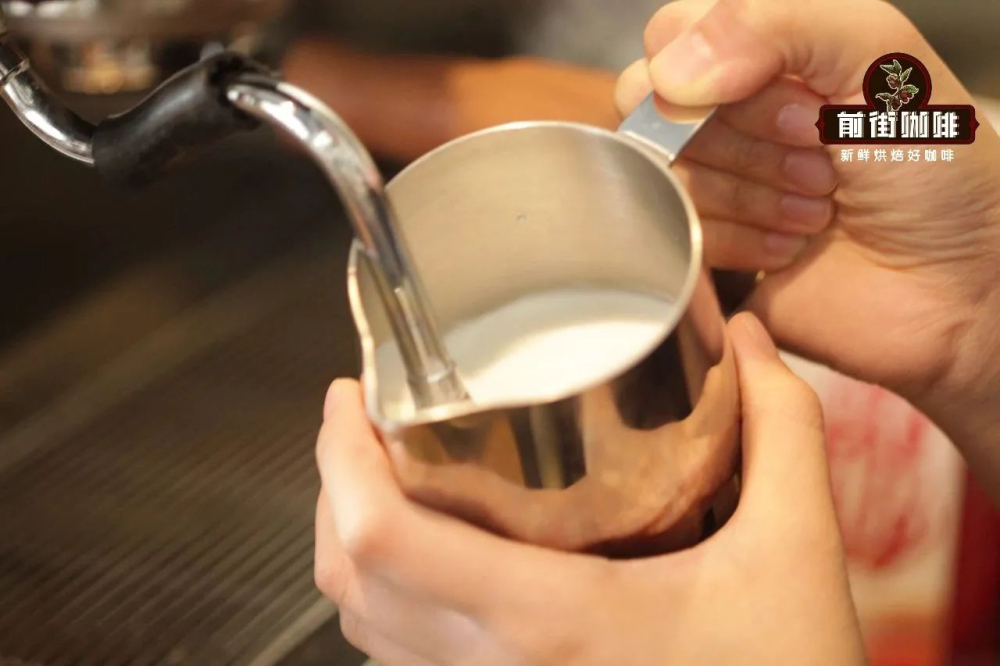
Milk frothing temperature: 50-60°C (too low a temperature cannot bring out the lactose in the milk, while too high a temperature will destroy the protein in the milk, resulting in a gritty texture)
Milk foam thickness: 5mm (1cm of milk foam is for making latte, 1.5cm thick milk foam is for making cappuccino)
Espresso amount: 40ml
Milk amount: 140ml
Above, Front Street Coffee has provided the preparation parameters for espresso and the milk ratio amounts. Next, the most important step is to froth the milk into milk foam, which is also one of the essences of espresso-based milk coffee. So next, Front Street Coffee will teach everyone how to froth milk.
What is the best frothing state and level for flat white's milk foam?
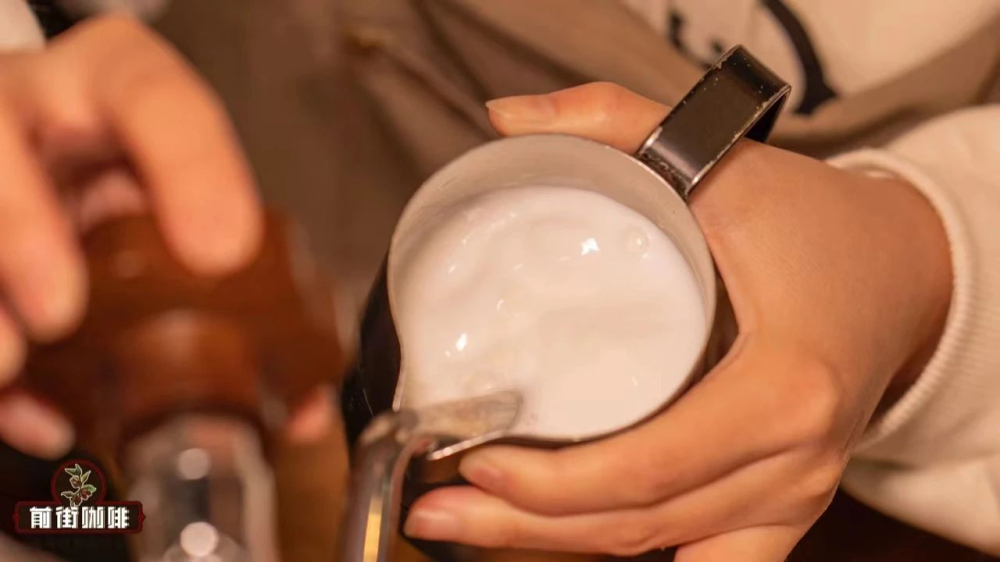
As Front Street Coffee mentioned above, flat white coffee is composed of two parts: espresso and milk. And what needs to be added is frothed milk, and the operation of frothing milk is a great test of a barista's milk-frothing skills. Therefore, making Australian white coffee is divided into three parts: the first part is extracting the espresso, the second part is frothing the milk, and the third part is combining the frothed milk with the espresso and doing latte art.
How to froth milk?
Front Street Coffee mainly relies on the coffee machine's steam wand to froth milk. Pour an appropriate amount of milk into the milk pitcher. For example, Front Street Coffee's latte serving cup is 300ml, so 280ml of milk can be poured in, because after frothing the milk expands due to the air incorporated into it. Before starting to froth the milk, briefly open the steam switch and let out a short burst of steam to expel excess water from the steam wand, then submerge the steam tip of the steam wand into the milk surface and turn on the switch. Finally, combine the frothed milk with the extracted espresso and do latte art.
So what is the degree of milk frothing for latte art?
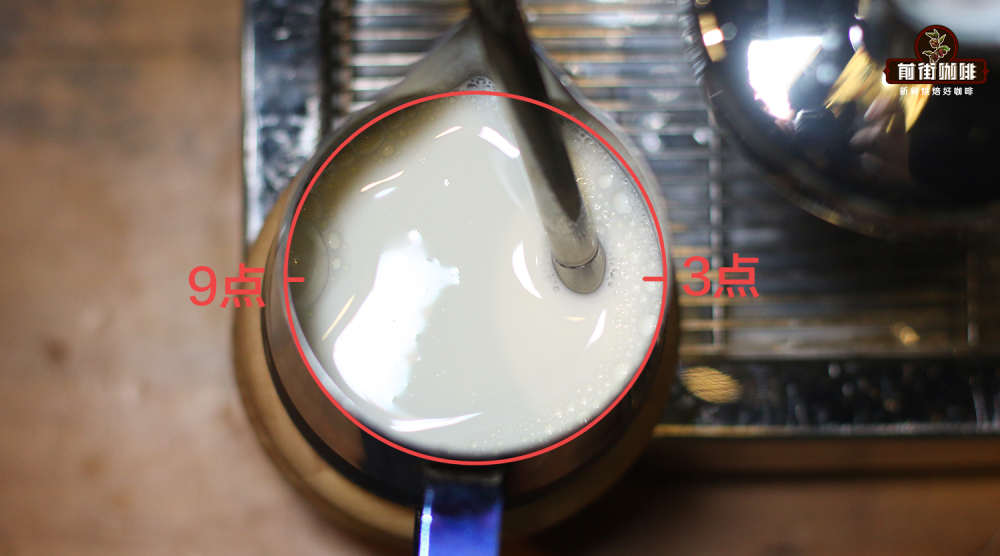
According to Front Street Coffee's practical experience, milk foam can be said to be the most important factor. The fineness of the milk foam directly affects how long the milk foam remains stable. The finer the milk foam, the slower it breaks down. Frothing milk can be divided into two stages: frothing and texturing. Among them, texturing is about making the already-frothed coarse milk foam fine and smooth. Specifically, the steam wand can be inserted deeper into the milk foam layer, about 1cm below the surface, with all the steam holes buried inside the milk, and through a one-directional vortex the milk foam is textured until fine and smooth. Generally, qualified milk foam has no large bubbles on the surface, appears glossy, and has good fluidity.
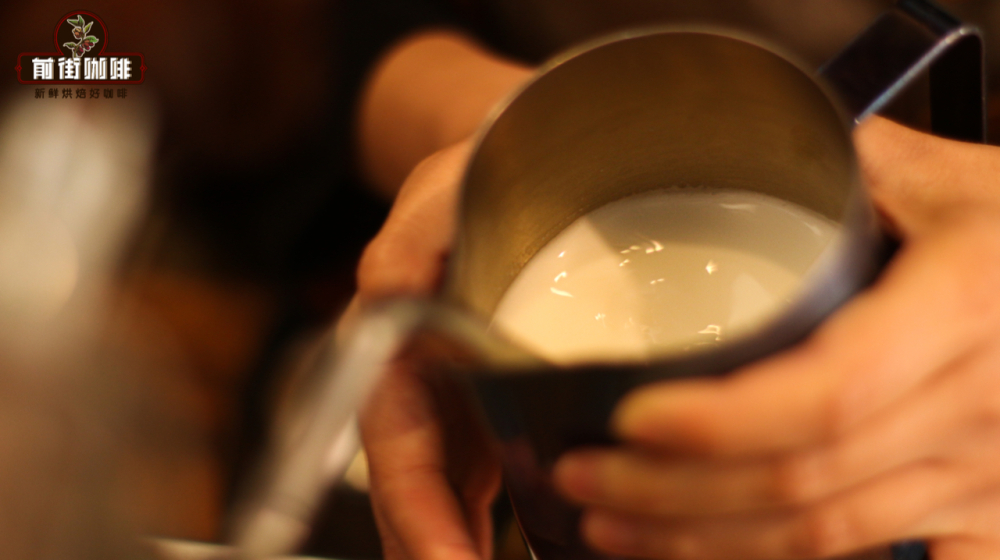
Of course, the temperature of the milk will also affect the speed at which the milk foam breaks down (separates). The ideal temperature for frothing milk is between 55-65°C. If it is lower than this temperature, the sweetness of the milk cannot be brought out as much as possible; if it is higher than this temperature, too much protein will be denatured. That is, it will accelerate the speed at which the milk foam breaks down.
What kind of milk is used for frothing milk?
Next is a common question that Front Street Coffee often hears from customers about frothing

First, everyone should know that milk is composed of three main components: protein, carbohydrates, and fat. Protein makes up 3.3% of milk. Protein can be broken down into two elements: casein and whey protein.
Whey protein contains nine essential amino acids, which coagulate or denature when heated to high temperatures. Casein, on the other hand, forms "micelles" (micelles refer to surfactants dissolved in water that, when at low concentrations, exist as single molecules or are adsorbed on the surface of the solution, thereby reducing surface tension). When milk is steamed, the formation of micelles is disrupted, and casein molecules wrap around air bubbles, protecting them from bursting and thus forming milk foam.
The protein content in different types of milk affects the durability of latte art decorations on the surface. Whole milk has a richer mouthfeel and thicker foam, while low-fat milk tends to produce larger bubbles when steamed.
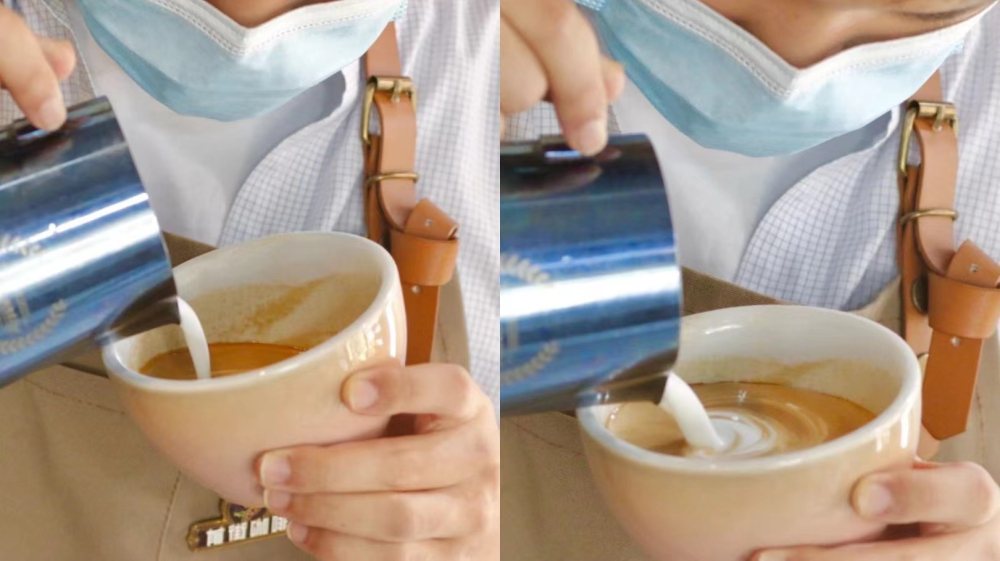
Therefore, Front Street Coffee (FrontStreet Coffee) chooses whole milk with good foaming properties when making milk-based coffee. So whether it's whole milk, low-fat milk, or skim milk, all can be used to make milk-based coffee. It's just that these milks differ in fat and protein content, making the difficulty of preparing milk-based coffee vary, and of course, there are significant differences in taste as well. Because whole milk has high fat and protein content, the foam it produces is dense, long-lasting, and pleasant in mouthfeel, making it the top choice, but other milks also have their own advantages—it all depends on what you choose for different situations.
The above is the relevant content compiled by Front Street Coffee (FrontStreet Coffee) on how to make a flat white and how to steam milk foam. At the same time, Front Street Coffee (FrontStreet Coffee) also hopes to help coffee enthusiasts who want to learn about related knowledge, so that in the future they can easily make a cup of aromatic espresso milk coffee at home.
For more specialty coffee beans, please add the private WeChat of Front Street Coffee (FrontStreet Coffee), WeChat ID:kaixinguoguo0925
The above content is compiled by CoffeeHunters, a coffee news website.


