







For more specialty coffee knowledge, please follow our WeChat official account: Front Street Coffee (FrontStreet Coffee)
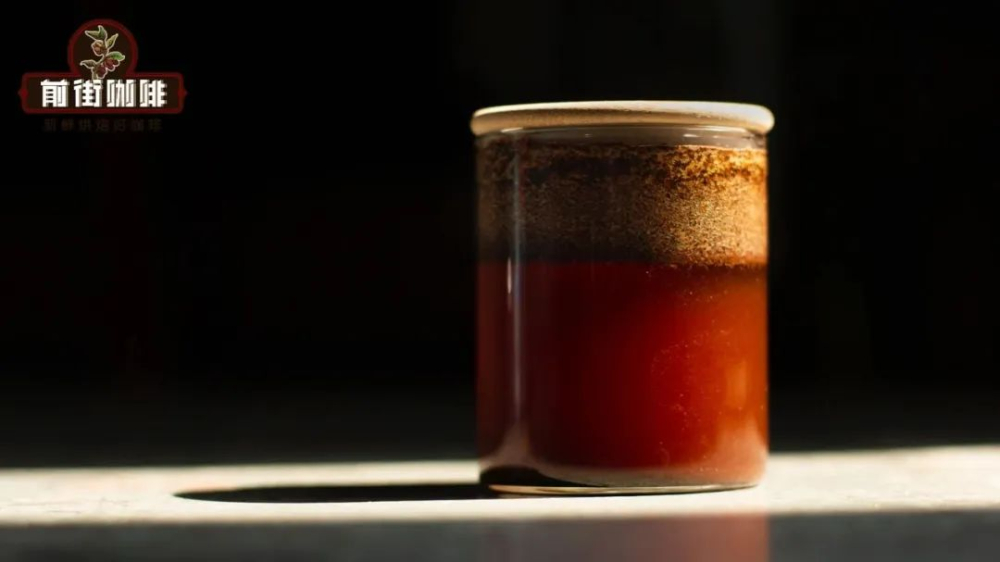
Cold brew coffee originally refers to the process where, under low-temperature conditions, small-molecule compounds that tend toward aroma and acidity are more easily released in cold water, so the coffee tastes light-bodied and mostly presents a sweet-and-sour profile. In addition, since it is not limited by equipment or location, cold brew can be said to be coffee that people can easily get their hands on—at home, as long as you have ingredients, a bottle, water, and a refrigerator, you can easily achieve caffeine freedom.
Regarding the making of cold brew, some people asked Front Street: What is the difference between cold brews made with different ratios? How does the coffee-to-water ratio affect the coffee?
As a typical immersion extraction, cold brew coffee is the process of extracting flavor by keeping low-temperature water and coffee grounds in the same container in contact for a long time. When other parameters remain unchanged, the larger the proportion of water, the lower the concentration of the coffee liquid, the lighter the coffee taste, and the thinner the mouthfeel; conversely, the smaller the proportion of water, the higher the concentration, the stronger the taste, and the thicker the mouthfeel.
Therefore, in order to find a balanced mouthfeel and allow the coffee to present a better flavor, we have to apply an appropriate coffee-to-water ratio.
How long should cold brew be steeped? How fine should the coffee grounds be ground?
We all know that the various parameters involved in any extraction plan are more or less related. For cold brew, the coffee-to-water ratio is not the only factor determining the taste; we also need to look at grind size, steeping time, water quality, and most critically, the coffee beans.
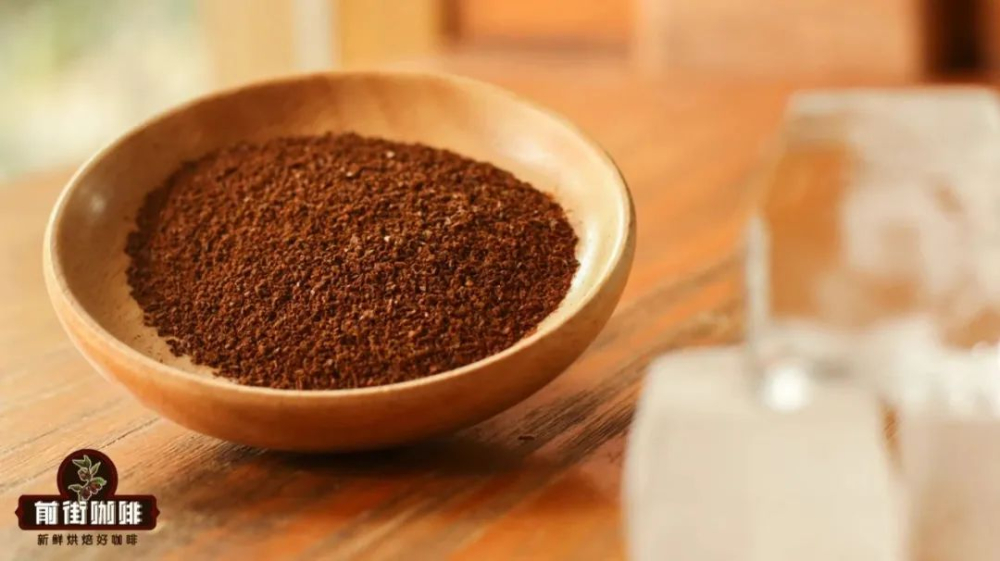
Although low-temperature extraction can reduce the appearance of bitter substances, it is not 100 percent effective. So if you want to pursue deliciousness, the coffee grounds used for cold brew should not be ground too fine, and even more so should not be steeped too long. For the former, we recommend controlling it to about an 80-85% pass rate through a 0.85mm standard sieve, so that it looks like granulated white sugar to the naked eye; for the latter, it is best to keep it within 6 to 16 hours, because this ensures sufficient contact time between grounds and water, and at the same time makes it less likely to show negative flavors due to over-extraction.
Regarding the choice of coffee beans, here Front Street uses Kenya · Little Tomato from the bean shelf as an experimental demonstration. It uses the K72 washed processing method, and the varieties are SL28 and SL34. Both SL28 and SL34 are varieties selected after multiple rounds of cultivation. SL28 belongs to the Bourbon genetic group and carries the bright tonality and rich acidity of the original Bourbon, while SL34 is genetically closer to Typica and has a milder acidity.
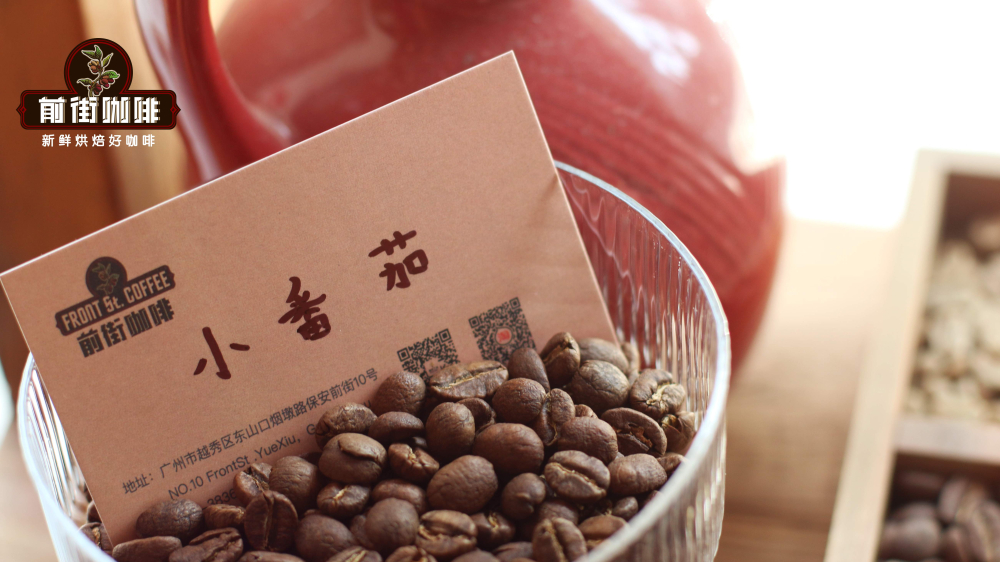
Iced coffee made from Kenya AA has an entry on the palate like dark berries wrapping around the mouth, while also carrying a full aroma of small tomatoes. Drunk ice-cold, it is extremely satisfying, which is why it is the first-choice bean for many friends when making cold brew.
How does cold brew coffee made with different coffee-to-water ratios taste?
Since cold brew is always carried out in an environment of 0-10°C, the extraction efficiency is very low. In addition, the coffee grounds and water are in a relatively static state, and there is no external force driving them in the process, so the speed at which the coffee grounds dissolve flavor substances is very limited. In order to make the experimental results clearer, Front Street set up 4 relatively common coffee-to-water ratios here, namely 1:8, 1:10, 1:12, and 1:15, with all other parameters kept unchanged.
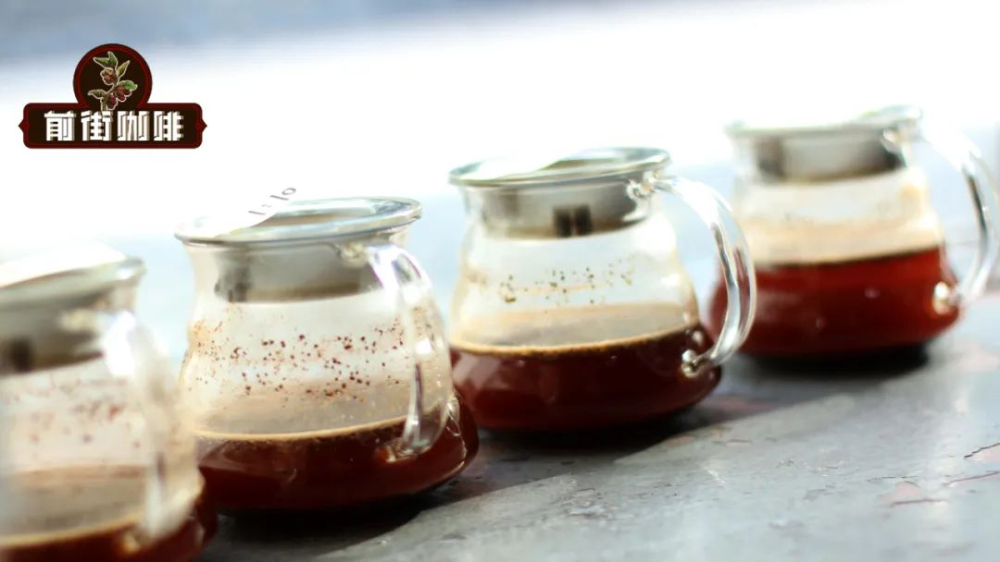
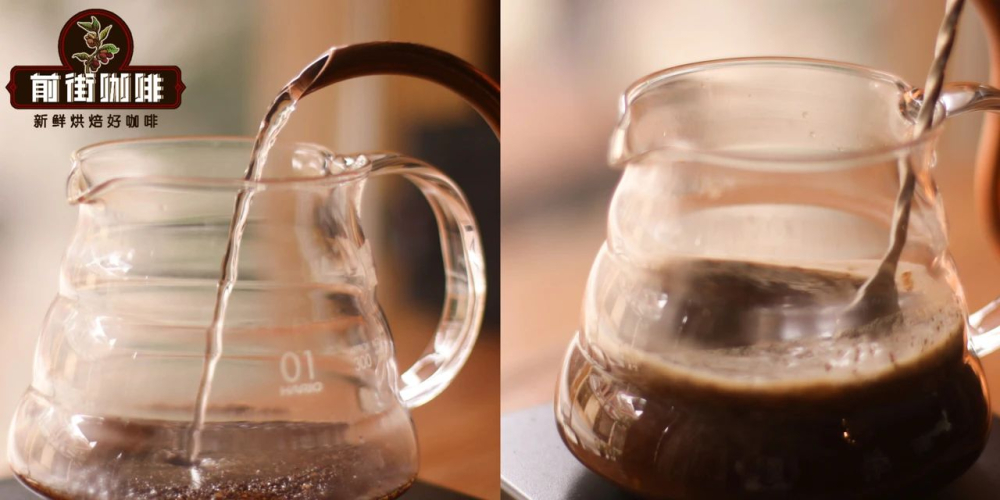
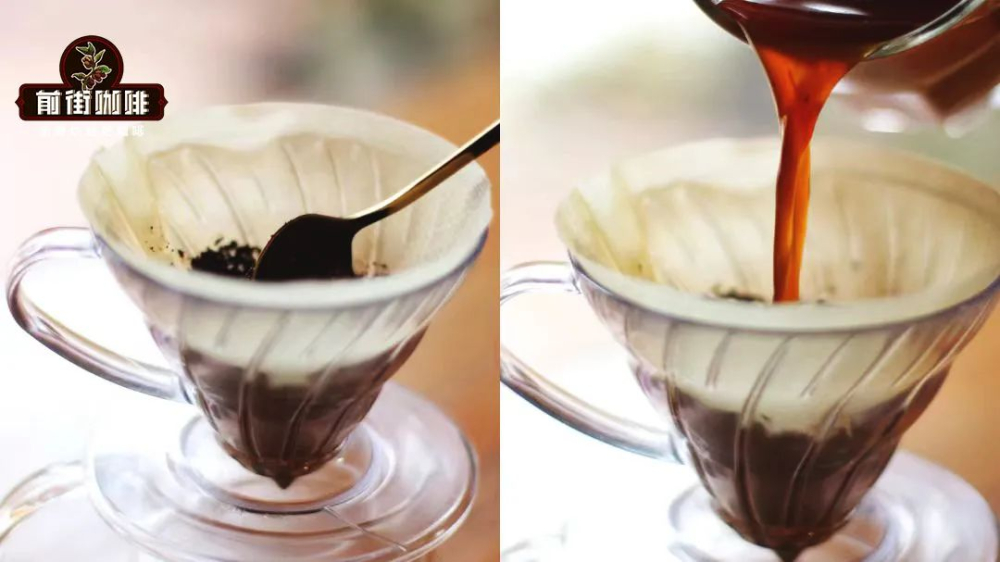
The production steps are all the same: pour the coffee grounds and water into the container in sequence, then stir, seal, and place them in the refrigerator one by one. When the time is up, we take them out and filter them (they can be stirred once during the process).
Coffee beans: Kenya · Little Tomato
Coffee dose: 18g
Steeping time: 6 hours
Grind size: fine granulated sugar / 80% pass rate through China No. 20 standard sieve (EK43s setting 9.5)
Coffee-to-water ratio: 1:8, 1:10, 1:12, 1:15
Corresponding water amounts: 144g, 180g, 216g, 270g
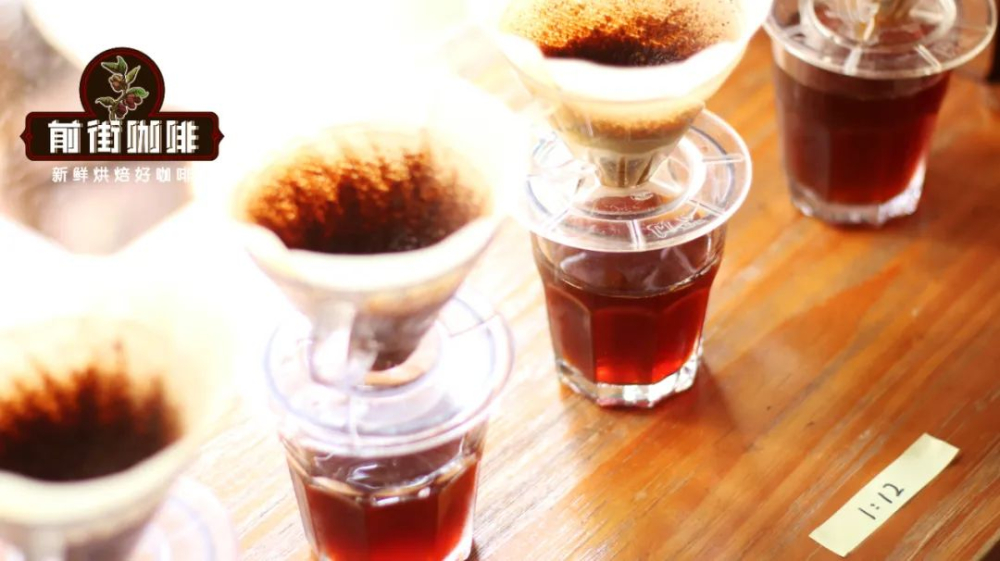
The coffee liquid with a coffee-to-water ratio of 1:8 has the darkest color, the strongest and most sour taste, and even a slightly salty mouthfeel; the flavor has only a little berry, with a bitter finish;
The coffee liquid with a coffee-to-water ratio of 1:10 smells of fresh sugarcane, with flavors of red plum, berries, and pear tea; the mouthfeel is slightly on the strong side, with high acidity and no obvious sweetness;
The cold brew with a coffee-to-water ratio of 1:12 has the clearest mouthfeel, with flavors of small tomato, red plum, smoked plum juice, sugarcane, and the lingering fragrance of preserved plum candy; the concentration is moderate, with balanced acidity, sweetness, and bitterness;
The coffee liquid with a coffee-to-water ratio of 1:15 has the lightest color, a thinner body, and only a little acidity from black plum and berries; the taste is bland, but there is almost no bitterness.
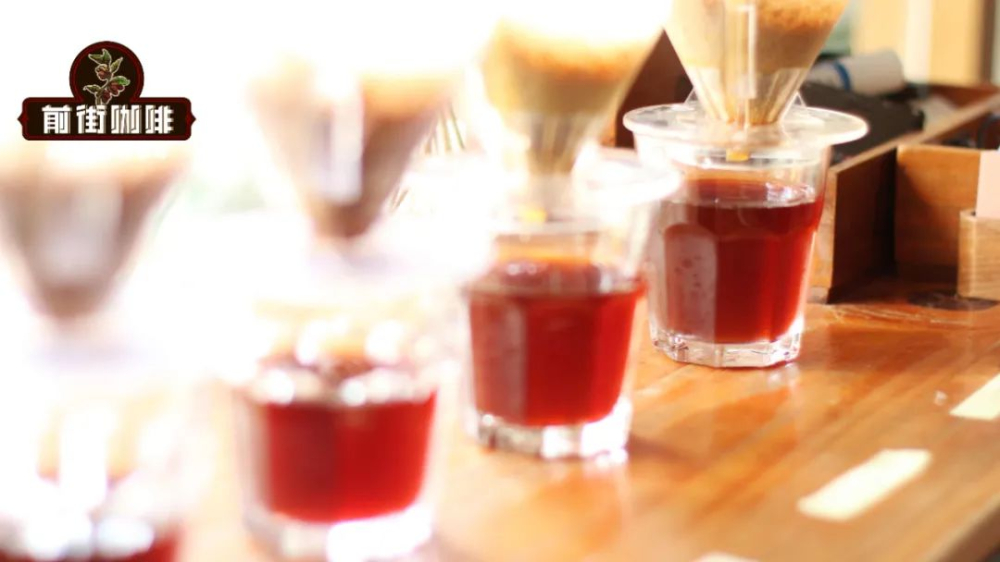
From the above comparison, it is not hard to see that because the 1:8 ratio uses less water, the coffee flavor does not have enough room to develop, and it also easily shows the negative characteristics of being heavy and bitter; on the contrary, because the 1:15 ratio uses more water, the soluble substances are overly diluted, resulting in insufficient body and purity of the coffee, so it naturally tastes weak and flavorless.
Among the two groups of 1:10 and 1:12, the cold brew coffee made with 1:12 clearly has the best flavor and mouthfeel when drunk directly, but Front Street will prioritize 1:10 in many articles and daily service. Why is that?
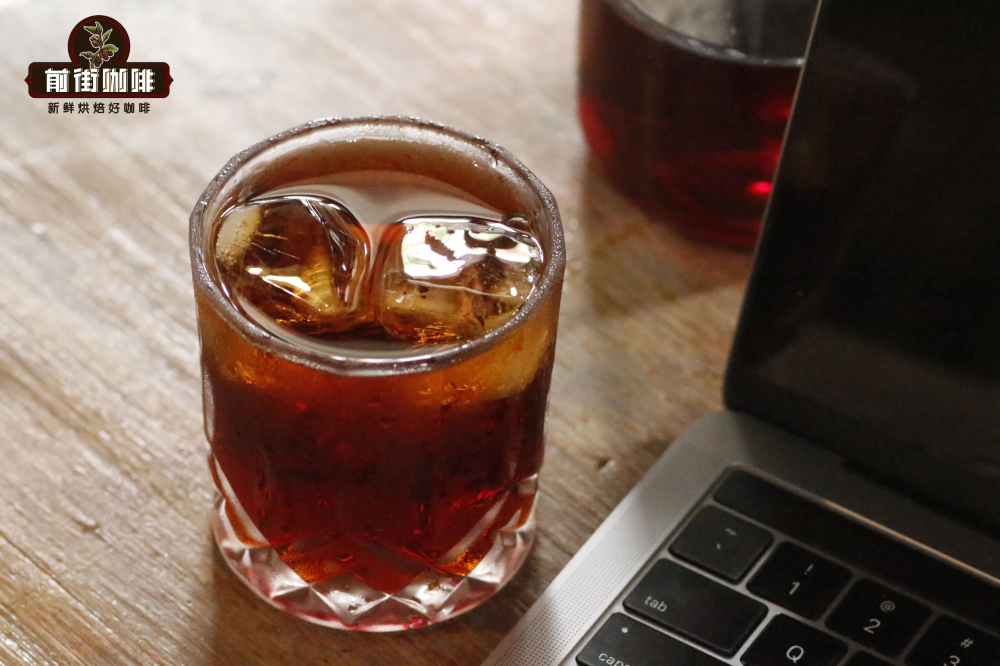
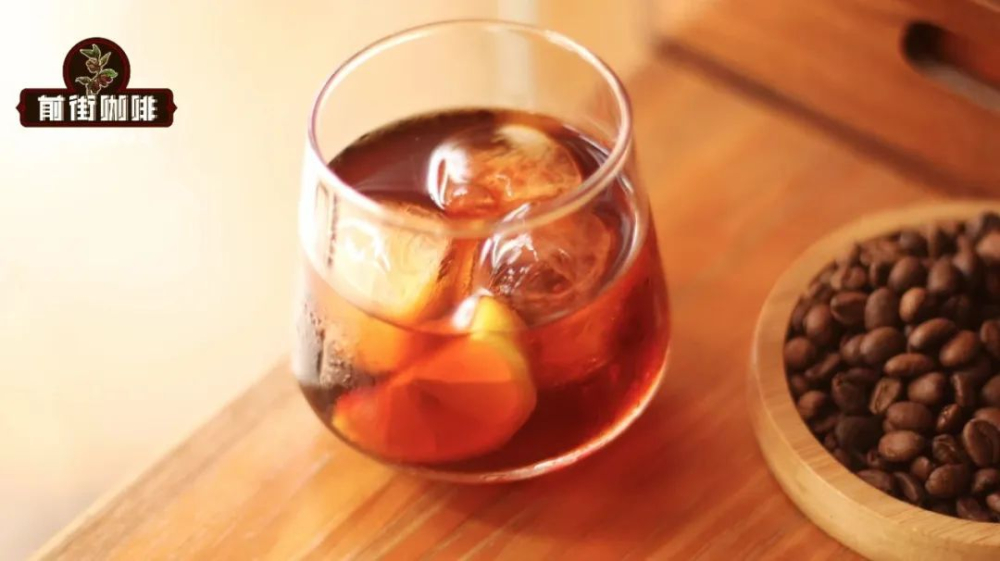
Finally, in order to keep the cold brew at a cold mouthfeel, in addition to serving it in an iced cup, Front Street usually also adds1~2hard ice cubes, so that even if the coffee is diluted, the flavor will not change too much; second, because each guest has different taste preferences, some like it light and some like it strong. When the ice cubes are first added, the coffee has a full and thick mouthfeel. As time passes and they slowly melt into water, the coffee gradually becomes lighter. Therefore, using a high-concentration version of cold brew with ice satisfies both the "heavy-flavor camp" and the "light-flavor camp."
The above content is compiled by CoffeeHunters, a coffee news website.


