







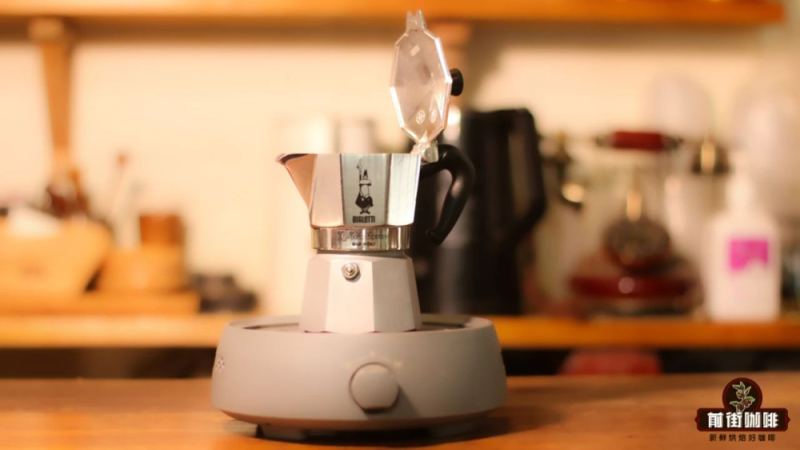
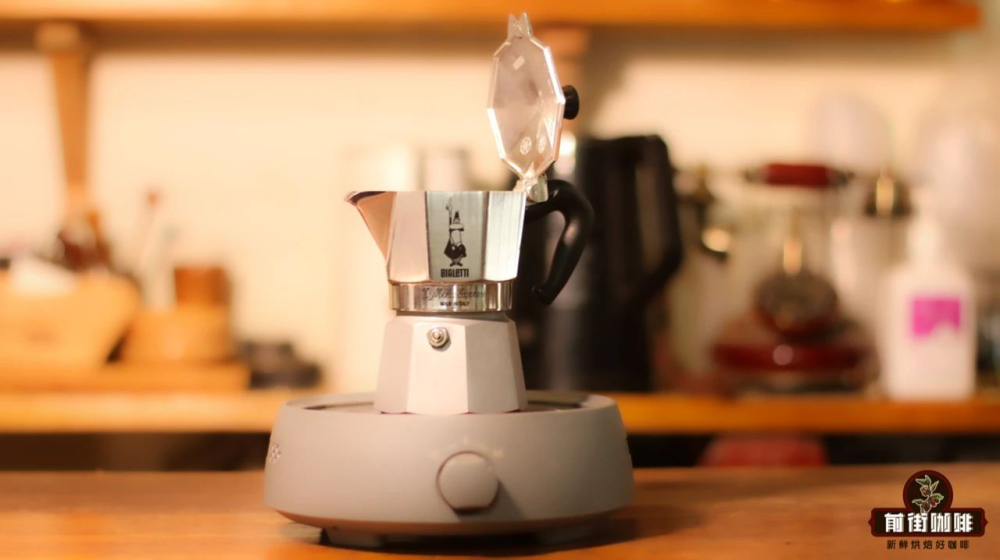
For many people, their first real encounter with coffee-making actually begins with a moka pot, because it is not only attractive and convenient, but also affordable and very easy to operate, making it especially beginner-friendly.
However, Front Street Coffee has also noticed that some friends place more emphasis on ritual, such as the increasingly rare siphon coffee maker, with its cool-looking equipment and unique brewing process, or the American drip coffee maker that many coffee lovers keep at home. So what are the differences between these three kinds of coffee makers? And how big is the difference in taste? Next, let Front Street break it down in detail.
What is a moka pot?
A moka pot uses the steam pressure of boiling hot water to pass directly through the coffee grounds and extract the essence of the coffee. The brewed coffee has a richer body and aroma, with a thin layer of coffee oils on the surface. This is the charm of Italian coffee.
Compared with other coffee brewing devices, the design of the moka pot is very simple. The whole structure is divided into only 3 parts: the upper chamber that holds the coffee liquid, the middle filter basket, and the lower chamber that holds water for heating. When we heat the moka pot, the water in the lower chamber heats up first and turns into steam, creating a certain pressure that pushes the steam upward. When the hot water rises and interacts with the coffee grounds, the continuously increasing pressure pushes the extracted coffee liquid up into the upper chamber. At this point, we get the rich coffee liquid we want.
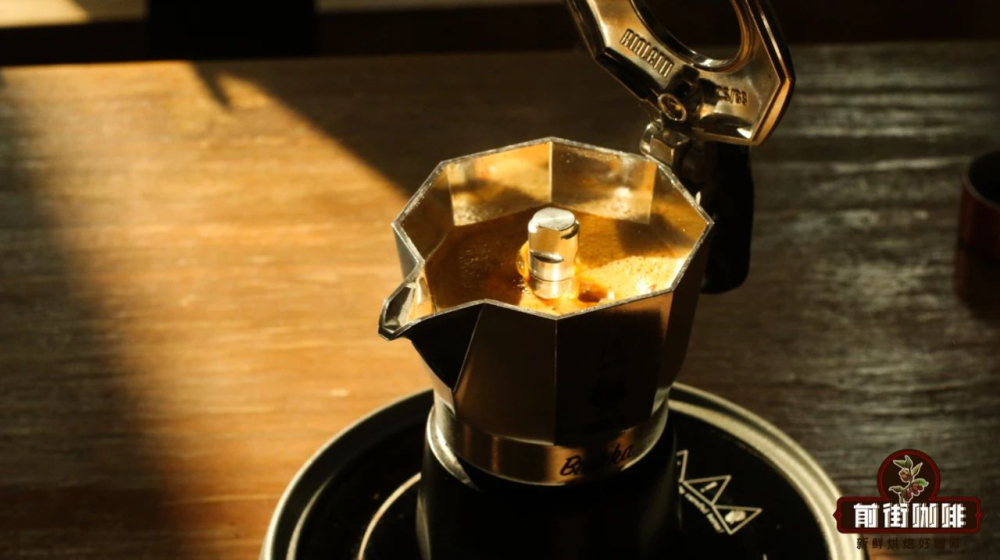
The extraction method of the moka pot is similar to the pressure-pressurized espresso we commonly see. After the water in the lower chamber boils, it produces steam, and the accumulating steam creates a certain pressure, forcing hot water through the coffee grounds, dissolving flavor compounds that then flow with the coffee liquid in a forceful stream into the upper container. Brewing coffee with a moka pot is roughly about 1.2 to 3 atmospheres of pressure. The increase in pressure concentrates the coffee flavors even more, so coffee brewed with a moka pot also has a mellow mouthfeel.
Common moka pots on the market are divided into two types: single-valve and dual-valve. When using a dual-valve moka pot to make coffee, an additional pressure valve is added on top of the original design. The increase in pressure also raises the coffee’s concentration and brings out more coffee oils. Although a moka pot cannot compare with a standard espresso machine’s more than 9 atmospheres of pressure, if we simply want to enjoy a cup of rich, mellow coffee at home in our leisure time, Front Street believes the moka pot is also a very good choice.

What is a siphon coffee maker?
A set of equipment that looks much like laboratory apparatus, paired with a halogen lamp or alcohol lamp. Through the light of the flame, you can see bubbles churning up in the hot water. As the coffee grounds are added, a refreshing aroma drifts up. After the temperature drops, the liquid quickly flows back and becomes deep in color. Take a small sip, and the taste is round and balanced. Compared with other brewing methods, comfort and healing are Front Street Coffee’s deepest impressions of the siphon.

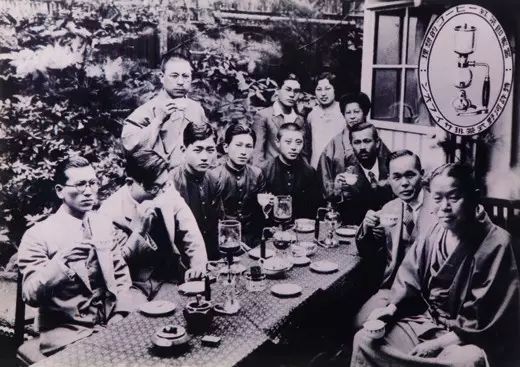
The English name of the siphon coffee maker is “SIPHON,” so it is also called a siphon pot. It uses the thermal expansion and contraction caused by heating water to produce steam, pushing hot water from the lower chamber up into the upper chamber to merge with the coffee grounds. When the temperature drops, the water flows back into the lower chamber through the vacuum tube, thereby yielding coffee liquid. As for the origin of the siphon coffee maker, we can trace it back to the early 19th century, nearly a hundred years earlier than pour-over. According to relevant records, in 1826, German physicist Johann Norremberg invented the siphon coffee maker using equipment from the laboratory. His original intention was to demonstrate the power of steam to students, so he did not apply for a patent, and his design did not become popular. It was not until the mid-19th century that this set of equipment was improved by French inventor Marie Fanny Amelne Massot, and the upward-downward convection siphon coffee maker was born. She obtained the relevant patent in 1842, and only then did this device enter the market for sale.
Around the same period, Scottish engineer Robert Napier designed his Napier Coffee Pot. This device also used the vacuum principle to brew coffee. Although it won an award from the Institution of Mechanical Engineers in 1856, Napier never applied for a patent for it. Since then, vacuum brewing devices of the same type began to become popular across Europe and spread to places such as the United States. However, with the later invention of automatic drip coffee, Americans’ use of siphon coffee makers gradually declined.
What is an American drip coffee maker?
A drip coffee maker, also called a Drip Coffee Maker, is currently a fairly common type of coffee machine and is suitable for coffee beginners to use at home or in the office; it is simple to operate, convenient to use, and its process is basically very standardized. Generally, brewing a pot of coffee takes only 5–8 minutes.
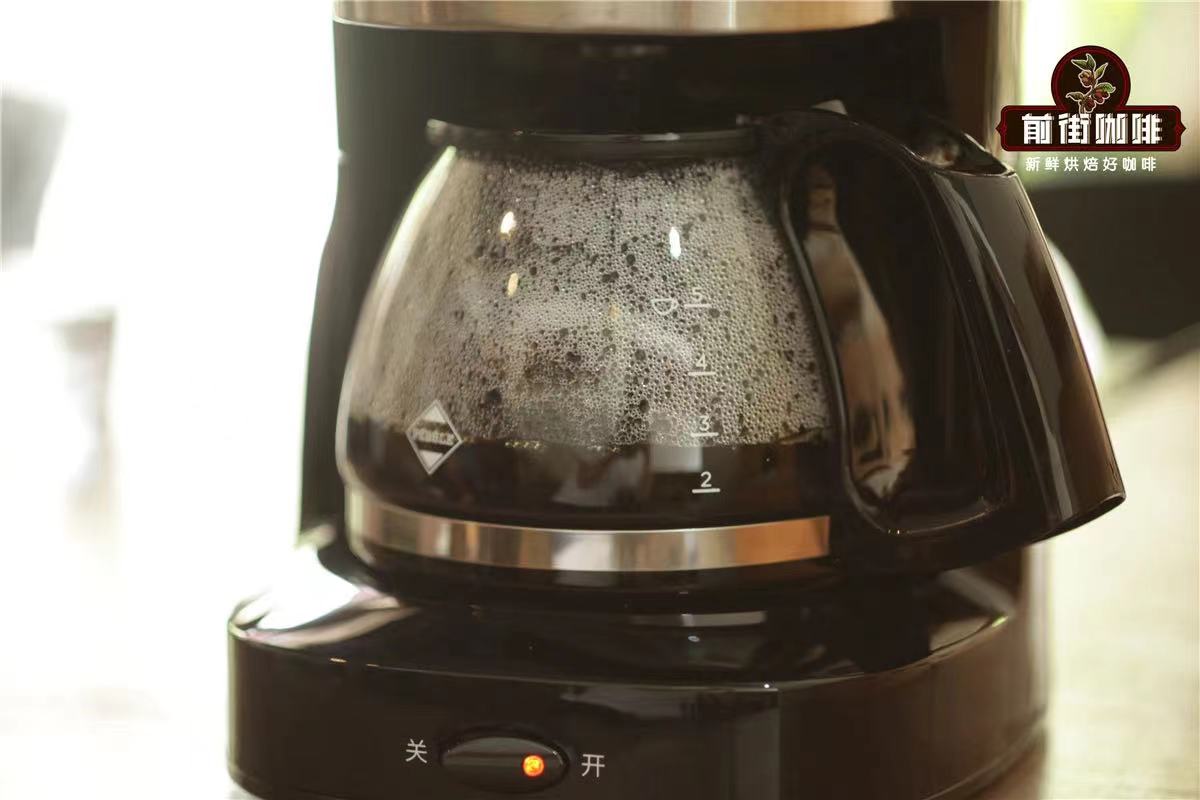
American drip coffee makers generally come in two common models: 5-cup and 12-cup, meaning they can brew a maximum of 5 cups or 12 cups of coffee at one time; usually the glass carafe capacity and water tank capacity of a 5-cup coffee maker are 550ml–650ml; the glass carafe capacity and water tank capacity of a 12-cup coffee maker are 1.2–1.3L. The cup measurement standard referred to above is 100–120ml per cup, which means brewing one cup of coffee uses between 100–120ml of water; generally, American coffee makers are best used to brew at least 2 cups at a time.
Generally, for American coffee, 1 cup of coffee is 100–120ml per cup and requires 5–7g of coffee grounds. Each American coffee maker has its own dedicated coffee ground measuring spoon. One cup of coffee generally corresponds to one spoon of grounds, and if you brew several cups, you add several spoons of grounds; no matter what kind of coffee beans they are, as long as they are ground into powder, they can be used.

To brew 1 cup of coffee, you need to add 100–120ml of water. Refer in detail to the markings in step 2 and add water to the coffee maker’s water tank up to the corresponding mark. To brew one cup of coffee, you need to add 1 level spoon of coffee grounds, generally about 6g. You can increase or decrease the amount of coffee grounds according to your own taste.
Front Street believes that the flavor and mouthfeel of American coffee are closely related to the coffee beans used. Any coffee beans are suitable for an American coffee maker; it all depends on personal subjective preference. Broadly speaking, lightly roasted coffee beans have very obvious fruit acidity and a relatively strong juicy quality. Front Street recommends Front Street Kenya Coffee and Front Street Flower魁 Coffee. Medium-roast coffee beans stand out for their nutty and balanced, smooth flavors. Front Street recommends Front Street Bird of Paradise Coffee and Front Street Queen’s Estate Coffee. Dark-roasted coffee is stronger than the above two types of coffee beans, but its chocolate finish is still irresistible. Front Street recommends Front Street Golden Mandheling Coffee.
How do you use a moka pot? What flavor characteristics does moka pot coffee have?
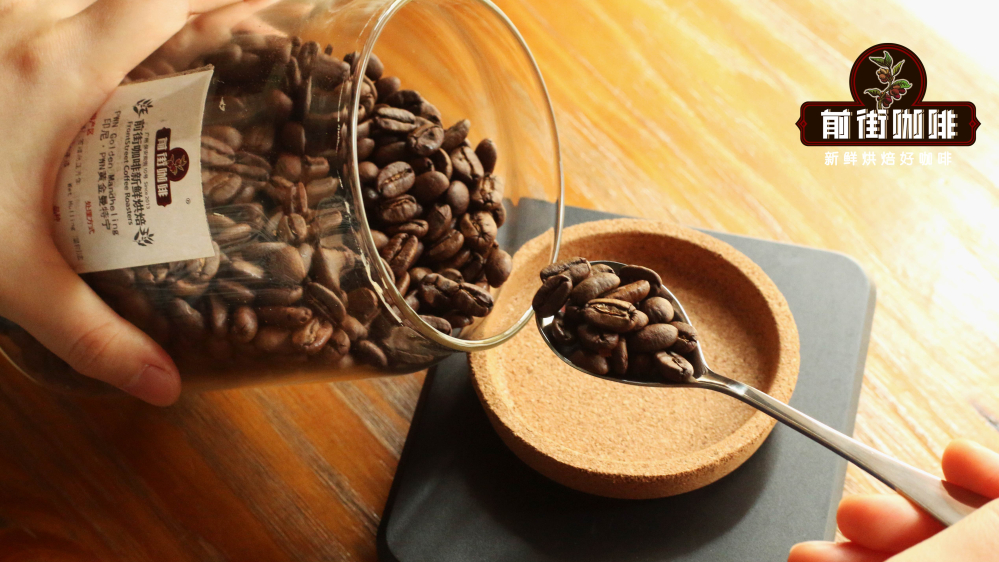
Before brewing coffee, we need to prepare fresh coffee beans, water, a grinder, a heated gas stove (or induction cooker), and our protagonist—the moka pot. For the coffee beans, Front Street selected Front Street’s own roasted “Sunflower Warm Sun Blend Coffee Beans,” a blend of Honduras Sherry and naturally processed Yirgacheffe Red Cherry in a 7:3 ratio.
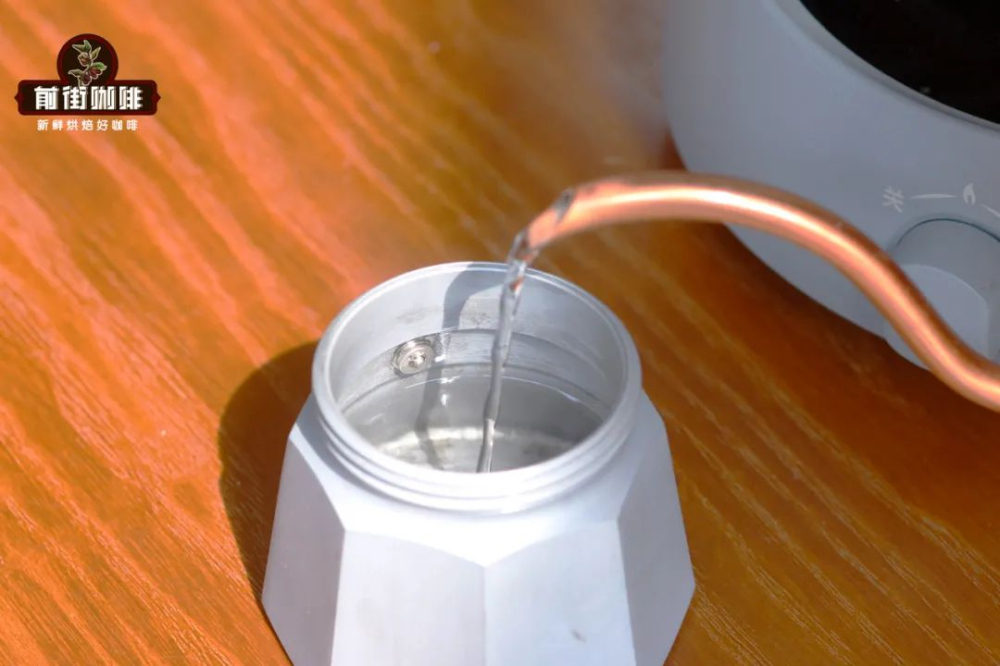
First, remove the base of the moka pot and add purified warm water to the lower chamber. This can shorten the brewing time and also prevent the coffee grounds from heating too quickly, which can easily make the flavor burnt and bitter. Control the water level to about 0.5cm below the pressure relief valve line. The safety valve is there to prevent the brewing channel from being blocked by coffee grounds that are ground too fine, which could cause the moka pot to explode. If the safety valve is submerged by water and the extraction channel is also blocked, the consequences of a high-temperature moka pot exploding are unimaginable.
To extract a rich black coffee, the grind size needs to be much finer than regular pour-over. The Front Street store uses an EK-43s grinder at a setting of 0.5 for coarseness. The amount of grounds is controlled according to the size of the moka pot. Here at Front Street, we use a 3-cup Bialetti classic pot, with 18g of grounds.

Pour the ground coffee into the filter basket, fill it to nine-tenths full, smooth it flat with your finger, and then place it into the base. There is no need to tamp it firmly; an overly compacted layer can easily block the upward flow of water, thereby affecting extraction.
Next, screw the upper chamber and lower chamber tightly together, wipe the body dry with a towel, and place it on a gas stove or induction cooker to heat. When using an open flame, be careful to control the flame so that it does not exceed the base range of the moka pot.
Just wait for the moka pot to heat up. When you hear a hissing sound, turn to low heat, and the coffee liquid and oils will slowly flow out. When you see the coffee liquid in the upper chamber reach halfway full, you can turn off the heat source and move the pot to the table, using the residual heat and pressure inside the pot to continue extracting the remaining coffee liquid.
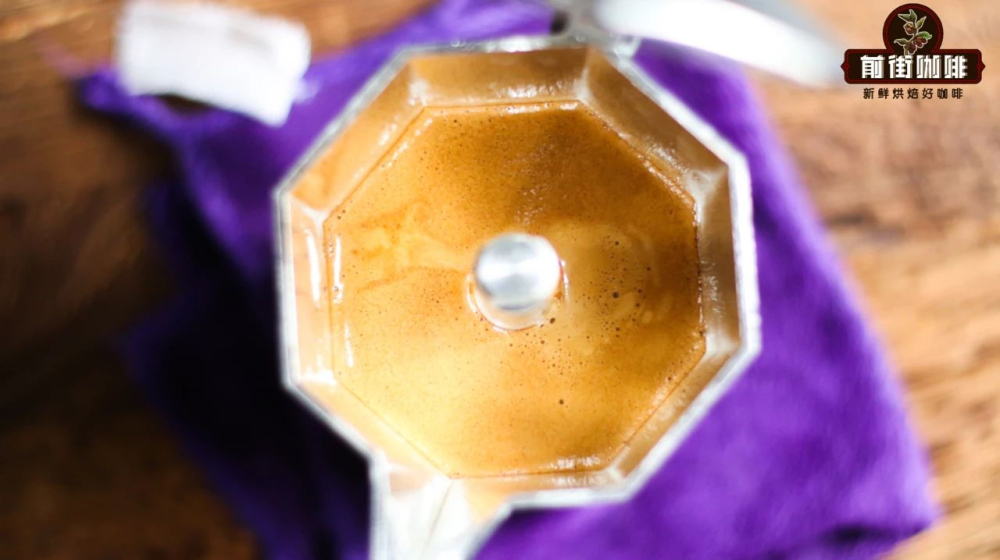
Finally, pour the extracted coffee liquid into a cup. You can drink it directly, and the taste will be very rich and solid, with a strong whisky aroma, vanilla, cream, and the sweet-tartness of berries on the palate, along with the aroma of roasted nuts. For friends who usually like American coffee, Front Street suggests diluting it with 70–80°C hot water at a 1:5 ratio, stirring, and then drinking it. At this point, it presents a fresh fruity sweetness and acidity; if you prefer coffee with milk, you can pair moka pot coffee with milk, and it will taste of chocolate and cream cookies.

Is brewing coffee with a siphon difficult to operate? What flavor does siphon coffee have?
This time, Front Street will use a fast-paced extraction method and pair it with a lightly roasted coffee bean—Kenya Asalia! So the water temperature will be relatively high, around 92°C, meaning it is sealed when the lower chamber has been heated until it bubbles frequently. Since the extraction time is not long, only 60 seconds, and the coffee beans are relatively lightly roasted, we will use a grind that is “two degrees” finer than pour-over here: EK43 setting 9, with a 90% pass-through rate on a No. 20 sieve; the coffee-to-water ratio is 1:14, which means 20g of coffee grounds with 280ml of hot water.
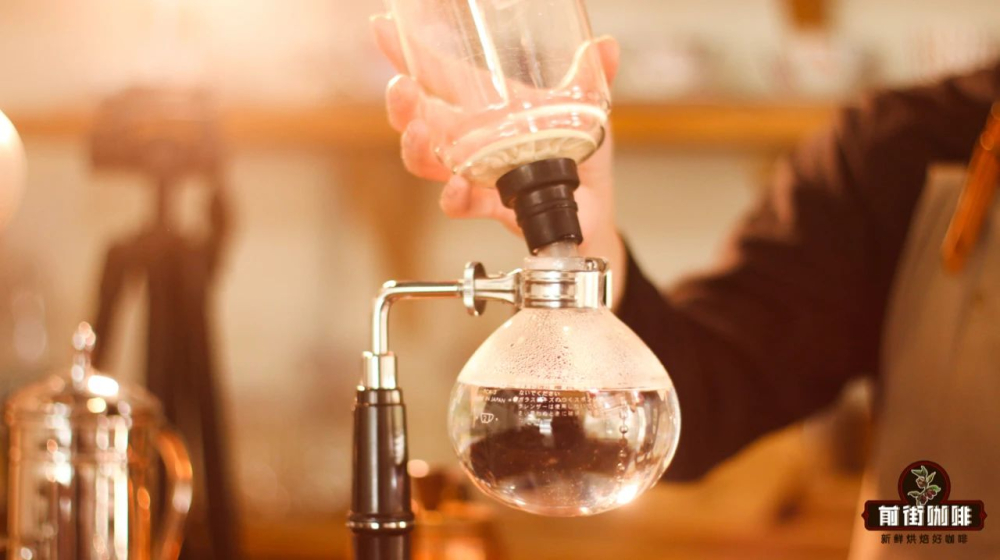
So first, let’s prepare all the equipment, and then pour the target amount of water into the lower chamber.
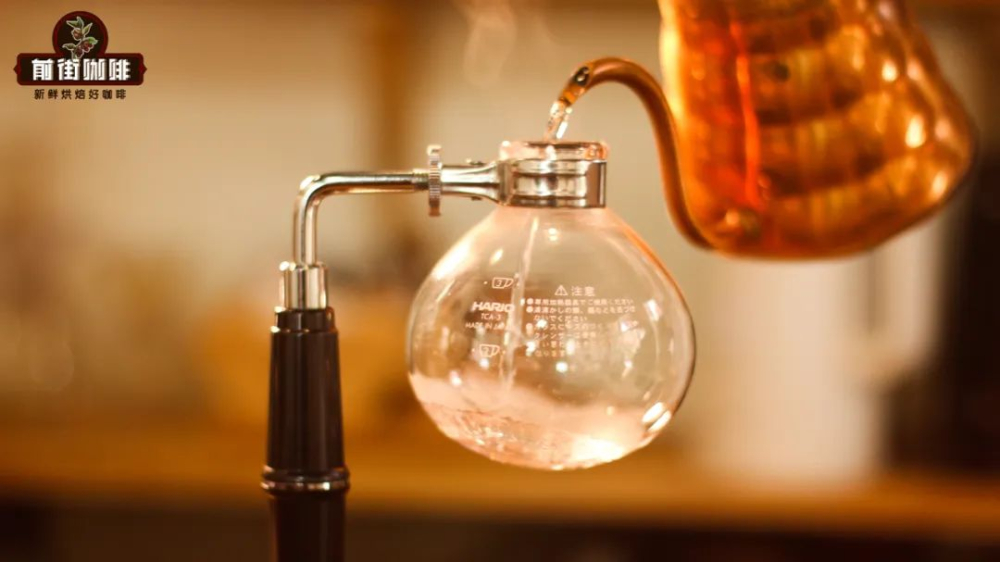
After pouring, remember to use a dry cloth to wipe away the water droplets on the lower chamber to avoid the risk of the pot cracking.

After wiping, first install the filter device into the upper chamber. The specific operation is to place the chain from inside the upper chamber downward, then forcefully hook the chain’s hook onto the tube. This way, the filter device can tightly block the upper chamber’s outlet and prevent too much coffee residue from seeping into the lower chamber! At the same time, it can also effectively slow down the flow rate.
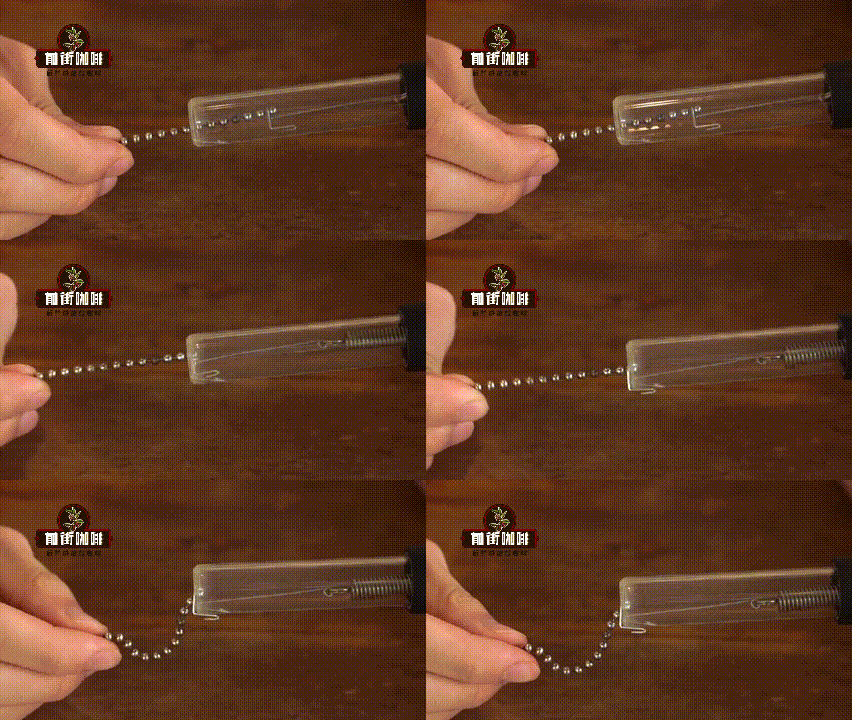
After installing it, we can place the upper chamber onto the lower chamber. Remember to make sure the chain can touch the bottom, and then begin heating.

When the lower chamber starts to produce small continuous droplets, do not rush. After the small droplets turn into large droplets, we then straighten and press in the upper chamber so that the lower chamber enters a vacuum state. After that, just wait for all the hot water in the lower chamber to rise into the upper chamber, and then extraction can begin!
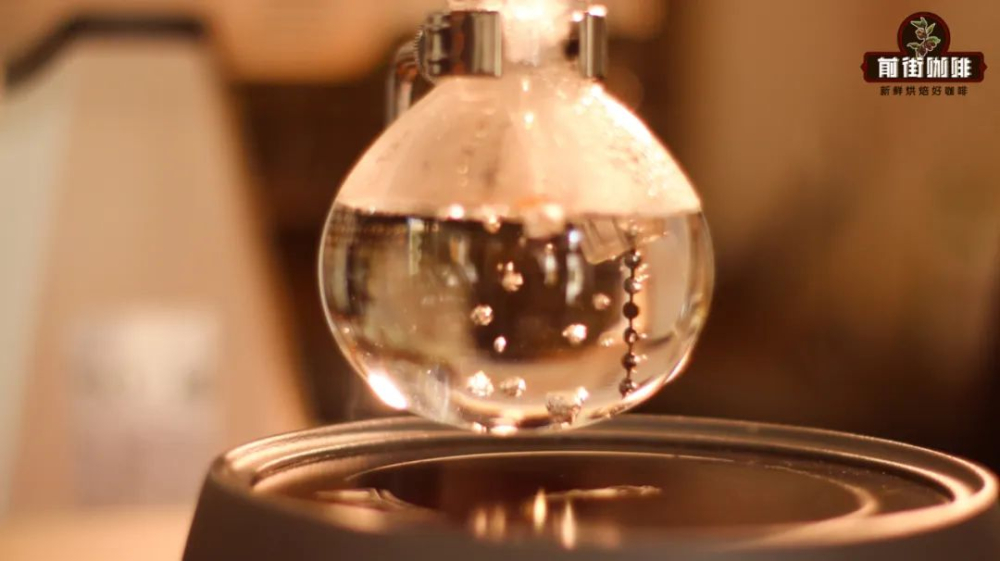
When pouring in the coffee grounds, start timing at the same time, and then begin our first stir.
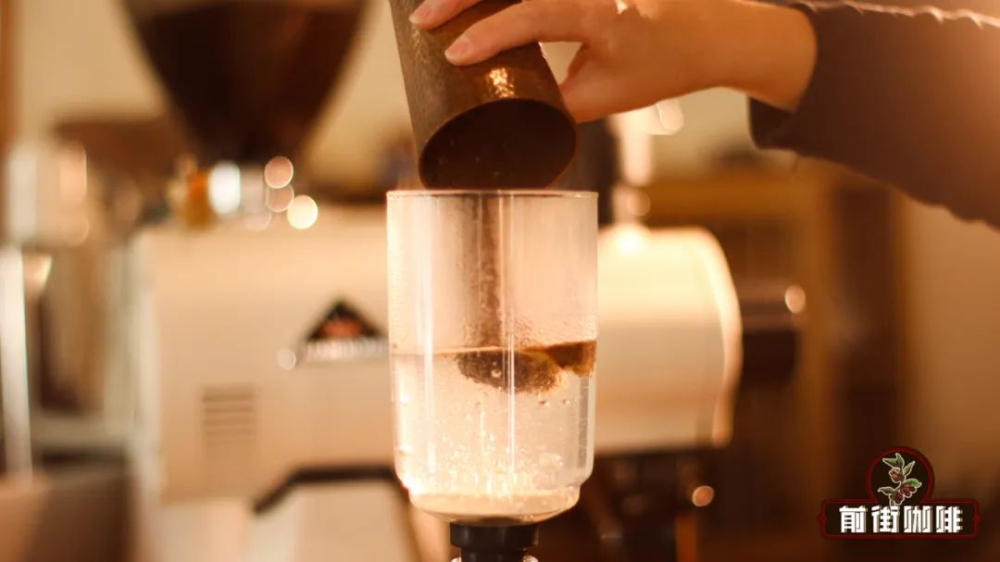
The purpose of this stir is to fully saturate the coffee grounds, equivalent to the blooming stage in pour-over, so we first use a tapping method to pat all the coffee grounds into the water so they absorb water evenly.

When the time reaches 25 seconds, we perform the second stir. The purpose of this stir is to accelerate the dissolution of coffee flavor compounds, so here we can use a technique with relatively higher stirring intensity. For example, what Front Street is currently using is the Z-shaped stirring method, stirring the coffee grounds by drawing Z shapes back and forth for 10 seconds.

When the time reaches 50 seconds, we perform the final stir. The purpose of this stir is likewise to increase the dissolution of coffee compounds, but the difference is that because extraction has reached the final stage, there are not many sweet and acidic compounds left in the coffee, so at this point we need to reduce the stirring intensity. For example, what Front Street is currently using is the circular stirring method, slowly drawing circles.
At 55 seconds, we can remove the heat source and wait for the coffee liquid to flow back. If the coffee liquid flows back very slowly, you can wipe the lower chamber with a wet cloth to accelerate the drop in temperature, speed up the return flow of the coffee liquid, and avoid the risk of over-extraction.
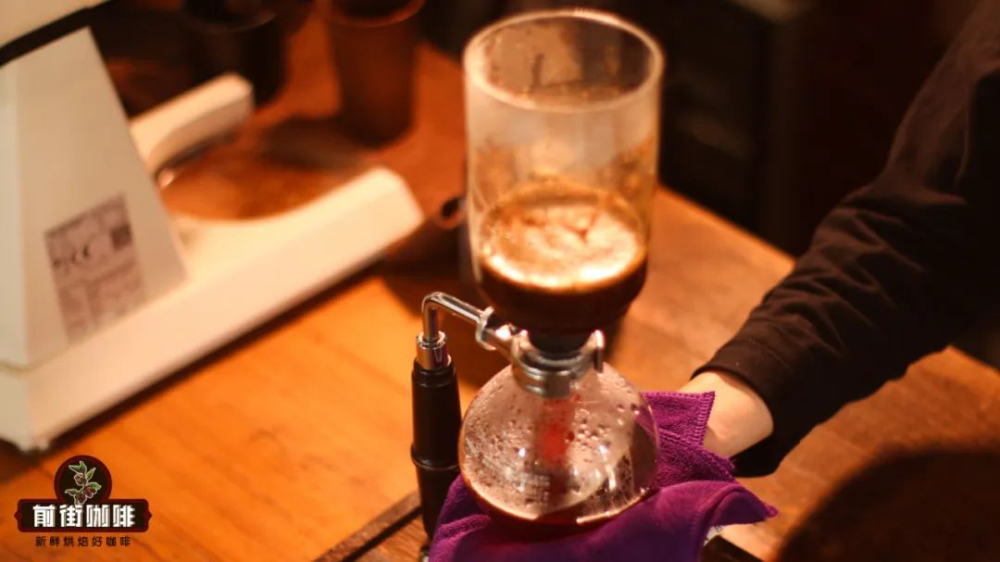
When the coffee liquid has completely returned to the lower chamber, extraction is finished. At this point, if we pour out the siphon coffee and taste it, it may be a bit hot, so you can let it sit for a while before tasting it~

After letting it sit for a while, Front Street tasted it! In addition to Kenya’s bright small tomato and smoked plum acidity, there was also a sweetness of yellow sugar and apricot. The overall mouthfeel was full-bodied and round. Although the layers were not as obvious as with pour-over, siphon coffee indeed tastes more solid, and the aroma is more prominent. It is a completely different experience~
The above content is compiled by CoffeeHunters, a coffee news website.


