







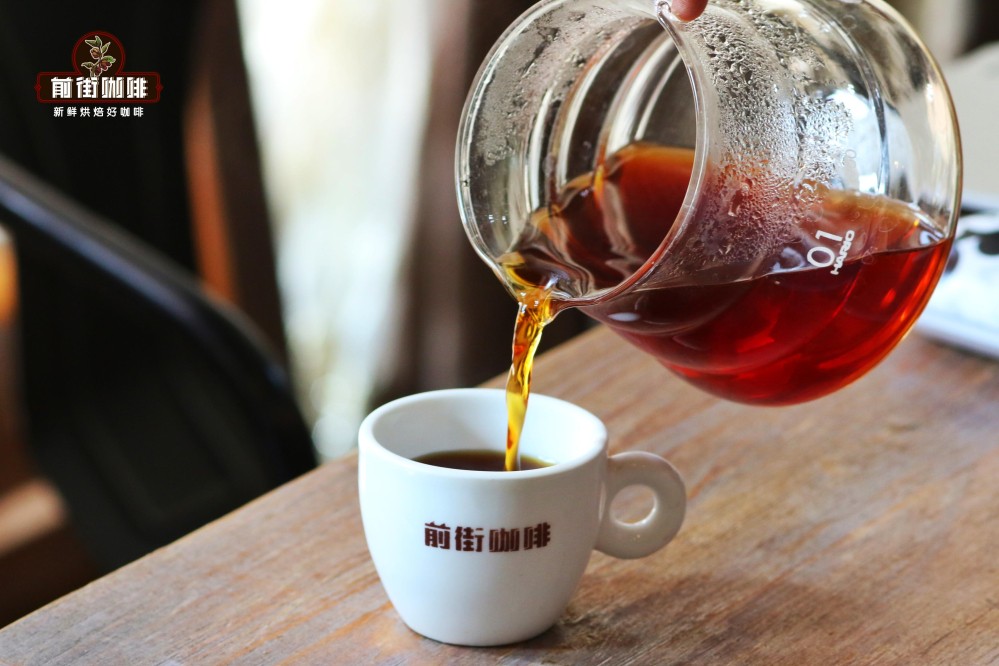
Front Street has always been a fan of Mandheling coffee, but at the Front Street Dongshankou store, coffee from Ethiopia in Africa is what friends love the most, such as washed Yirgacheffe, sun-dried Huakui, Gesha Village, etc.
When it comes to the differences in coffee flavor and mouthfeel between Mandheling and Huakui, Front Street believes this is a very obvious coffee taste difference.Mandheling Coffeeis the fullest-bodied coffee in the world, and can also be described as the bitter coffee that everyone thinks of—it has a rich aroma, a full body, a strong taste, and slight notes of chocolate and syrup. WhileHuakui Coffeebelongs to Ethiopian coffee, and Ethiopian coffee has a distinct floral and fruity profile.Huakui Coffeein particular has obvious tropical fruit flavors, such as mango, jackfruit, floral notes, and honey—like a cup of fruit and flower tea, and can also be described as the sour coffee that everyone thinks of. That is why Front Street says the taste of Mandheling and Huakui coffee is very clearly different.

The Dutch first introduced Arabica seedlings to Ceylon and Indonesia in the 17th century AD. Ceylon is present-day Sri Lanka. In 1877, a large-scale disaster struck the islands of Indonesia. Coffee rust nearly destroyed all the coffee trees. With no other choice, people had to give up the Arabica they had planted for many years. They introduced the highly disease-resistant Robusta coffee trees from Africa.
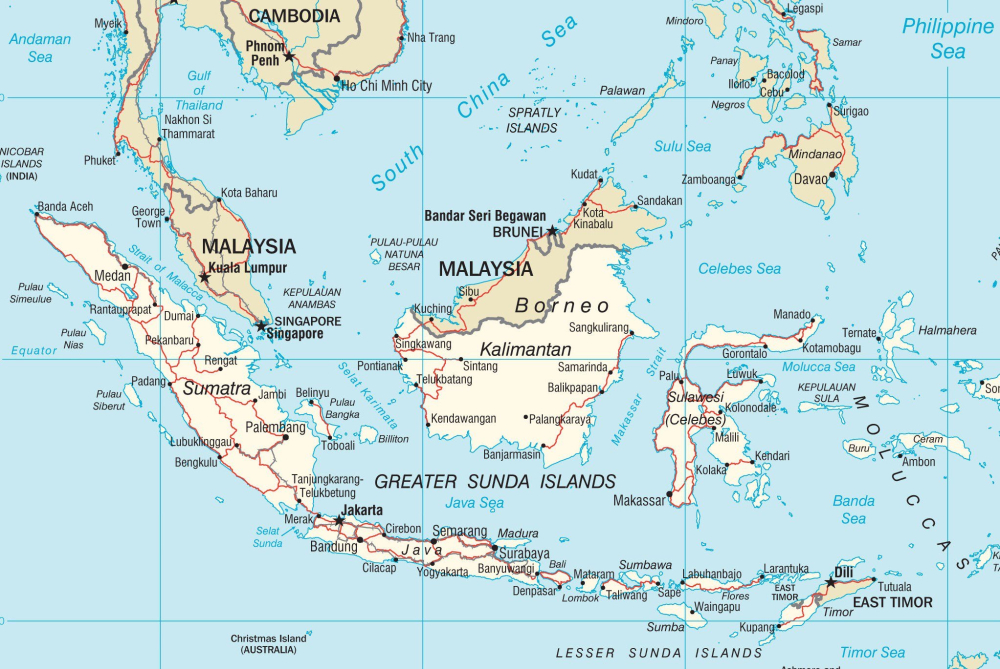
Today, Indonesia is a major coffee-producing country. The main producing areas are Java, Sumatra, and Sulawesi. Robusta accounts for 90% of total production. Sumatra Mandheling, however, belongs to the rare Arabica category. These coffee trees are planted on hillsides at altitudes between 750 and 1,500 meters. The unique and mysterious Sumatra has given Mandheling coffee a great deal.
Indonesia is the world's largest archipelagic country. As early as the 18th century during Dutch rule, Arabica coffee trees were introduced for cultivation. The main producing areas are located on Sumatra Island, Java Island, and Sulawesi Island. Southeastern Sumatra faces Java across the Sunda Strait, to the north it faces the Malay Peninsula across the Strait of Malacca, to the east it borders Borneo across the Karimata Strait, and to the west it faces the Indian Ocean.
Characteristics of Lintong Mandheling
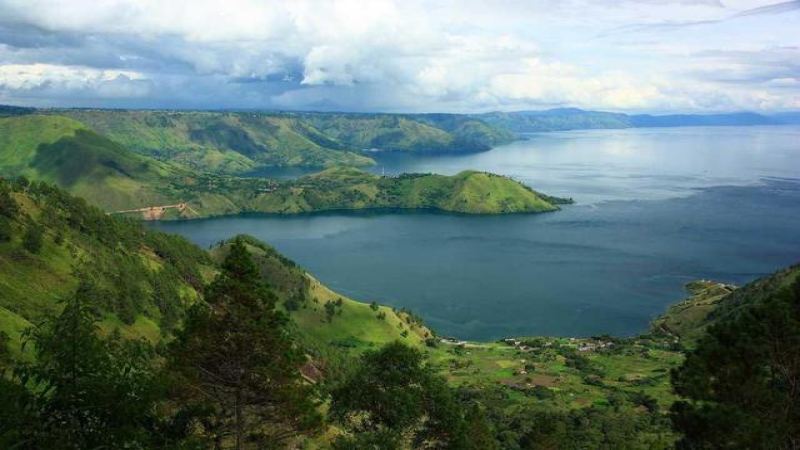
Lintong Mandheling is produced in the Lintong highlands of north-central Sumatra, near Lake Toba. FrontStreet Coffee's entry-level everyday bean from Indonesia's Mandheling producing area comes from here. Lintong Mandheling also uses the unique wet-hulling method, which gives it the characteristics of low acidity and high body. Front Street offers Lintong Mandheling coffee andGolden Mandheling Coffee.
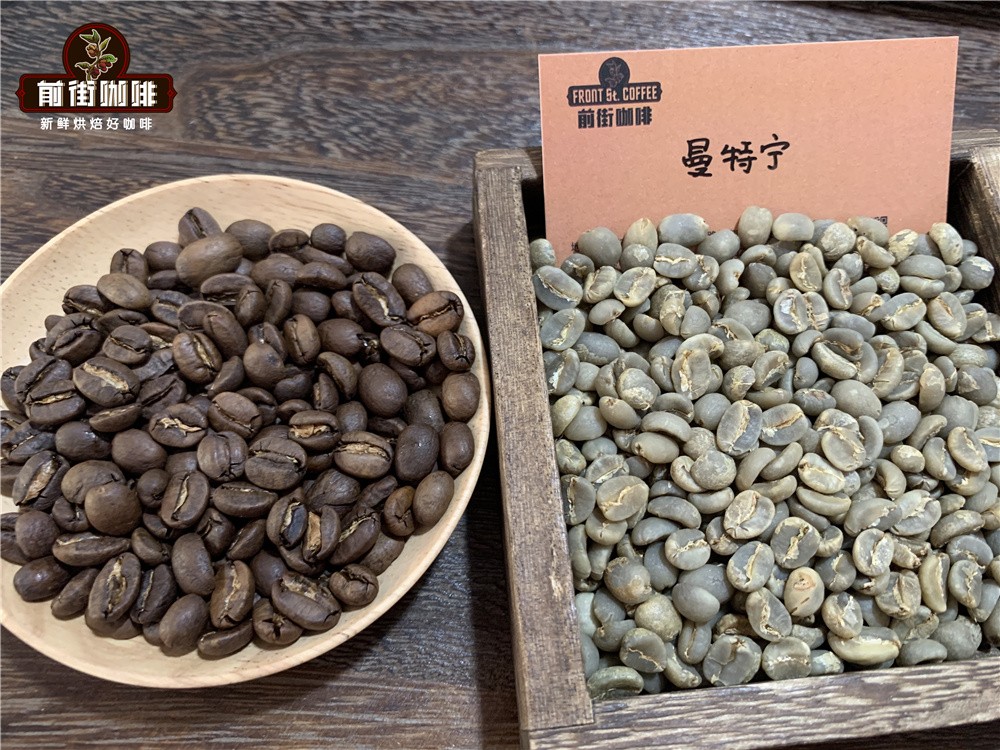
Mandheling is located in the Lintong region in the north of the Indonesian island of Sumatra, cultivated using the old-style method of shade-drying fruit trees. The old-style shade trees help maintain humidity and increase soil fertility, which is rich in organic matter. Sumatra beans rarely use machines to remove the outer shell. This is where it differs from Central and South America—Indonesian coffee beans use a unique semi-washed method called Giling Basah, also known as the wet-hulling process. Coffee beans processed through Giling Basah have particularly low acidity and a thick body.
Mandheling Coffee Beansare relatively large in size and have a hard bean texture. Its cultivation process is highly prone to defects, and after harvesting it generally undergoes extremely strict manual sorting. If the control process is not strict, it can easily lead to uneven quality. In addition, different roasting procedures will directly affect its taste. Therefore, it has become the single-origin coffee with the most controversy. Before Blue Mountain coffee was discovered, Mandheling was once regarded as the finest of coffees. Mandheling's full body gives a masculine impression; it has moderate acidity and an extremely heavy, rich aroma; it tastes relatively bitter and has a rich body; it is daring to duel, with a spirit reminiscent of the American Wild West cowboy.
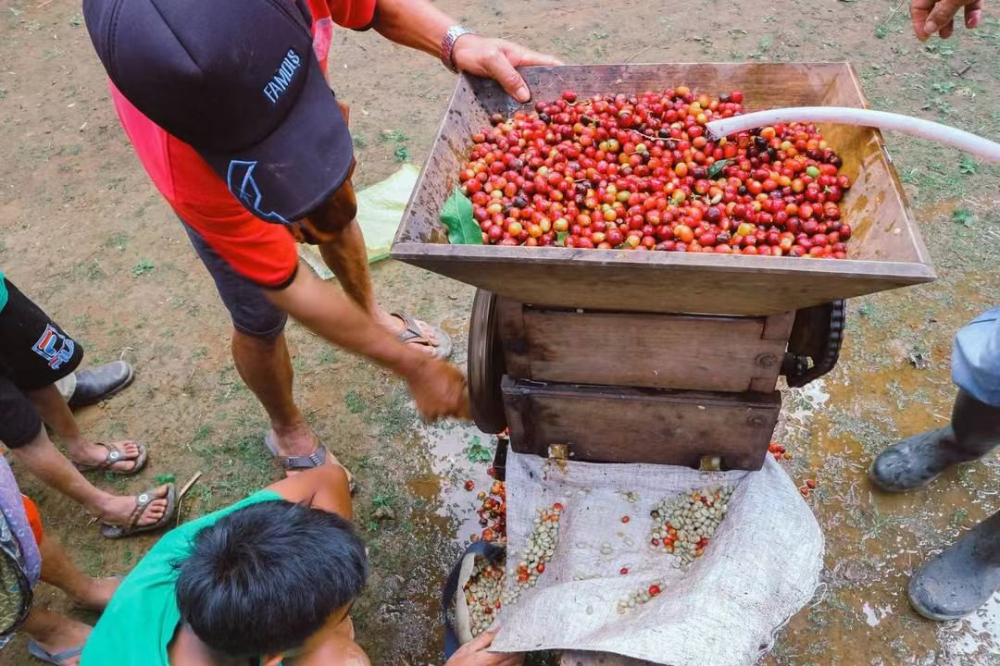
Mandheling Coffee Bean Wet-Hulling Process
Indonesia has year-round high temperatures and humidity, lacks long hours of sunlight, and humidity stays between 70-90% all year round. Therefore, relying purely on sun-drying is clearly unrealistic. For Sumatra, where the weather is unpredictable, even using the washed process makes it difficult to find a week of sunny weather for drying. Thus the wet-hulling process came into being. After the earlier washing steps, the coffee beans with parchment are placed under the sun to dry for 1-2 days, bringing the moisture content of the beans to 30-50%, after which the parchment is removed and the beans are sun-dried. This speeds up the drying of the coffee beans and greatly shortens the drying time.
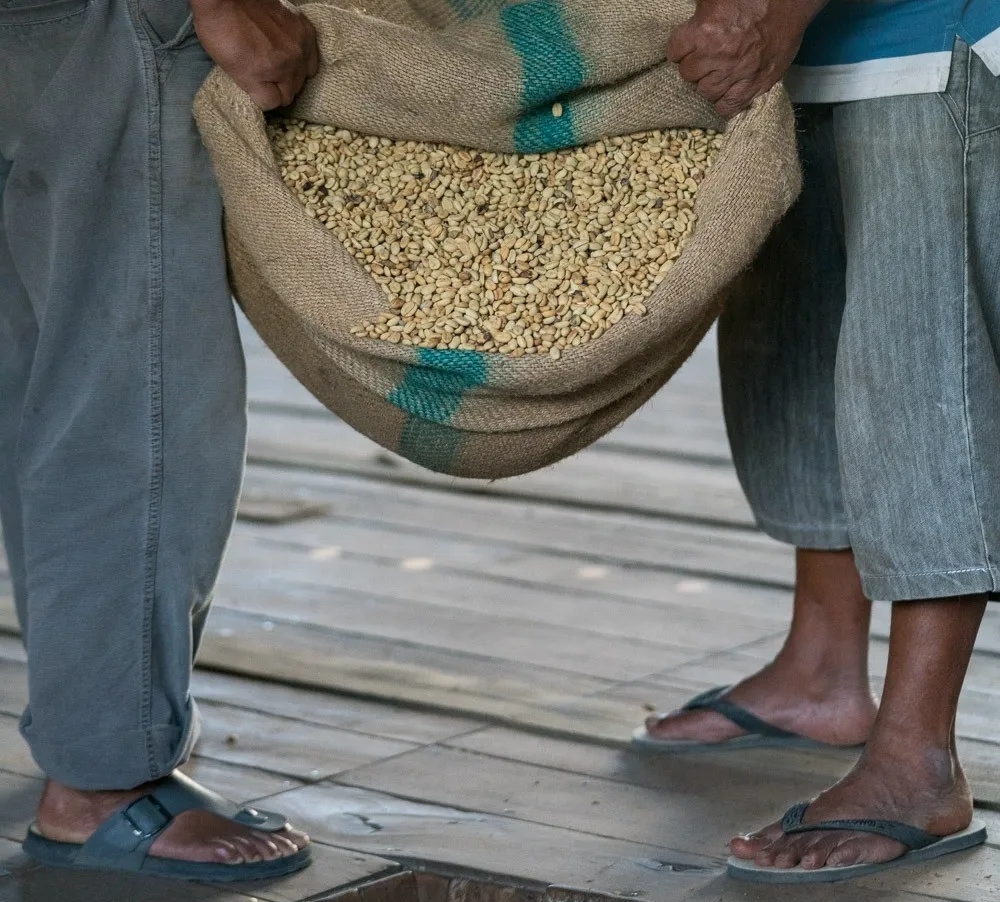
Among all single-origin coffees, Mandheling's appearance can be said to be the ugliest. However, coffee friends say that the uglier the Sumatra coffee beans, the better the taste. Mandheling coffee is recognized as the fullest-bodied coffee in the world.
Mandheling Coffee Varieties
Indonesia has a very long history of cultivating coffee beans. Arabica was planted in the past, but due to coffee leaf rust, currently 90% of Indonesia's exported coffee beans are Robusta, with only 10% being Arabica. Front Street's Lintong Mandheling coffee variety is TimTim Ateng, and the variety listed for Golden Mandheling coffee is: Ateng. In fact, TimTim is Timor, an Arabica variety with Robusta lineage, while Ateng is Catimor, a hybrid of Caturra and Catimor. These variety names are simply local designations.
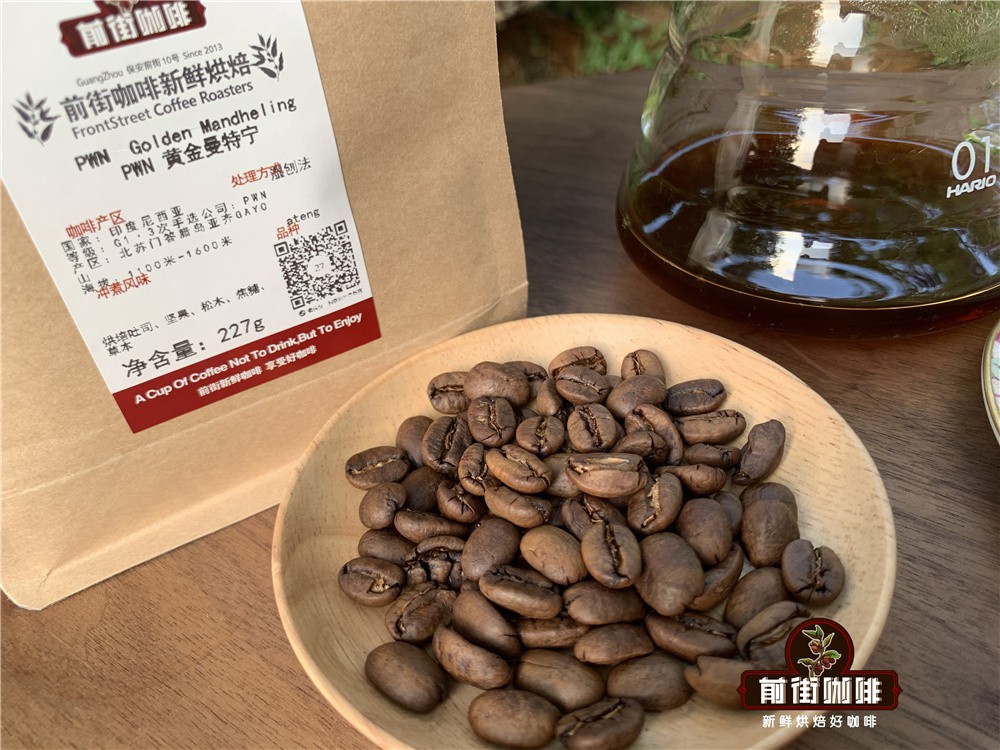
Ethiopia Hambella Producing Area
Ethiopian coffee beans are generally named after their place of origin, and "Huakui" is actually produced in the Hambella area within the Guji region of Ethiopia. Hambella is located in Guji, Ethiopia's largest coffee-producing region, and administratively belongs to the Oromia Region. The Guji producing area was once part of the Sidamo producing area, but in 2010 it was made an independent new producing area by the Ethiopia Commodity Exchange (ECX). The most famous coffee bean from the Guji producing area is none other thanHuakui Coffee Beans, which won the 2017 TOH (Ethiopia National Taste of Harvest Competition) with its outstanding strawberry cream flavor, truly deserving the title of Huakui. But not all coffee produced in Hambella can be called "Huakui"—only the sun-dried coffee beans from the "Buku Abel" processing station can be called Huakui.
Each coffee-producing region has a different coffee flavor. Front Street has brought in more than a dozen Ethiopian coffees, and Huakui coffee is the representative coffee of the Sidamo producing area and also a popular single-origin bean at Front Street.
Huakui Coffee
Huakui coffee beans are actually the Chinese transliteration of the English word Hambella—Hambella coffee beans. They are a lot of green beans from the Sidamo Hambella producing area in the 2017 TOH green bean competition (the Taste Of Harvest). With a strong strawberry and cream aroma, they stood out. An obscure Ethiopian Hambella sun-dried coffee bean thus defeated the ever-victorious Gesha, winning the championship of that year's Ethiopian TOH sun-dried group with a high score of 88.21, making the name "Huakui" truly deserve its reputation and take root in people's hearts. This high-quality Hambella coffee bean became widely known in China under the name "Huakui."
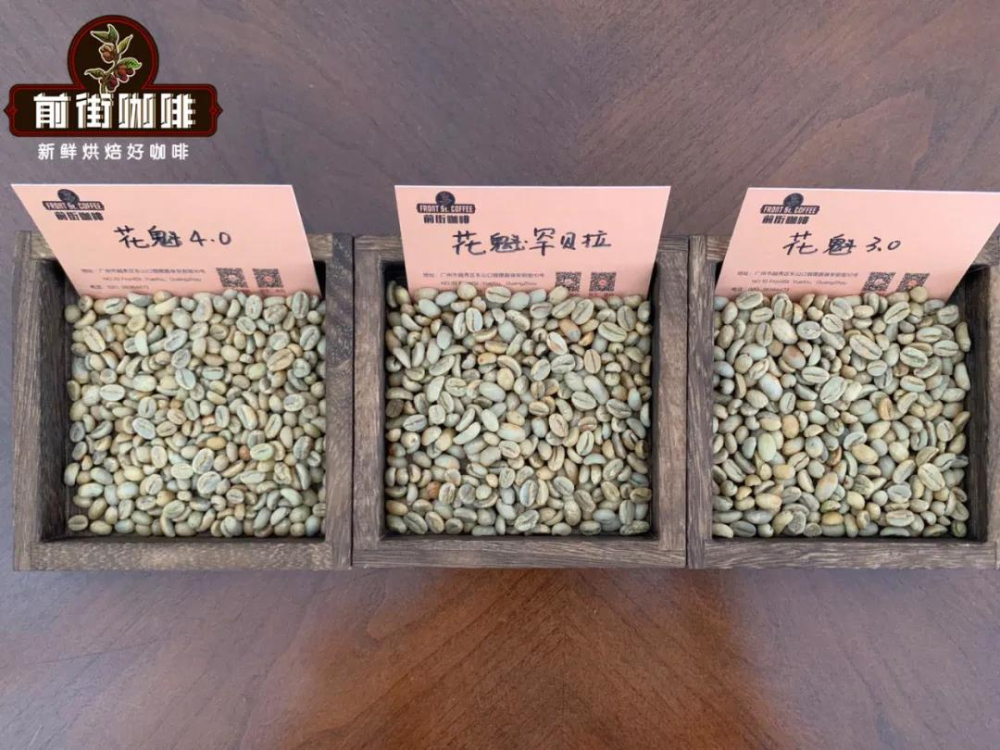
Huakui, the champion of the 2017 TOH sun-dried group, became known to more people after entering China. It was discovered and promoted by the founder of Beijing Hongshun, who created his own coffee brand LeBunna (Hongshun Coffee) in Ethiopia. Of course, if such a wonderful name were to be a fleeting phenomenon, that would be a pity. Therefore, afterward, Hongshun continued to introduce coffee beans from the "Buku Abel" processing station in the Hambella producing area and called them Huakui 2.0, Huakui 3.0, Huakui 3.1, to distinguish them from the earlier Huakui coffee and to represent different batches or harvest seasons. At this time, Huakui coffee still maintained certain characteristics: it was purchased and introduced by Hongshun, and the producing area was still locked to the Hambella "Buku Abel" processing station. Of course, as coffee is an agricultural product, its flavor will differ from year to year.
Huakui Coffee Bean Varieties
Because Ethiopia has far too many varieties—it is like a natural gene bank of Arabica—on the one hand there are so many varieties that identification and classification are difficult, and on the other hand the Ethiopian government, out of conservation considerations, is unwilling to disclose information about these varieties. So they are collectively called Ethiopian Heirloom, meaning heirloom treasures.
Huakui Coffee Bean Sun-Dried Processing Method
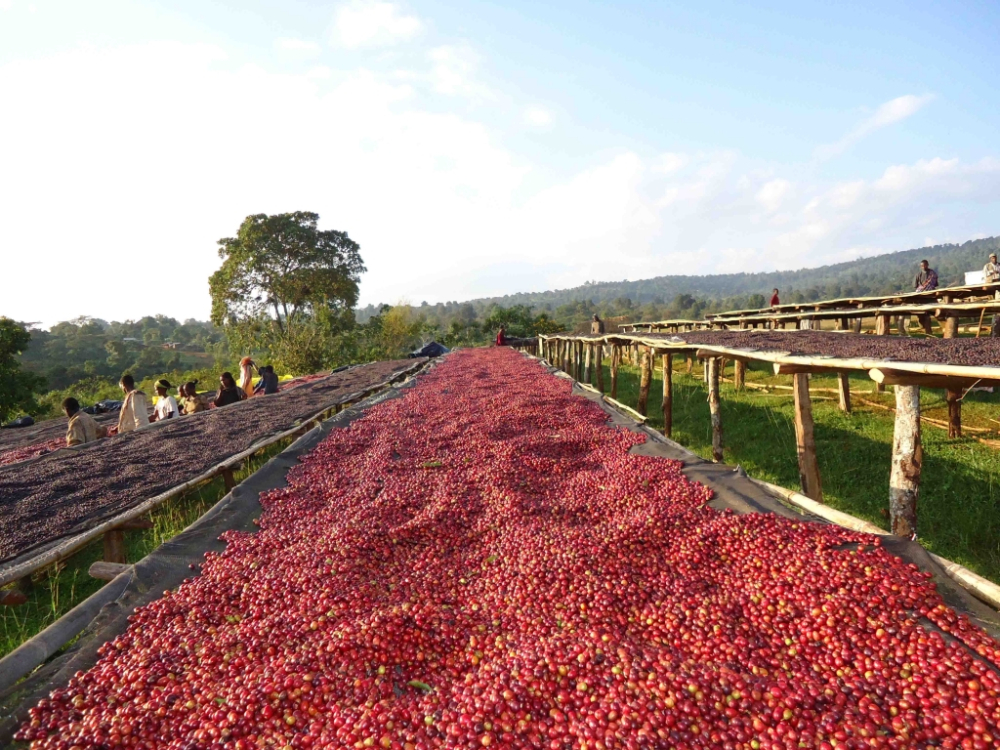
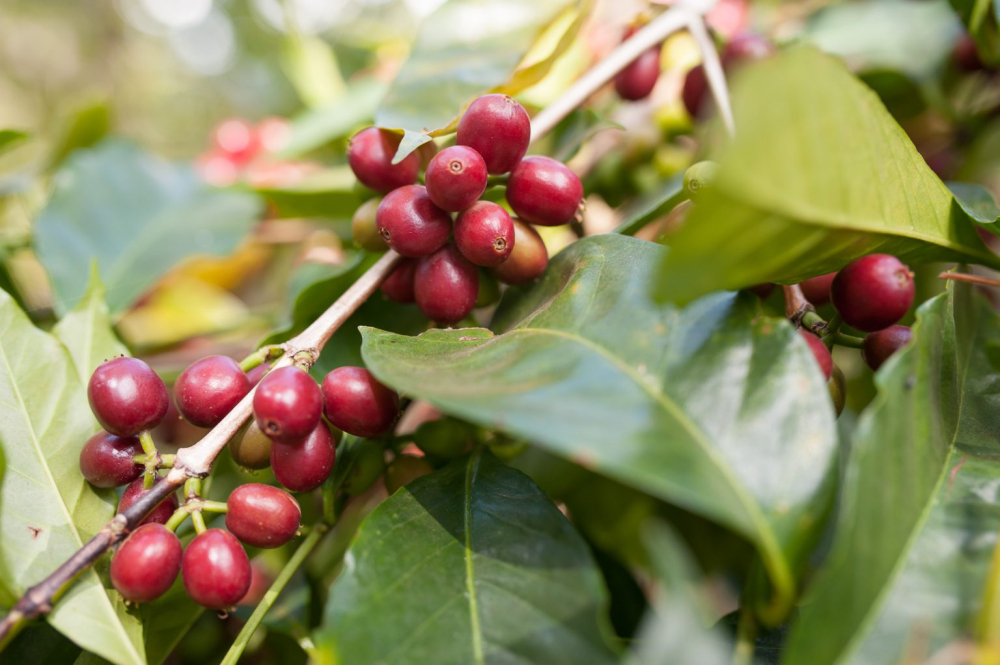
Hambella is located in Ethiopia's largest coffee region, Guji, and administratively belongs to the Oromia Region. Western Hambella faces Yirgacheffe Kochere across the mountains, and to the southeast, north, and east it borders the Guji sub-regions of Shakiso, Uraga, and Kercha respectively. It is the highest-altitude coffee sub-region in Ethiopia, with humus-rich reddish-brown soil and an altitude of around 2,300 meters. The large temperature difference between day and night allows the coffee cherries to grow slowly. Fully red cherries are picked and processed with refined sun-drying, dried on African raised beds with a limited thickness of 2-3 layers. According to the color changes after drying, on the 1st to 3rd days of drying, manual hand-sorting is performed twice a day, removing 10% each time. After that, the beans are turned every three hours. At noon and at night the coffee beans are covered, wrapped with thick plastic sheeting to avoid being dampened by rain and dew, accurately controlling the degree of fermentation. The entire process lasts up to 21 days, creating Huakui's unique flavor.
Front Street Mandheling Coffee Bean Roasting Approach and Brewing Parameters:
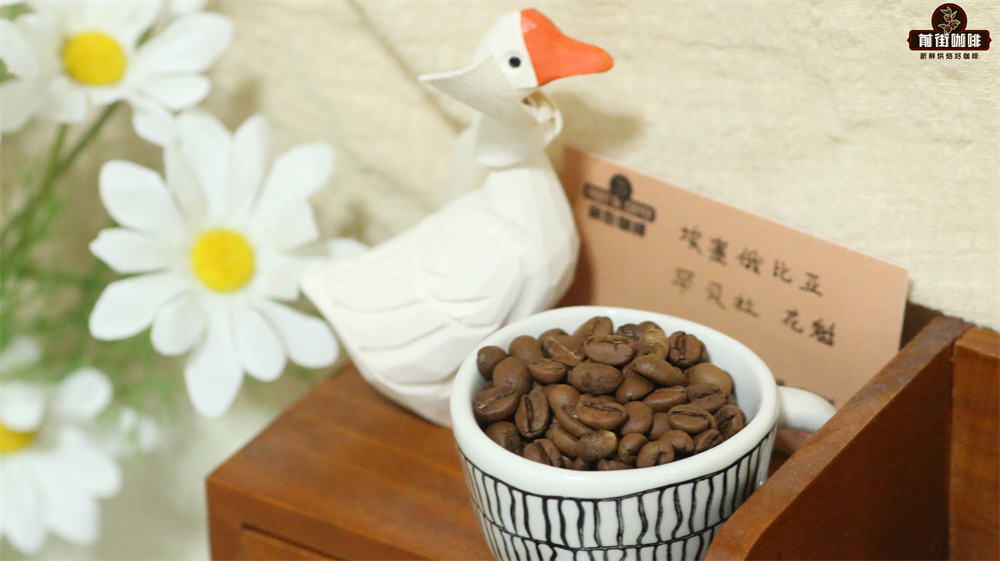
Front Street believes that the high-quality flavor of Mandheling coffee lies in the balance of acidity, sweetness, and bitterness, with a high body. In roasting, Front Street chose a medium-dark roast, which can highlight the coffee beans' nutty, pine, and herbal notes. Using a KONO dripper can produce a better body. Water temperature 88°C, coffee-to-water ratio 1:15, dose 15g, grind size (75% passing through a Chinese No. 20 standard sieve).
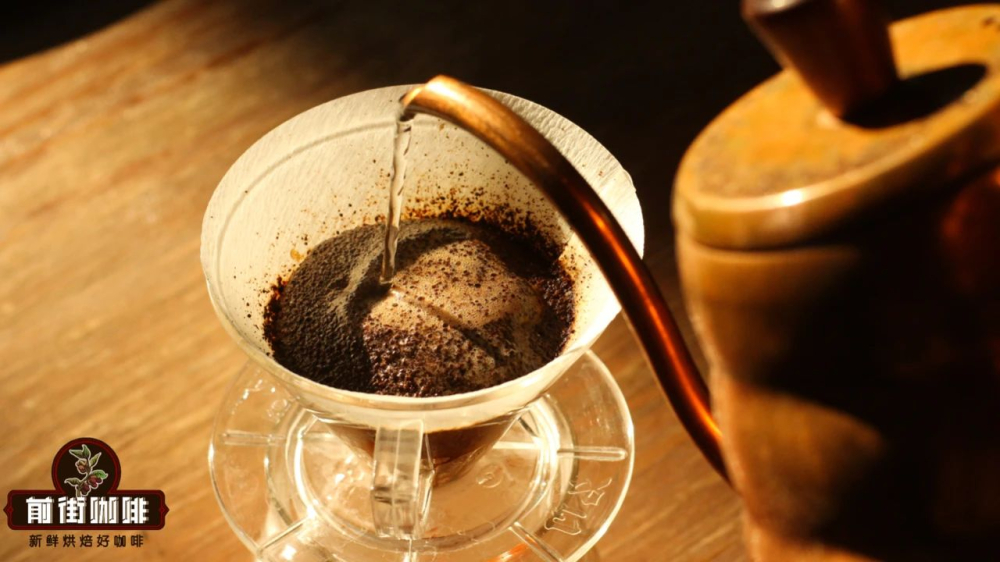
Brewing Flavor Description
[PWN Golden Mandheling Coffee Bean Flavor]: The coffee as a whole has multiple layers, is full-bodied and clean, with rich nutty and caramel aromas, chocolate notes, a long finish, and a high degree of balance.
[Lintong Mandheling Coffee Bean Flavor]: On the palate there is a rich herbal aroma, dark chocolate, caramel, and a sweet aftertaste.
Front Street's Roasting of Huakui Coffee Beans and Brewing Parameters:
FrontStreet Coffee noticed that the green beans of Huakui coffee have a fermented wine aroma of coffee flowers, completely different from the grassy aroma of ordinary green beans; moreover, Huakui green beans vary in size and are mostly pointed at both ends (Ethiopia Heirloom), with a good moisture content of around 11%, but they are not the kind of SHB beans with very high hardness. Because the beans are dense and hard, the early stage is extended to lengthen the dehydration time, and the temperature is raised before first crack into first crack, preserving as much as possible the loss of small-molecule aromatic substances such as floral notes. Front Street chose a light roast. In brewing, to make Huakui coffee more layered and richer in mouthfeel, Front Street chose to use a V60 dripper. The V60 dripper body has guiding ribs connecting the top and bottom and a large central hole, which speeds up the flow rate of water falling, while the spiral-shaped exhaust groove design lengthens the water flow path and increases the contact time between coffee grounds and hot water. Each stream of water converges along the grooves toward the center of the dripper, concentrating the pressure on the coffee grounds, resulting in a more layered extraction.
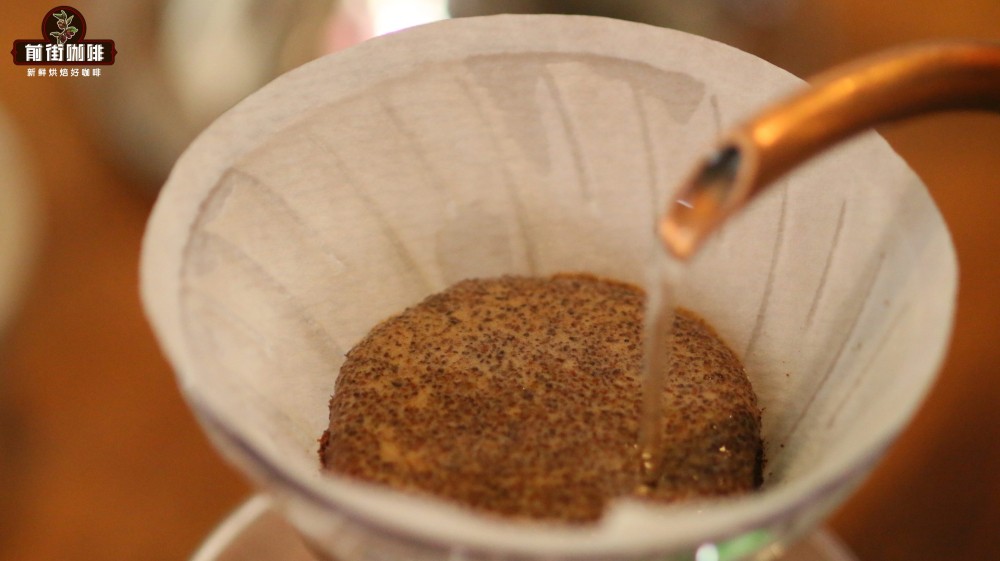
Dripper: Hario V60, water temperature: 90°C, dose: 15g, coffee-to-water ratio: 1:15, grind size: medium-fine grind (80% passing through a Chinese standard No. 20 sieve)
Brewing Flavor Description
[Huakui G1]Smooth, passion fruit, fermented wine aroma, jackfruit, strawberry.
[Huakui 2.0]The overall mouthfeel is clean, with a more pronounced berry aroma and nutty notes, making the mouthfeel richer.
[Huakui 3.0]Light strawberry jam, black tea tea-like body, short sweet finish.
[Huakui 3.1]Floral, cream, tropical fruit, caramel, long-lasting sweet aftertaste.
[Huakui 4.0]Citrus acidity, full berry juice sensation, lemon black tea tea-like body, long-lasting sweetness.
[Huakui 5.0]Floral notes, the sweet-and-sour sensation of berries, citrus, and plum, mango juice, honey, with a black tea sweet aroma in the finish.
[Small-Bean Huakui]Sweet berry aroma, cream strawberry, passion fruit, rich fruity sweetness, full body.
[Huakui 6.0]: Full berry juice sensation, black tea finish.
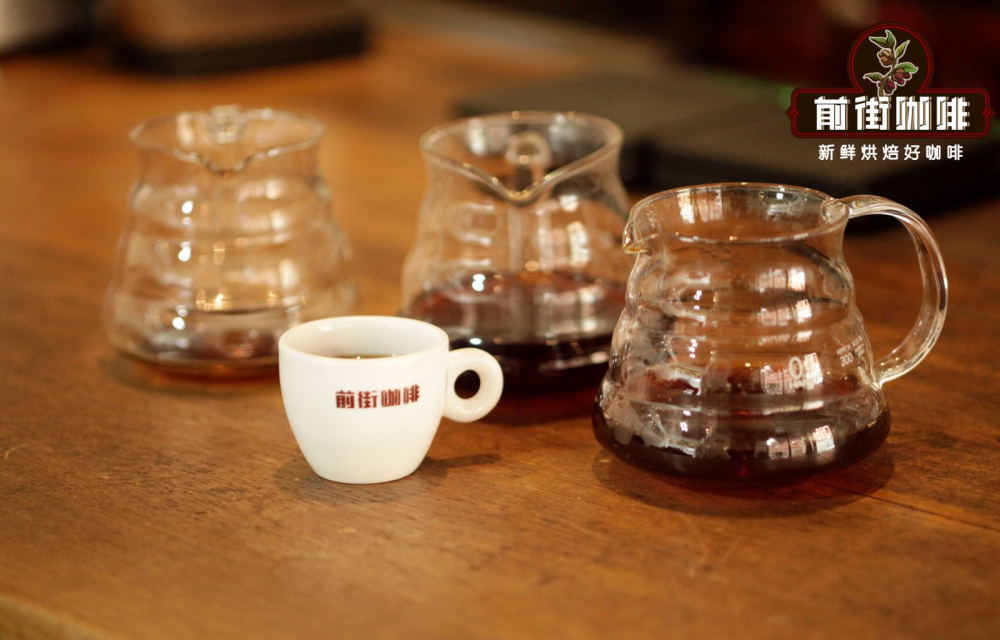
Front Street Coffee Brewing Suggestions:
Regarding coffee brewing, Front Street has always believed that the freshness of coffee beans has a great relationship with coffee flavor. Therefore, all coffee beans shipped by FrontStreet Coffee are within 5 days of the roast date. Front Street's roasting principle is "freshly roasted good coffee," so that every customer who places an order receives the freshest coffee. The resting period for coffee is about 4-7 days, so when customers receive it, it is at its best flavor.
For friends who need ground coffee, Front Street offers a warm reminder: once coffee beans are ground in advance, there is no need for further resting, because during transportation the pressure generated by carbon dioxide inside the package can also make the coffee flavor rounder, so once you receive the ground coffee you can immediately brew a cup and drink it. However, ground coffee needs to be brewed promptly, because after ground coffee contacts air it oxidizes relatively quickly—that is, the coffee flavor will dissipate relatively quickly and will not be as good. Therefore, Front Street recommends buying whole beans and grinding fresh for each brew, so you can better taste the coffee's flavor.
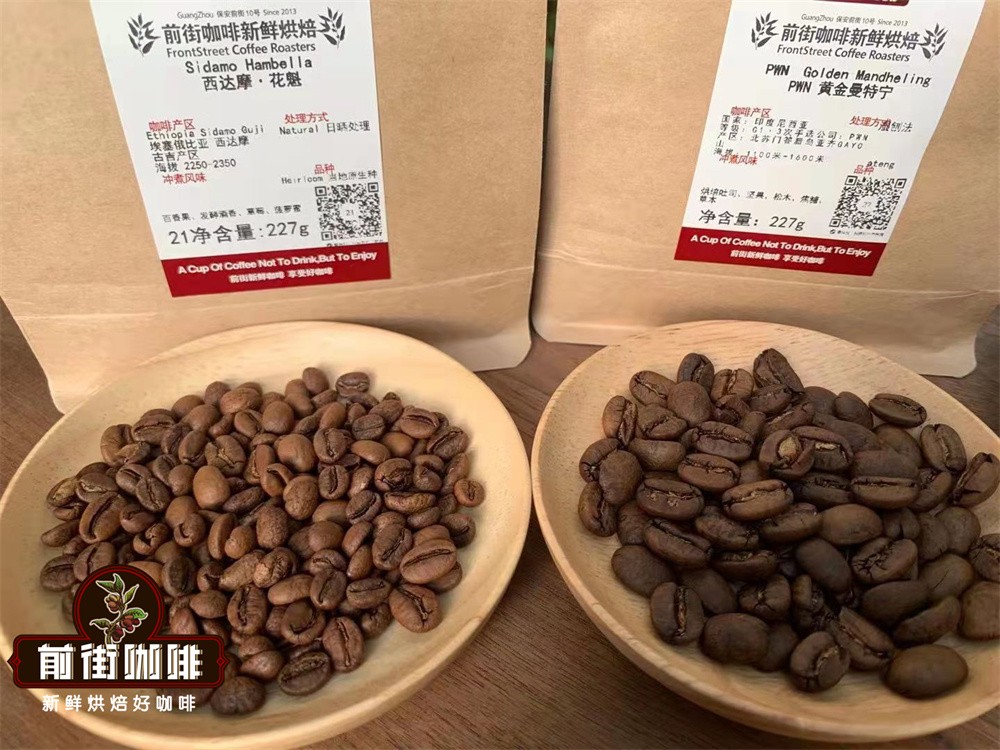
For friends who do not like bitterness, they may prefer Ethiopian coffee; while for friends who do not like sourness, they may prefer the taste of Mandheling or Brazilian coffee. In fact, Front Street believes that every coffee bean has its own distinctive flavor, and as long as it is the one you like, that is the best-tasting one.
For professional coffee knowledge exchange and more coffee bean information, please follow Coffee Workshop (WeChat public account: cafe_style)
For more specialty coffee beans, please add the private WeChat of FrontStreet Coffee, WeChat ID: qjcoffeex
The above content is compiled by CoffeeHunters, a coffee news website.


